

Red Yucca
Red Yucca
Nearly indestructible, with coral blooms hummingbirds love
Couldn't load pickup availability
Arizona's Favorite Hummingbird Plant — Red Yucca
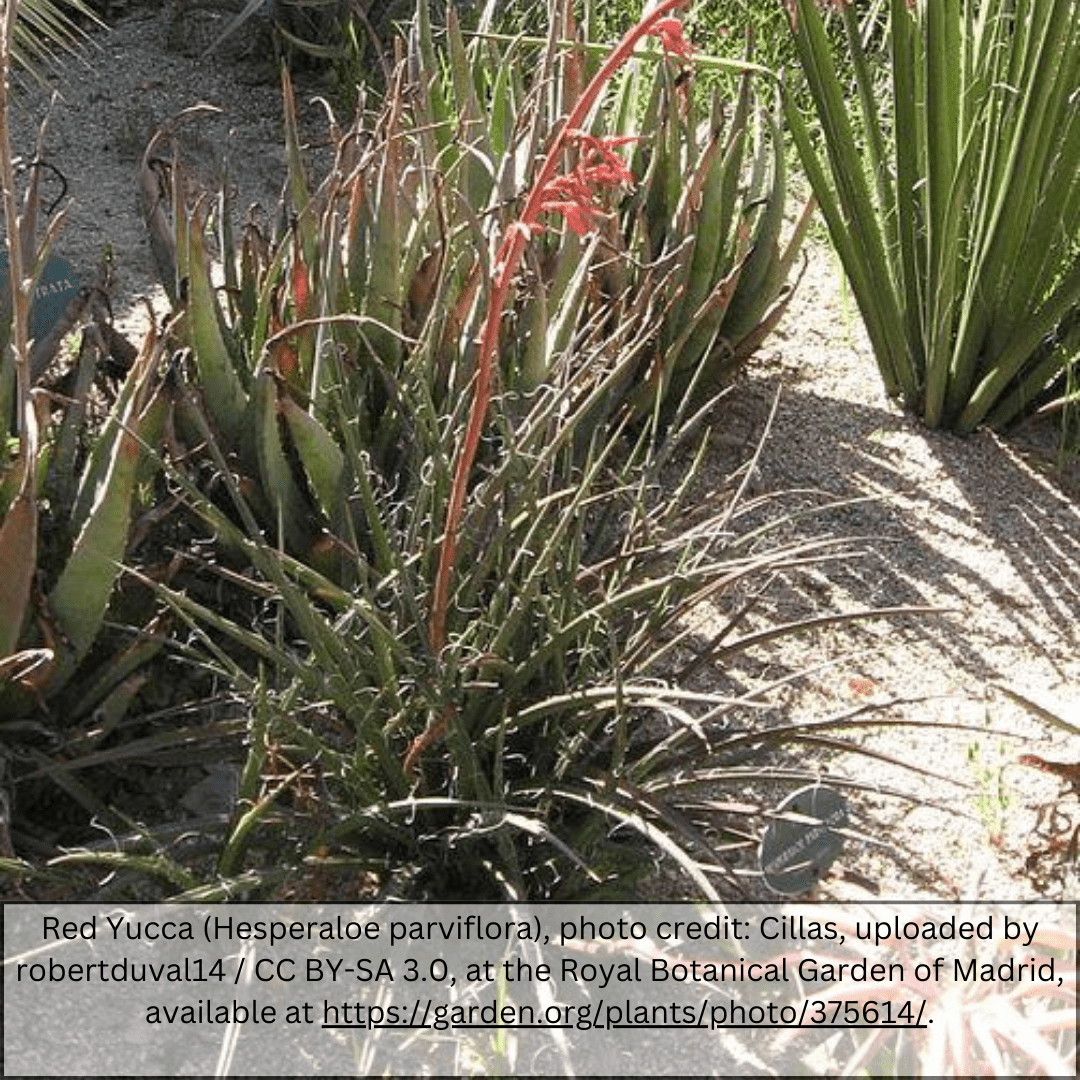
Red Yucca (Hesperaloe parviflora) is the most beloved drought-tolerant accent plant in the Phoenix Valley. Its tall coral-pink flower spikes shoot up from a rosette of arching blue-green leaves, attracting hummingbirds from spring through fall. Whether you're designing a low-water garden in Scottsdale, creating a pollinator-friendly yard in Chandler, adding color to a desert landscape in Gilbert, or anchoring a modern courtyard in Mesa — Red Yucca delivers season after season with almost zero maintenance.
Red Yucca Plant Details
| Attribute | Detail |
|---|---|
| Scientific Name | Hesperaloe parviflora |
| Common Names | Red Yucca, Red Hesperaloe, False Yucca, Coral Yucca |
| Mature Height | 2–4 feet (flower spikes reach 4–6 feet) |
| Mature Width | 3–5 feet |
| Growth Rate | Moderate — 1 foot per year in Phoenix |
| Sun | Full sun (6+ hrs). Handles reflected heat from walls and pavement. |
| Water | Very low once established. Among the most drought-tolerant plants for Phoenix. |
| USDA Zones | 9–11 (Phoenix is Zone 9b–10a) |
| Soil | Well-draining. Adapts well to Arizona caliche soils. |
| Foliage | Semi-evergreen — soft, arching blue-green leaves year-round |
| Bloom Color | Coral-red to pink; blooms spring through fall |
Red Yucca Uses in Phoenix Landscapes
Hummingbird and Pollinator Garden
Red Yucca is unmatched as a hummingbird magnet in the Sonoran Desert. The tubular coral flowers are perfectly shaped for hummingbird feeding, and plants bloom reliably from April through October. Pair with Chuparosa, Desert Ruellia, and Autumn Sage to create a multi-season pollinator haven.
Low-Water Accent and Focal Point
The combination of soft, arching blue-green foliage and towering flower spikes makes Red Yucca a natural focal point in xeric landscape designs. It pairs beautifully with boulders, decomposed granite, and angular concrete — making it a go-to plant for modern desert yards in Scottsdale, Tempe, and Peoria.
Pool-Friendly Landscaping
Red Yucca is an ideal pool plant — it doesn't drop messy leaves, debris, or seed pods, and its non-invasive root system won't threaten pool shells or hardscape. Plant in clusters of 3 around pool coping for a clean, sculptural look with seasonal color.
Mass Planting and Borders
Red Yucca is highly effective in mass plantings along walkways, driveways, and property borders. Plant 4–5 feet apart for ground-level coverage. In a 20-foot border: 4–5 plants. In a 40-foot stretch: 8–10 plants. Mixes well with Desert Spoon, Desert Marigold, and Brittlebush.
Best Time to Plant Red Yucca in Phoenix
Fall (October–November) is the ideal planting window. The soil stays warm for root development, cooler air reduces transplant stress, and plants get 6–8 months of establishment before their first Phoenix summer. Spring (February–April) is the second-best window. Avoid planting in peak summer heat if possible.
How to Plant Red Yucca
- Dig wide, not deep — 2–3x the root ball width, same depth as the container
- Check for caliche — break through any hardpan layer to ensure proper drainage
- Backfill with native soil — a light 20% organic blend is fine; avoid heavy amendments
- Spacing — 4–5 ft apart for mass planting; 5–6 ft for individual accent specimens
- Water basin — build a 3–4 inch earthen ring around the plant to direct water to roots
- Mulch — 2–3 inches of decomposed granite or bark mulch to retain moisture and suppress weeds
Watering Red Yucca in Phoenix
First Year Watering Schedule
- Weeks 1–2: Every 1–2 days, deep and slow (20–30 min)
- Month 1–2: Every 3–4 days
- Month 3–6: Every 7–10 days (5–7 days during peak summer)
- After Year 1: Every 10–14 days in summer; every 3–4 weeks in winter
Drip Irrigation
Place emitters 18–24 inches from the base, using 1–2 GPH emitters. One or two emitters per plant is usually sufficient. Once fully established (after year 2), Red Yucca can survive on rainfall alone in most Phoenix Valley locations, making it one of the most water-efficient plants available.
How fast does Red Yucca grow in Phoenix?
Red Yucca grows at a moderate pace — roughly 1 foot per year in Phoenix. Flower spikes appear within the first 1–2 years and become more prolific each season as the plant matures.
Is Red Yucca truly drought-tolerant once established?
Yes — Red Yucca is one of the most drought-tolerant plants sold at Three Timbers. After year 2, it can survive on natural rainfall in Phoenix with only occasional supplemental irrigation during extreme heat events.
What's the difference between Red Yucca and a true Yucca?
Despite the name, Red Yucca (Hesperaloe parviflora) is not a true Yucca. It belongs to the Asparagaceae family and has soft, flexible leaves without the sharp spine tips found on true yuccas — making it a safer choice for yards with kids and pets.
Can Red Yucca handle Phoenix's full summer heat?
Absolutely. Red Yucca is native to Texas and northern Mexico and thrives in reflected heat, intense sun, and soil temperatures that would stress most plants. It's one of the few plants that actually blooms more in Phoenix summer heat.
Does Red Yucca work near pools?
Yes — Red Yucca is an excellent pool plant. It produces no significant litter, has a non-invasive root system, and tolerates the reflected heat of pool decking. Its colorful flower spikes provide dramatic vertical interest without the mess.
You May Also Like
- Desert Spoon — A striking native accent with a dramatic spoon-shaped rosette, pairs perfectly with Red Yucca in modern desert designs.
- Desert Marigold — Bright yellow daisy-like blooms that complement Red Yucca's coral spikes in pollinator gardens.
- Autumn Sage — A compact flowering shrub that blooms in sync with Red Yucca, doubling your hummingbird attraction.
- Chuparosa — Another top hummingbird plant, this shrubby native pairs beautifully with Red Yucca in wildlife-friendly landscapes.
- Brittlebush — A low-spreading native with yellow spring blooms that makes an ideal groundcover companion for Red Yucca groupings.
How Many Red Yucca Do I Need?
Red Yucca works as a single accent or massed along borders, driveways, and walkways. With a mature width of 3 to 5 feet, space plants 4 to 5 feet apart for a continuous low border, or 5 to 6 feet apart when each rosette is featured as a standalone accent.
| Run Length | Plants Needed (4 to 5 ft spacing) |
|---|---|
| 10 ft | 2 to 3 plants |
| 20 ft | 4 to 5 plants |
| 40 ft | 8 to 10 plants |
| 60 ft | 12 to 14 plants |
For a fuller pool-side or entry cluster, group 3 plants in a triangle about 4 feet apart.
Red Yucca Season-by-Season in Phoenix
- Spring (Feb to Apr): Coral-red spikes begin rising and hummingbirds arrive. Strong second planting window before summer.
- Summer (May to Sep): Peak bloom. Red Yucca actually flowers harder through 110F-plus heat and reflected heat off walls and pavement. Monsoon storms give it all the water it needs; little to no extra irrigation required once established.
- Fall (Oct to Nov): Prime planting season and a final flush of blooms before cooler weather. Trim spent flower stalks anytime.
- Winter (Dec to Jan): Holds its arching blue-green foliage year-round. Fully cold-hardy in the Valley with no frost protection needed.
At a Glance
✔ Hummingbird-Friendly ✔ Pollinator-Friendly ✔ Heat-Loving (Reflected-Heat Tolerant) ✔ Drought-Tolerant ✔ Pool-Friendly (Low-Litter) ✔ Evergreen ✔ Low-Maintenance ✔ Deer & Rabbit-Resistant ✔ Spineless ✔ Cold-Hardy to -10°F
Plant It With
- Desert Spoon: a sculptural blue-gray rosette that anchors Red Yucca in modern desert designs.
- Brake Lights Hesperaloe: a compact cousin with non-stop coral blooms for layered hummingbird color.
- Giant Hesperaloe: a larger relative that adds height and scale behind a Red Yucca border.
- Yellow Yucca: the soft-yellow-flowered form, perfect for mixing bloom colors in a mass planting.
Is Red Yucca Right for Your Yard?
Red Yucca is ideal for full-sun, reflected-heat spots with well-drained or caliche soil, including pool surrounds, parking strips, and pollinator borders where its soft, spineless leaves are safe around kids and pets. It is not a fit for deep shade, where it will stop blooming, or for soggy, poorly drained ground, where the crown can rot.
Share