

Yellow Yucca
Yellow Yucca
Couldn't load pickup availability
The Best Yellow-Flowering Succulent for Phoenix & Scottsdale Landscapes
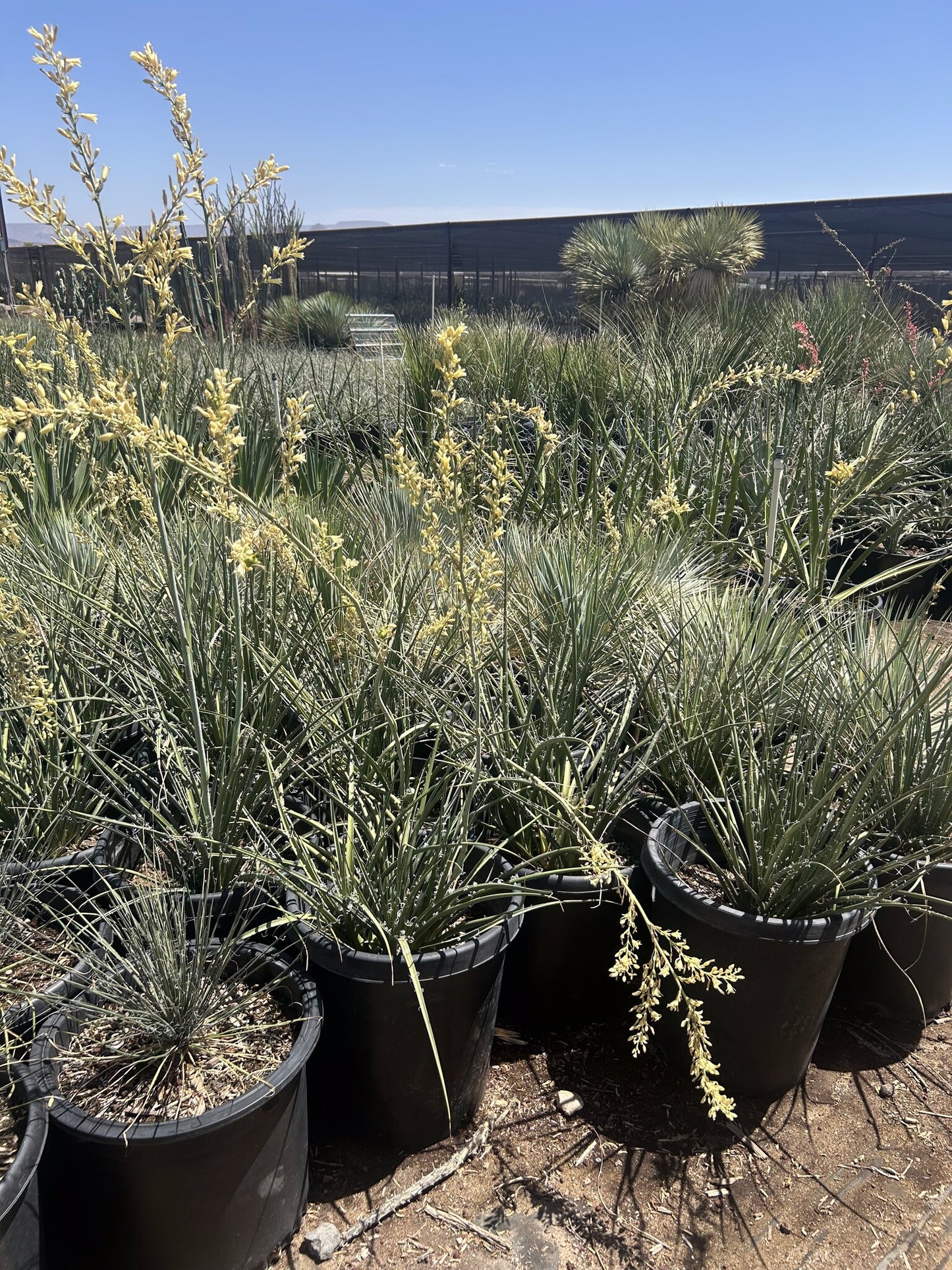
Yellow Yucca (Hesperaloe parviflora 'Yellow') is one of the most exceptional yellow-flowering succulents available for Phoenix-area desert gardens. A rare cultivar of the beloved Red Yucca, it produces tall bloom stalks loaded with cheerful, tubular yellow flowers from late spring through fall — attracting hummingbirds and butterflies for months. Its graceful, arching grass-like foliage forms a neat mound that requires absolutely no trimming or irrigation once established. Heat-tolerant and incredibly tough, Yellow Yucca thrives in the most demanding conditions across Scottsdale, Chandler, and Mesa. Whether you're adding striking vertical bloom interest to a modern desert garden in Gilbert, brightening a low-water border in Tempe, or creating a pollinator-friendly oasis in Peoria — Yellow Yucca gets the job done with color and elegance.
Yellow Yucca Plant Details
| Attribute | Detail |
|---|---|
| Scientific Name | Hesperaloe parviflora 'Yellow' |
| Common Names | Yellow Yucca, Yellow Red Yucca, Yellow Hesperaloe |
| Mature Height | 2–4 feet (foliage); 5–6 feet with bloom stalks |
| Mature Width | 3–4 feet |
| Growth Rate | Slow to moderate — 6–12 inches per year in Phoenix |
| Sun | Full sun to partial shade. Tolerates reflected heat from walls and pavement. |
| Water | Very low once established. Exceptionally drought-tolerant. |
| USDA Zones | 5–11 (Phoenix is Zone 9b–10a) |
| Soil | Well-draining. Adapts well to Arizona caliche soils. Avoid overwatering. |
| Foliage | Evergreen — arching, grass-like blue-green leaves year-round; no thorns |
| Bloom Color | Bright yellow tubular flowers — late spring through fall |
| Bloom Season | Long — often 5–6 months of continuous blooming from spring to fall |
| Wildlife | Excellent — attracts hummingbirds, butterflies, and orioles |
Yellow Yucca Uses in Phoenix Landscapes
Long-Season Color and Pollinator Gardens
Yellow Yucca is one of the longest-blooming plants in the Phoenix-area desert plant palette — producing bright yellow tubular flowers from late spring clear through fall. This extended bloom season makes it a cornerstone plant for pollinator gardens where hummingbirds and butterflies are frequent visitors. Plant 3–5 specimens near seating areas, patios, or windows in Scottsdale and Paradise Valley to enjoy up-close hummingbird activity all summer long.
Modern Desert and Xeriscape Design
Yellow Yucca's refined, architectural form — neat arching mounds with vertical bloom stalks — makes it a natural fit for contemporary desert designs across Phoenix and Scottsdale. It provides both structural interest and seasonal bloom color without any maintenance. Pair with Blue Agave, Desert Spoon, or ornamental grasses like Pine Muhly for a cohesive low-water palette that looks sophisticated year-round.
Pool-Friendly and Patio Borders
Unlike spiny yuccas or agaves, Yellow Yucca's soft, thornless foliage makes it safe and attractive around pools, patios, and high-traffic areas. It keeps pool surroundings tidy — no spines, no messy leaf drop — while delivering cheerful yellow blooms that draw pollinators all summer. Plant 2–3 along a pool perimeter or flanking a patio gate for an elegant, low-water display.
Mass Plantings and Low-Water Borders
Planted in groups, Yellow Yucca creates a stunning chorus of yellow bloom stalks that rise above the foliage mounds — providing seasonal color impact equivalent to traditional flowering shrubs at a fraction of the water. For a 20 ft border — use 4–5 plants spaced 4 ft apart; for a 40 ft border — use 8–10 plants. The contrasting yellow blooms against desert gravel and decomposed granite look exceptional.
Best Time to Plant Yellow Yucca in Phoenix
Fall (October–November) is ideal — warm soil encourages root establishment before winter, giving plants 6–8 months of moderate weather before their first Phoenix summer. Spring (February–April) is the second-best window; you'll get to enjoy the first season of yellow blooms shortly after planting. Avoid midsummer planting if possible. Yellow Yucca is highly adaptable but establishes best when not immediately subjected to Phoenix's most extreme heat.
How to Plant Yellow Yucca
- Dig wide, not deep — excavate 2–3x the width of the root ball, matched to root ball depth.
- Check for caliche — break through any hardpan layer for proper drainage (critical — Yellow Yucca does not tolerate standing water).
- Backfill with native soil — minimal organic amendment; Yellow Yucca prefers lean, well-draining soil. Avoid rich soil mixes.
- Spacing — 3–4 ft apart for borders and mass plantings; 5 ft for individual specimens.
- Build a water basin — create a 3–4 inch raised ring during establishment only; remove once plant is established.
- Apply gravel mulch — 1–2 inches of decomposed granite or gravel (avoid heavy wood mulch that retains moisture).
Watering Yellow Yucca in Phoenix
First Year Watering Schedule
Weeks 1–2: Water every 3–4 days, deep and slow. Month 1–3: Every 7–10 days. Month 4–6: Every 14 days. After Year 1: Every 3–4 weeks in summer; rainfall-dependent in winter. Yellow Yucca is one of the most drought-tolerant plants available for Phoenix gardens — once established, it needs very occasional deep irrigation and handles Phoenix's heat with ease.
Drip Irrigation
Place a single 0.5–1 GPH drip emitter 18–24 inches from the plant base. Overwatering is the primary cause of Yellow Yucca failure — less is more. Run cycles infrequently but deeply. Established plants need minimal supplemental irrigation beyond monsoon season rainfall and will bloom prolifically for decades with very little water.
How long does Yellow Yucca bloom in Phoenix?
Yellow Yucca is one of Phoenix's longest-blooming plants — often producing flowers for 5–6 consecutive months from late spring through fall. Multiple bloom stalks emerge in succession, ensuring continuous color throughout the warm season.
Is Yellow Yucca deer resistant?
Yes — Yellow Yucca is generally considered deer resistant due to its tough, fibrous foliage. Its soft, thornless leaves are not a preferred food source for deer in Arizona landscapes.
How is Yellow Yucca different from Red Yucca?
Yellow Yucca (Hesperaloe parviflora 'Yellow') is a cultivar of Red Yucca (Hesperaloe parviflora) that produces bright yellow flowers instead of the classic coral-red. Both are equally tough, drought-tolerant, and attractive to hummingbirds, but Yellow Yucca provides a striking color variation that works beautifully in modern and naturalistic desert landscape designs.
Does Yellow Yucca have thorns?
No — despite its common name, Yellow Yucca (Hesperaloe parviflora) does not have the sharp spines or thorns associated with true Yucca plants. Its soft, arching foliage is completely safe around children, pets, and pool areas — making it much more versatile in landscape design than traditional yuccas.
Can Yellow Yucca grow in partial shade in Phoenix?
Yes — Yellow Yucca tolerates partial shade well and still produces bloom stalks even with reduced direct sun. In Phoenix's intense summer heat, a location with afternoon shade can actually be beneficial, keeping the foliage looking lush and extending bloom season.
You May Also Like
Pink Parade Hesperaloe — A pink-flowering Hesperaloe cultivar that pairs beautifully with Yellow Yucca for a bicolor pollinator garden display.
Giant Hesperaloe — A larger, more dramatic Hesperaloe species with bold form and extended bloom stalks for statement desert landscapes.
Stoplights Hesperaloe — A bicolor red-and-yellow flowering Hesperaloe that creates stunning contrast alongside Yellow Yucca plants.
Brake Lights Hesperaloe — A compact, deep-red flowering Hesperaloe perfect for layering with Yellow Yucca in mixed desert borders.
Desert Cassia — A drought-tolerant native shrub with matching yellow flowers that complements Yellow Yucca's bloom color in mixed plantings.
How Many Yellow Yucca Do I Need?
Yellow Yucca matures to 3 to 4 feet wide, so space plants about 4 feet apart center to center for a full mass planting or border. Use this guide for a single row:
| Run Length | Plants Needed (4 ft spacing) |
|---|---|
| 10 ft | 3 plants |
| 20 ft | 5 to 6 plants |
| 30 ft | 8 plants |
| 40 ft | 10 to 11 plants |
For a pollinator pocket near a patio or window, plant in odd-numbered groups of 3 to 5 spaced 4 feet apart so the bloom stalks read as a unified chorus of yellow.
Yellow Yucca Season-by-Season in Phoenix
- Spring (Feb to Apr): Bloom season begins; tall stalks of tubular yellow flowers start drawing hummingbirds, orioles, and butterflies. A strong second planting window.
- Summer (May to Sep): Peak bloom continues straight through the heat, shrugging off reflected warmth from walls and pavement. Monsoon rains are welcome; just keep soil well drained. One of the longest-blooming desert plants, often flowering 5 to 6 months straight.
- Fall (Oct to Nov): Blooming winds down while this is the prime planting season. Cooler air and warm soil establish roots fast.
- Winter (Dec to Jan): Foliage stays fully evergreen and grass-like. Exceptionally cold-hardy, well past Phoenix winter lows, with no frost protection needed.
At a Glance
✔ Pollinator-Friendly ✔ Hummingbird-Friendly ✔ Heat-Loving (Reflected-Heat Tolerant) ✔ Drought-Tolerant ✔ Pool-Friendly (Low-Litter) ✔ Evergreen ✔ Low-Maintenance ✔ Spineless ✔ Deer & Rabbit-Resistant ✔ Cold-Hardy to 0°F
Plant It With
- Pink Parade Hesperaloe: a pink-flowering cousin for a bicolor pollinator display.
- Brake Lights Hesperaloe: deep-red blooms that contrast the bright yellow stalks.
- Giant Hesperaloe: a larger soft-leaved Hesperaloe for height behind the mounds.
- Desert Spoon: a sculptural blue-gray rosette that anchors the planting with structure.
Is Yellow Yucca Right for Your Yard?
It thrives in full sun to part shade, takes reflected heat with ease, and needs only lean, well-drained soil; break through caliche so roots never sit in water. Soft and thornless, it is safe along pools, patios, and walkways and asks for almost no care once established. Give each plant 3 to 4 feet of room. It is not a fit for shady, overwatered beds, where soggy roots cause rot and bloom drops off.
Customer Reviews
Share