

Giant Hesperaloe
Giant Hesperaloe
Bold clumping succulent with towering flower spikes
Couldn't load pickup availability
Arizona's Most Dramatic Flowering Succulent — Massive Scale, Zero Maintenance
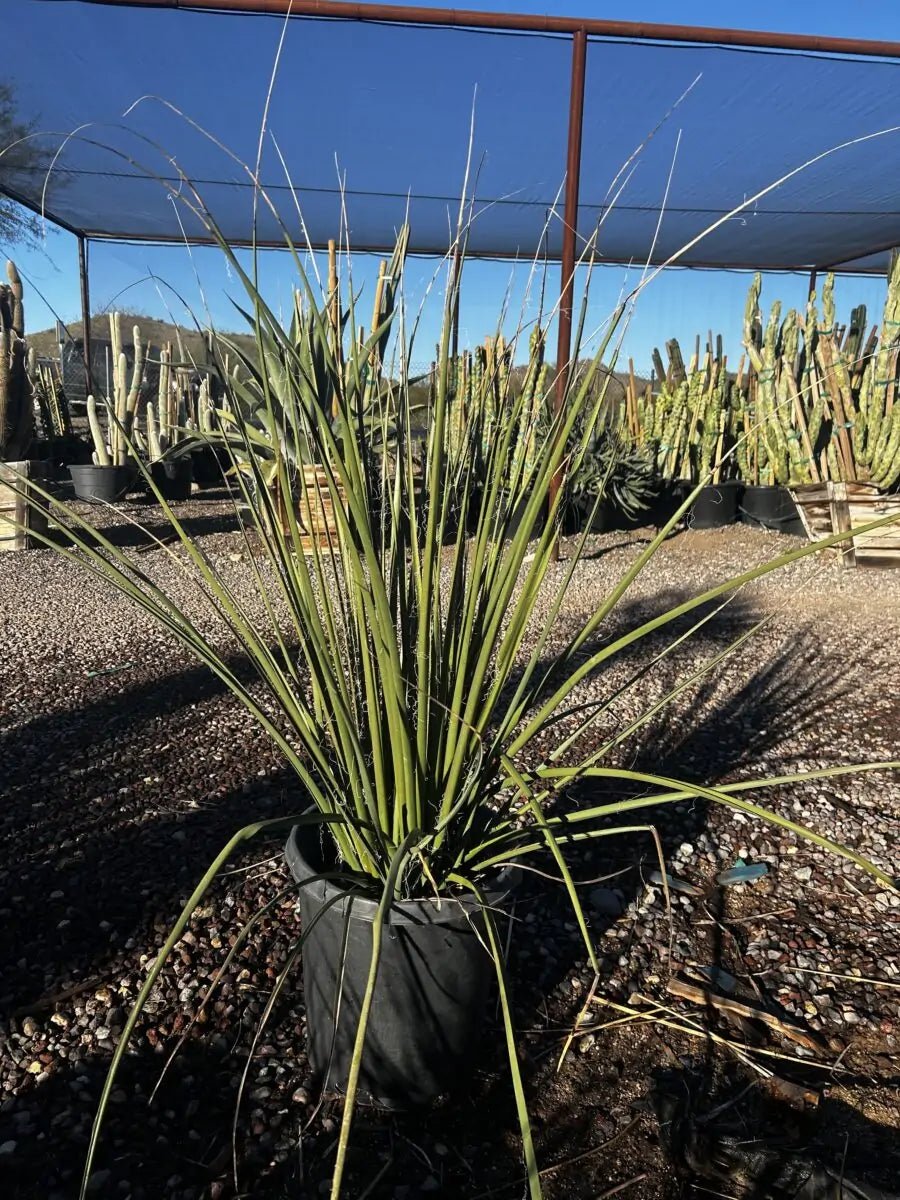
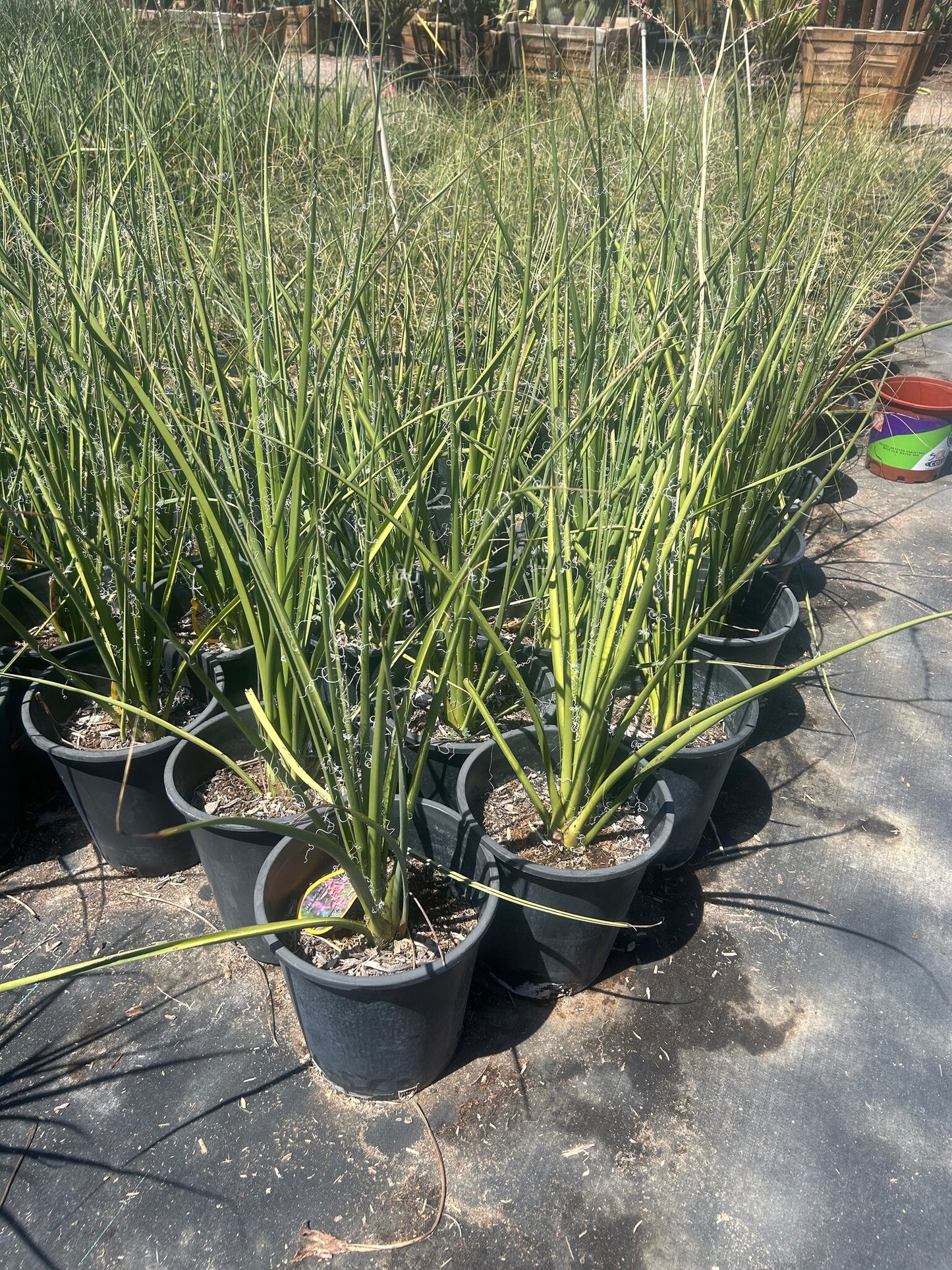
Giant Hesperaloe (Hesperaloe funifera) is the most architecturally impressive Hesperaloe species available — a true statement plant for Phoenix-area landscapes that demands attention. Its enormous clumps of bold, stiff foliage can reach 5–6 feet tall and spread 6–10 feet wide, creating an imposing desert presence unlike anything else in the succulent world. Towering creamy white flower stalks rise dramatically in late spring and summer, attracting hummingbirds and orioles in droves. Virtually indestructible once established, Giant Hesperaloe thrives in the most punishing conditions across Scottsdale, Chandler, and Mesa with almost no care. Whether you're creating a dramatic focal point in Phoenix, anchoring a large commercial landscape in Gilbert, or establishing an unforgettable desert specimen in Peoria — Giant Hesperaloe is unmatched in presence and toughness.
Giant Hesperaloe Plant Details
| Attribute | Detail |
|---|---|
| Scientific Name | Hesperaloe funifera |
| Common Names | Giant Hesperaloe, Giant Red Yucca, New Mexico False Yucca |
| Mature Height | 5–6 feet (foliage); bloom stalks can reach 10–14 feet |
| Mature Width | 6–10 feet |
| Growth Rate | Slow to moderate — reaches full size in 5–7 years in Phoenix |
| Sun | Full sun (6+ hrs). Thrives in Phoenix's most intense heat exposures. |
| Water | Very low once established. One of the most drought-tolerant succulents available. |
| USDA Zones | 7–11 (Phoenix is Zone 9b–10a) |
| Soil | Well-draining. Highly adaptable, including Arizona caliche soils. |
| Foliage | Evergreen — bold, stiff blue-green leaves with fibrous leaf margins; year-round structure |
| Bloom Color | Creamy white tubular flowers on tall branching stalks |
| Bloom Season | Late spring through summer — massive branching stalks reaching 10–14 feet |
| Wildlife | Excellent — attracts hummingbirds, orioles, and large bees |
Giant Hesperaloe Uses in Phoenix Landscapes
Bold Specimen and Anchor Plantings
Giant Hesperaloe is the undisputed king of desert focal points. Its massive scale and bold form make it the perfect anchor plant for large landscape spaces in Scottsdale and Paradise Valley — commanding attention from every angle year-round and providing towering bloom stalks that rise dramatically above surrounding plantings. Give it room to spread to 8–10 feet and it will reward with decades of virtually maintenance-free drama.
Large Commercial and Public Landscapes
For commercial properties, HOA common areas, medians, and public spaces across Phoenix, Chandler, and Mesa, Giant Hesperaloe is an ideal plant — its massive scale works with large landscape proportions, its drought tolerance eliminates irrigation concerns, and its virtually zero maintenance profile means long-term savings on landscape management. Plant as single specimens every 10–12 feet in medians or 8 feet apart in large mass plantings.
Slope Stabilization and Erosion Control
Giant Hesperaloe's enormous, fibrous root system makes it outstanding for stabilizing slopes, hillsides, and erosion-prone areas across the Phoenix Valley. Its dense clumps grip soil tightly while the striking foliage provides year-round visual interest on difficult-to-irrigate slopes. Plant 6–8 feet apart on slopes for good coverage and excellent erosion control.
Wildlife and Habitat Gardens
The creamy white flowers of Giant Hesperaloe attract large pollinators — particularly orioles, large carpenter bees, and hummingbirds — that rely on the tall, branching bloom stalks as major nectar sources. In wildlife-friendly gardens across Tempe, Glendale, and Peoria, Giant Hesperaloe provides an irreplaceable food source for pollinators during late spring and summer when many other flowers have faded.
Best Time to Plant Giant Hesperaloe in Phoenix
Fall (October–November) is the preferred planting window — cooler air temperatures reduce transplant stress while warm soil encourages root development through winter. Spring (February–April) is also excellent. Unlike smaller plants, Giant Hesperaloe's large root mass helps it establish more quickly than many succulents, but it still benefits from a full growing season before facing Phoenix's most intense summer heat. Avoid midsummer planting whenever possible.
How to Plant Giant Hesperaloe
- Dig wide, not deep — excavate 3x the width of the root ball and matched to root ball depth. Giant Hesperaloe's massive root system benefits from a large planting area.
- Check for caliche — break through any hardpan layer beneath the hole for essential drainage.
- Backfill with native soil — minimal amendment; Giant Hesperaloe thrives in lean, native Arizona soils.
- Spacing — allow 8–10 feet from structures and other plants to accommodate its eventual 6–10 foot spread.
- Build a large water basin — create a 4–6 inch raised ring 3–4 feet from the plant center to direct deep irrigation.
- Apply gravel mulch — 2–3 inches of decomposed granite or gravel around the base (avoid organic mulch that retains too much moisture).
Watering Giant Hesperaloe in Phoenix
First Year Watering Schedule
Weeks 1–2: Water every 3–5 days, very deep and slow (30–40 minutes). Month 1–3: Every 10–14 days. Month 4–6: Every 2–3 weeks. After Year 1: Every 3–4 weeks in summer; rarely or never in winter. Giant Hesperaloe is one of the most drought-resistant plants in cultivation — once established it is essentially self-sufficient on Phoenix's natural rainfall with only occasional supplemental deep watering in the driest stretches.
Drip Irrigation
Place 2 drip emitters (1–2 GPH each) at 24–36 inches from the plant center for young plants. Increase spacing as the plant grows. Run deep, infrequent cycles that wet soil 18–24 inches. Mature Giant Hesperaloe needs very occasional supplemental irrigation beyond monsoon season and will thrive for decades with minimal water input.
How big does Giant Hesperaloe get in Phoenix?
Giant Hesperaloe is one of the largest Hesperaloe species — foliage clumps typically reach 5–6 feet tall and 6–10 feet wide at maturity. Bloom stalks can tower 10–14 feet above the foliage, creating a dramatic display unlike any other desert succulent. Plan for its mature size when selecting planting locations.
How is Giant Hesperaloe different from Red Yucca?
Giant Hesperaloe (Hesperaloe funifera) is significantly larger than Red Yucca (Hesperaloe parviflora) in every dimension — much taller, much wider, with much more massive bloom stalks. Giant Hesperaloe also produces creamy white flowers rather than the coral-red of Red Yucca. It's a completely different scale of plant — use Red Yucca for borders and focal points, Giant Hesperaloe for bold specimen plantings and large landscape anchors.
Does Giant Hesperaloe have dangerous spines?
Giant Hesperaloe's leaf tips have a minimal point, but nothing approaching the dangerous terminal spines of true Agave or Yucca. The leaf margins have fibrous threads that peel away but no sharp spines. However, given its size, we recommend planting it away from high-traffic areas — not for safety reasons but simply because it will grow very large and should not be near walkways.
How often does Giant Hesperaloe bloom?
Once established (usually after year 2–3), Giant Hesperaloe blooms annually in late spring and early summer, sending up multiple massive branching stalks. Each individual bloom stalk can carry hundreds of creamy white flowers and persists for several weeks before the stalk can be cut back — or left as dramatic sculptural elements in the landscape.
You May Also Like
Yellow Yucca — A smaller, companion Hesperaloe with yellow flowers that provides beautiful scale contrast alongside Giant Hesperaloe.
Pink Parade Hesperaloe — A compact pink-flowering Hesperaloe that fills smaller spaces around Giant Hesperaloe plantings with color.
Stoplights Hesperaloe — A mid-size bicolor Hesperaloe that layers beautifully alongside Giant Hesperaloe in mixed succulent designs.
Blue Nolina — Another bold, architectural native succulent that provides structural contrast and similar massive scale in large landscape designs.
Green Desert Spoon — A striking Desert Spoon species that pairs beautifully with Giant Hesperaloe for bold, low-water succulent-focused landscapes.
How Many Giant Hesperaloe Do I Need?
This is a large clumping specimen that matures 6 to 10 feet wide, so it is placed for bold scale rather than run as a tight hedge. Give each clump room to reach full spread.
| Placement | How to Space |
|---|---|
| Single focal point | One clump as a landscape anchor, with a clear 8 to 10 foot circle and set back from walkways for its size. |
| Mass or grove | Groups spaced about 8 feet on center so the clumps read as a bold drift without crowding. |
| Median or slope | Single specimens every 10 to 12 feet in medians, or 6 to 8 feet apart on slopes for erosion control. |
Giant Hesperaloe Season-by-Season in Phoenix
- Spring (Feb-Apr): Late spring launches the towering branching creamy-white bloom stalks. New growth fills the clump and it is a strong second planting window.
- Summer (May-Sep): Bloom carries on into summer, feeding hummingbirds, orioles, and large bees when little else is flowering. Thrives in full sun and the hottest reflected-heat exposures; through the monsoon (Jul-Sep) it needs little to no extra water.
- Fall (Oct-Nov): Prime planting season. Cooler air plus warm soil drives strong root development before winter.
- Winter (Dec-Jan): Holds its bold evergreen structure. It is genuinely cold-hardy to around 0°F, so no frost protection is needed anywhere in the Valley.
At a Glance
✔ Pollinator-Friendly ✔ Hummingbird-Friendly ✔ Heat-Loving (Reflected-Heat Tolerant) ✔ Drought-Tolerant ✔ Evergreen ✔ Low-Maintenance ✔ Fire-Wise ✔ Deer & Rabbit-Resistant ✔ Cold-Hardy to 0°F
Plant It With
- Yellow Yucca: a smaller yellow-flowering Hesperaloe for scale contrast.
- Pink Parade Hesperaloe: a compact pink-bloomer to fill in around the giant.
- Stoplights Hesperaloe: a mid-size bicolor that layers between scales.
- Blue Nolina: another bold architectural clump for structural contrast.
Is Giant Hesperaloe Right for Your Yard?
Giant Hesperaloe is a fit for large, open, full-sun spaces, including commercial anchors, medians, slopes, and big desert beds where its 6 to 10 foot clump and towering bloom stalks have room to perform on almost no water, and it is reliably cold-hardy here. It is not a fit for small yards or tight beds near walkways, since it grows very large and should not crowd a path or a structure.
Share