

Desert Spoon
Desert Spoon
Couldn't load pickup availability
Phoenix's Most Dramatic Desert Accent — Desert Spoon
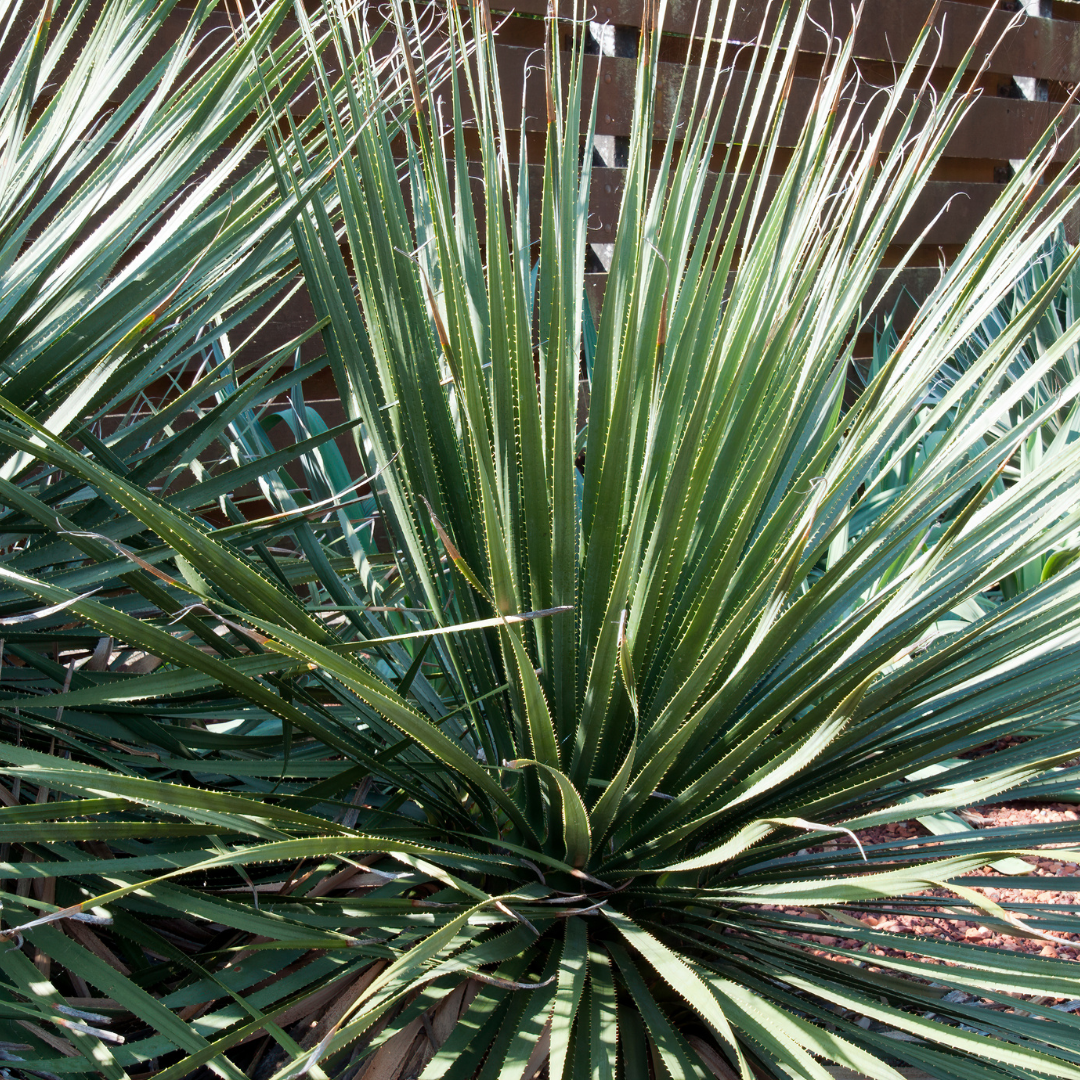
Desert Spoon (Dasylirion wheeleri) is the ultimate architectural statement plant for Phoenix Valley landscapes. Its explosive starburst rosette of silvery-green, saw-toothed leaves creates a sculptural focal point that looks equally stunning in modern desert gardens, poolside plantings, and rocky native landscapes. This rugged native thrives in full sun, extreme heat, and rocky soils — requiring almost no maintenance once established. Whether you're anchoring a xeriscape in Scottsdale, creating a bold courtyard accent in Chandler, adding structure to a slope in Gilbert, or designing a low-maintenance front yard in Peoria — Desert Spoon is the plant that commands attention year-round.
Desert Spoon Plant Details
| Attribute | Detail |
|---|---|
| Scientific Name | Dasylirion wheeleri |
| Common Names | Desert Spoon, Common Sotol, Wheeler Sotol |
| Mature Height | 3–6 feet (flower spikes reach 10–15 feet) |
| Mature Width | 4–6 feet |
| Growth Rate | Slow — 6–12 inches per year in Phoenix |
| Sun | Full sun (6+ hrs). Thrives in reflected heat from walls and pavement. |
| Water | Very low once established. Exceptionally drought-tolerant. |
| USDA Zones | 7–11 (Phoenix is Zone 9b–10a) |
| Soil | Well-draining, rocky, or sandy. Adapts to Arizona caliche soils. |
| Foliage | Evergreen — silvery-green to blue-gray saw-toothed leaves year-round |
| Bloom | Tall creamy-white flower spike (10–15 ft); blooms in summer on mature plants |
Desert Spoon Uses in Phoenix Landscapes
Architectural Focal Point
Desert Spoon's symmetrical starburst rosette is one of the most architecturally striking forms in the plant world. A single specimen planted at a courtyard entrance, driveway corner, or garden center commands attention every day of the year. Pair with boulders, concrete walls, and decomposed granite for a clean modern desert look.
Modern and Minimalist Desert Design
Desert Spoon is a favorite for contemporary Southwestern landscapes because its geometric form and silver-green color palette work beautifully alongside steel, concrete, and natural stone. Use in groups of odd numbers (3 or 5 plants) at varying sizes for layered depth. Space 5–6 feet apart for individual expression.
Pool-Friendly Accent Plant
Desert Spoon is an excellent pool plant — it produces no significant litter, has a non-invasive root system, and handles the intense reflected heat of pool decking with ease. Its sculptural form provides year-round visual interest without the mess of flowering shrubs near pool areas.
Slope and Low-Water Border
Desert Spoon's deep taproot and exceptional drought tolerance make it ideal for dry slopes, berms, and rocky embankments where irrigation is limited. It stabilizes soil effectively and requires no supplemental water once established in most Phoenix locations.
Best Time to Plant Desert Spoon in Phoenix
Fall (October–November) is the ideal planting window. Warm soil allows root establishment while cooler air reduces transplant stress, giving the plant 6–8 months before its first Phoenix summer. Spring (February–April) is the second-best window. Avoid planting in peak summer if possible.
How to Plant Desert Spoon
- Dig wide, not deep — 2–3x the root ball width, same depth as the container
- Check for caliche — break through hardpan for proper drainage; sotol is extremely sensitive to wet roots
- Backfill with native soil — no amendments; lean rocky soil is ideal
- Spacing — 5–6 ft apart for visual separation; 4 ft for grouped plantings
- Water basin — build a 3–4 inch earthen ring around the plant to direct initial watering
- Mulch — use decomposed granite or rock mulch; avoid organic mulch near the crown
Watering Desert Spoon in Phoenix
First Year Watering Schedule
- Weeks 1–2: Every 1–2 days, deep and slow (20–30 min)
- Month 1–2: Every 3–4 days
- Month 3–6: Every 10–14 days (7–10 days in peak summer)
- After Year 1: Every 21–30 days in summer; rainfall only in winter
Drip Irrigation
Place emitters 18–24 inches from the base using 1 GPH emitters. One emitter per plant is sufficient. Desert Spoon is one of the most water-efficient plants available — once established (year 2+), it can survive entirely on Phoenix's natural rainfall in most locations.
How big does Desert Spoon get in Phoenix?
The rosette itself grows 3–6 feet tall and 4–6 feet wide at a slow, steady pace. In Phoenix's warm climate, mature plants occasionally send up dramatic flower spikes reaching 10–15 feet tall in summer — a spectacular event that can happen on plants 5–10 years old.
Is Desert Spoon the same as a Yucca?
No — Desert Spoon (Dasylirion wheeleri) is related to agaves but is its own distinct genus. Unlike true yuccas, it has narrower, grass-like leaves with fine serrations along the edges. The leaf base has a distinctive spoon-shaped base that gives the plant its common name.
Can it survive Phoenix summers without any water?
Once fully established (typically after 2 years), Desert Spoon can survive Phoenix's hot, dry summers on natural rainfall alone. During establishment, supplemental irrigation is recommended, but the goal is always to gradually reduce watering as the plant matures.
Is Desert Spoon deer resistant?
Yes — the sharply serrated leaf margins deter deer and most browsing animals. Desert Spoon is one of the most deer-resistant plants available for Phoenix-area landscapes near desert open space.
Does it need pruning?
Minimal pruning required. Remove dead outer leaves at the base as needed. After flowering, the spent flower spike can be cut at the base. Never trim the rosette tips — this damages the plant's symmetry and appearance.
You May Also Like
- Green Desert Spoon — A green-leafed variety of sotol that offers a softer color palette alongside the classic silvery Desert Spoon.
- Smooth Spoon — A similar sotol species with smoother leaf margins, ideal for areas with high foot traffic.
- Red Yucca — Soft arching leaves and coral flower spikes that contrast beautifully with Desert Spoon's rigid starburst form.
- Agave — Bold structural companions that share Desert Spoon's love of sun, heat, and well-drained soil.
- Tree Bear Grass — A tall ornamental grass that pairs beautifully with Desert Spoon in layered xeric designs.
How Many Desert Spoon Do I Need?
Desert Spoon is an architectural specimen, not a hedge plant, so plan it by the form rather than by the foot. At a mature width of 4 to 6 feet, give each rosette room to stand clear:
- As a focal point: a single specimen at an entry, driveway corner, or courtyard does the whole job.
- In groups: plant odd-numbered clusters of 3 or 5, spaced 5 to 6 feet apart, mixing sizes for a layered, natural look.
- Along a drive or path: repeat one plant every 6 feet for a rhythmic accent line.
Keep the saw-toothed leaf margins at least 3 feet back from walkways, patios, and pool edges so no one brushes the serrations in passing.
Desert Spoon Season-by-Season in Phoenix
- Spring (Feb to Apr): Steady slow growth resumes and the silver rosette looks its crispest. Strong second planting window.
- Summer (May to Sep): Unfazed by extreme and reflected heat. Mature plants may launch a 10 to 15 foot creamy flower spike, and the rosette coasts through the monsoon on almost no extra water.
- Fall (Oct to Nov): Top planting season in Phoenix. Roots settle in fast in the warm soil and cooling air.
- Winter (Dec to Jan): Fully evergreen and cold-tough. Hardy well below freezing (to roughly 10°F and lower), so Valley frosts do not faze it. Keep the crown dry, since wet winter soil is the one real risk.
At a Glance
✔ Arizona Native ✔ Heat-Loving (Reflected-Heat Tolerant) ✔ Drought-Tolerant ✔ Pool-Friendly (Low-Litter) ✔ Evergreen ✔ Low-Maintenance ✔ Deer & Rabbit-Resistant ✔ Cold-Hardy to 10°F
Plant It With
- Red Yucca: soft arching leaves and coral flower spikes that contrast the rigid starburst form.
- Brittlebush: silver-leaved Sonoran native that fills the lower layer with spring yellow daisies.
- Desert Ruellia: low purple bloomer that softens the bold structure with season-long color.
- Texas Sage: mounding silver shrub that frames Desert Spoon and ties the palette together.
Is Desert Spoon Right for Your Yard?
Desert Spoon is a near-perfect fit for a full-sun, low-water spot with sharp drainage, including hot reflected-heat zones, slopes, and poolside. It is evergreen, cold-tough, and asks for almost nothing once established. Not a fit if your soil stays wet (the crown rots in standing water) or if it would sit right against a high-traffic walkway, since the serrated leaf edges can catch passersby. Give it room and good drainage and it will anchor the yard for decades.
Customer Reviews
The 10/15 gallon Desert Spoon plant we ordered is much rougher than we would like. The Desert Spoon plant has several broken branches and most all branches have dead brown tips. Appears that the plant have sufferd some drought stress and heavy sunburn. Hopefully, the Desert Spoon plant will recover and will eventually grow nicely in our desert landscape.
Share