

Brake Lights
Brake Lights
Couldn't load pickup availability
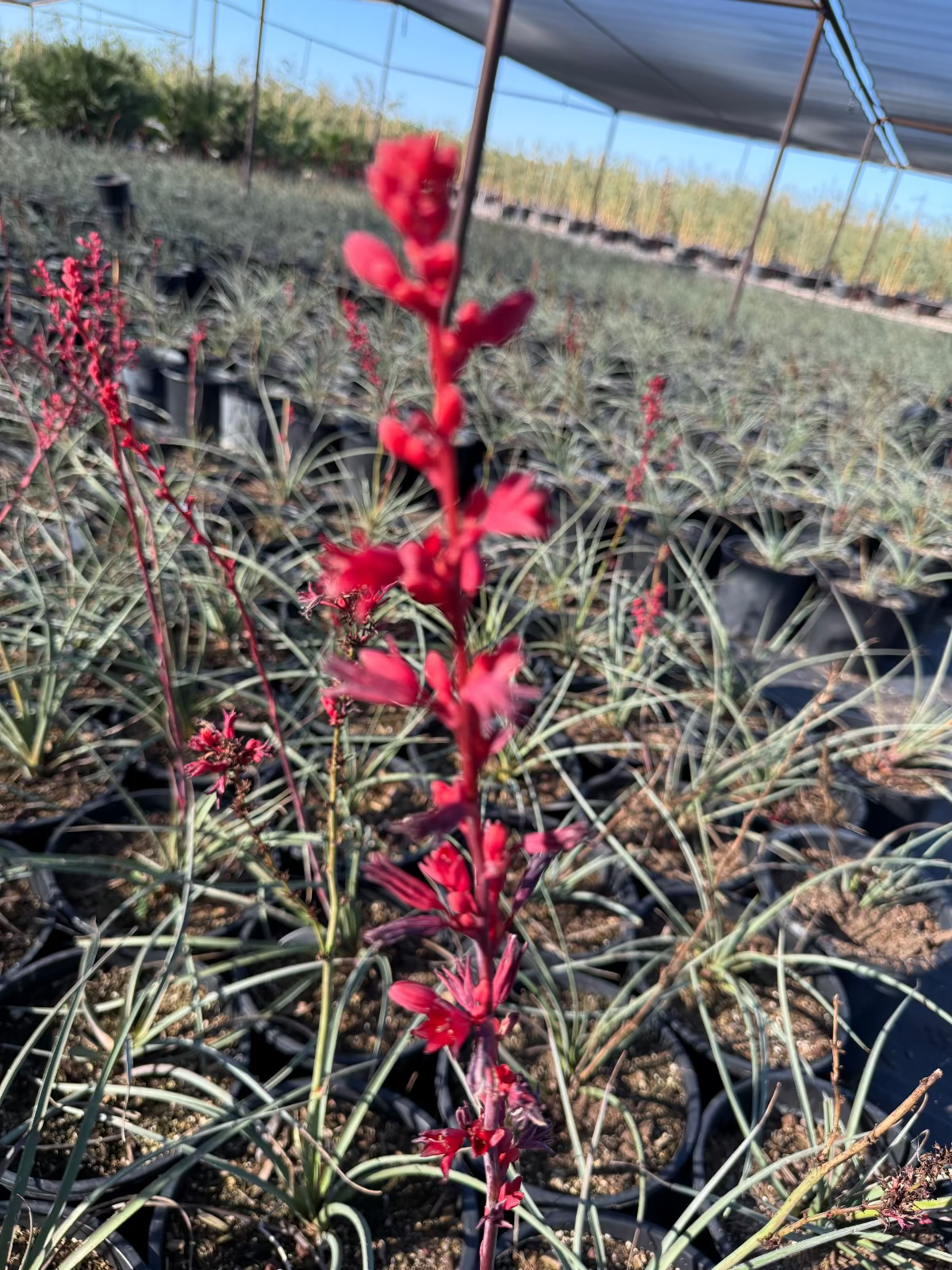
Brake Lights Hesperaloe — Bold Coral Blooms for Phoenix Landscapes
If you want year-round color that stops traffic, Brake Lights Hesperaloe (Hesperaloe x 'Little Giant') delivers. This compact, fast-growing hybrid fires up 5–6 foot bloom stalks loaded with vivid coral-pink to salmon flowers nearly every month of the year. Unlike most flowering plants in the Sonoran Desert, Brake Lights blooms in summer's peak heat — making it a standout choice for homeowners and landscapers in Phoenix, Scottsdale, and Chandler who need reliable color when everything else has faded.
| Common Name | Brake Lights Hesperaloe |
|---|---|
| Scientific Name | Hesperaloe x 'Little Giant' |
| Plant Type | Evergreen succulent/perennial |
| Mature Height | 3–4 ft (foliage); 5–6 ft with bloom stalks |
| Mature Spread | 3–4 feet |
| Flower Color | Coral-pink to salmon |
| Bloom Season | Nearly year-round; heaviest spring–fall |
| Sun Exposure | Full sun |
| Water Needs | Very low — drought tolerant once established |
| USDA Hardiness Zone | Zone 7–11 (ideal for Zone 9b–10a) |
| Soil Tolerance | Caliche, rocky, sandy, well-draining soils |
| Growth Rate | Moderate to fast |
| Toxicity | Non-toxic to people and pets |
Why Brake Lights Hesperaloe Thrives in the Phoenix Valley
The Phoenix Valley's intense summer heat and alkaline, caliche-heavy soils eliminate most flowering plants — but Brake Lights is built for exactly these conditions. As a hybrid of the native Hesperaloe parviflora, it carries deep desert genetics that make it virtually indestructible once established. Hummingbirds and pollinators flock to the coral blooms, adding life and movement to any landscape in Tempe, Gilbert, or Peoria.
Landscape Uses
Brake Lights is one of the most versatile mid-size accent plants available. Use it as a focal point in a desert-modern front yard, mass-plant 3–4 feet on center along a wall for a vivid color drift, or tuck it into a rock garden alongside agaves and cacti. Its compact foliage clump stays tidy without pruning, making it ideal for low-maintenance commercial and HOA landscapes.
Planting Density Guide
For a naturalistic spacing, plant Brake Lights 4 feet on center. For a bold color mass effect, bring plants 3 feet on center. Single specimens work well in 4×4 foot or larger planting pockets in decomposed granite.
Best Time to Plant
Plant Brake Lights Hesperaloe in fall (October–November) or early spring (February–March) for best establishment. Avoid planting in peak summer heat unless you can provide shade cloth and extra irrigation for the first 2–3 weeks. Container-grown plants from Three Timbers transplant well year-round in experienced hands.
How to Plant Brake Lights Hesperaloe
- Choose a full-sun location with good drainage — avoid low spots that pool water.
- Dig a hole 2× the width of the container and the same depth as the root ball.
- If your soil is heavy caliche, break through it and add native soil or decomposed granite to the backfill for drainage.
- Remove the plant from its container and gently loosen circling roots.
- Set the plant so the crown sits at or slightly above the surrounding soil level.
- Backfill with native soil — no amendments needed for desert-adapted plants.
- Water deeply immediately after planting.
- Apply a 2–3 inch layer of decomposed granite or gravel mulch around (not touching) the crown.
Watering Guide
Watering Schedule
During the first 90 days, water every 7–10 days (deeper is better than frequent shallow watering). Once established — typically after one full growing season — Brake Lights Hesperaloe survives on Phoenix's natural rainfall with supplemental irrigation only during extended dry spells.
Drip Irrigation Setup
Install a 1-gallon-per-hour (GPH) emitter for 5-gallon plants; use a 2 GPH emitter for 15-gallon plants. Run drip for 60–90 minutes per session. During summer monsoon season, reduce drip frequency and let monsoon rains do the work. Overwatering is the number-one killer of Hesperaloe — always let the soil dry completely between waterings.
Frequently Asked Questions
How fast does Brake Lights Hesperaloe grow?
Brake Lights is a moderate-to-fast grower. In Phoenix's climate it can reach its mature size of 3–4 feet wide within 2–3 years with proper irrigation during establishment.
Does Brake Lights bloom more than once a year?
Yes — Brake Lights is one of the most prolific bloomers in the Hesperaloe family, sending up new bloom stalks repeatedly throughout spring, summer, and fall. It's one of the few plants that actively flowers in Phoenix's peak summer heat.
Do I need to remove the old bloom stalks?
You can cut spent bloom stalks at the base for a tidier appearance, but it's not required. The plant will continue producing new stalks regardless.
Is Brake Lights deer resistant?
Yes. The stiff, fibrous foliage and compact growth habit make it unappealing to deer.
Will it grow in heavy caliche soil?
Brake Lights tolerates caliche well as long as there is some drainage. If you have a solid caliche hardpan, break through it with a bar and add drainage material to prevent water pooling at the root zone.
You May Also Like
If you love Brake Lights Hesperaloe, explore these other Three Timbers favorites: Red Yucca (Hesperaloe parviflora) for a taller version with similar coral blooms, Giant Hesperaloe (Hesperaloe funifera) for massive architectural scale, and Desert Cassia for a complementary yellow-flowering accent.
How Many Brake Lights Hesperaloe Do I Need?
Brake Lights forms a tidy 3 to 4 ft clump, so it mass-plants beautifully into color drifts along walls, walkways, and medians. Use the run length of your bed to estimate plant count.
| Run Length | At 4 ft Spacing (natural drift) | At 3 ft Spacing (bold mass) |
|---|---|---|
| 10 ft | 3 plants | 4 plants |
| 20 ft | 5 plants | 7 plants |
| 30 ft | 8 plants | 10 plants |
| 40 ft | 10 plants | 14 plants |
For a single accent, give each plant a 4 ft x 4 ft pocket so the bloom stalks have room to arch.
Brake Lights Hesperaloe Season-by-Season in Phoenix
- Spring (Feb–Apr): Heavy flush of coral bloom stalks and the best primary planting window. Hummingbirds arrive as the first spikes open.
- Summer (May–Sep): One of the few desert plants that keeps blooming through extreme heat and reflected heat. Monsoon rains push another wave of stalks. Ease off irrigation so the crown never sits wet.
- Fall (Oct–Nov): Prime planting season and a strong second bloom as temperatures ease.
- Winter (Dec–Jan): Evergreen foliage holds its form and color. Hardy well below freezing (Zone 7), so no frost protection is needed in the Valley.
At a Glance
✔ Hummingbird-Friendly ✔ Pollinator-Friendly ✔ Heat-Loving (Reflected-Heat Tolerant) ✔ Drought-Tolerant ✔ Evergreen ✔ Low-Maintenance ✔ Deer & Rabbit-Resistant ✔ Cold-Hardy to 0°F
Plant It With
- Red Yucca: the taller parent species with the same coral blooms for a layered, repeating color story.
- Giant Hesperaloe: massive architectural scale behind the compact Brake Lights clumps.
- Pink Parade Hesperaloe: a pink-flowered cousin to widen the bloom palette.
- Desert Spoon: a silver-blue rosette that contrasts the green strappy foliage.
Is Brake Lights Hesperaloe Right for Your Yard?
Brake Lights thrives in full sun and reflected heat, in caliche or any well-draining soil, with very little water once established and almost no pruning. It is an ideal low-maintenance color plant for front yards, HOA beds, and pollinator gardens. It is not a fit if your bed stays soggy or heavily shaded, since wet crowns and low light reduce blooming and invite rot.
Customer Reviews
Brake lights is growing well !
Share