

Desert Dusk
Desert Dusk
Couldn't load pickup availability
Long-Blooming Desert Dusk Hesperaloe for Phoenix Low-Water Landscapes
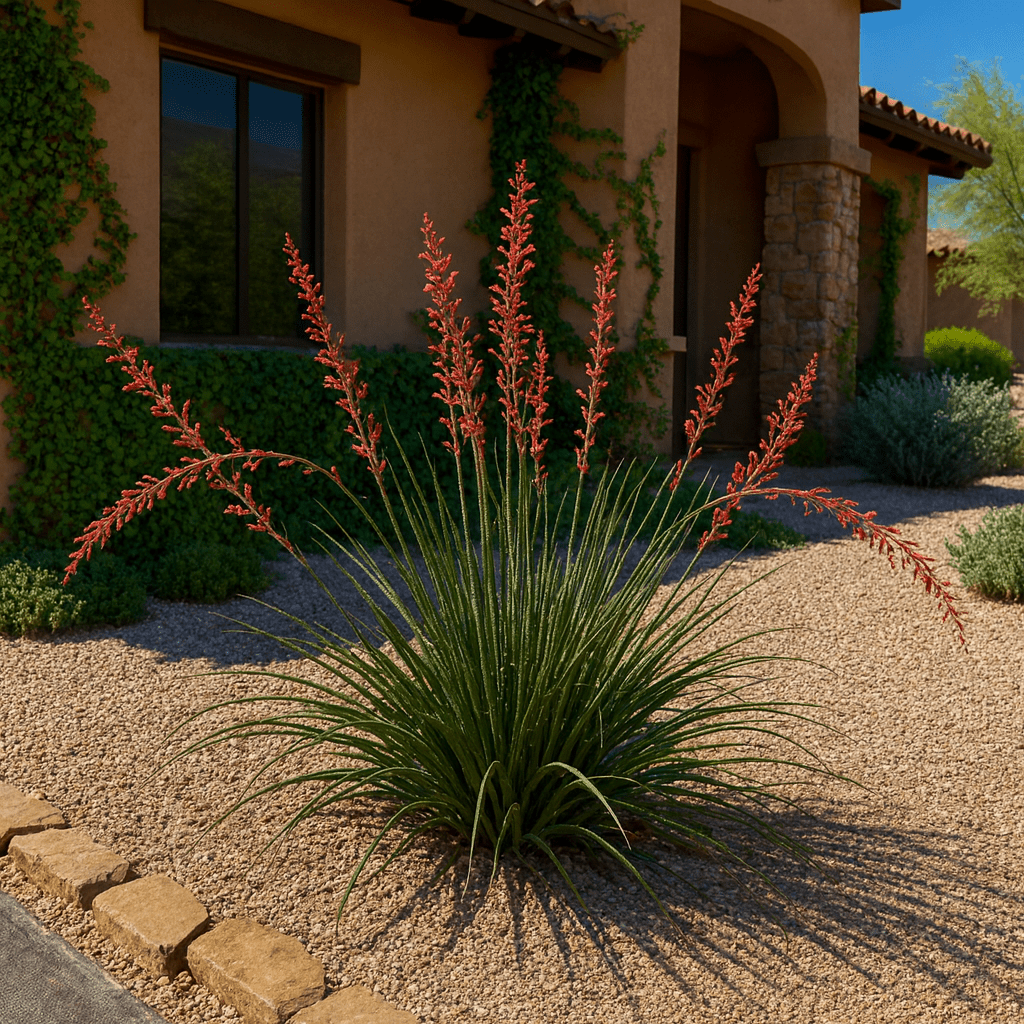
Desert Dusk (Hesperaloe 'Desert Dusk') is one of the most striking low-water perennials you can grow in the Phoenix Valley. This hardy evergreen hybrid produces tall, dramatic spikes of deep rose-purple flowers that bloom from spring well into fall — one of the longest bloom seasons of any desert plant. With its fountain-like clumping foliage and exceptional drought tolerance, Desert Dusk brings vibrant color and year-round structure to landscapes in Scottsdale, Chandler, Gilbert, Mesa, and Tempe with almost no maintenance.
Desert Dusk Plant Details
| Attribute | Detail |
|---|---|
| Scientific Name | Hesperaloe 'Desert Dusk' |
| Common Names | Desert Dusk, Desert Dusk Hesperaloe, False Red Yucca |
| Mature Height | 2–3 feet (foliage); 4–6 feet with bloom stalks |
| Mature Width | 3–4 feet |
| Growth Rate | Moderate — reaches mature size in 2–3 years |
| Sun | Full sun (6+ hrs). Thrives in reflected heat from walls and pavement. |
| Water | Very low once established. Extremely drought-tolerant. |
| USDA Zones | 7–11 (Phoenix is Zone 9b–10a) |
| Soil | Well-draining. Excellent in rocky, sandy, and Arizona caliche soils. |
| Foliage | Evergreen — fountain-like green to blue-green leaves year-round |
| Bloom Color | Deep rose-purple flower stalks, spring through fall |
Desert Dusk Uses in Phoenix Landscapes
Desert-Modern Accent Plant
Desert Dusk is a standout specimen plant for modern desert landscapes. Its architectural fountain-like form and tall purple flower stalks create a dramatic focal point in gravel beds, rock gardens, and minimalist courtyard designs. One plant makes a statement; a grouping of three creates a showstopper.
Low-Water Mass Planting
Plant Desert Dusk 3–4 feet apart for a stunning mass planting along driveways, medians, and commercial properties. The long bloom season means months of rose-purple color with virtually no irrigation once established — perfect for water-conscious HOA common areas across Peoria, Glendale, and Surprise.
Hummingbird & Pollinator Garden
The tubular rose-purple flowers are a magnet for hummingbirds throughout the blooming season. Pair with Red Yucca (Hesperaloe parviflora) and Ruellia for a low-water pollinator garden that blooms from spring through fall.
Best Time to Plant Desert Dusk in Phoenix
Fall (October–November) is ideal: soil is warm for root development, cooler air reduces transplant stress, and the plant establishes 6–8 months before its first Phoenix summer. Spring (February–April) is the second-best window. Desert Dusk is tough enough to handle planting almost any time of year except peak summer.
How to Plant Desert Dusk
- Dig wide, not deep — 2–3x the root ball width, same depth.
- Check for caliche — break through any hardpan layer for drainage. Hesperaloe does not tolerate standing water.
- Backfill with native soil — no amendment needed. Desert Dusk thrives in lean, rocky soil.
- Spacing — 3–4 ft apart for mass planting; 4–5 ft for individual specimens.
- Water basin — build a small ring to direct water during establishment only.
- Mulch — 2–3 inches of gravel or decomposed granite. Avoid bark mulch.
Watering Desert Dusk in Phoenix
First Year Watering Schedule
- Weeks 1–2: Every 3–4 days, deep and slow
- Month 1–2: Every 5–7 days
- Month 3–6: Every 10–14 days
- After Year 1: Every 3–4 weeks summer; monthly or less in winter
Drip Irrigation
Place a 1–2 GPH emitter 12–18 inches from the base. Once established, Desert Dusk needs very little supplemental water — it's one of the most drought-tolerant flowering perennials available for Phoenix landscapes.
How long does Desert Dusk bloom?
Desert Dusk has one of the longest bloom seasons of any desert plant — typically spring through late fall in the Phoenix area, giving you 6–8 months of rose-purple flower stalks.
Is Desert Dusk drought tolerant?
Extremely. Once established, it's one of the most water-efficient flowering plants for Phoenix. It thrives in the hottest, driest spots with almost no supplemental irrigation.
Does Desert Dusk attract hummingbirds?
Yes. The tubular flowers are highly attractive to hummingbirds throughout the bloom season. It's one of the best hummingbird plants for Phoenix gardens.
How is Desert Dusk different from Red Yucca?
Desert Dusk is a Hesperaloe hybrid with deeper rose-purple flowers and slightly larger foliage than the standard Red Yucca (Hesperaloe parviflora). Both are equally tough and low-maintenance.
You May Also Like
- Red Spike Ice Plant — Upright succulent with striking red blooms, another low-water performer.
- Red Ice Plant — Vivid red groundcover for sunny desert landscapes.
- Gazania-Yellow — Bright yellow flowering groundcover that pairs well with Desert Dusk's purple tones.
- Gazania-Orange — Orange flowering groundcover for a warm desert color palette.
How Many Desert Dusk Do I Need?
Desert Dusk forms a fountain-like 3 to 4 ft clump, so it mass-plants into long-blooming color drifts along drives, medians, and beds. Space 3 to 4 ft on center and use your run length to estimate counts.
| Run Length | At 3 ft spacing (full mass) | At 4 ft spacing (open drift) |
|---|---|---|
| 10 ft | 4 plants | 3 plants |
| 20 ft | 7 plants | 5 plants |
| 30 ft | 10 plants | 8 plants |
| 40 ft | 14 plants | 10 plants |
For a specimen, plant in groups of 3 spaced 4 ft apart so the bloom stalks layer into a single rose-purple cloud.
Desert Dusk Season-by-Season in Phoenix
- Spring (Feb–Apr): First rose-purple bloom stalks rise as days warm, drawing hummingbirds. Strong primary planting window.
- Summer (May–Sep): Keeps blooming straight through extreme and reflected heat, one of the longest-flowering desert plants. Monsoon rains extend the show. Water sparingly so the crown stays dry.
- Fall (Oct–Nov): Prime planting season and continued bloom into late fall.
- Winter (Dec–Jan): Evergreen fountain of foliage holds structure. Hardy to Zone 7, so it shrugs off Valley frosts with no protection.
At a Glance
✔ Hummingbird-Friendly ✔ Pollinator-Friendly ✔ Heat-Loving (Reflected-Heat Tolerant) ✔ Drought-Tolerant ✔ Evergreen ✔ Low-Maintenance ✔ Deer & Rabbit-Resistant ✔ Cold-Hardy to 0°F
Plant It With
- Red Yucca: the classic coral-flowered Hesperaloe for a layered, repeating bloom story.
- Brake Lights Hesperaloe: compact coral blooms that contrast Desert Dusk's rose-purple.
- Giant Hesperaloe: architectural scale behind the mid-size clumps.
- Desert Spoon: a silver rosette that anchors the planting between blooms.
Is Desert Dusk Right for Your Yard?
Desert Dusk thrives in full sun and reflected heat, in caliche or any well-draining soil, with very little water once established and almost no upkeep beyond removing spent stalks. It is an ideal long-bloom color plant for low-water and pollinator gardens. It is not a fit in soggy, shaded beds, where bloom drops off and the crown can rot.
Customer Reviews
Share