

Totem Pole Minor
Totem Pole Minor
Couldn't load pickup availability
Compact Spineless Columnar Cactus — Perfect Sculptural Accent for Phoenix Yards
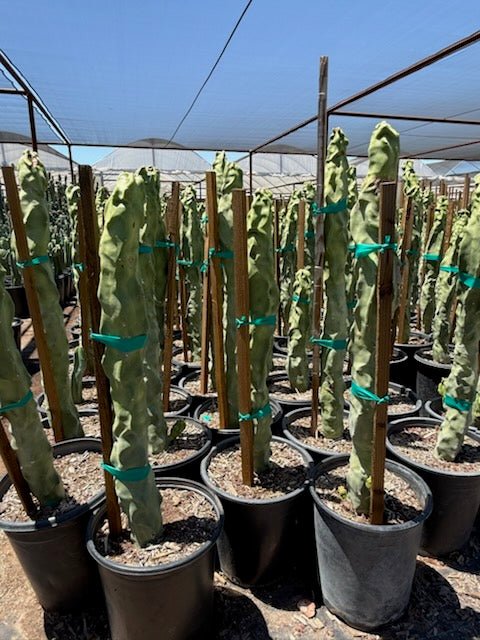
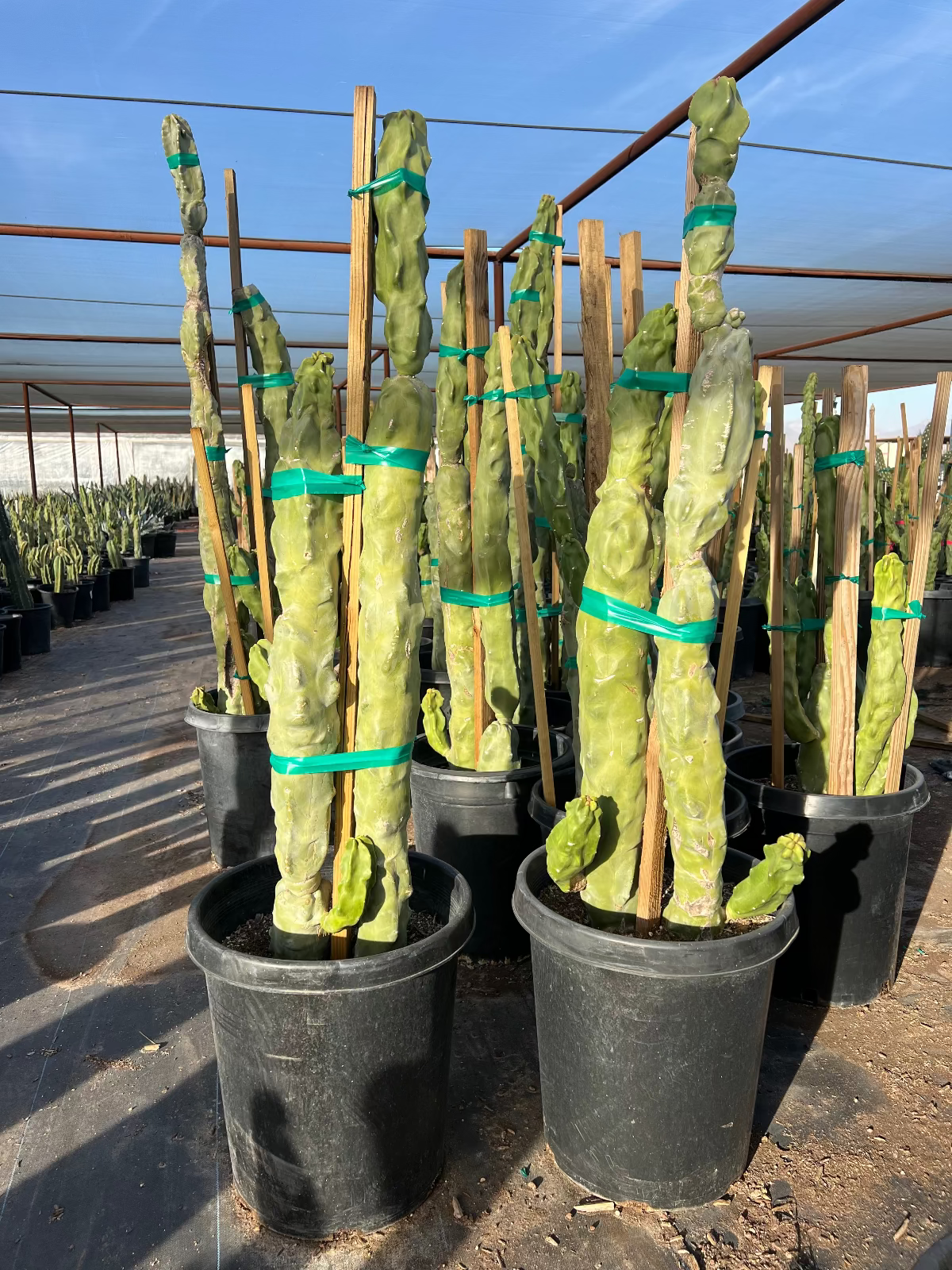
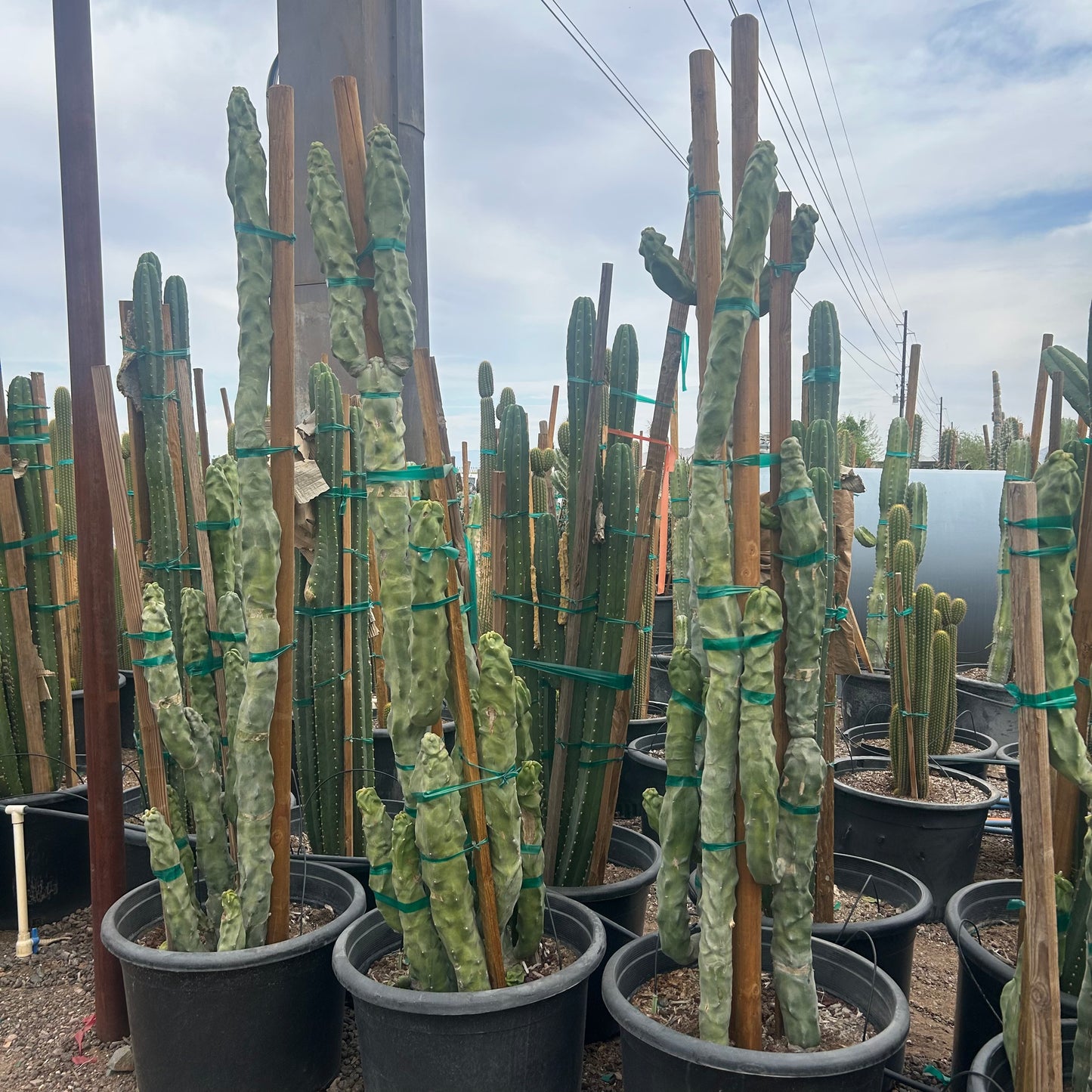
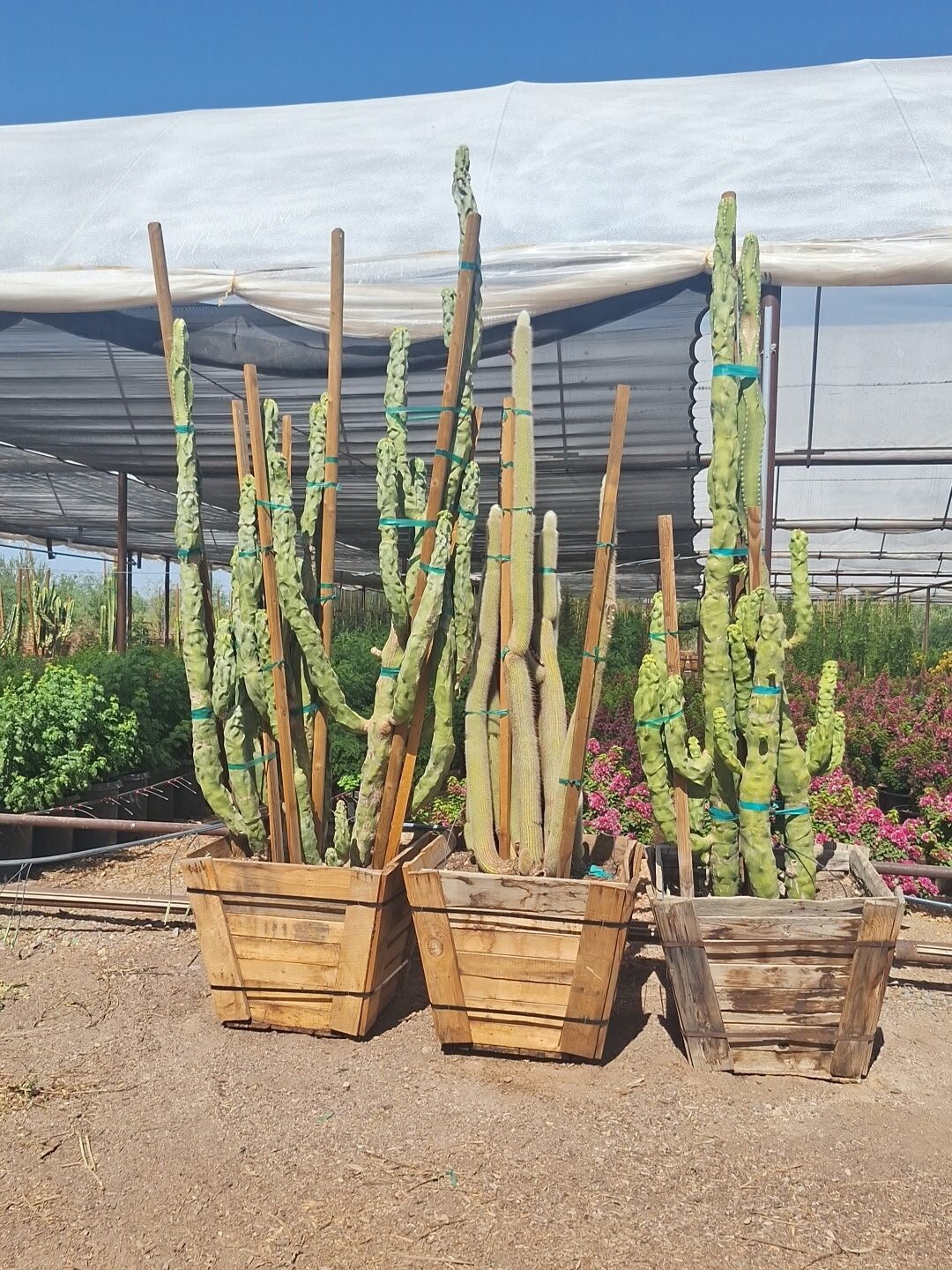
Totem Pole Minor (Lophocereus schottii f. monstrosus 'Minor') is a rare, spineless columnar cactus prized for its smooth, knobby texture and compact sculptural form. Smaller and more densely branched than its cousin the Totem Pole Major, this Minor variety forms tight clusters of bumpy, blue-green columns that look like carved stone or abstract desert art. Native to Baja California's Sonoran Desert, it thrives in Arizona's intense heat with virtually no maintenance. Whether you're building a collector's rock garden in Scottsdale, adding a spineless accent near a Gilbert pool, or creating a modern entryway statement in Chandler, Mesa, or Tempe — the Totem Pole Minor delivers serious visual impact in a compact package.
Totem Pole Minor Plant Details
| Attribute | Detail |
|---|---|
| Scientific Name | Lophocereus schottii f. monstrosus 'Minor' |
| Common Names | Totem Pole Minor, Small Totem Pole Cactus, Minor Monstrose |
| Mature Height | 4–8 feet (up to 10–12 feet at full maturity) |
| Mature Width | 2–4 feet (dense multi-column clusters) |
| Growth Rate | Slow — 2–4 inches per year in Phoenix |
| Sun | Full sun (6+ hrs). Handles reflected heat from walls and concrete. |
| Water | Very low once established. Extremely drought-tolerant. |
| USDA Zones | 9–11 (Phoenix is Zone 9b–10a). Hardy to ~25°F — protect during hard freezes. |
| Soil | Fast-draining sandy or rocky soil. Adapts to Arizona caliche with amended drainage. |
| Foliage | Evergreen — smooth, spineless blue-green to gray-green skin year-round |
| Form | Monstrose — smooth knobby columns with bumps and folds, completely spineless |
Totem Pole Minor Uses in Phoenix Landscapes
Sculptural Focal Point & Entryway Accent
The Totem Pole Minor's compact, multi-column form makes it an ideal focal point for front entries, courtyards, and small garden beds. Its smooth, spineless surface is safe for high-traffic areas — perfect near walkways, doorways, and patios where spiny cacti would be a hazard. A single mature specimen against a clean stucco wall or in a gravel bed creates instant desert-modern elegance.
Rock Garden & Collector Displays
Group Totem Pole Minor with other monstrose and crested specimens — Totem Pole Major, Spiral Totem Pole, Apache War Club, or Crested Blue Myrtle — for a curated collector's garden. The Minor's tighter texture and smaller scale provide contrast and variety. Set among dark volcanic boulders and decomposed granite for maximum visual impact.
Pool-Safe & Container Specimen
Because it's completely spineless, the Totem Pole Minor is one of the safest columnar cacti for pool surrounds and outdoor living areas. It also thrives in large containers — use a wide pot with gritty cactus mix for a portable sculpture that works on covered patios, rooftop decks, or balconies. The compact branching habit stays proportional to containers for years.
Best Time to Plant Totem Pole Minor in Phoenix
Fall (October–November) is the ideal planting window. Warm soil promotes root establishment while cooler air reduces transplant stress. Your Totem Pole Minor gets 6–8 months of root development before facing its first Phoenix summer. Spring (February–April) is the second-best option. Avoid planting in the extreme heat of June through September.
How to Plant Totem Pole Minor
- Dig wide, not deep — 2–3x the root ball width, same depth as the container
- Check for caliche — break through any hardpan layer to ensure drainage; standing water causes rot
- Backfill with native soil — mix in 20–30% pumice or coarse gravel for extra drainage
- Spacing — 3–4 ft from other plants to showcase the clustered column form
- Water basin — build a 3–4 inch ring around the base to direct water to roots during establishment
- Top dress — 2–3 inches of decomposed granite or gravel mulch to retain moisture and keep the base dry
Watering Totem Pole Minor in Phoenix
First Year Watering Schedule
- Weeks 1–2: Every 3–5 days, deep and slow (20–30 min)
- Month 1–3: Every 7–10 days
- Month 3–6: Every 10–14 days (every 7 days in peak summer)
- After Year 1: Every 14–21 days in summer; monthly or less in winter
Drip Irrigation
Place one 1–2 GPH emitter 18–24 inches from the trunk. Totem Poles are rot-prone — always err on the side of less water. Ensure soil dries completely between waterings. Established plants need very little supplemental water outside of summer months.
How fast does Totem Pole Minor grow in Phoenix?
Slowly — expect 2–4 inches of new growth per year. The columns thicken and branch over time, forming increasingly dense and sculptural clusters. Larger box specimens provide immediate impact; smaller gallon sizes are perfect for patient collectors who enjoy watching the form develop.
Is Totem Pole Minor drought tolerant?
Extremely. Once established after the first year, it needs very little supplemental water. This is one of the most drought-tolerant cacti available — thriving on neglect in Phoenix's arid climate.
What's the difference between Totem Pole Minor and Major?
The Major form grows taller (10–20 ft) with larger, wider columns and a more open branching habit. The Minor stays more compact (4–8 ft), with tighter columns, denser bumpy texture, and more branches from the base. Both are completely spineless and share the same smooth, sculptural appearance.
Is it safe near pools and walkways?
Absolutely. The Totem Pole Minor is completely spineless — no thorns, no glochids, no sharp edges. It's one of the safest cacti for high-traffic areas, pool decks, and family yards.
Does it work in containers?
Yes — it's an excellent container specimen. Use a wide pot with fast-draining cactus mix. The compact, multi-column form stays proportional and looks great on patios, porches, and covered entries.
You May Also Like
- Totem Pole Major — the larger version with taller, wider smooth columns
- Spiral Totem Pole — a rare twisting form with corkscrew columns
- Apache War Club — another smooth, spineless monstrose cactus with dramatic club-shaped stems
- Mexican Fence Post — a tall columnar cactus with clean white rib lines
- Crested Blue Myrtle — a sculptural fan-shaped crested cactus with silvery-blue skin
How Many Totem Pole Minor Do I Need?
Totem Pole Minor is a compact sculptural specimen rather than a hedge plant. Use these groupings based on its 2 to 4 foot mature cluster width:
| Design Goal | Spacing & Count |
|---|---|
| Single accent or container piece | One specimen by an entry, in a gravel bed, or in a wide pot |
| Collector grouping | Odd-numbered groups of 3, spaced 3 to 4 ft apart among boulders |
| Low repeating rhythm | One plant every 3 ft along a courtyard border or pathway edge |
Being spineless, it can sit as close as 2 to 3 ft from pool edges, walkways, and seating with no safety setback.
Totem Pole Minor Season-by-Season in Phoenix
- Spring (Feb to Apr): Best secondary planting window. Slow new growth resumes as soil warms; the knobby blue-green columns plump up.
- Summer (May to Sep): Main growth season. Thrives in full sun and reflected heat above 115F. Monsoon humidity is fine if drainage is fast; this species is rot-prone, so never let the base stay wet.
- Fall (Oct to Nov): The prime planting window, giving roots months to settle before winter.
- Winter (Dec to Jan): Evergreen and sculptural. Hardy to about 25F. Cover young or container plants on hard frost nights in the mid-20s to prevent tip scarring.
At a Glance
✔ Heat-Loving (Reflected-Heat Tolerant) ✔ Drought-Tolerant ✔ Pool-Friendly (Low-Litter) ✔ Spineless ✔ Evergreen ✔ Low-Maintenance ✔ Deer & Rabbit-Resistant ✔ Cold-Hardy to 25°F
Plant It With
- Totem Pole Major: The taller sibling, for layering smooth columns at two different scales.
- Spiral Totem Pole: A rare twisting form that adds movement next to the Minor's tight clusters.
- Mexican Fence Post: Clean ribbed columns that contrast the Minor's bumpy texture.
- Crested Blue Myrtle: A silvery-blue crested fan that plays off the spineless monstrose theme.
Is Totem Pole Minor Right for Your Yard?
It thrives in full sun, reflected heat, and fast-draining soil where caliche has been broken through, and its compact spineless form makes it ideal for small beds, containers, and pool-side spots. Not a fit if your soil holds water or your site sits in a frost pocket that regularly drops into the low 20s without protection.
Customer Reviews
Share