

Totem Pole Major
Totem Pole Major
Couldn't load pickup availability
The Smoothest, Most Sculptural Cactus for Modern Phoenix Landscapes
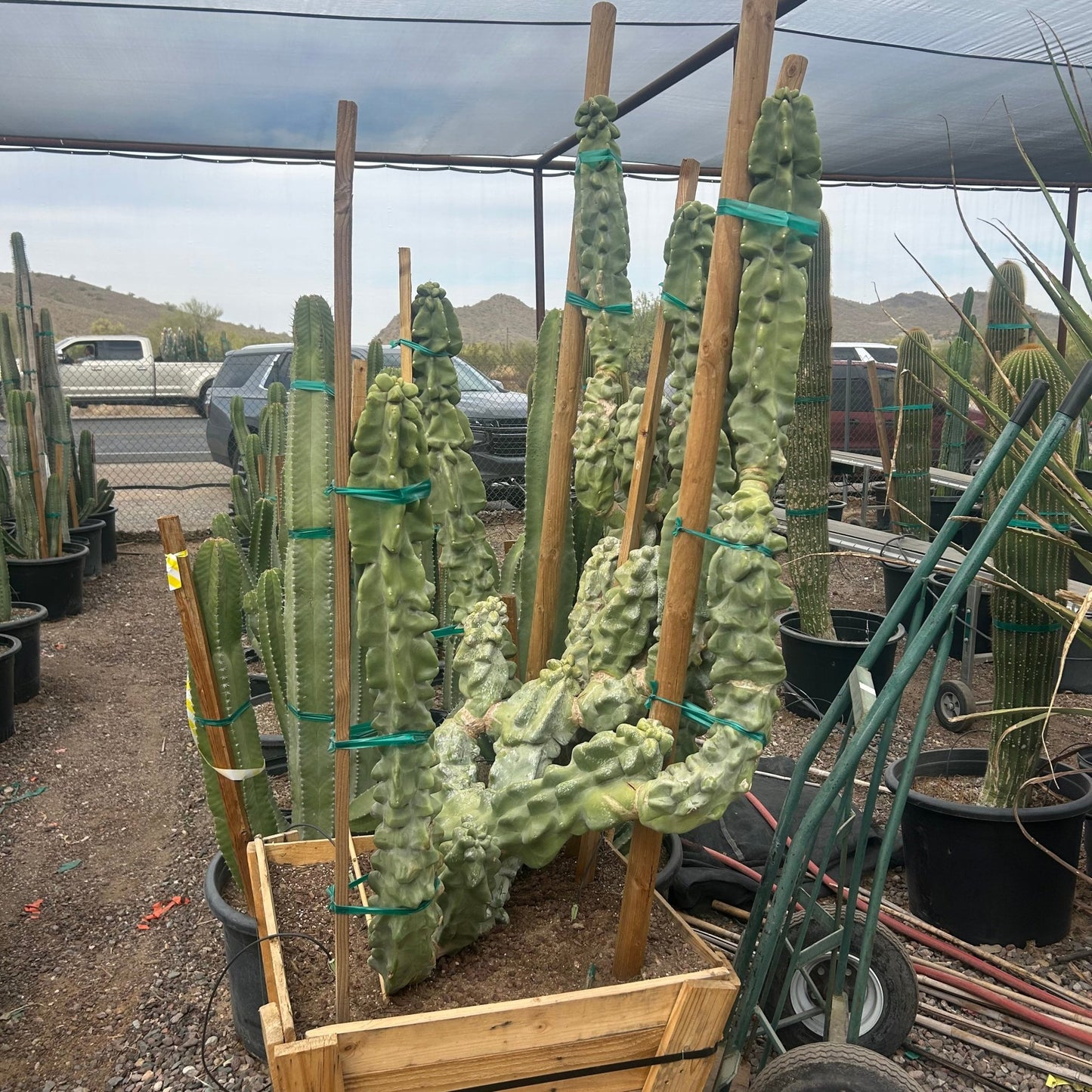
The Totem Pole Major (Lophocereus schottii 'Monstrosus') is the most sought-after columnar cactus in desert landscaping — and for good reason. Its smooth, spineless columns with flowing bumps and ridges look like living sculpture, growing 6–12 feet tall (up to 20 feet at maturity) with multiple branching arms. Unlike most cacti, Totem Pole Major is completely spineless, making it safe for high-traffic areas near pools, patios, and walkways. Whether you're designing a modern desert courtyard in Scottsdale, creating a dramatic entry in Paradise Valley, or building a collector-grade cactus garden in Mesa — Totem Pole Major is the statement piece that ties it all together.
Totem Pole Major Plant Details
| Attribute | Detail |
|---|---|
| Scientific Name | Lophocereus schottii 'Monstrosus' |
| Common Names | Totem Pole Major, Monstrose Totem Pole Cactus, Monstrous Major |
| Mature Height | 6–12 feet (can reach 15–20 feet) |
| Mature Width | 3–5 feet (multi-branching) |
| Growth Rate | Slow to moderate — 4–8 inches per year in Phoenix |
| Sun | Full sun (6+ hrs). Handles reflected heat from walls. |
| Water | Very low once established. Highly drought-tolerant. |
| USDA Zones | 9b–11 (Phoenix is Zone 9b–10a) |
| Soil | Well-draining. Adapts to Arizona caliche soils with good drainage. |
| Foliage | Evergreen — smooth green columns year-round |
| Spines | Spineless — safe near pools, patios, and walkways |
Totem Pole Major Uses in Phoenix Landscapes
Modern Desert Statement Piece
Totem Pole Major's smooth, sculptural columns are the perfect focal point in contemporary desert design. Plant a single large specimen or a group of three in a gravel bed with accent lighting for a gallery-worthy display. This is the #1 cactus choice for architects and landscape designers in Scottsdale and Paradise Valley.
Pool-Friendly Landscaping
Because Totem Pole Major is completely spineless, it's one of the few columnar cacti safe to plant near pools, spas, and outdoor living areas. Place it 3–4 feet from pool edges in Chandler, Gilbert, or Tempe for dramatic vertical interest without any risk of spines near bare feet.
Entry & Courtyard Design
Frame a front door or gate with a pair of Totem Pole Major specimens for an unforgettable first impression. The smooth, flowing columns create a modern desert aesthetic that pairs perfectly with steel planters, decomposed granite, and architectural lighting. Popular in Peoria, Glendale, and north Phoenix new-builds.
Collector Cactus Garden
Combine Totem Pole Major with Mexican Fence Post, Golden Barrel, and Purple Prickly Pear for a diverse cactus collection that showcases different forms — smooth columnar, ribbed columnar, spherical, and pad-type. This combination thrives in Mesa and east Valley gardens.
Best Time to Plant Totem Pole Major in Phoenix
Fall (October–November) is the ideal planting window. Warm soil encourages root growth while cooler air reduces transplant stress. Spring (February–April) is the second-best option. Avoid transplanting in peak summer — Totem Pole Major is slow-growing and needs time to establish roots before extreme heat.
How to Plant Totem Pole Major
- Dig wide, not deep — 2–3x the root ball width, same depth as the container.
- Check for caliche — break through any hardpan layer. This cactus absolutely requires excellent drainage.
- Backfill with native soil — add 30% pumice or perlite for extra drainage in heavy clay.
- Spacing — 4–5 feet apart for grouped plantings; allow 3–4 feet from walls for branching.
- Staking — large specimens may need temporary staking for 6–12 months until roots anchor.
- Mulch — 2–3 inches of gravel or decomposed granite. Never use organic mulch against cacti.
Watering Totem Pole Major in Phoenix
First Year Watering Schedule
Weeks 1–2: Every 5–7 days, deep and slow. Month 1–3: Every 10–14 days. Month 3–12: Every 2–3 weeks. After Year 1: Monthly in summer; no supplemental water in winter. Totem Pole Major is extremely drought-tolerant and overwatering causes rot.
Drip Irrigation
Place one 1 GPH emitter 12–18 inches from the base during establishment. After year one, reduce to monthly summer supplemental water only. Remove emitters entirely once fully established (3+ years).
How fast does Totem Pole Major grow?
Slow to moderate — expect 4–8 inches of vertical growth per year in Phoenix. A 5-gallon specimen can reach 4–5 feet in 5–6 years. Larger box specimens provide instant impact and are worth the investment for prominent locations.
Is Totem Pole Major really spineless?
Yes — the 'Monstrosus' form is completely spineless with smooth, bumpy skin. This makes it one of the safest cacti for landscapes with children, pets, or pool areas.
Why is Totem Pole Major more expensive than other cacti?
Totem Pole Major grows slowly and can only be propagated by cuttings (not seed), making large specimens rare and valuable. A 30" box specimen represents 15–20+ years of growth.
Can Totem Pole Major handle Phoenix summer heat?
Absolutely — it thrives in full sun and handles temperatures above 115°F. It also tolerates reflected heat from walls and pavement. However, newly planted specimens benefit from afternoon shade during their first summer.
Does Totem Pole Major branch?
Yes — mature plants develop multiple arms branching from the base, creating the classic "totem pole" silhouette. Branching becomes more pronounced with age and good growing conditions.
You May Also Like
Mexican Fence Post — A tall, ribbed columnar cactus with a clean vertical profile that complements Totem Pole's smooth texture.
Golden Barrel Cactus — A round, golden-spined cactus that provides contrasting shape at the base of columnar cacti.
Purple Prickly Pear — Purple pad cactus that adds color contrast at ground level in front of Totem Pole's green columns.
Queen Victoria Agave — A compact geometric rosette that accents Totem Pole's vertical lines perfectly.
Blue Glow Agave — A glowing blue rosette for stunning color contrast against Totem Pole's green columns.
How Many Totem Pole Major Do I Need?
Totem Pole Major is an architectural specimen, not a hedge plant. Use these groupings based on its 3 to 5 foot mature, multi-branching width:
| Design Goal | Spacing & Count |
|---|---|
| Single focal point | One specimen in a gravel bed with accent lighting |
| Modern courtyard grouping | Odd-numbered groups of 3, spaced 4 to 5 ft apart so each column reads clearly |
| Entry or gate framing | A matched pair, 4 to 6 ft apart on either side |
Because it is spineless, you can plant it as close as 3 to 4 ft from pool edges, patios, and walkways with no safety setback.
Totem Pole Major Season-by-Season in Phoenix
- Spring (Feb to Apr): Best secondary planting window. Slow new growth resumes as soil warms; the smooth columns stay green and turgid.
- Summer (May to Sep): Peak growth season. Thrives in full sun and reflected heat above 115F. Monsoon humidity is welcome, but keep soil fast-draining to prevent rot. Newly set plants appreciate light afternoon shade their first summer.
- Fall (Oct to Nov): The prime planting window. Warm soil drives root establishment before winter.
- Winter (Dec to Jan): Evergreen and structural. Hardy to about 25F. Protect or cover young plants on hard frost nights in the mid-20s, as tip damage can occur.
At a Glance
✔ Heat-Loving (Reflected-Heat Tolerant) ✔ Drought-Tolerant ✔ Pool-Friendly (Low-Litter) ✔ Spineless ✔ Evergreen ✔ Low-Maintenance ✔ Deer & Rabbit-Resistant ✔ Cold-Hardy to 25°F
Plant It With
- Mexican Fence Post: A tall ribbed column that contrasts Totem Pole's smooth monstrose texture.
- Golden Barrel Cactus: A round gold-spined globe that anchors the base of the columns.
- Purple Prickly Pear: Purple pads add ground-level color in front of the green columns.
- Totem Pole Minor: The finer-textured sibling, for layering different column scales.
Is Totem Pole Major Right for Your Yard?
It thrives in full sun, reflected heat, and fast-draining soil where caliche has been broken through, and its spineless columns make it one of the safest cacti for pools, patios, and family spaces. Not a fit if your site stays wet or poorly drained, or if you are in an unprotected frost pocket that regularly drops below the mid-20s without cover.
Share