

Spiral Totem Pole
Spiral Totem Pole
Couldn't load pickup availability
The Rarest Twisting Columnar Cactus for Phoenix Desert Landscapes
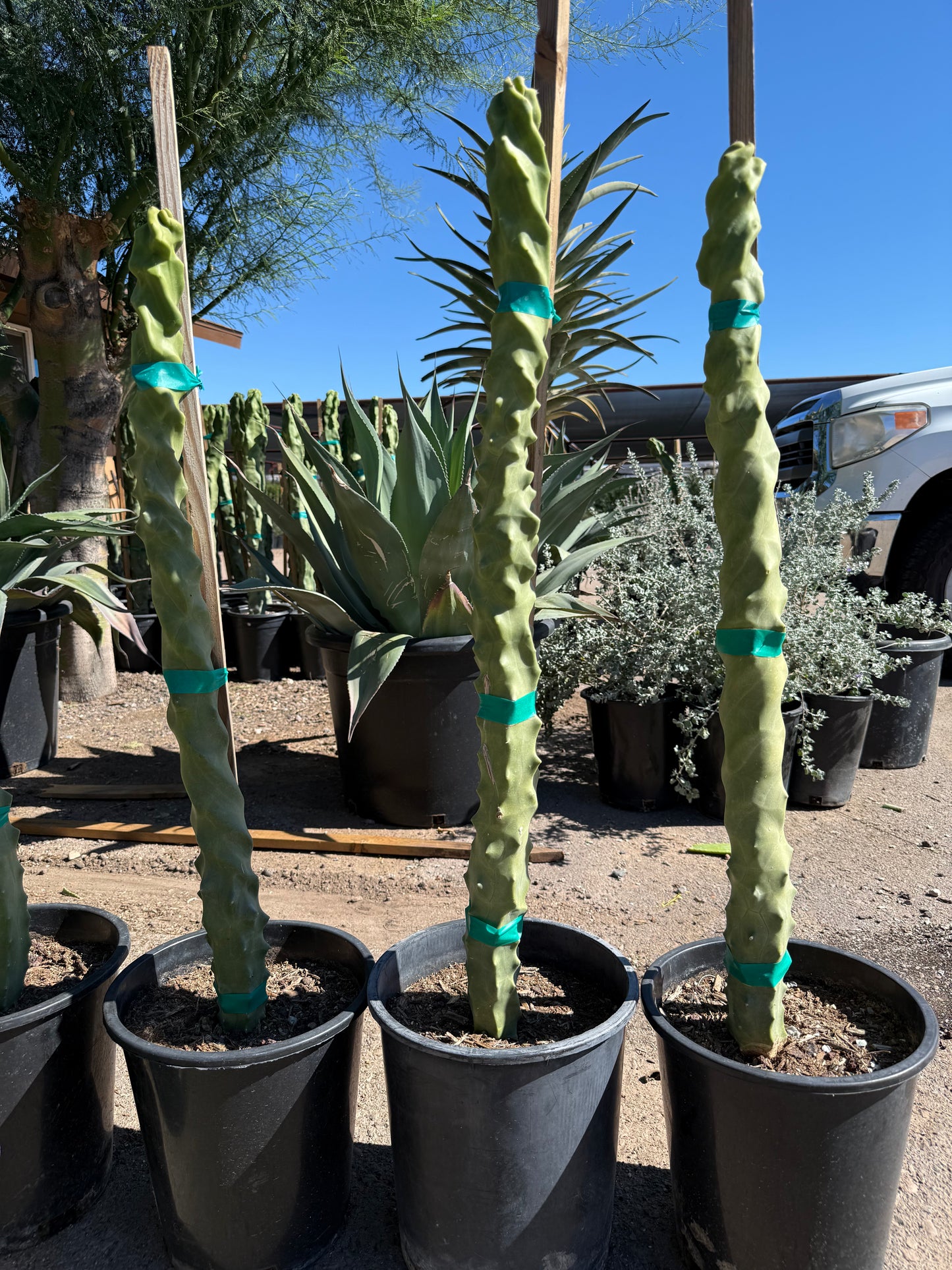
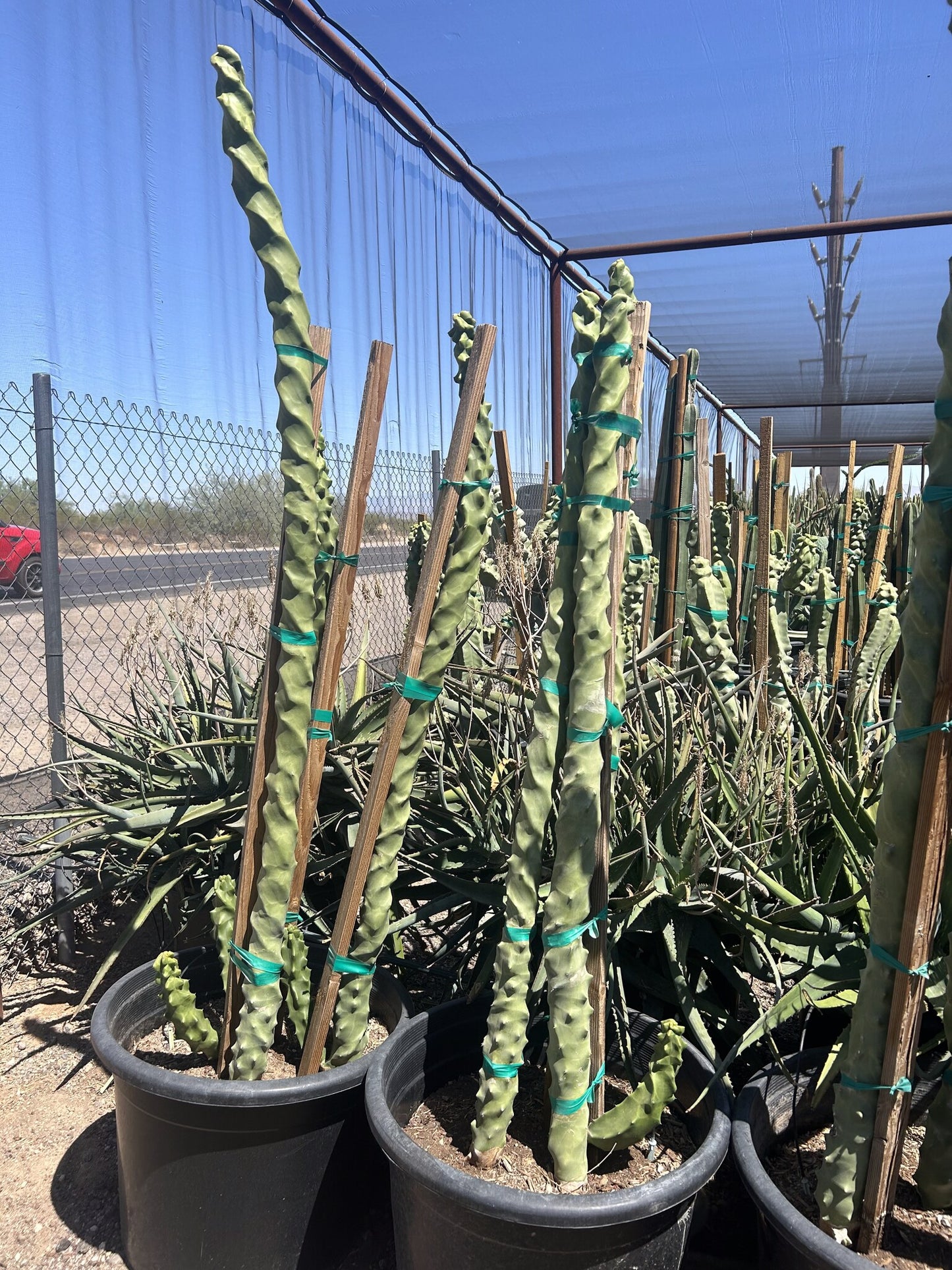
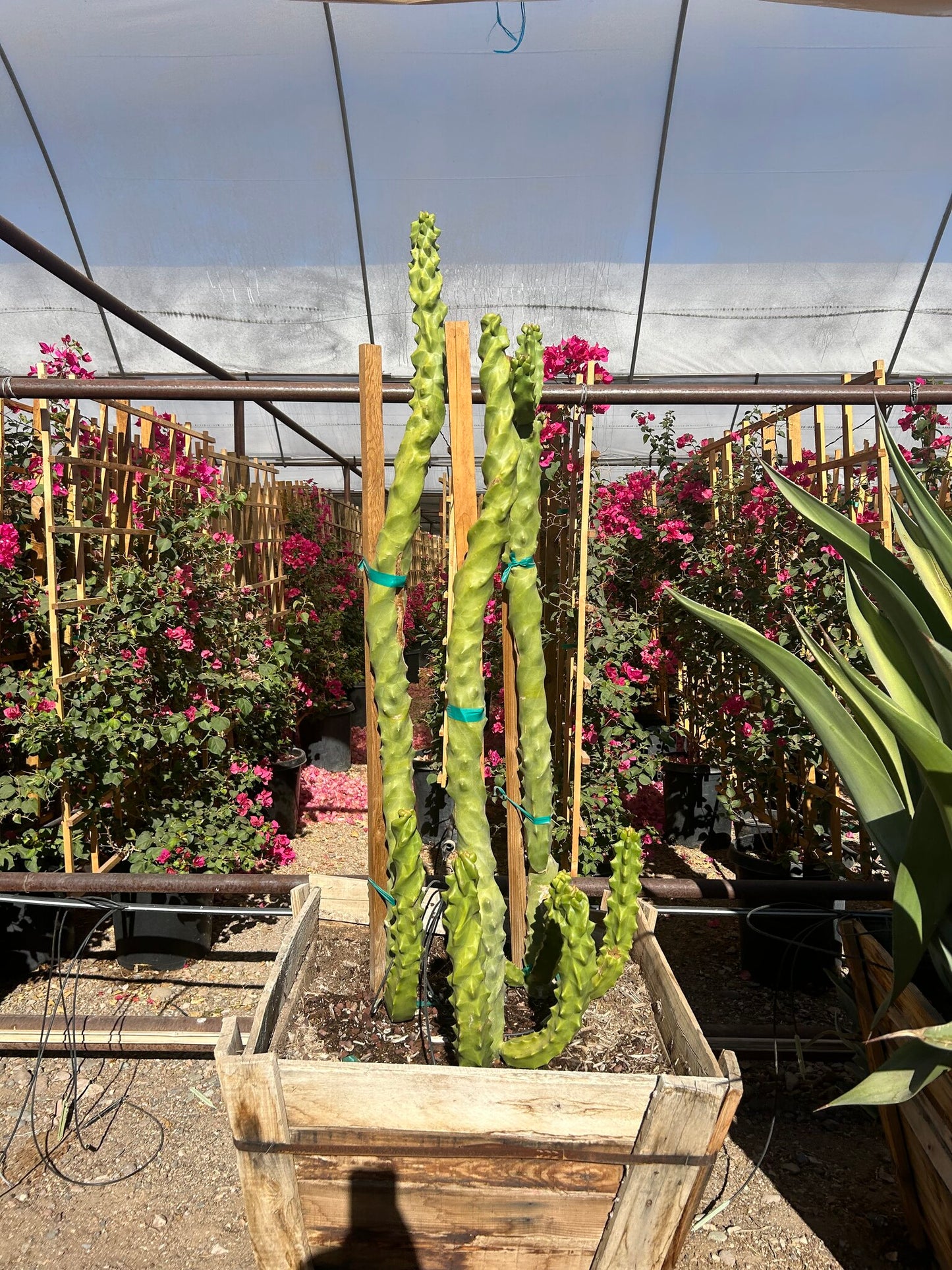
Spiral Totem Pole (Lophocereus schottii f. monstrosus 'Spiralis') is one of the most sought-after columnar cacti in the world — a smooth, spineless cactus whose columns twist upward in mesmerizing corkscrew patterns. Native to the Sonoran Desert of Baja California, this rare spiraling form thrives in Arizona's intense sun and dry heat. Each specimen develops a unique twist pattern, making every plant a one-of-a-kind living sculpture. Whether you're creating a modern desert garden in Scottsdale, a collector's showcase in Mesa, or a dramatic entryway focal point in Chandler — the Spiral Totem Pole delivers architectural impact that no other plant can match.
Spiral Totem Pole Plant Details
| Attribute | Detail |
|---|---|
| Scientific Name | Lophocereus schottii f. monstrosus 'Spiralis' |
| Common Names | Spiral Totem Pole, Twisting Totem Pole Cactus, Spiral Monstrose |
| Mature Height | 6–12 feet (up to 15 feet at full maturity) |
| Mature Width | 3–5 feet (clustering branches from base) |
| Growth Rate | Slow — 3–6 inches per year in Phoenix |
| Sun | Full sun (6+ hrs). Handles reflected heat from walls and concrete. |
| Water | Very low once established. Extremely drought-tolerant. |
| USDA Zones | 9–11 (Phoenix is Zone 9b–10a). Hardy to ~25°F — protect during hard freezes. |
| Soil | Fast-draining sandy or rocky soil. Adapts to Arizona caliche with amended drainage. |
| Foliage | Evergreen — smooth, spineless blue-green to silver-gray skin year-round |
| Form | Monstrose spiral — smooth twisting columns with undulating ridges, no spines |
Spiral Totem Pole Uses in Phoenix Landscapes
Architectural Focal Point
The Spiral Totem Pole is the ultimate statement piece for modern desert landscapes. Its smooth, twisting columns create dramatic shadows when backlit by morning or evening sun. Place a single large specimen at an entryway, courtyard center, or pool-side planting bed for instant architectural impact. The spineless form makes it safe for high-traffic areas and poolside plantings.
Collector & Sculpture Garden
Pair the Spiral Totem Pole with other monstrose and crested cacti — Totem Pole Major, Crested Blue Myrtle, or Ming Thing — for a curated collector's garden. The smooth spiraling form contrasts beautifully with angular, spiny plants like Mexican Fence Post, Agave, and Golden Barrel Cactus. Group against dark volcanic boulders or a clean stucco wall to highlight the twisting lines.
Modern Minimalist Desert Design
The clean, smooth lines of the Spiral Totem Pole are a natural fit for minimalist landscape design. Plant in a decomposed granite bed with a single boulder and a few low Agave or Dyckia accents for a gallery-worthy outdoor space. The spineless, sculptural form works with any architectural style from contemporary to Southwestern.
Best Time to Plant Spiral Totem Pole in Phoenix
Fall (October–November) is the ideal planting window. Warm soil promotes root establishment while cooler air reduces transplant stress. Your Spiral Totem Pole gets 6–8 months of root growth before its first Phoenix summer. Spring (February–April) is the second-best window. Avoid planting during the extreme heat of June through September.
How to Plant Spiral Totem Pole
- Dig wide, not deep — 2–3x the root ball width, same depth as the container
- Check for caliche — break through any hardpan layer to ensure drainage; standing water causes root rot
- Backfill with native soil — mix in 20–30% pumice or coarse gravel for extra drainage
- Spacing — 4–6 ft from other plants to showcase the spiral form and ensure airflow
- Water basin — build a 3–4 inch ring around the base to direct water to roots during establishment
- Top dress — 2–3 inches of decomposed granite or gravel mulch to retain moisture and keep the base dry
Watering Spiral Totem Pole in Phoenix
First Year Watering Schedule
- Weeks 1–2: Every 3–5 days, deep and slow (20–30 min)
- Month 1–3: Every 7–10 days
- Month 3–6: Every 10–14 days (every 7 days in peak summer)
- After Year 1: Every 14–21 days in summer; monthly or less in winter
Drip Irrigation
Place one 1–2 GPH emitter 18–24 inches from the trunk. Totem Poles are rot-prone — always err on the side of less water. Ensure soil dries completely between waterings. Established plants in the ground need very little supplemental water outside of summer.
How fast does Spiral Totem Pole grow in Phoenix?
Slowly — expect 3–6 inches of height per year. The spiral pattern becomes more pronounced as the plant matures. Large box specimens give you a head start with immediate landscape impact, while smaller gallon sizes let you watch the unique twist develop over time.
Is Spiral Totem Pole drought tolerant?
Extremely. Once established after the first year, it needs very little supplemental water. This is one of the toughest columnar cacti for low-water Phoenix landscapes — it thrives on neglect.
What's the difference between Spiral Totem Pole and regular Totem Pole?
The standard Totem Pole (Lophocereus schottii f. monstrosus) grows straight columns with smooth, bumpy skin. The Spiral form adds a dramatic corkscrew twist to the columns. Both are spineless and smooth, but the Spiral is rarer and more visually dynamic.
Can it handle full Phoenix summer sun?
Yes. Full sun is preferred. It handles reflected heat from walls, concrete, and pool decks without issue. The smooth skin may develop a slight tan in extreme heat, which is normal and cosmetic.
Is it safe near pools and walkways?
Absolutely — the Spiral Totem Pole is completely spineless, making it one of the safest columnar cacti for high-traffic areas, pool surrounds, and entryways.
You May Also Like
- Totem Pole Major — the classic smooth, spineless columnar form without the spiral twist
- Totem Pole Minor — a compact totem pole variety with smaller columns
- Mexican Fence Post — a tall, clean columnar cactus with striking white rib lines
- Crested Blue Myrtle — another rare sculptural cactus with fan-shaped crested growth
- Apache War Club — a smooth, spineless monstrose cactus with dramatic club-shaped stems
How Many Spiral Totem Pole Do I Need?
This is a slow-growing, smooth, spineless specimen cactus prized for its one-of-a-kind twist, so it is planted as a focal piece rather than a hedge. At a mature width of 3 to 5 feet with branches clustering from the base, give each plant clear space to show its spiral.
| Planting Goal | Spacing | Notes |
|---|---|---|
| Single focal point | Stand-alone | One specimen at an entry, courtyard, or poolside bed with open ground around it so the twisting columns read in the round. |
| Collector grouping | 4 to 6 ft apart | Cluster 3 to 5 monstrose and crested cacti at varied heights, each spaced so the forms stay distinct. |
| Minimalist accent line | 4 to 5 ft on center | A short row of 3 to 4 along a stucco wall gives a clean, gallery-style rhythm. |
Because it is completely spineless, the Spiral Totem Pole is safe right up against walkways, patios, and pool decks.
Spiral Totem Pole Season-by-Season in Phoenix
- Spring (Feb–Apr): Slow new growth resumes as nights warm. A good second planting window and the time to refresh the gravel top-dress and check drip emitters.
- Summer (May–Sep): Active but slow growth. The smooth blue-green to silver-gray skin handles reflected heat off walls and pool decks; a light cosmetic tan in extreme heat is normal. Keep water sparing since this species is rot-prone.
- Fall (Oct–Nov): The prime planting window. Warm soil and cooling air give roots months to settle before next summer.
- Winter (Dec–Jan): Evergreen and dormant. Hardy to about 25°F, but protect young or recently planted columns during hard freezes and cover on the coldest Valley nights to avoid frost scarring.
At a Glance
✔ Heat-Loving (Reflected-Heat Tolerant) ✔ Drought-Tolerant ✔ Spineless ✔ Pool-Friendly (Low-Litter) ✔ Evergreen ✔ Low-Maintenance ✔ Deer & Rabbit-Resistant ✔ Cold-Hardy to 25°F
Plant It With
- Totem Pole Major: the classic straight smooth column, a natural mate to the spiral form.
- Totem Pole Minor: a compact smooth totem for layering shorter heights into the grouping.
- Mexican Fence Post: clean ribbed columns that contrast the twisting monstrose lines.
- Crested Blue Myrtle: a fan-shaped crested cactus that completes a collector sculpture bed.
Is Spiral Totem Pole Right for Your Yard?
Spiral Totem Pole thrives in full sun and reflected heat, in fast-draining or amended caliche soil, as a spineless focal specimen safe near pools, patios, and walkways. It is not the right pick if you want fast screening (it grows just 3 to 6 inches a year), or if your spot stays wet or cannot be kept dry between waterings, since this rot-prone cactus needs sharp drainage and restraint with the hose.
Customer Reviews
Share