

Raywood Ash
Raywood Ash
Couldn't load pickup availability
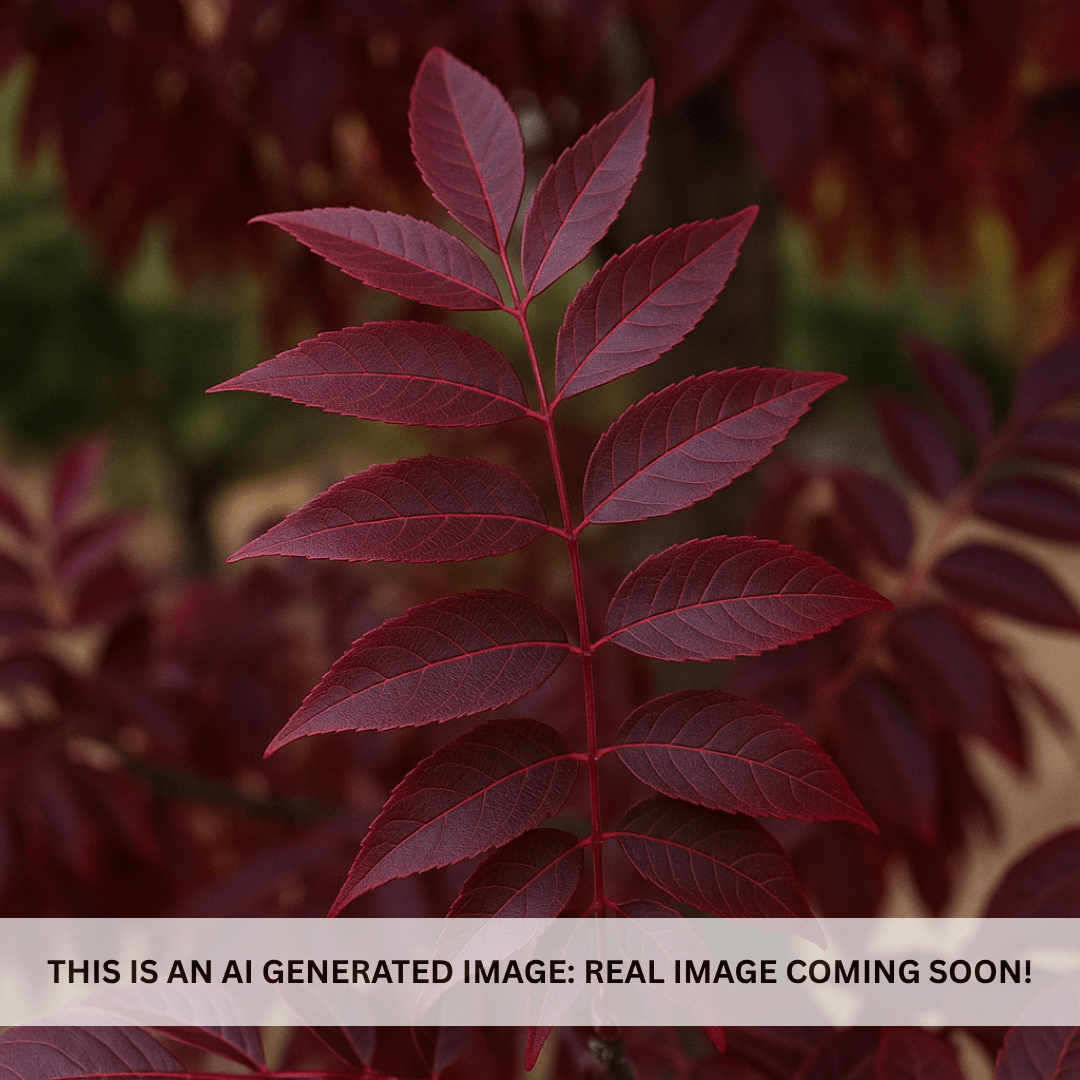
Arizona's Most Colorful Shade Tree — Stunning Burgundy Fall Foliage
The Raywood Ash (Fraxinus velutina 'Raywood') is the most visually striking shade tree available for Phoenix-area landscapes. While it provides reliable summer shade with a dense, symmetrical canopy of fine-textured deep-green foliage, its defining moment comes in autumn — when the leaves transform into vivid shades of burgundy, plum, and deep red, creating one of the most spectacular seasonal displays of any shade tree grown in Arizona. From Scottsdale to Gilbert, Chandler to Peoria, homeowners and designers who want a large shade tree that also delivers genuine seasonal interest consistently choose the Raywood Ash.
Raywood Ash Plant Details
| Attribute | Detail |
|---|---|
| Scientific Name | Fraxinus velutina 'Raywood' |
| Common Names | Raywood Ash, Claret Ash |
| Mature Height | 30–45 feet |
| Mature Width | 25–35 feet |
| Growth Rate | Fast — 3–5 feet per year in Phoenix |
| Sun | Full sun. Performs well in Phoenix's intense summer heat. |
| Water | Moderate. Benefits from regular deep watering for best growth and fall color. |
| USDA Zones | 6–9 (well-suited to Phoenix's Zone 9b–10a) |
| Soil | Adaptable. Tolerates alkaline and caliche soils with good drainage. |
| Foliage | Deciduous — deep green summer; burgundy-red in fall |
| Fall Color | Rich burgundy to deep plum-red — outstanding for Arizona landscapes |
Raywood Ash Uses in Phoenix Landscapes
Primary Shade Tree with Four-Season Appeal
The Raywood Ash provides dense summer shade while offering something no other common Phoenix ash delivers — a vivid, reliable autumn color change. As temperatures drop from October through December, its leaves shift from deep green to rich burgundy and red, bringing warmth and seasonal character to Phoenix yards that otherwise stay green year-round. It's the ideal choice for homeowners in Scottsdale and Tempe who want a substantial shade tree with true four-season interest.
Front Yard Specimen & Street Tree
With its naturally symmetrical, rounded form and refined foliage texture, the Raywood Ash excels as a front yard focal point. Its clean branching habit and elegant form look polished without constant pruning, making it one of the most landscape-designer-friendly shade trees available in Phoenix. It's equally at home as a formal street tree planting where its uniform canopy creates a consistent, attractive row effect.
Privacy & Property Border Planting
Planted 20–25 feet apart along a property line, a row of Raywood Ash trees creates significant privacy screening during the leafed-out months and provides a dramatic burgundy corridor in fall. Pair them with evergreen understory plants like Texas Sage or Desert Spoon to maintain year-round screening beneath the canopy.
Pool-Friendly Shade
The Raywood Ash's deciduous nature means leaf drop in late fall and winter — worth planning for around pools. However, its leaf drop period is relatively brief (4–6 weeks) and the leaves are small and manageable. During Phoenix's long swimming season from March through October, it provides some of the best pool-side shade available from any deciduous tree in the Valley.
Best Time to Plant Raywood Ash in Phoenix
Fall (October–November) is the premier planting window — soil is still warm for root establishment while cooler air reduces transplant stress. Your tree gets 6–8 months of root development before its first Phoenix summer. Spring (February–April) is a strong second option. Avoid planting in summer heat if possible; if summer planting is necessary, water daily for the first 2–3 weeks.
How to Plant Raywood Ash
- Dig wide, not deep — 2–3× the width of the root ball, matching the container depth exactly.
- Check for caliche — break through any hardpan layer with a rebar rod or tile spade. Good drainage is essential for root health.
- Backfill with native soil — a light 20% compost blend improves establishment speed but isn't required. Do not over-amend.
- Spacing — 25–30 feet apart for specimen planting; 20–25 feet for rows.
- Build a watering basin — form a 4-inch earthen ring at the drip line to direct water efficiently to the root zone.
- Mulch — apply 3 inches of bark mulch over the root zone to retain moisture and moderate soil temperature.
Watering Raywood Ash in Phoenix
First Year Watering Schedule
- Weeks 1–2: Every 1–2 days, deep and slow (20–30 minutes)
- Months 1–2: Every 2–3 days
- Months 3–6: Every 5–7 days (every 3–5 days during peak summer)
- After Year 1: Every 7–14 days in summer; every 3–4 weeks in winter
Drip Irrigation Tips
Use 1–2 GPH emitters placed 18–24 inches from the trunk, moving outward as the canopy expands. Run drip cycles 60–90 minutes per session. Consistent, deep watering in summer also improves the intensity of fall color — trees that receive adequate moisture through September and October tend to develop richer burgundy hues.
How fast does Raywood Ash grow in Phoenix?
Fast — typically 3–5 feet per year with good irrigation in Phoenix's warm climate. A 24"/25 gallon tree can reach 15–20 feet in 3–4 growing seasons.
Does Raywood Ash get fall color in Phoenix?
Yes, and it's one of the best fall color trees available for the Phoenix Valley. Leaf color change typically occurs from October through December, with intensity varying based on temperature swings. Cooler autumn nights produce the richest burgundy-red tones.
How is Raywood Ash different from Shamel Ash or Fan-Tex Ash?
The Raywood Ash is smaller (30–45 ft vs. 40–80 ft for Shamel Ash) with a more refined form and, most distinctively, exceptional burgundy fall color. Shamel Ash and Fan-Tex Ash are better choices for maximum shade area; Raywood Ash is preferred for front yards, street trees, and landscapes where seasonal interest is a priority.
Does it lose all its leaves in winter?
Yes — the Raywood Ash is deciduous. It drops its leaves in late fall to early winter (usually November–January in Phoenix), then leafs back out in spring. The leafless period is relatively brief and the tree's architectural branching structure remains attractive.
You May Also Like
- Shamel Ash — A larger, faster-growing ash for maximum shade coverage in Phoenix yards and commercial landscapes.
- Fan-Tex Ash — A hybrid ash with extra-large leaves and an extremely dense canopy, prized for its shade performance in the Phoenix Valley.
- Little Leaf Ash — Arizona's native ash tree — smaller, more drought-tolerant, and highly adapted to desert soils.
- Arizona Ash — A rugged native ash with fast growth and wide canopy, ideal for hot full-sun exposures across the Valley.
How Many Raywood Ash Do I Need?
This is a large shade specimen with a 25 to 35 foot mature spread. Give it room: it is sized for focal points, street rows, and property-line corridors, not tight hedging.
| Planting goal | Spacing | Guidance |
|---|---|---|
| Single shade specimen | n/a | One tree set 25+ ft from the house anchors a front yard and turns burgundy each fall. |
| Property-line corridor | 20 to 25 ft apart | A 60 ft line takes about 3 trees for screening plus a fall color run. |
| Street / formal row | 25 to 30 ft apart | Widest spacing keeps each symmetrical canopy uniform and uncrowded. |
Raywood Ash Season-by-Season in Phoenix
- Spring (Feb to Apr): Leafs out fast in fine-textured deep green and resumes its quick growth. A strong secondary planting window before summer heat.
- Summer (May to Sep): A full, dense canopy casting heavy shade through the heat. It performs well in Phoenix summers but is a moderate-water tree, not a desert native: keep deep irrigation steady through September to fuel growth and set up rich fall color. Monsoon rain helps.
- Fall (Oct to Nov): The signature season and prime planting time. Foliage turns burgundy to plum-red, with the best color after cool autumn nights.
- Winter (Dec to Jan): Drops its leaves for a brief 4 to 6 week bare period, showing a clean branching structure. Very cold-hardy for the Valley, to roughly -10°F, so frost is no concern.
At a Glance
✔ Heat-Loving (Reflected-Heat Tolerant) ✔ Pool-Friendly (Low-Litter) ✔ Shade-Providing ✔ Low-Maintenance ✔ Cold-Hardy to -10°F
Plant It With
- Shamel Ash: a larger, faster ash for maximum shade where canopy area is the priority.
- Fan-Tex Ash: a dense-canopy hybrid ash that pairs well in a mixed shade row.
- Little Leaf Ash: the smaller, more drought-tolerant native ash for tighter spots.
- Arizona Ash: a rugged native ash for hot full-sun exposures across the yard.
Is Raywood Ash Right for Your Yard?
It thrives in full sun, in adaptable well-draining soil broken through any caliche, on a regularly irrigated zone with space for a 25 to 35 ft canopy. It is the right tree if you want a large, refined shade tree with genuine burgundy fall color and reliable Valley cold tolerance. It is not a fit for a low-water, no-irrigation desert bed, or for a small lot where a 30 to 45 ft tree will quickly outgrow the space and crowd foundations or hardscape.
Customer Reviews
Share