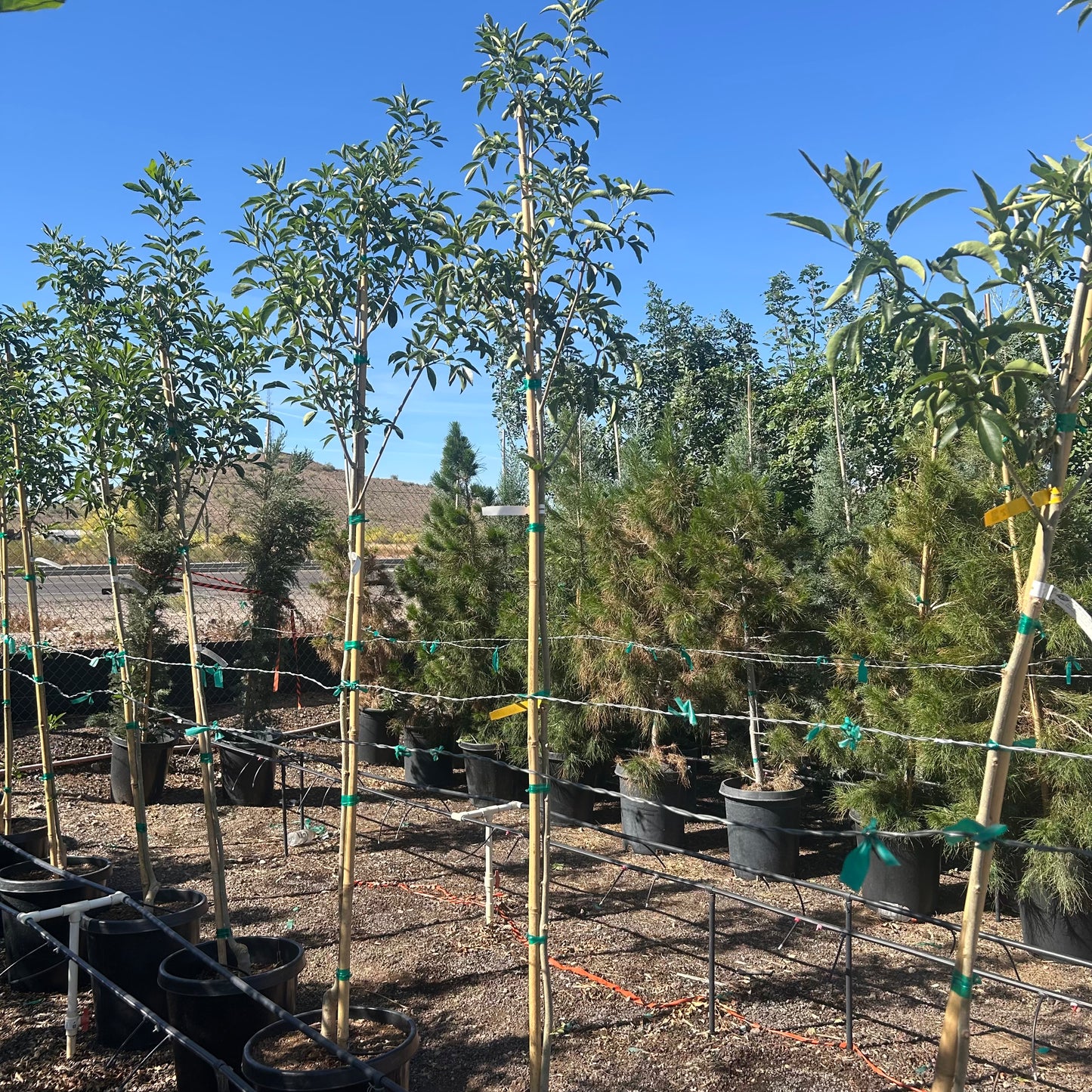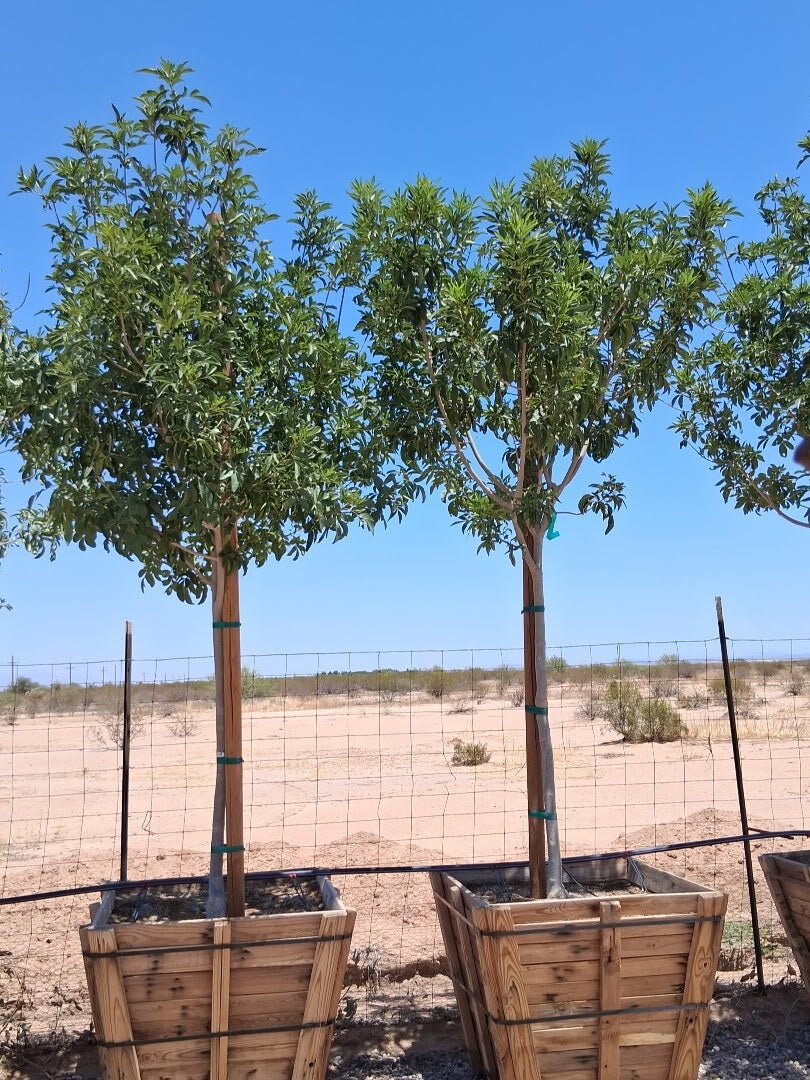


Fan-Tex Ash
Fan-Tex Ash
Couldn't load pickup availability
Phoenix's Best Fast-Growing Shade Tree — Fan-Tex Ash for Large Canopy Coverage
Fan-Tex Ash (Fraxinus velutina 'Fan-Tex') is the premier large-canopy shade tree for Phoenix Valley landscapes. A superior selection of the Arizona Ash, Fan-Tex was bred for stronger branch structure, denser foliage, and exceptional heat tolerance — solving the weak-limb problems that can affect standard Arizona Ash. This fast-growing deciduous tree delivers broad, rounded canopy shade with lush green summer foliage and golden fall color. Whether you're shading a large backyard in Scottsdale, cooling a patio in Chandler, or creating a dramatic street-side canopy in Gilbert — Fan-Tex Ash delivers results fast.
Fan-Tex Ash Plant Details
| Attribute | Detail |
|---|---|
| Scientific Name | Fraxinus velutina 'Fan-Tex' |
| Common Names | Fan-Tex Ash, Arizona Ash, Fan Tex Ash |
| Mature Height | 30–40 feet |
| Mature Width | 25–35 feet |
| Growth Rate | Fast — 3–5 feet per year in Phoenix |
| Sun | Full sun (6+ hrs). Handles reflected heat from walls and hardscape. |
| Water | Moderate when young; low-moderate once established. Drought-tolerant. |
| USDA Zones | 7–11 (Phoenix is Zone 9b–10a) |
| Soil | Well-draining. Adapts to Arizona caliche soils with proper planting. |
| Foliage | Deciduous — lush green summer; golden yellow fall color before drop |
| Branch Structure | Superior to standard Arizona Ash — stronger limbs, reduced breakage risk |
Fan-Tex Ash Uses in Phoenix Landscapes
Backyard Shade Tree — Fast Canopy for Outdoor Living
Fan-Tex Ash is the go-to choice when Phoenix homeowners want serious canopy shade, fast. The broad, rounded crown — reaching 25–35 feet wide — can shade an entire patio, pool deck, or backyard seating area within just a few years. Unlike slow-growing trees, Fan-Tex delivers functional shade quickly in Tempe, Mesa, and Peoria yards where summer heat demands results now.
Street Tree and Front Yard Focal Point
With its strong, upright structure and uniform growth habit, Fan-Tex Ash makes an outstanding street tree or front yard focal point. The dense canopy provides excellent curb appeal in spring and summer, while the golden fall color adds seasonal interest rare in Phoenix landscapes. Plant 25–30 feet apart for a continuous shade canopy along a driveway or street.
Lawn and Turf Companion
Fan-Tex Ash pairs beautifully with lawn areas — it tolerates regular lawn irrigation well, making it one of the better ash varieties for turf environments. Its deciduous nature means it drops leaves in winter, letting sun reach the lawn during cooler months and reducing winter irrigation demand. A natural fit for Chandler, Gilbert, and Scottsdale homes with traditional lawn settings.
Riparian and Low Spot Planting
As a velutina-type ash, Fan-Tex has natural affinity for drainage swales, low spots, and areas that receive occasional runoff. It performs especially well in spots where water collects after monsoon rains, making it a smart placement choice for any low area in your yard that needs a large-canopy tree to anchor the space.
Best Time to Plant Fan-Tex Ash in Phoenix
Fall planting (October through November) is ideal for Fan-Tex Ash in the Phoenix Valley. The soil stays warm enough to encourage root development while cooler air temperatures dramatically reduce transplant stress. A fall-planted tree gains 6–8 months of root establishment before facing its first Phoenix summer. Spring planting (February through April) works well as a second option. Avoid planting during June through September — the combination of heat stress and transplant shock makes establishment significantly harder during peak summer.
How to Plant Fan-Tex Ash
- Dig wide, not deep — excavate a hole 2–3 times the width of the root ball, but only as deep as the root ball itself. Fan-Tex Ash should sit at or slightly above grade.
- Check for caliche — if you hit a hardpan caliche layer, break through it to ensure proper drainage. Standing water will kill roots fast.
- Backfill with native soil — no need to heavily amend; a light 20% organic blend mixed with native soil is sufficient and encourages roots to spread outward.
- Spacing — plant 25–30 feet apart for a shade canopy or street-tree row; single specimen trees need 30+ feet of clearance from structures.
- Build a water basin — form a 3–4 inch soil ring around the outer edge of the planting hole to direct irrigation water down to the roots where it's needed.
- Mulch — apply 2–3 inches of wood chip or bark mulch inside the basin to retain moisture and regulate soil temperature. Keep mulch a few inches away from the trunk.
Watering Fan-Tex Ash in Phoenix
First Year Watering Schedule
- Weeks 1–2: Every 1–2 days, deep and slow (20–30 minutes per session)
- Months 1–2: Every 3–4 days, always deep watering
- Months 3–6: Every 7–10 days (every 5–7 days during peak summer heat)
- After Year 1: Every 10–14 days in summer; every 3–4 weeks in winter
Drip Irrigation Setup
Position drip emitters 18–24 inches from the trunk and use 2–4 GPH emitters per tree. Run irrigation long and slow to encourage deep root growth — shallow, frequent watering keeps roots near the surface and increases wind-throw risk. Established Fan-Tex Ash (3+ years) can handle significant drought periods between waterings, especially in fall and winter.
How fast does Fan-Tex Ash grow in Phoenix? Fan-Tex Ash is one of the fastest-growing shade trees available for the Phoenix Valley — expect 3–5 feet of new growth per year under good conditions. A 25-gallon tree can reach 20+ feet within 3–4 years with consistent watering and full sun.
What's the difference between Fan-Tex Ash and standard Arizona Ash? Fan-Tex Ash is a superior selected cultivar of Arizona Ash (Fraxinus velutina). It was bred specifically for stronger branch structure and reduced limb breakage — a known weakness in standard Arizona Ash, especially during Phoenix monsoon storms. Fan-Tex also tends to have denser, more uniform canopy growth.
Is Fan-Tex Ash drought-tolerant once established? Yes — once established after year 1–2, Fan-Tex Ash becomes moderately drought-tolerant and can handle deep, infrequent watering. During establishment, however, consistent irrigation is critical to preventing drought stress and encouraging healthy root development in Phoenix's hot, dry soils.
Does Fan-Tex Ash drop leaves in Phoenix? Yes, Fan-Tex Ash is deciduous. It will drop its leaves in late fall or early winter (typically November–December in Phoenix) and re-leaf in spring. The fall color display — golden yellow — is one of its most appealing seasonal features in a desert landscape that often lacks fall color.
Can Fan-Tex Ash handle Phoenix summer heat and reflected heat? Absolutely. Fan-Tex Ash is highly heat-tolerant and thrives in Phoenix's full-sun conditions. It handles reflected heat from walls, pavement, and hardscape well — a key requirement for most Phoenix Valley planting sites.
You May Also Like
- Arizona Ash — the classic fast-growing shade tree for Phoenix, excellent for large properties needing quick canopy coverage.
- Bonita Ash — a compact, semi-evergreen ash variety ideal for smaller Phoenix yards and patio shade.
- Shamel Ash — a large, evergreen ash that holds its leaves year-round, offering constant shade without seasonal leaf drop.
- Little Leaf Ash — Arizona's native compact ash for smaller spaces, patios, and drought-conscious Phoenix landscapes.
- Shoestring Acacia — a graceful, weeping evergreen tree for Phoenix yards seeking fast-growing structure with dramatic form.
How Many Fan-Tex Ash Do I Need?
Fan-Tex Ash forms a broad rounded crown 25 to 35 ft wide, so it is planted as a specimen or in a spaced shade row rather than a clipped hedge. For continuous canopy along a driveway, lawn edge, or street frontage, space trees 25 to 30 ft on center.
| Row or frontage length | Trees at 28 ft spacing |
|---|---|
| 28 ft | 1 to 2 trees |
| 56 ft | 2 to 3 trees |
| 84 ft | 3 to 4 trees |
| 112 ft | 4 to 5 trees |
One Fan-Tex Ash set 20 to 25 ft from the house shades a patio or pool deck within a few seasons.
Fan-Tex Ash Season-by-Season in Phoenix
- Spring (Feb to Apr): Fast leaf-out and the strongest growth flush of the year; second-best planting window.
- Summer (May to Sep): Dense green canopy at full shade value, handling reflected heat from walls and pavement. Deep-water every 10 to 14 days through the monsoon for fastest growth.
- Fall (Oct to Nov): Prime planting season, and the golden-yellow fall color sets in: rare seasonal color for a desert yard.
- Winter (Dec to Jan): Deciduous, so it drops its leaves and lets winter sun reach the patio or lawn beneath. Hardy through Valley freezes (cold-hardy to about 0°F), the bare structure re-leafs in spring.
At a Glance
✔ Heat-Loving (Reflected-Heat Tolerant) ✔ Drought-Tolerant ✔ Shade-Providing ✔ Low-Maintenance ✔ Cold-Hardy to 0°F
Plant It With
- Arizona Ash: the native parent species, for a larger fast shade canopy on a big lot.
- Bonita Ash: a more compact ash for the smaller end of a mixed shade row.
- Evergreen Elm: a semi-evergreen counterpart that holds leaves while the ash is bare.
- Shoestring Acacia: weeping evergreen form that adds vertical contrast beside the rounded ash crown.
Is Fan-Tex Ash Right for Your Yard?
Fan-Tex Ash thrives in full Phoenix sun, takes reflected heat, and tolerates lawn irrigation and occasional runoff in low spots, as long as caliche is broken for drainage. Give it 25 to 30 ft of clearance from structures and other large trees. Its stronger branch structure resists the monsoon limb-breakage that troubles standard Arizona Ash. Not a fit right next to a pool, where its fall and winter leaf drop means steady skimming.
Customer Reviews
Share