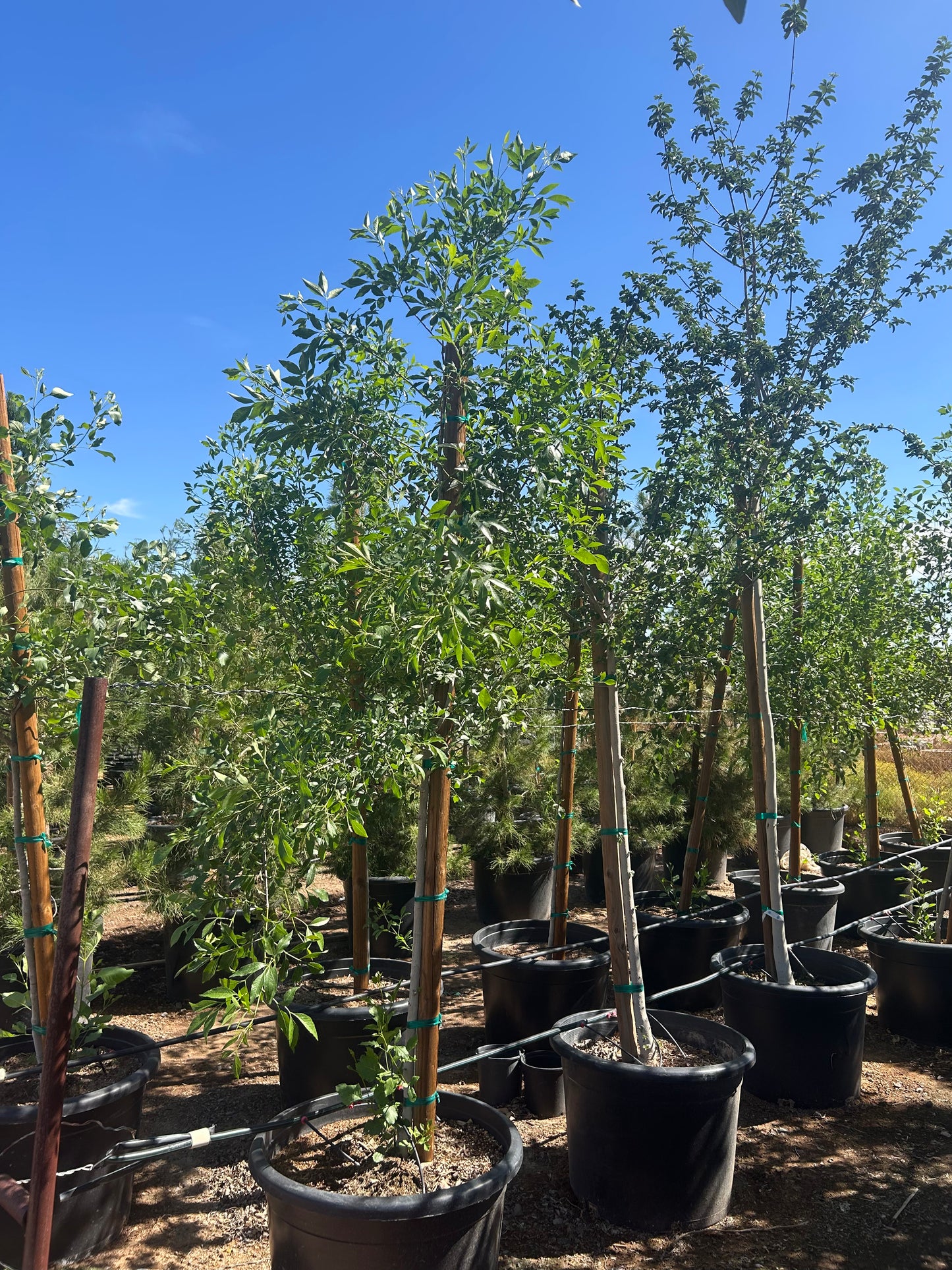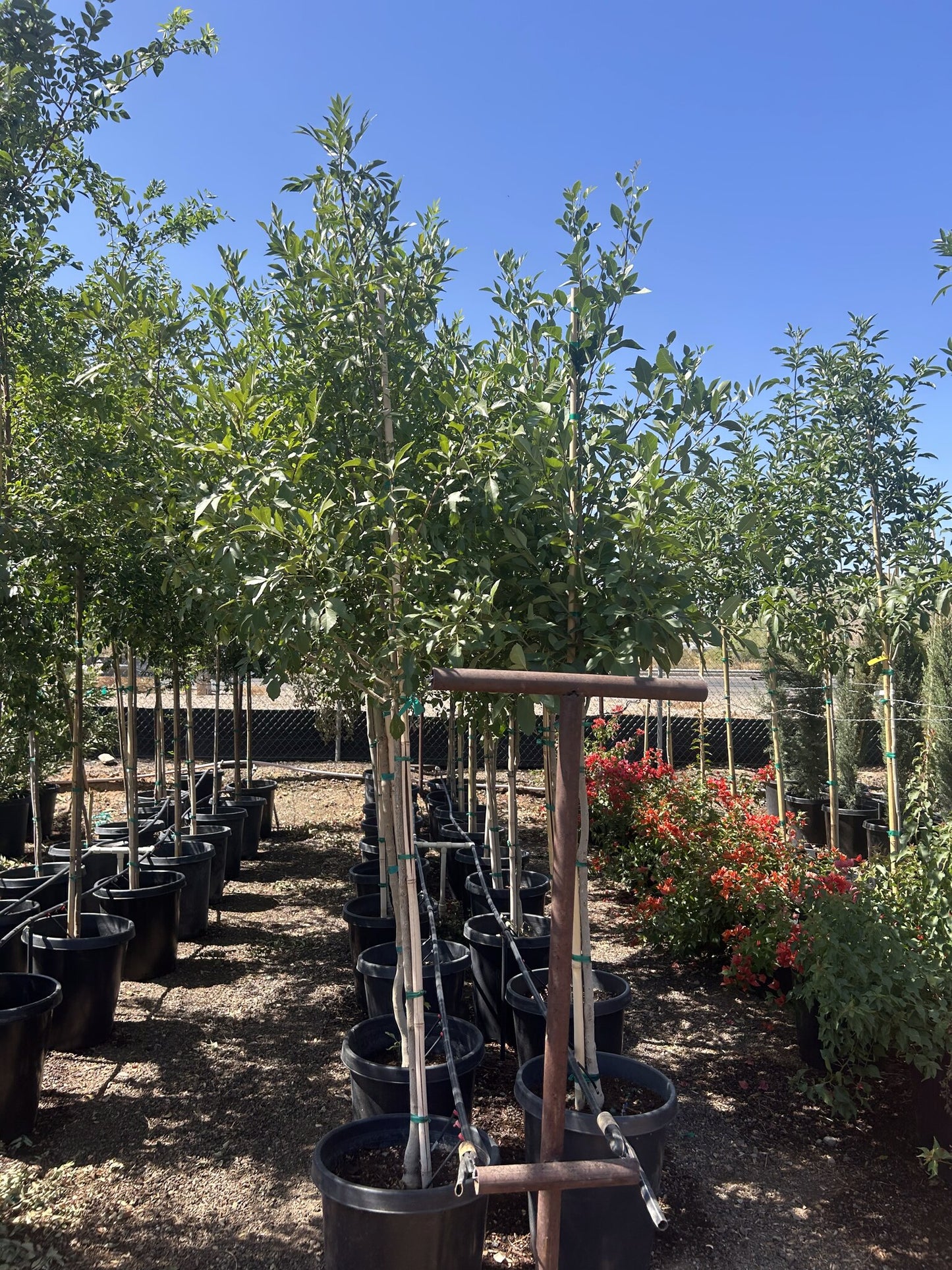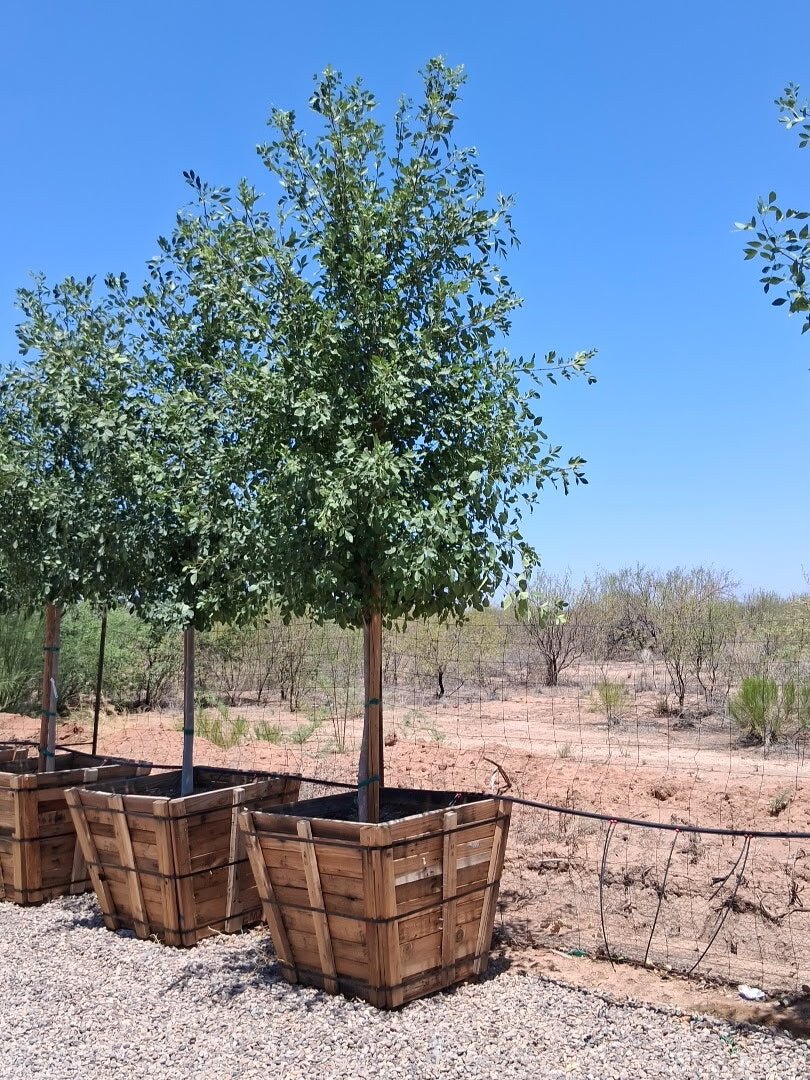


Arizona Ash
Arizona Ash
Couldn't load pickup availability
Phoenix's Classic Fast-Growing Shade Tree — Arizona Ash for Maximum Summer Canopy
Arizona Ash (Fraxinus velutina) is the time-tested, high-performance shade tree that Phoenix Valley homeowners have relied on for decades. Known for its explosive growth rate and massive rounded canopy, Arizona Ash is the go-to solution when you need significant shade, fast. Lush green compound leaves provide dense summer coverage, while golden yellow fall color brings seasonal interest to desert landscapes. Whether you're creating a large backyard canopy in Mesa, shading a patio in Glendale, cooling a wide lot in Chandler, or anchoring a sprawling Scottsdale landscape — Arizona Ash delivers the big, bold shade Phoenix summers demand.
Arizona Ash Plant Details
| Attribute | Detail |
|---|---|
| Scientific Name | Fraxinus velutina |
| Common Names | Arizona Ash, Velvet Ash, Desert Ash |
| Mature Height | 30–45 feet |
| Mature Width | 25–40 feet |
| Growth Rate | Fast — 3–5 feet per year in Phoenix under good conditions |
| Sun | Full sun (6+ hrs). Handles reflected heat from walls and hardscape. |
| Water | Moderate when young; low-moderate once established. Drought-tolerant. |
| USDA Zones | 7–11 (Phoenix is Zone 9b–10a) |
| Soil | Well-draining. Adapts to Arizona caliche soils with proper planting. |
| Foliage | Deciduous — lush green summer; golden yellow fall color before drop |
| Native Status | Native to Arizona's riparian zones and canyon areas |
Arizona Ash Uses in Phoenix Landscapes
Large Backyard Shade Tree — Fast Results on Big Properties
Arizona Ash is the undisputed champion for fast shade on large Phoenix properties. Its rapid 3–5 feet per year growth rate means a 25-gallon tree can realistically shade an entire backyard within 3–5 years. If you have a wide open lot in Mesa, Peoria, or Avondale and need big canopy shade as quickly as possible, Arizona Ash is the answer. Plant it 30–35 feet from structures to allow full spread without crowding.
Lawn and Turf Companion Tree
Arizona Ash thrives alongside lawn areas, tolerating the regular irrigation that turf requires. In a traditional Phoenix lawn setting, it provides the kind of cooling canopy overhead that dramatically reduces surface temperatures and makes outdoor spaces livable through summer. Its deciduous nature means it drops leaves in winter — letting warm sun reach the lawn and reducing irrigation needs during the cool season.
Street Tree and Neighborhood Canopy
Arizona Ash is widely used as a street tree throughout the Phoenix Valley for good reason — it establishes quickly, handles reflected heat from asphalt and concrete walls, and produces excellent canopy coverage with minimal management once established. Space trees 30–40 feet apart for a continuous canopy effect along a street or driveway.
Riparian and Low Spot Planting
As a native Arizona riparian tree, Fraxinus velutina has a natural affinity for drainage channels, swales, and low spots where water collects. It performs exceptionally well in areas that receive seasonal monsoon runoff — making it an ideal anchor plant for any low-lying area on your property that benefits from a large, water-tolerant shade tree.
Best Time to Plant Arizona Ash in Phoenix
Fall is the ideal planting window for Arizona Ash in the Phoenix Valley — October and November give the tree warm soil for root development while cooler air temperatures dramatically reduce transplant stress. A fall-planted Arizona Ash gets 6–8 months of root establishment before its first Phoenix summer, giving it a significant survival and growth advantage. Spring planting (February through April) is a solid second choice. Avoid summer planting from June through September — the heat stress combined with transplant shock makes establishment significantly harder and increases the risk of tree loss.
How to Plant Arizona Ash
- Dig wide, not deep — excavate a hole 2–3 times the width of the root ball, but only as deep as the root ball itself. The tree should sit at or slightly above grade to prevent crown rot.
- Check for caliche — break through any hardpan caliche layer to ensure proper drainage. Arizona Ash in standing water will fail quickly.
- Backfill with native soil — a light mix of 80% native soil and 20% organic compost works well. Avoid over-amending, which can discourage roots from spreading outward into native soil.
- Spacing — plant 30–40 feet apart for street or canopy rows; 30+ feet from structures and power lines for single specimens.
- Build a water basin — create a 3–4 inch soil ring around the outer perimeter of the planting hole to direct irrigation water down to the root zone where it's needed.
- Mulch — apply 2–3 inches of bark or wood chip mulch inside the basin, keeping mulch several inches away from the trunk to prevent rot.
Watering Arizona Ash in Phoenix
First Year Watering Schedule
- Weeks 1–2: Every 1–2 days, deep and slow (20–30 minutes per session)
- Months 1–2: Every 3–4 days, consistently deep
- Months 3–6: Every 7–10 days (5–7 days during peak summer heat)
- After Year 1: Every 10–14 days in summer; every 3–4 weeks in winter
Drip Irrigation Setup
Use 2–4 GPH emitters placed 18–24 inches from the trunk. Water deeply and slowly to encourage deep root development — deep roots improve drought tolerance and wind stability during Phoenix monsoon season. Established Arizona Ash (2–3+ years) needs far less supplemental irrigation, particularly in fall and winter.
How fast does Arizona Ash grow in Phoenix? Arizona Ash is one of the fastest-growing shade trees available for Phoenix — expect 3–5 feet of new growth per year under good conditions with adequate irrigation. A 25-gallon tree can reach 20+ feet within 3–4 years.
Is Arizona Ash drought-tolerant once established? Yes — once established after 1–2 years of consistent watering, Arizona Ash becomes moderately drought-tolerant. It handles deep, infrequent irrigation well. During establishment, consistent moisture is critical, especially through the first summer.
Does Arizona Ash drop its leaves in Phoenix? Yes — Arizona Ash is deciduous. It drops its leaves in late fall or early winter (November–January in Phoenix) and re-leafs in spring. The fall color display — golden yellow — is one of the most appealing seasonal features of this tree in desert landscapes that typically lack fall color.
What's the difference between Arizona Ash, Fan-Tex Ash, and Bonita Ash? Arizona Ash (Fraxinus velutina) is the standard species, offering the largest size and fastest growth. Fan-Tex Ash ('Fan-Tex') is a selected cultivar with superior branch structure and denser foliage, reducing limb breakage risk. Bonita Ash ('Bonita') is a more compact cultivar with a tidier, smaller canopy suited for smaller yards and patios.
Can Arizona Ash handle Phoenix summer heat and reflected heat? Yes — Arizona Ash is highly heat-tolerant and thrives in Phoenix's full-sun conditions. It handles reflected heat from walls, fences, and hardscape well, which is one reason it's been a Phoenix landscaping staple for generations.
You May Also Like
- Fan-Tex Ash — a superior ash cultivar with stronger branch structure and denser canopy, ideal when you want ash quality with reduced maintenance concerns.
- Bonita Ash — a compact ash cultivar with a tidier 20–30 foot spread, perfect for smaller Phoenix yards and patio shade applications.
- Shamel Ash — a large evergreen ash that holds its leaves year-round, providing constant shade without seasonal leaf drop.
- Little Leaf Ash — Arizona's native compact ash ideal for smaller spaces, patios, and drought-focused Phoenix landscapes.
- Chinese Pistache — a stunning fall-color deciduous tree that pairs beautifully with ash trees in mixed Phoenix landscape designs.
How Many Arizona Ash Do I Need?
Arizona Ash is a large, fast, rounded shade tree (25 to 40 feet wide at maturity), planted as a single backyard canopy specimen or spaced in a row for a street or driveway. Use its mature width to set spacing: 30 to 40 feet apart for separated crowns on a canopy row, and at least 30 feet from structures and power lines for single trees.
| Row length | Trees needed (at 35 ft spacing) |
|---|---|
| 35 ft (single specimen) | 1 tree |
| 70 ft | 2 to 3 trees |
| 105 ft | 3 to 4 trees |
| 140 ft | 4 to 5 trees |
For one big backyard shade tree, a single Arizona Ash covers a wide area within a few seasons. Give it a large open lot, since the broad canopy and vigorous roots need 30-plus feet of clearance.
Arizona Ash Season-by-Season in Phoenix
- Spring (Feb to Apr): Fresh green compound leaves flush out fast and fill the canopy. Best second planting window once frost has passed. Inconspicuous wind-pollinated flowers appear before the leaves.
- Summer (May to Sep): Peak shade season. The dense canopy delivers heavy cooling shade through 110-plus degree heat and reflected heat. Monsoon storms (Jul to Sep) drive fast growth, but the fast wood and tight branch crotches can break in strong wind, so structurally prune young trees.
- Fall (Oct to Nov): Prime Phoenix planting season, and the canopy turns golden yellow for rare desert fall color before leaf drop.
- Winter (Dec to Jan): Fully deciduous and bare, letting warm winter sun reach the lawn and patio. Very cold-hardy (to roughly 0°F), so Valley frost is never a concern.
At a Glance
✔ Arizona Native ✔ Heat-Loving (Reflected-Heat Tolerant) ✔ Drought-Tolerant ✔ Shade-Providing ✔ Cold-Hardy to 0°F
Plant It With
- Fan-Tex Ash: a stronger-branched ash cultivar for a matched canopy with less limb breakage.
- Bonita Ash: a tidier, more compact ash for the smaller corners of a mixed planting.
- Chinese Pistache 'Red Push': a second fall-color shade tree that pairs beautifully with ash.
- Arizona Sycamore: a fellow native riparian shade tree for low spots and wash edges.
Is Arizona Ash Right for Your Yard?
Arizona Ash thrives in full sun and reflected heat, takes the regular water of a lawn or a wet low spot, and is genuinely native to Arizona's riparian zones. It is the classic choice when you need a large shade canopy fast. It is not the right fit for a small yard, a pool deck, or a low-water-only design, since it grows large, drops a heavy load of leaves and seed in fall, and the fast wood needs early structural pruning to limit storm limb breakage.
Customer Reviews
Share