
Palmer's Agave
Palmer's Agave
Couldn't load pickup availability
A Bold, Architectural Agave Built for Arizona's Toughest Heat
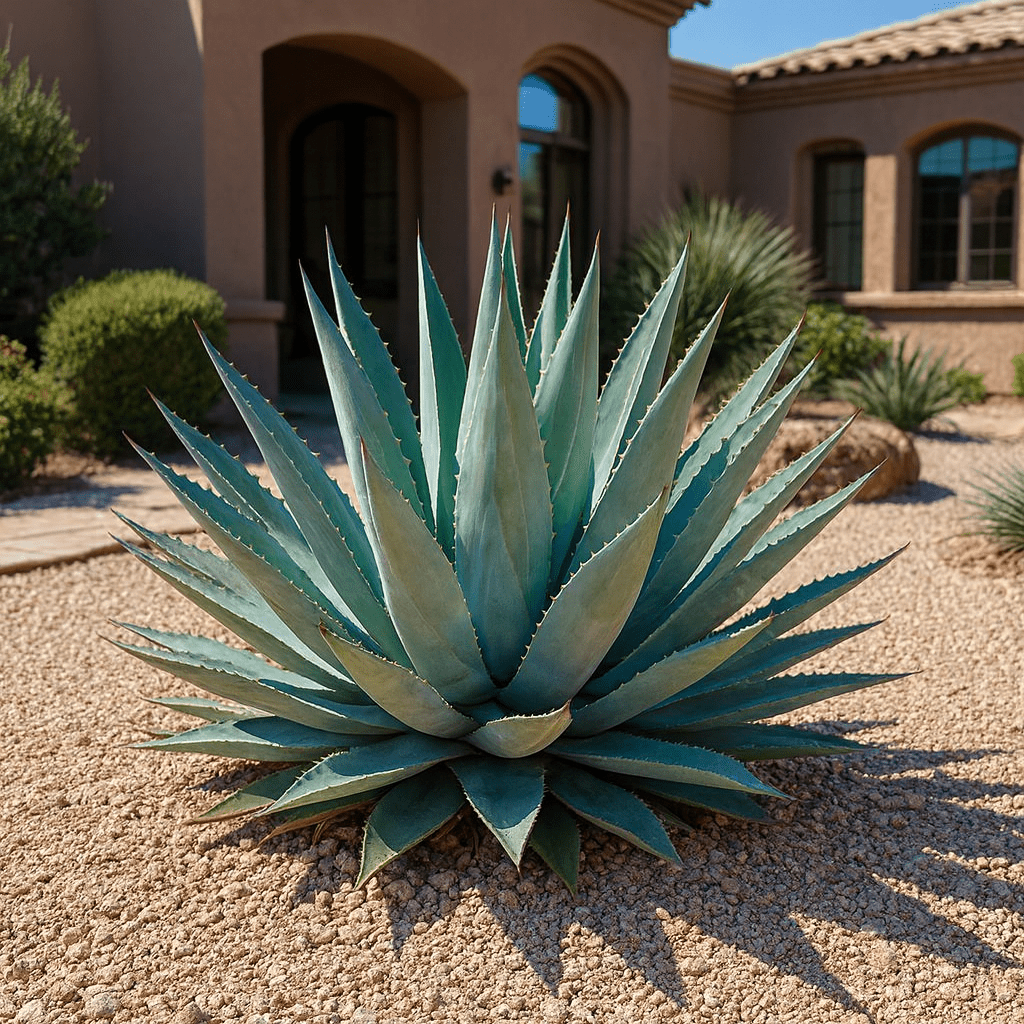
Palmer's Agave (Agave palmeri) is one of the most impressive large rosette agaves for Phoenix-area landscapes. Growing 4–6 feet tall with broad, blue-gray leaves armed with striking dark spines, this Arizona native delivers dramatic sculptural impact with almost zero maintenance. Whether you're designing a bold entryway in Scottsdale, anchoring a desert garden in Mesa, or adding vertical drama to a Chandler backyard — Palmer's Agave is a showstopper that thrives on neglect.
Palmer's Agave Plant Details
| Attribute | Detail |
|---|---|
| Scientific Name | Agave palmeri |
| Common Names | Palmer's Agave, Palmer's Century Plant, Palmer Agave |
| Mature Height | 4–6 feet (rosette); flower stalk 10–15 feet |
| Mature Width | 4–6 feet |
| Growth Rate | Moderate — reaches mature size in 8–12 years in Phoenix |
| Sun | Full sun (6+ hrs). Handles reflected heat from walls and pavement. |
| Water | Very low once established. Extremely drought-tolerant. |
| USDA Zones | 7–11 (Phoenix is Zone 9b–10a) |
| Soil | Well-draining. Thrives in rocky, gravelly Arizona caliche soils. |
| Foliage | Evergreen — blue-gray leaves year-round |
| Native Status | Native to Arizona, New Mexico, and northern Mexico |
| Bloom | Tall yellow-green flower stalk at maturity (monocarpic — blooms once) |
Palmer's Agave Uses in Phoenix Landscapes
Dramatic Focal Point for Desert Gardens
Palmer's Agave commands attention with its large, symmetrical rosette of blue-gray leaves. Plant it as a solo specimen at the center of a gravel courtyard, at a pathway intersection, or flanking a front entrance for instant architectural presence. It pairs beautifully with low-growing companions like Desert Spoon, Blackfoot Daisy, and Damianita.
Arizona Native Xeriscape Anchor
As a true Arizona native, Palmer's Agave is perfectly adapted to Phoenix's extreme heat and extended drought. Use it as the anchor plant in a native xeriscape garden surrounded by Texas Sage, Red Yucca, and Ruellia. Once established, it needs virtually no supplemental irrigation — making it one of the lowest-maintenance landscape plants available.
Modern Desert Design & Commercial Landscaping
The bold geometric form of Palmer's Agave makes it a favorite for contemporary desert architecture in Scottsdale, Paradise Valley, and Tempe. Mass-plant 3–5 specimens in a staggered row along a clean concrete wall or use individual plants in large decorative containers to frame an entryway. Space plants 5–6 feet apart for a grouped planting.
Best Time to Plant Palmer's Agave in Phoenix
Fall (October–November) is the ideal planting window. The soil stays warm enough for root establishment while cooler air temperatures reduce transplant stress, giving the agave 6–8 months of root growth before its first Phoenix summer. Spring (February–April) is the second-best window. Avoid planting during peak summer heat when possible.
How to Plant Palmer's Agave
- Dig wide, not deep — 2–3x the root ball width, same depth as the container.
- Check for caliche — break through any hardpan layer to ensure drainage; Palmer's Agave will not tolerate standing water.
- Backfill with native soil — no amendments needed; a light 20% pumice or gravel blend is fine for heavy clay.
- Spacing — 5–6 feet apart for grouped plantings; 8+ feet if used as standalone specimens.
- Water basin — build a 3–4 inch soil ring around the root zone to direct water to roots during establishment.
- Mulch — 2–3 inches of gravel or decomposed granite (avoid organic mulch touching the crown).
Watering Palmer's Agave in Phoenix
First Year Watering Schedule
Weeks 1–2: Every 3–4 days, deep and slow (15–20 min). Month 1–3: Every 7–10 days. Month 3–6: Every 10–14 days (7–10 days in peak summer). After Year 1: Every 2–3 weeks in summer; monthly or less in winter.
Drip Irrigation
Place two 2-GPH emitters 12–18 inches from the base on opposite sides. After the first year, Palmer's Agave is one of the most drought-tolerant plants in your landscape and may need supplemental water only during the hottest stretches of summer.
How fast does Palmer's Agave grow in Phoenix?
Palmer's Agave is a moderate grower. Expect a 5-gallon plant to reach 3–4 feet in diameter within 5–7 years in Phoenix's warm climate. It grows somewhat faster with occasional deep summer watering but thrives even without it.
Is Palmer's Agave drought-tolerant once established?
Extremely. As an Arizona native, Palmer's Agave is adapted to survive on rainfall alone once its root system is established (typically after one year). It's one of the most water-efficient landscape plants you can choose for Phoenix.
Does Palmer's Agave bloom? What happens after it flowers?
Yes — Palmer's Agave is monocarpic, meaning it produces a spectacular 10–15 foot tall flower stalk once at maturity (typically after 15–25 years), then the main rosette dies. However, it usually produces offsets (pups) around the base before blooming, so the plant colony continues.
Can Palmer's Agave handle reflected heat from walls and concrete?
Absolutely. Palmer's Agave thrives in Phoenix's hottest microclimates, including south- and west-facing exposures with reflected heat from block walls, concrete, and stucco.
You May Also Like
Artichoke Agave — A similar-sized rosette agave with wide, blue-green leaves and a softer, more rounded form.
Century Plant — Classic large agave with gray-green leaves; another bold focal point for desert gardens.
Desert Spoon — A complementary native accent plant with a spherical form and silver-blue foliage.
Mountain Agave — A cold-hardy alternative with a compact, tight rosette and similar blue-gray coloring.
Cowhorn Agave — Dramatic curved spines and wide leaves for a striking sculptural companion planting.
How Many Palmer's Agave Do I Need?
This is a large architectural specimen agave (mature 4 to 6 ft wide). Plant a single rosette as a bold focal point in a courtyard or at an entry, or set odd-numbered groups of 3 to 5 spaced about 5 to 6 ft apart so each symmetrical rosette stands clear. For a staggered accent row along a wall, use the spacing guide below. Keep the dark terminal spines back at least 3 ft from walkways, pool decks, and patio edges.
| Row / bed length | Plants needed (at 5 to 6 ft spacing) |
|---|---|
| 15 ft | 3 plants |
| 25 ft | 4 to 5 plants |
| 40 ft | 7 to 8 plants |
Palmer's Agave Season-by-Season in Phoenix
- Spring (Feb to Apr): Steady new growth from the center as soil warms. Strong second planting window and a good time to separate basal pups for new plantings.
- Summer (May to Sep): In its element. As a desert native it powers through extreme heat and reflected heat with no afternoon shade needed. Monsoon rain (Jul to Sep) covers most of its water needs; let the soil dry between soakings.
- Fall (Oct to Nov): The best planting season in the Valley, roots establish fast in warm soil. Mature plants may push their towering flower stalk in late spring to summer, not fall.
- Winter (Dec to Jan): Evergreen and very cold-tough. Hardy to about 10°F, it needs no frost protection anywhere in the Valley and holds its blue-gray color all winter.
At a Glance
✔ Arizona Native ✔ Heat-Loving (Reflected-Heat Tolerant) ✔ Drought-Tolerant ✔ Evergreen ✔ Low-Maintenance ✔ Deer & Rabbit-Resistant ✔ Cold-Hardy to 10°F
Plant It With
- Artichoke Agave: a similar-sized rosette with a softer rounded form for rhythm in a grouping.
- Century Plant: a classic large gray-green agave that echoes the bold focal scale.
- Mountain Agave: a compact cold-hardy rosette that steps the planting down toward the path edge.
- Desert Spoon: a fine silver-blue native accent that softens the agave's stiff form in gravel.
Is Palmer's Agave Right for Your Yard?
It thrives in full sun and brutal reflected heat, wants fast-draining gravelly or caliche soil, and as an Arizona native shrugs off drought and Valley frost down to about 10°F. Give it room for a 4 to 6 ft rosette plus its eventual pups, and keep the sharp spines away from foot traffic. Not a fit if your soil holds water, or if you need a soft, spineless plant safe right at a pool step or busy walkway: this one is armed and best placed where it can be admired from a step back.
Customer Reviews
Share