
Mountain Agave
Mountain Agave
Couldn't load pickup availability
A Compact, Cold-Hardy Agave With Stunning Sculptural Form
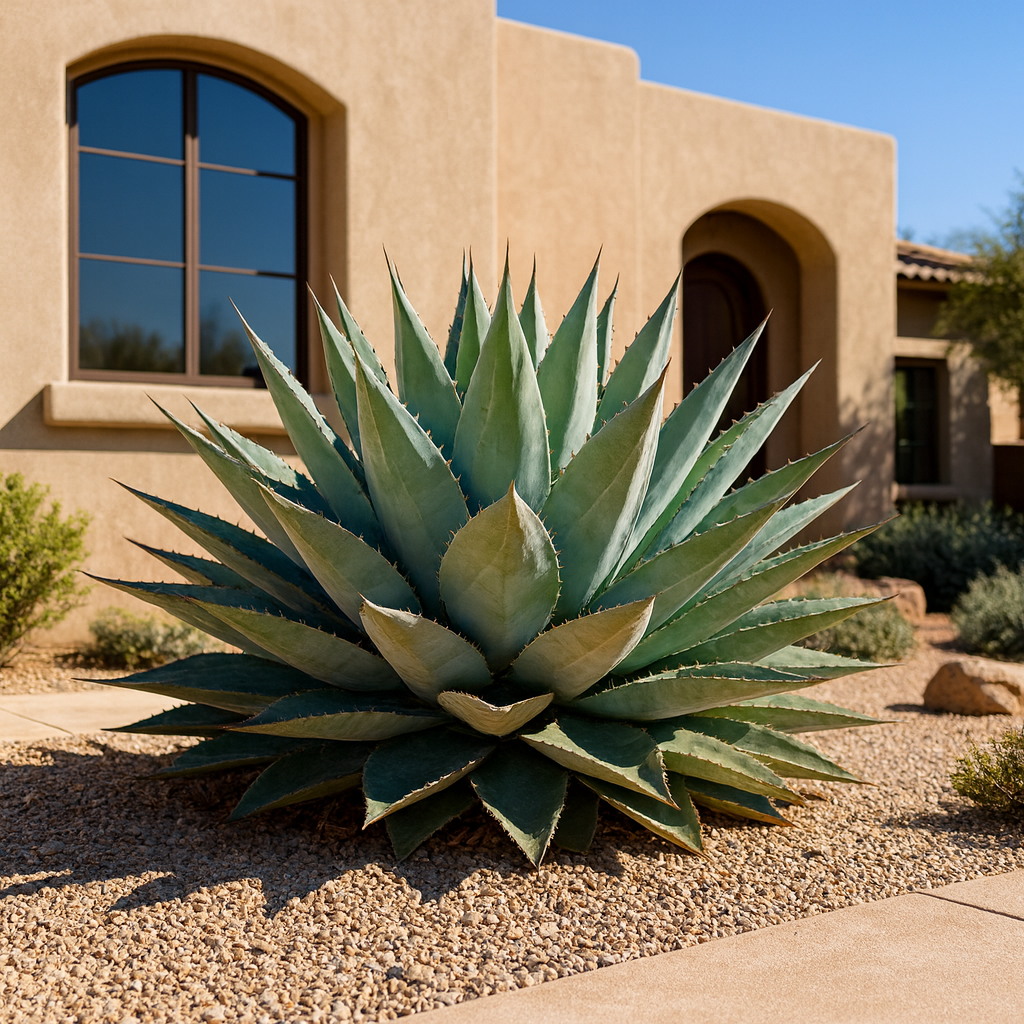
Mountain Agave (Agave montana) is one of the most visually striking compact agaves for Phoenix-area landscapes. Forming a dense, tightly packed rosette of broad, blue-green leaves with dramatic dark spine imprints, this cold-hardy species delivers museum-quality sculptural impact with virtually zero maintenance. Whether you're creating a modern desert garden in Scottsdale, designing a rock garden accent in Mesa, or planting a drought-tolerant focal point in a Chandler courtyard — Mountain Agave is a collector's favorite that handles Arizona's extremes with ease.
Mountain Agave Plant Details
| Attribute | Detail |
|---|---|
| Scientific Name | Agave montana |
| Common Names | Mountain Agave, Hardy Mountain Agave |
| Mature Height | 3–4 feet |
| Mature Width | 4–5 feet |
| Growth Rate | Slow to moderate — reaches mature size in 8–12 years in Phoenix |
| Sun | Full sun (6+ hrs). Handles reflected heat from walls and pavement. |
| Water | Very low once established. Extremely drought-tolerant. |
| USDA Zones | 7–11 (Phoenix is Zone 9b–10a) |
| Soil | Well-draining. Thrives in rocky, gravelly Arizona caliche soils. |
| Foliage | Evergreen — blue-green to dark green leaves year-round |
| Cold Hardiness | Cold-hardy to 10°F (–12°C) — tolerates brief freezes |
| Bloom | Tall yellow-green flower stalk at maturity (monocarpic — blooms once) |
Mountain Agave Uses in Phoenix Landscapes
Specimen Focal Point for Modern Desert Gardens
Mountain Agave's dense, symmetrical rosette and striking leaf imprints make it an ideal centerpiece for modern desert landscapes in Scottsdale, Paradise Valley, and Tempe. Plant it as a solo specimen in a gravel bed, at a pathway junction, or in a large decorative container to create an instant sculptural statement. Its compact size works well in both large open spaces and smaller courtyards.
Rock Garden & Boulder Accent
Tuck Mountain Agave between decorative boulders and decomposed granite for a naturalistic desert rock garden. The dark spine imprints on its blue-green leaves create beautiful contrast against light-colored stone. Pair with Desert Spoon, Blackfoot Daisy, and Red Yucca for complementary textures and year-round interest.
Low-Maintenance Container Plantings
Mountain Agave's manageable 3–4 foot height makes it perfect for large patio containers and courtyard planters throughout the Phoenix Valley. Use a well-draining cactus mix and a pot with drainage holes. Container-grown specimens make excellent entryway accents for homes in Gilbert, Chandler, and Peoria.
Best Time to Plant Mountain Agave in Phoenix
Fall (October–November) is the ideal planting window. The soil stays warm enough for root establishment while cooler air temperatures reduce transplant stress, giving the agave 6–8 months of root growth before its first Phoenix summer. Spring (February–April) is the second-best window. Avoid planting during peak summer heat when possible.
How to Plant Mountain Agave
- Dig wide, not deep — 2–3x the root ball width, same depth as the container.
- Check for caliche — break through any hardpan layer to ensure drainage; Mountain Agave will not tolerate standing water.
- Backfill with native soil — no amendments needed; a light 20% pumice or gravel blend is fine for heavy clay.
- Spacing — 4–5 feet apart for grouped plantings; 6+ feet if used as standalone specimens.
- Water basin — build a 3–4 inch soil ring around the root zone to direct water to roots during establishment.
- Mulch — 2–3 inches of gravel or decomposed granite (avoid organic mulch touching the crown).
Watering Mountain Agave in Phoenix
First Year Watering Schedule
Weeks 1–2: Every 3–4 days, deep and slow (15–20 min). Month 1–3: Every 7–10 days. Month 3–6: Every 10–14 days (7–10 days in peak summer). After Year 1: Every 2–3 weeks in summer; monthly or less in winter.
Drip Irrigation
Place two 1-GPH emitters 12–18 inches from the base on opposite sides. After the first year, Mountain Agave needs minimal supplemental water and thrives on Phoenix rainfall plus occasional deep summer soaks.
How fast does Mountain Agave grow in Phoenix?
Mountain Agave is a slow to moderate grower. A 1-gallon plant will typically reach 2–3 feet across within 5–7 years in the Phoenix climate. The tight, symmetrical rosette becomes more dramatic and beautiful with each passing year.
Is Mountain Agave cold-hardy?
Yes — Mountain Agave tolerates temperatures down to 10°F (–12°C), making it well-suited for all Phoenix microclimates, including higher-elevation areas around Fountain Hills and Cave Creek where occasional hard freezes occur.
What makes Mountain Agave different from other agaves?
Mountain Agave is prized for the distinctive dark imprints (bud prints) left by its tightly packed leaves as they unfurl. This creates a unique decorative pattern on each leaf that no other agave species replicates — making it a collector's plant with serious visual impact.
Does Mountain Agave produce pups?
Mountain Agave is typically solitary and does not produce offsets. It grows as a single, increasingly impressive rosette throughout its life, making each plant a true specimen.
You May Also Like
Artichoke Agave — A similar-sized rosette agave with wide, overlapping blue-green leaves and a softer, artichoke-like form.
New Mexico Agave — A compact, extremely cold-hardy agave perfect for rock gardens and borders.
Palmer's Agave — A larger Arizona native agave for bold architectural impact.
King Ferdinand Agave — A compact, densely packed rosette with striking symmetry — great companion planting.
Green Giant Agave — A massive agave for landscapes that need a dramatic large-scale focal point.
Share