

Century Plant
Century Plant
Monumental blue rosette, the desert's living statue
Couldn't load pickup availability
Century Plant — The Iconic Giant Agave for Phoenix Desert Landscapes
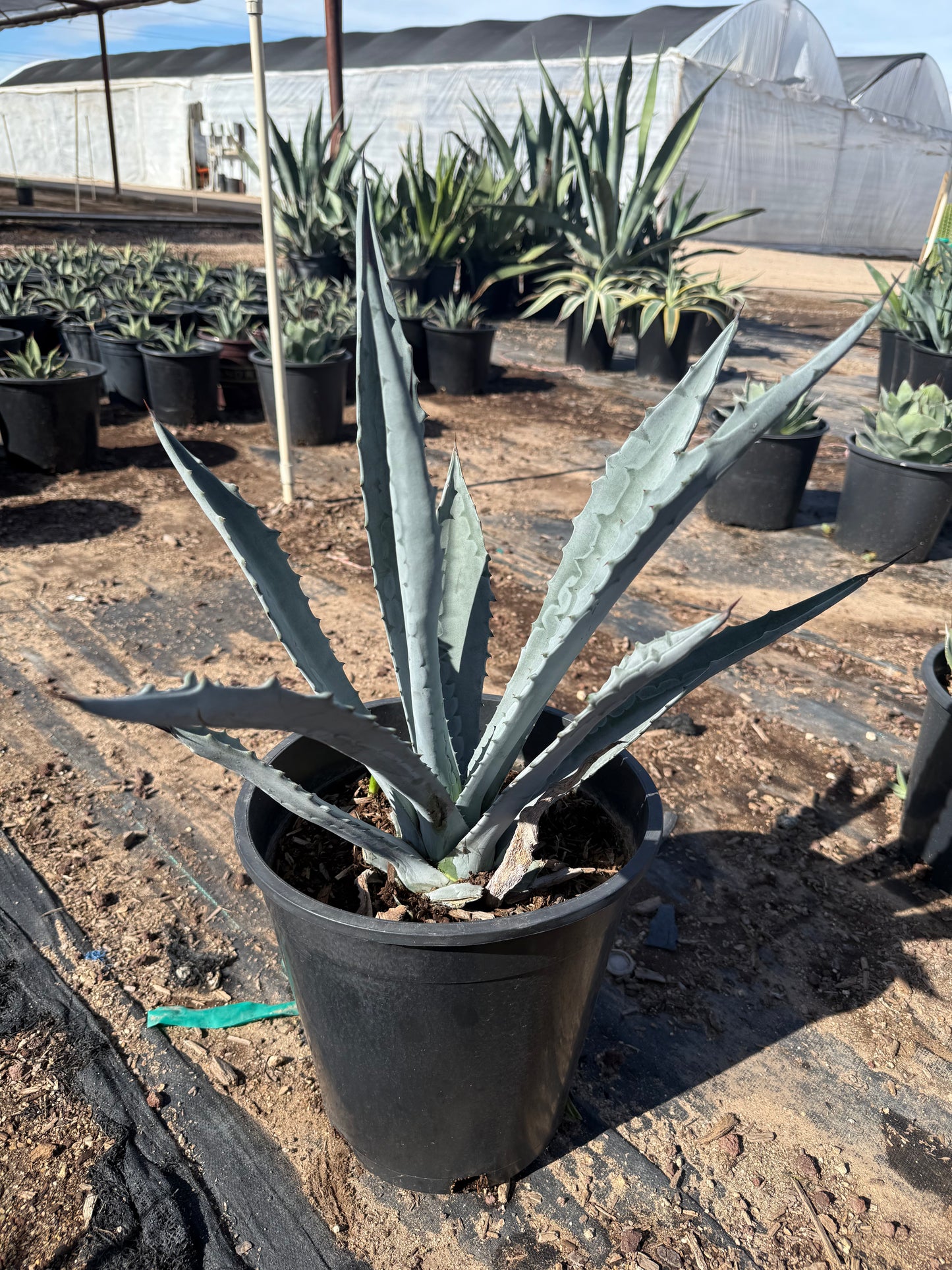
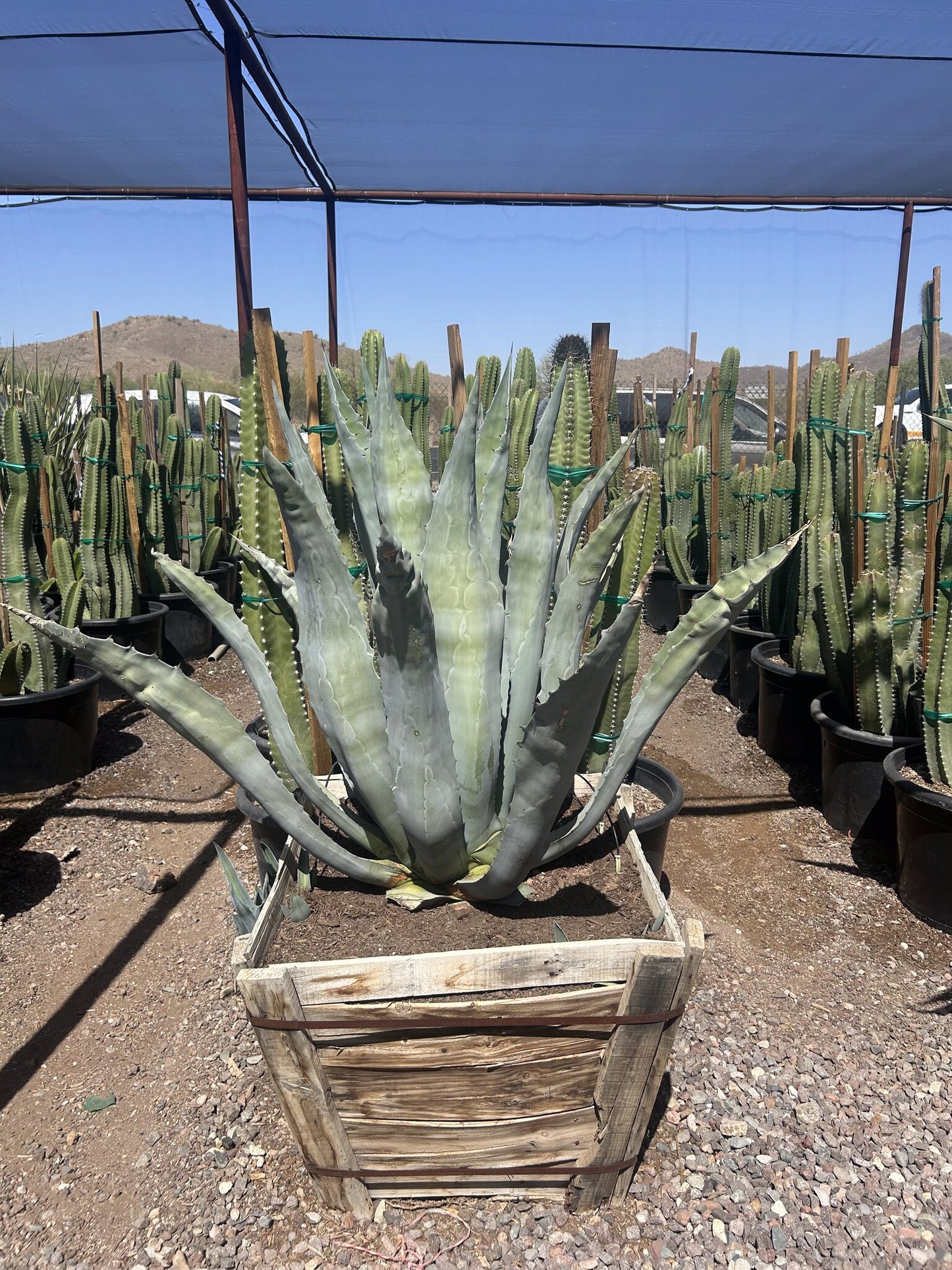
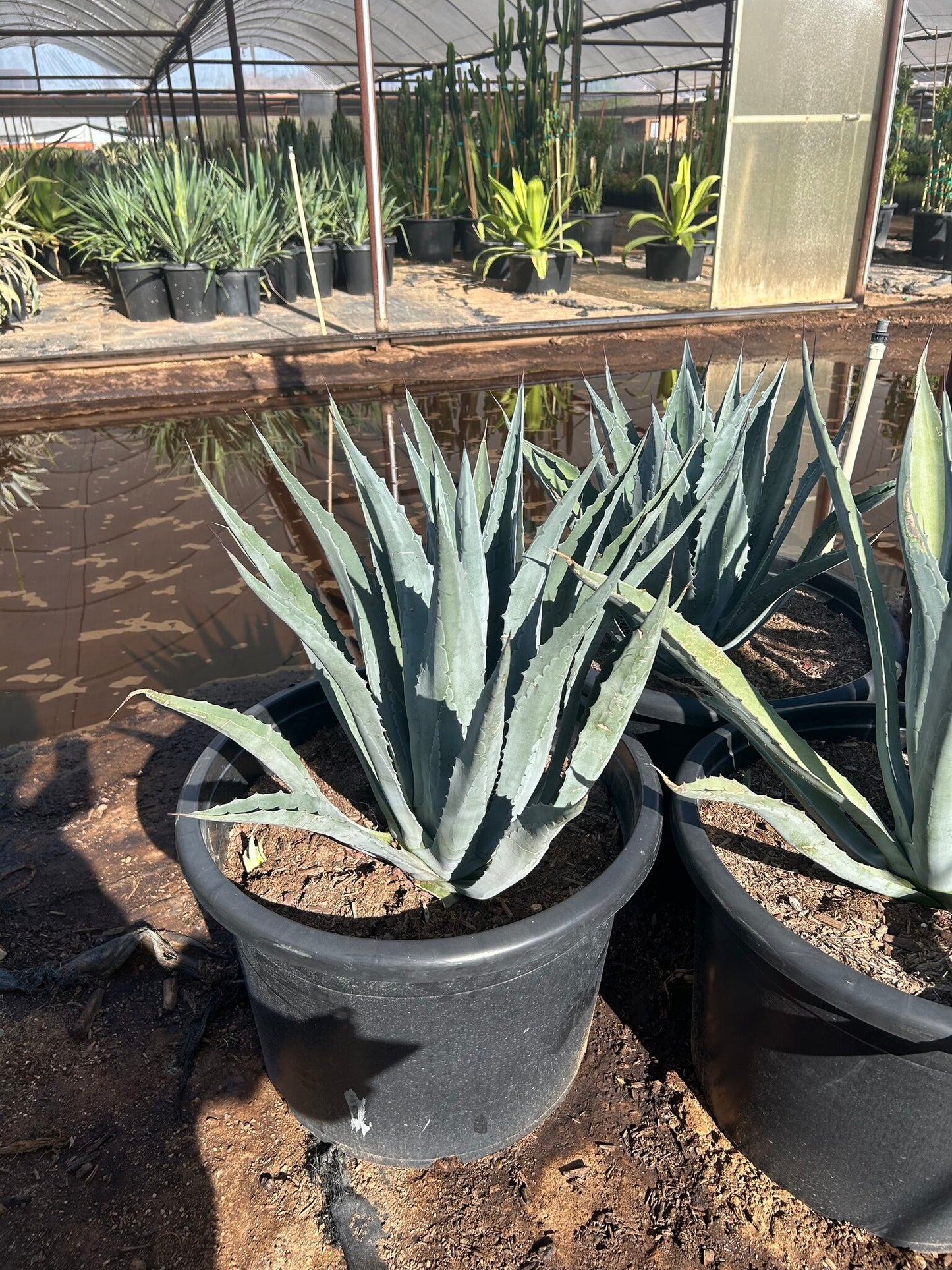
The Century Plant (Agave americana) is the iconic desert agave — a massive, architectural powerhouse that defines the Arizona landscape. With its broad, blue-green leaves armed with sharp marginal teeth and a dramatic terminal spine, this agave forms a commanding rosette that reaches 6–10 feet tall and 8–12 feet wide at maturity. It's one of the toughest, most drought-tolerant, and most recognizable plants in the Southwest. Whether you're anchoring a grand desert garden in Scottsdale, filling a commercial landscape bed in Chandler, or creating a bold xeriscape statement in Mesa — the Century Plant is the original desert icon.
Century Plant Details
| Attribute | Detail |
|---|---|
| Scientific Name | Agave americana |
| Common Names | Century Plant, American Agave, Maguey |
| Mature Height | 6–10 feet |
| Mature Width | 8–12 feet |
| Growth Rate | Moderate to fast — 8–12 inches per year in Phoenix |
| Sun | Full sun (6+ hrs). Handles reflected heat from walls. |
| Water | Very low once established. Extremely drought-tolerant. |
| USDA Zones | 8–11 (Phoenix is Zone 9b–10a) |
| Soil | Well-draining. Adapts to Arizona caliche soils. |
| Foliage | Evergreen — blue-green leaves year-round |
| Flower Color | Greenish-yellow on a towering bloom stalk (15–30 feet) |
Century Plant Uses in Phoenix Landscapes
Grand-Scale Desert Focal Point
The Century Plant is the ultimate large-scale desert specimen. A single mature plant anchors an entire front yard, median island, or commercial entry with its massive blue-green rosette. Its sheer size and sculptural form make it one of the most photographed plants in Phoenix Valley neighborhoods from Paradise Valley to Tempe. Give it room to reach its full 8–12 foot spread.
Commercial and HOA Landscapes
For commercial projects, HOA common areas, and resort landscaping across Gilbert, Peoria, and Glendale, the Century Plant delivers high visual impact at rock-bottom maintenance cost. Its extreme drought tolerance means minimal irrigation once established, and its bold scale reduces the number of plants needed to fill large beds. Space 8–10 feet apart for grouped plantings.
Xeriscape and Water-Wise Design
No plant says "desert xeriscape" like the Century Plant. Pair it with other Three Timbers favorites — Palo Verde trees, Texas Sage, Desert Spoon, and Ruellia — for a complete water-wise landscape that looks bold and intentional. It's the backbone plant of countless award-winning Phoenix xeriscapes.
Best Time to Plant Century Plant in Phoenix
Fall (October–November) is the ideal planting window. Warm soil encourages root establishment while cooler air reduces transplant stress, giving the plant 6–8 months of root growth before its first Phoenix summer. Spring (February–April) is the second-best option. Larger box sizes can be planted year-round with proper watering care.
How to Plant Century Plant
- Dig wide, not deep — excavate a hole 2–3x the width of the root ball, but only as deep as the root ball itself.
- Check for caliche — break through any hardpan layer to ensure proper drainage below the roots.
- Backfill with native soil — a light 20% organic blend is fine, but avoid rich potting mixes.
- Spacing — 8–10 feet apart for grouped plantings; 10–12 feet as standalone specimens to allow full spread.
- Water basin — build a 4–6 inch soil ring around the plant to direct water to the root zone.
- Mulch — 2–3 inches of gravel or decomposed granite to retain moisture and keep roots cool.
Watering Century Plant in Phoenix
First Year Watering Schedule
- Weeks 1–2: Every 2–3 days, deep and slow (30–45 min for larger sizes)
- Month 1–2: Every 4–5 days
- Month 3–6: Every 7–10 days (every 5–7 days in peak summer)
- After Year 1: Every 14–21 days in summer; monthly or less in winter
Drip Irrigation
Place emitters 18–24 inches from the trunk. For larger box-size plants, use two 2 GPH emitters on opposite sides. Once established, the Century Plant is one of the most drought-tolerant landscape plants available — it can often survive on rainfall alone in Phoenix.
How fast does the Century Plant grow in Phoenix?
With Phoenix's long growing season, expect 8–12 inches of new growth per year. A 5-gallon plant reaches impressive landscape size within 4–6 years. Larger 25-gallon and box sizes provide instant scale from day one.
Is the Century Plant drought tolerant?
Extremely — it's one of the most drought-tolerant landscape plants in existence. Once established, it stores water in its massive leaves and can survive extended dry spells with no supplemental irrigation.
Why is it called the Century Plant?
The common name comes from the myth that it takes 100 years to bloom. In reality, Century Plants bloom after 10–30 years in Phoenix's climate, sending up a spectacular 15–30 foot tall flower stalk with greenish-yellow blooms. The main rosette dies after blooming but produces pups (offsets) that carry on.
How big does the Century Plant get?
This is one of the largest agaves. Expect 6–10 feet tall and 8–12 feet wide at full maturity. Plan for its ultimate size — it will fill its space impressively.
Is the Century Plant good for commercial landscapes?
Absolutely. Its extreme toughness, minimal water needs, and bold scale make it one of the most cost-effective landscape plants for commercial, HOA, and municipal projects across the Phoenix Valley.
You May Also Like
- Variegated Century Plant — The same massive americana form with stunning cream-and-green striped leaves.
- Yellow Striped Century Plant — Features a bold yellow center stripe on each leaf for ornamental interest.
- White Striped Century Plant — A striking white-centered variegation on the large americana form.
- Green Giant Agave — Another massive agave option for bold-scale landscapes.
- Palmer's Agave — An Arizona native with blue-gray rosettes, slightly smaller scale.
How Many Century Plants Do I Need?
The Century Plant is a grand-scale specimen agave, not a hedge plant. At a mature 8 to 12 foot spread, it earns its space as a standalone focal point or in widely spaced groups. Plant single as a front-yard or entry anchor, or in odd-numbered groups of 3 to 5 so each massive rosette stands clear. Keep its toothed margins and sharp terminal spine well back from walkways, driveways, pool decks, and play areas.
| Planting goal | Spacing | What to buy |
|---|---|---|
| Single focal specimen | 10–12 ft clearance all around | 1 plant (go big: 15 or 25 gal for instant scale) |
| Bold entry or median trio | 8–10 ft on center | 3 plants staggered |
| Large commercial / HOA mass | 10 ft on center | 5+ plants in a sweeping group |
Century Plant Season-by-Season in Phoenix
- Spring (Feb–Apr): Prime active-growth season. The rosette pushes new blue-green leaves and you may see pups emerging at the base. A strong second planting window once nights warm.
- Summer (May–Sep): Thrives in extreme heat and reflected heat off west-facing walls and pavement. Monsoon rains (Jul–Sep) fuel a growth flush. Established plants need little to no supplemental water. Watch drainage so monsoon downpours do not pool around the crown.
- Fall (Oct–Nov): The best planting window of the year. Warm soil plus mild air lets roots establish before winter. Growth continues at a steady pace.
- Winter (Dec–Jan): Evergreen and structural through the cool months. Agave americana is among the hardier agaves and shrugs off typical Valley frosts, taking brief dips to about 15°F. A hard, prolonged freeze can scar leaf tips on younger plants, but mature specimens recover quickly.
At a Glance
✔ Heat-Loving (Reflected-Heat Tolerant) ✔ Drought-Tolerant ✔ Evergreen ✔ Low-Maintenance ✔ Deer & Rabbit-Resistant ✔ Cold-Hardy to 15°F
Plant It With
- Green Giant Agave: another bold large-scale rosette that echoes the Century Plant's architecture across a big bed.
- Desert Spoon: fine silvery texture that softens the Century Plant's heavy form and reads beautifully in xeriscape.
- Texas Sage: a flowering shrub backdrop that adds purple monsoon bloom around the agave's structure.
- Red Yucca: airy coral bloom spikes and grassy clumps that contrast the agave's mass and feed hummingbirds.
Is the Century Plant Right for Your Yard?
The Century Plant is right for you if you have full sun, room for an 8 to 12 foot spread, and want a low-water, reflected-heat-proof icon that fends off deer and rabbits with near-zero care. Caliche is fine as long as water drains away from the crown. It is not a fit if your space is tight or close to foot traffic and pets, since the marginal teeth and tip spine are genuinely sharp. For smaller yards choose a more compact agave instead.
Share