

Little Giant
Little Giant
Couldn't load pickup availability
Phoenix's Best Compact Desert Accent Plant — Little Giant Hesperaloe
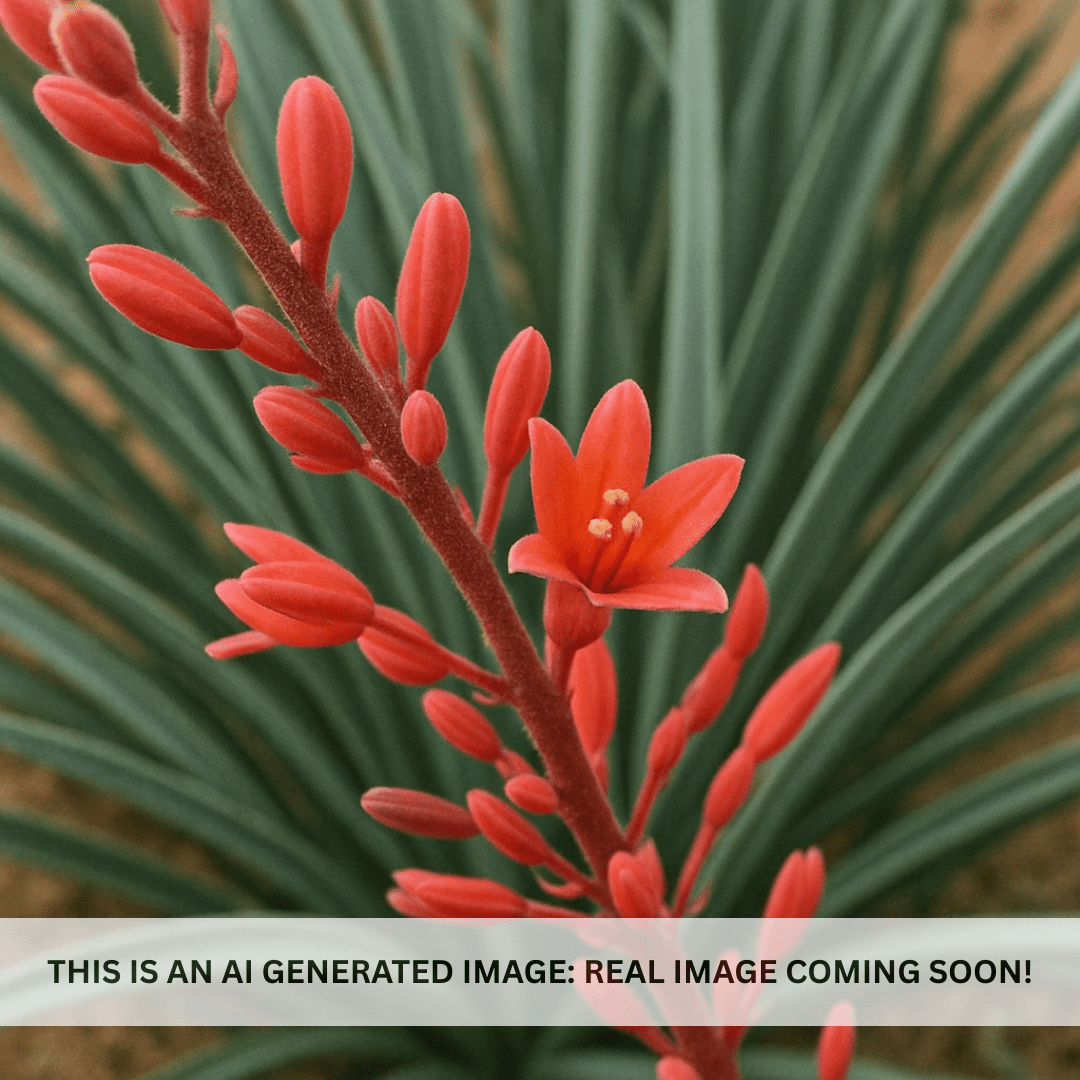
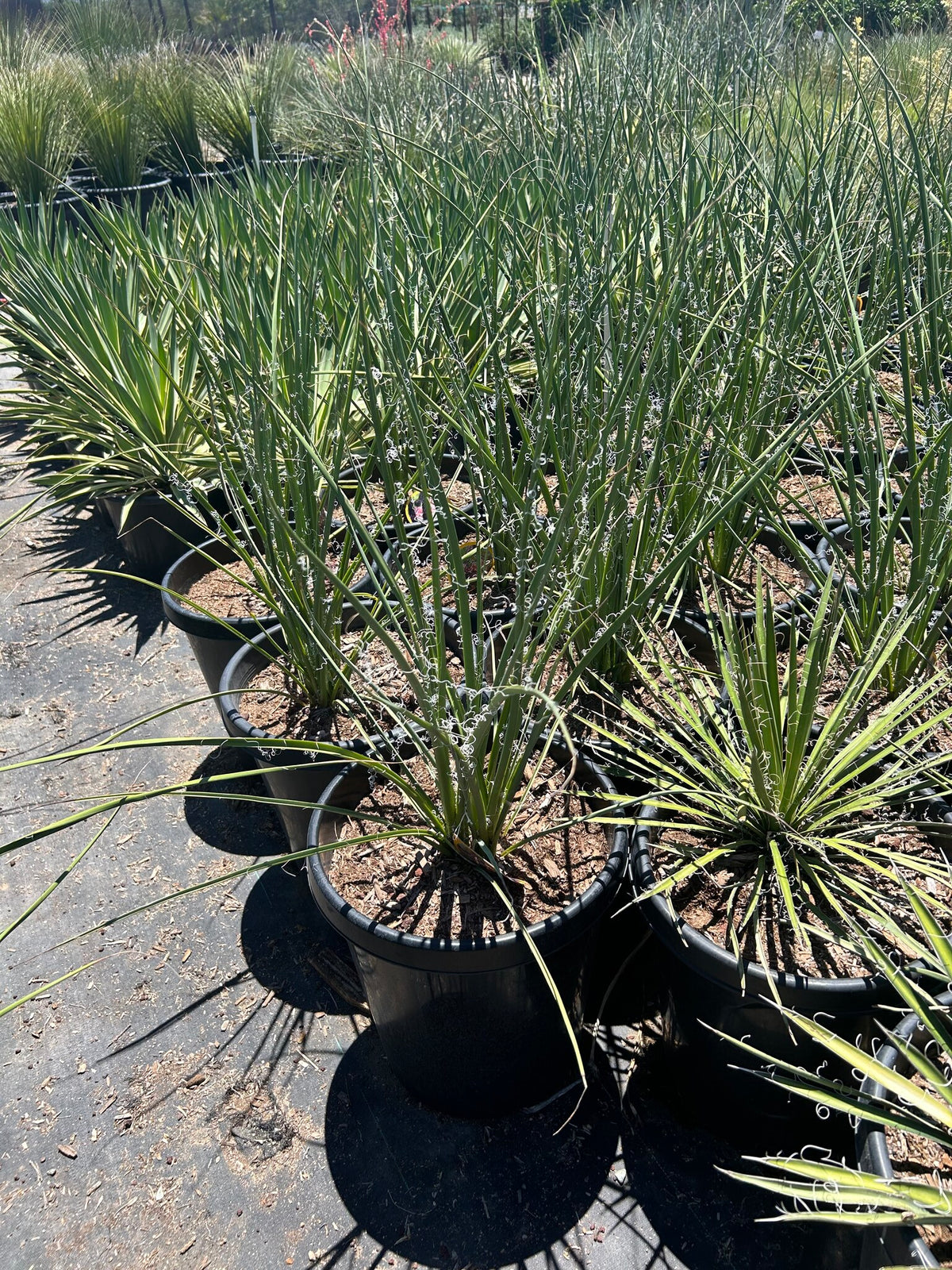
Little Giant Hesperaloe (Hesperaloe × 'Little Giant') is Phoenix's top compact desert accent for small spaces, borders, and modern xeriscape designs. Growing just 2–3 feet tall with graceful, arching evergreen foliage and bold flower spikes reaching 4–5 feet, it delivers striking coral-red color with nearly zero maintenance. Thriving in full sun and blazing heat, it's the go-to choice for homeowners in Scottsdale designing low-water landscapes, in Mesa adding curb appeal, and in Gilbert or Chandler creating stylish, drought-proof yards.
Little Giant Hesperaloe Plant Details
| Attribute | Detail |
|---|---|
| Scientific Name | Hesperaloe × 'Little Giant' |
| Common Names | Little Giant Hesperaloe, Compact Red Yucca, Dwarf Red Yucca |
| Mature Height | 2–3 feet (foliage); 4–5 feet (flower stalks) |
| Mature Width | 2–3 feet |
| Growth Rate | Moderate — 6–12 inches per year in Phoenix's warm climate |
| Sun | Full sun (6+ hrs). Thrives in reflected heat from walls and pavement. |
| Water | Very low once established. One of Phoenix's most drought-tolerant accent plants. |
| USDA Zones | 7–11 (Phoenix is Zone 9b–10a — ideal) |
| Soil | Well-draining. Adapts to Arizona caliche soils with proper drainage. |
| Foliage | Evergreen — stays attractive year-round with arching, grass-like leaves |
| Flower Color | Coral-red to salmon-pink; blooms late spring through summer |
| Wildlife Value | Excellent hummingbird attractor; also draws orioles and butterflies |
Little Giant Hesperaloe Uses in Phoenix Landscapes
Border Plantings and Modern Xeriscape
Little Giant's tidy, compact form makes it ideal for defined borders, landscape beds, and modern xeriscape designs where structure matters. Its arching evergreen foliage provides year-round color, while the tall flower spikes add vertical drama without taking over the space. Plant 3 feet apart for a continuous border effect. Pair with Desert Spoon or Blue Elf Aloe for a striking textural contrast.
Container and Patio Accent
At 2–3 feet wide, Little Giant is one of the few true desert accent plants that works beautifully in large patio containers. It handles the intense reflected heat of patios, driveways, and pool decks without any stress. Plant in a 15–20 gallon container with fast-draining cactus mix and enjoy the coral blooms up close all summer long.
Mass Planting and Curb Appeal
When planted in groups of 3–7, Little Giant creates a bold, cohesive landscape statement with minimal effort. The uniform size ensures a clean, polished look that stays low-maintenance year after year. For a 20-foot bed, plant 5–6 plants spaced 3 feet apart. Combine with Mexican Feather Grass or Purple Three Awn for a dynamic, naturalistic desert planting.
Pool-Friendly Desert Gardens
Little Giant is an excellent pool-area plant — it drops no messy seeds or pods, stays compact enough to avoid blocking sight lines, and tolerates the intense reflected heat typical of pool surrounds. The hummingbird-friendly blooms add color and life to the poolside environment all season long.
Best Time to Plant Little Giant Hesperaloe in Phoenix
Fall (October–November) is the ideal planting window. Soil temperatures stay warm enough to support root establishment, while cooler air temperatures reduce transplant stress. Plants get 6–8 months to develop deep roots before facing their first Phoenix summer. Spring (February–April) is the second-best window. Avoid planting in peak summer (June–August) unless you can provide daily watering and afternoon shade during establishment.
How to Plant Little Giant Hesperaloe
- Dig wide, not deep — excavate a hole 2–3 times the root ball width but only as deep as the root ball height.
- Check for caliche — break through any hardpan caliche layer beneath the planting hole to ensure water can drain freely.
- Backfill with native soil — a light 20% compost blend with your native soil is fine; avoid heavy organic mixes that retain too much moisture.
- Spacing — plant 3 feet apart for borders and mass plantings; 4–5 feet for individual specimens.
- Water basin — build a 3–4 inch raised ring of soil around the plant to direct irrigation water directly to the root zone.
- Mulch — apply 2–3 inches of gravel or bark mulch to retain soil moisture and regulate temperature.
Watering Little Giant Hesperaloe in Phoenix
First Year Watering Schedule
Weeks 1–2: Water every 1–2 days, deep and slow (20–30 minutes per session). Month 1–2: Reduce to every 3–4 days. Month 3–6: Water every 7–10 days (every 5–7 days in peak summer heat). After Year 1: Little Giant is highly drought-tolerant — water every 2–3 weeks in summer and every 4–6 weeks in winter.
Drip Irrigation
Place a 1–2 GPH emitter 12–18 inches from the crown of the plant. Avoid wetting the crown or center of the rosette, as this can lead to rot. Once fully established (after year 1–2), Little Giant can survive on Phoenix's natural rainfall with only occasional deep supplemental irrigation during extreme heat.
How fast does Little Giant Hesperaloe grow in Phoenix?
Little Giant grows at a moderate rate of 6–12 inches per year in Phoenix's warm climate. In optimal conditions with full sun and well-draining soil, plants can reach their mature size within 2–3 years of planting.
Is Little Giant drought tolerant once established?
Yes — it's one of Phoenix's most drought-tolerant accent plants. After the first year, it can thrive on very minimal supplemental irrigation, making it ideal for low-water landscapes and HOA-approved xeriscape designs.
What is the difference between Little Giant and regular Red Yucca (Hesperaloe parviflora)?
Standard Red Yucca grows 3–5 feet wide and tall, while Little Giant stays compact at 2–3 feet. Little Giant is a purpose-bred hybrid for smaller spaces, containers, and tighter landscape designs where the full-size Red Yucca would be too large.
Can Little Giant handle Phoenix's extreme summer heat?
Absolutely. Little Giant is one of the toughest compact accent plants for Phoenix's climate, thriving in full sun, reflected heat from walls and pavement, and triple-digit temperatures. It actually blooms most prolifically during the hot season.
Does Little Giant work near swimming pools?
Yes — it's an excellent pool-area plant. It doesn't drop messy fruit or seeds, stays compact enough not to obstruct views, and tolerates the reflected heat of pool decks without any issues.
You May Also Like
Brake Lights Hesperaloe — A dramatic red-flowered Hesperaloe variety with deeper crimson blooms, great for bold landscape statements.
Pink Parade Hesperaloe — Soft pink-flowering Hesperaloe for a lighter, romantic color palette in desert gardens.
Giant Hesperaloe — The full-size version for larger landscape areas that need maximum impact and dramatic scale.
Desert Spoon (Dasylirion wheeleri) — A bold rosette succulent that pairs beautifully with Hesperaloe for textural contrast.
Purple Three Awn — A fine-textured native grass that softens the bold structure of Hesperaloe in mixed plantings.
How Many Little Giant Hesperaloe Do I Need?
Little Giant stays a compact 2 to 3 feet wide, so it spaces tightly for borders and mass plantings. Use 3 foot centers for a continuous run or accent grouping. Plant counts by run length:
| Run Length | At 3 ft spacing |
|---|---|
| 10 ft | 4 plants |
| 20 ft | 7 plants |
| 30 ft | 11 plants |
| 40 ft | 14 plants |
For a clean accent, set 3 to 5 in an odd-numbered cluster at 3 foot spacing. As a single specimen or container star, give it 4 to 5 feet so the 4 to 5 foot flower stalks have room to arch.
Little Giant Hesperaloe Season-by-Season in Phoenix
- Spring (Feb to Apr): Coral-red flower stalks begin rising and pull in hummingbirds and orioles. Strong second planting window as soil warms.
- Summer (May to Sep): Peak bloom. Thrives in full sun and reflected heat and flowers most heavily through the hottest months. Monsoon rain usually covers its water needs.
- Fall (Oct to Nov): The prime planting window. Roots establish through the mild months and a light second flush of bloom is common.
- Winter (Dec to Jan): Evergreen, arching foliage holds structure. Cold-hardy well below freezing (Zone 7), so no frost protection is needed in the Valley.
At a Glance
✔ Hummingbird-Friendly ✔ Pollinator-Friendly ✔ Heat-Loving (Reflected-Heat Tolerant) ✔ Drought-Tolerant ✔ Pool-Friendly (Low-Litter) ✔ Evergreen ✔ Low-Maintenance ✔ Fire-Wise ✔ Deer & Rabbit-Resistant ✔ Cold-Hardy to 0°F
Plant It With
- Brake Lights Hesperaloe: deeper crimson blooms that layer with Little Giant's coral for a bold red theme.
- Pink Parade Hesperaloe: soft pink flowers that lighten the palette in the same bed.
- Giant Hesperaloe: the full-size cousin for scale and a backdrop behind the compact Little Giant.
- Desert Spoon: a silver-blue rosette that contrasts in texture with the arching grassy foliage.
Is Little Giant Hesperaloe Right for Your Yard?
It is an easy fit for full-sun, reflected-heat spots with well-draining soil: borders, narrow beds, pool surrounds, containers, and HOA xeriscapes where a tidy, litter-free accent matters. Break through caliche so water drains and keep the drip emitter off the crown. Not a fit for deep shade or low spots that stay wet, where the crown can rot.
Customer Reviews
Share