

Havard's Century Plant
Havard's Century Plant
Couldn't load pickup availability
Havard's Century Plant — The Cold-Hardy Desert Giant for Phoenix Gardens
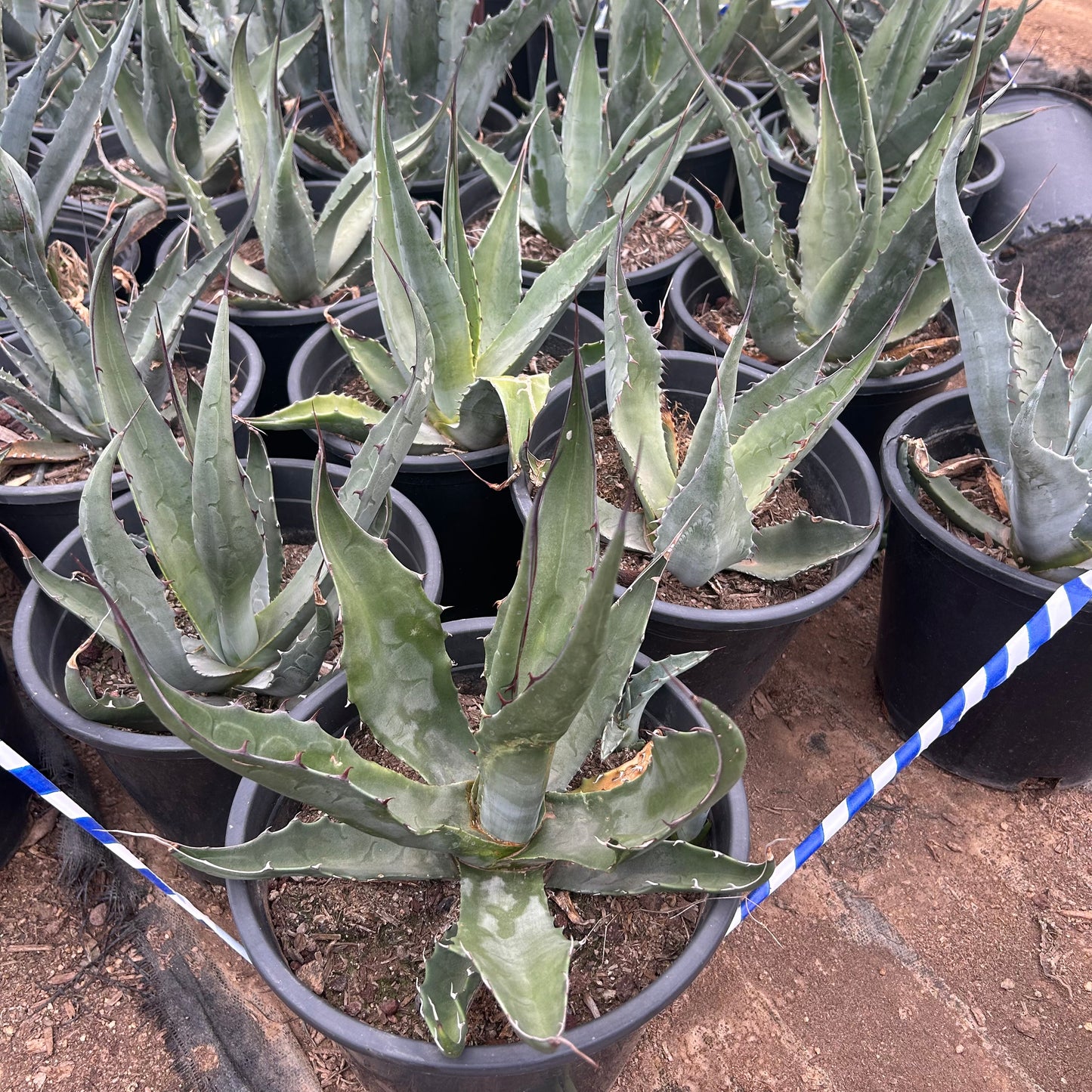
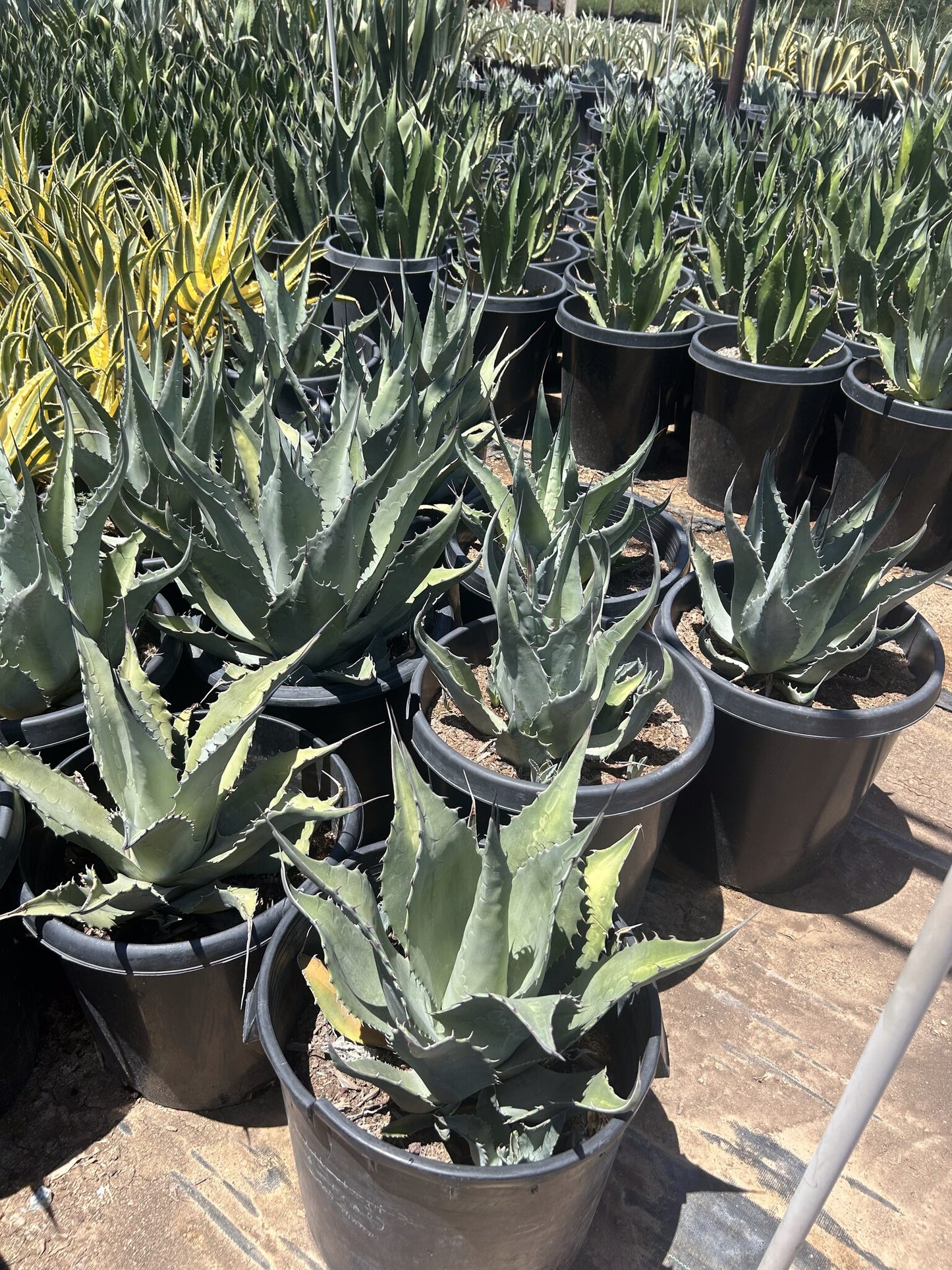
Havard's Century Plant (Agave havardiana) is one of the most cold-hardy and visually striking large agaves available for Phoenix Valley landscapes. This rugged West Texas native forms a broad, dense rosette of thick blue-gray leaves with bold dark teeth along the margins and a stout terminal spine. Growing 3–4 feet tall and 4–5 feet wide, it creates a powerful architectural presence in any desert garden. Unlike many tropical agaves, Havard's Century Plant handles cold snaps down to 0°F — making it equally at home in the Phoenix Valley, Prescott, or Flagstaff. Whether you're designing a xeriscape in Scottsdale, a rock garden in Mesa, or a hardy foundation planting in Gilbert — Havard's Century Plant is built to endure.
Havard's Century Plant Details
| Attribute | Detail |
|---|---|
| Scientific Name | Agave havardiana |
| Common Names | Havard's Century Plant, Havard Agave, Chisos Agave |
| Mature Height | 3–4 feet |
| Mature Width | 4–5 feet |
| Growth Rate | Slow — adds 2–4 inches per year in Phoenix |
| Sun | Full sun (6+ hrs). Handles reflected heat from walls and pavement. |
| Water | Very low once established. Extremely drought-tolerant. |
| USDA Zones | 5–11 (Phoenix is Zone 9b–10a). Cold-hardy to 0°F. |
| Soil | Well-draining. Adapts to Arizona caliche soils. |
| Foliage | Evergreen — thick blue-gray leaves with dark marginal teeth |
| Bloom | Yellow flowers on a 10–15 ft stalk (blooms once at maturity) |
Havard's Century Plant Uses in Phoenix Landscapes
Sculptural Focal Point
The dense, symmetrical rosette of blue-gray leaves makes Havard's Century Plant a commanding focal point. Plant it solo in a gravel bed, raised planter, or at the center of a rock garden in Scottsdale, Paradise Valley, or Tempe. Its compact but powerful form demands attention without overwhelming smaller landscapes.
Cold-Hardy Xeriscape Design
One of the few large agaves that can handle both Phoenix summer heat and occasional hard freezes, making it perfect for higher-elevation properties in Fountain Hills, Cave Creek, or north Scottsdale. Pair with other cold-hardy desert plants like Red Yucca, Desert Spoon, and Beargrass for a landscape that thrives year-round.
Rock Garden & Boulder Companion
Havard's Century Plant looks stunning nestled among boulders and decomposed granite. The blue-gray leaves complement warm-toned Arizona sandstone beautifully. Plant it alongside Mexican Fence Post Cactus, Golden Barrel, and Agave parryi for a dramatic desert rock garden in Mesa, Chandler, or Peoria.
Best Time to Plant Havard's Century Plant in Phoenix
Fall (October–November) is the ideal planting window. Warm soil supports root establishment while cooler air reduces transplant stress. Spring (February–April) is the second-best window. Because this species is so cold-hardy, late fall planting is especially safe — even an unexpected frost won't harm it.
How to Plant Havard's Century Plant
- Dig wide, not deep — 2–3x the root ball width, same depth as the container.
- Check for caliche — break through any hardpan layer for proper drainage.
- Backfill with native soil — a light 20% pumice or volcanic rock blend improves drainage.
- Spacing — 4–5 ft apart for grouped plantings; 6+ ft for standalone specimens.
- Water basin — build a 3–4 inch ring around the root zone to direct water to roots.
- Mulch — 2–3 inches of gravel or decomposed granite to retain moisture and suppress weeds.
Watering Havard's Century Plant in Phoenix
First Year Watering Schedule
Weeks 1–2: Water every 2–3 days, deep and slow (15–20 min). Month 1–2: Every 5–7 days. Month 3–6: Every 10–14 days (7–10 days in peak summer). After Year 1: Every 2–3 weeks in summer; monthly or less in winter.
Drip Irrigation
Place one 2 GPH emitter 12–18 inches from the base. Established Havard's Century Plants need very little supplemental water — they evolved in the arid Chisos Mountains and handle extended drought with ease.
How fast does Havard's Century Plant grow in Phoenix?
It's a slow grower, adding 2–4 inches per year. A 5-gallon plant will reach its mature 4–5 foot spread in about 6–10 years. Patience is rewarded — mature specimens are among the most striking agaves in any garden.
How cold-hardy is Havard's Century Plant?
Extremely. It handles temperatures down to 0°F (USDA Zone 5), making it one of the most cold-tolerant large agaves available. In Phoenix (Zone 9b–10a), cold is never a concern.
Is it drought-tolerant?
Very. As a native of the arid Chisos Mountains of West Texas, it thrives on minimal water. Once established in Phoenix, it can survive on rainfall alone.
Does it produce pups?
Sparingly. Havard's Century Plant may produce a few offsets near its base as it matures, but it's not as prolific a pupper as some other agave species.
You May Also Like
Mountain Agave — Another cold-hardy agave with broad blue leaves and bold teeth.
Artichoke Agave — Compact overlapping rosette for tight spaces and modern designs.
Palmer's Agave — Large blue-gray rosette with dramatic form and impressive bloom stalk.
New Mexico Agave — Cold-hardy compact rosette ideal for borders and rock gardens.
How Many Havard's Century Plant Do I Need?
Havard's Century Plant is a compact architectural specimen at 4 to 5 feet wide, so it works solo or in clean odd-numbered groups.
| Planting Style | Spacing | What It Looks Like |
|---|---|---|
| Single focal point | 1 plant | One blue-gray rosette nestled among boulders or in a planter. |
| Odd-numbered grouping | 4 to 5 ft apart | Groups of 3 or 5 for a layered rock-garden cluster. |
| Repeating accent (per 25 ft bed) | 4 to 5 ft apart | About 5 to 6 plants spaced down a foundation or border. |
Set the stout terminal spine back about 2 to 3 feet from walkways and pool decks.
Havard's Century Plant Season-by-Season in Phoenix
- Spring (Feb to Apr): Slow new growth resumes from the center as soil warms. A solid second planting window after fall.
- Summer (May to Sep): Handles extreme and reflected heat with ease. Monsoon rain (Jul to Sep) usually covers its water needs; this is a low-water plant, so do not overwater in humid spells.
- Fall (Oct to Nov): The best planting season, and an especially safe one here since the plant is hardy enough that an early frost is no threat.
- Winter (Dec to Jan): Evergreen and exceptionally cold-tough, holding form down to about 0°F. No frost protection needed anywhere in the Valley, including higher-elevation yards in Cave Creek and Fountain Hills.
At a Glance
✔ Heat-Loving (Reflected-Heat Tolerant) ✔ Drought-Tolerant ✔ Evergreen ✔ Low-Maintenance ✔ Deer & Rabbit-Resistant ✔ Cold-Hardy to 0°F
Plant It With
- Red Yucca: cold-hardy, hummingbird-friendly bloom spikes that complement the blue rosette.
- Desert Spoon: silvery fine texture that pairs with the broad agave leaves.
- Artichoke Agave: a smaller overlapping rosette to echo the form at lower height.
- Century Plant: scale up the agave grouping with this larger gray-green icon.
Is Havard's Century Plant Right for Your Yard?
It is an ideal pick for full-sun, sharp-draining spots, rock gardens, and cold-prone higher-elevation Valley yards where softer agaves struggle. It is slow and compact, so it stays in scale in smaller beds. Not a fit if you want fast size or a spine-free plant near a play area, since growth is gradual and the teeth and terminal spine are firm.
Customer Reviews
Share