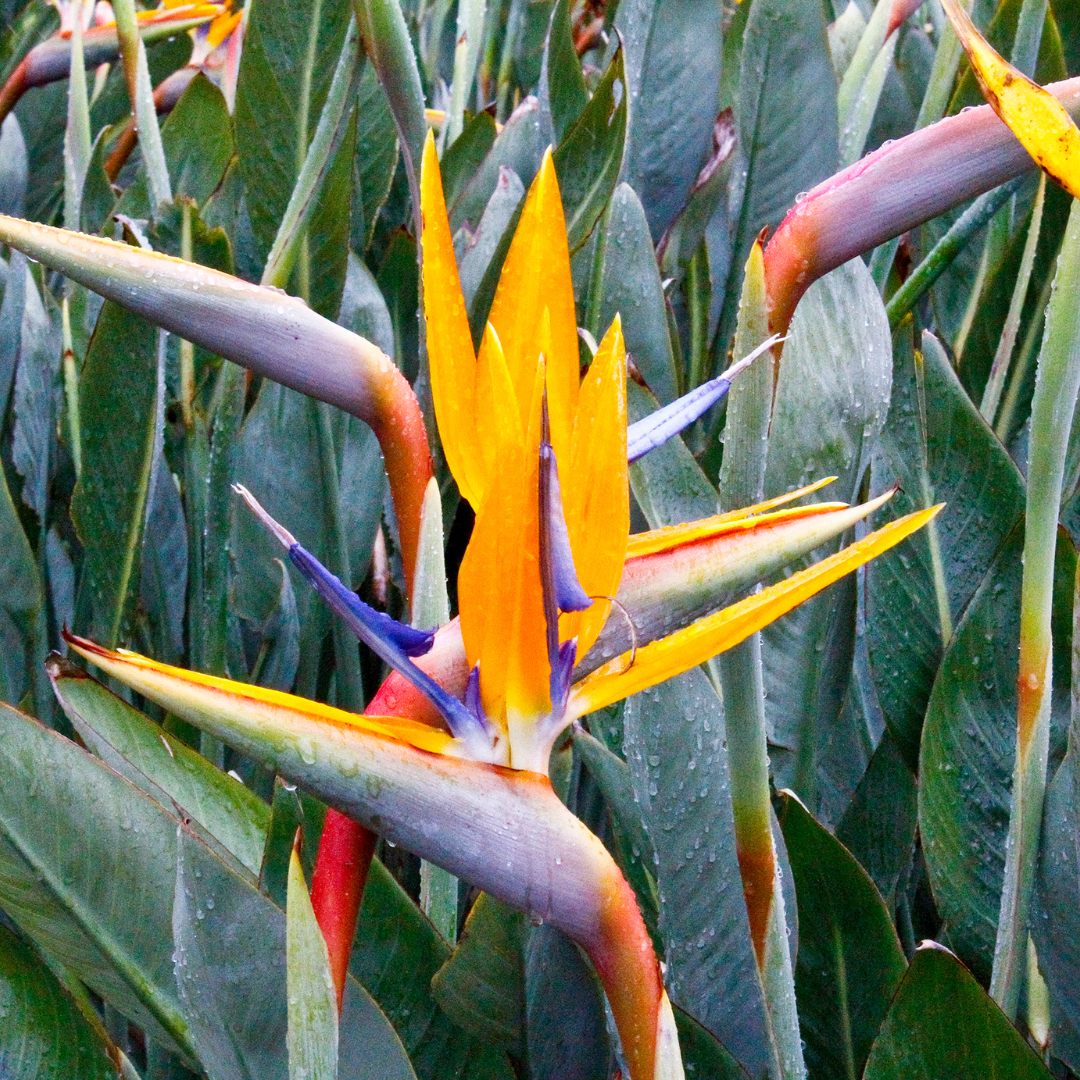


Tropical Bird of Paradise - Multi
Tropical Bird of Paradise - Multi
Couldn't load pickup availability
Phoenix's Most Iconic Tropical Perennial — Bird of Paradise Multi
Tropical Bird of Paradise Multi (Strelitzia reginae) delivers the same spectacular orange and purple blooms as single-stem Bird of Paradise — but in a full, lush multi-stem clump that creates an even bolder landscape presence. Growing 4–6 feet tall with a spread of 3–5 feet, this multi-stem form fills beds, borders, and pool areas with year-round tropical texture. Whether you're anchoring a garden bed in Scottsdale, creating a resort-style pool landscape in Chandler, or designing a dramatic entryway in Gilbert — Bird of Paradise Multi is the definitive choice for bold, low-water tropical impact.
Bird of Paradise Multi Plant Details
| Attribute | Detail |
|---|---|
| Scientific Name | Strelitzia reginae |
| Common Names | Tropical Bird of Paradise, Bird of Paradise, Crane Flower |
| Form | Multi-stem clump — fuller, denser than single-stem specimens |
| Mature Height | 4–6 feet |
| Mature Width | 3–5 feet per clump |
| Growth Rate | Moderate — 1–2 feet per year once established in Phoenix |
| Sun | Full sun (6+ hrs). Handles intense Phoenix heat and reflected light. |
| Water | Low once established. Highly drought-tolerant. |
| USDA Zones | 9–11 (Phoenix is Zone 9b–10a — Bird of Paradise thrives here) |
| Soil | Well-draining. Adapts to Arizona caliche soils with amendment. |
| Foliage | Evergreen — bold paddle-shaped leaves year-round |
| Bloom Color | Vivid orange and royal purple — unmistakable tropical display |
| Bloom Season | Spring and fall primary (sporadic blooms possible year-round) |
Bird of Paradise Multi Uses in Phoenix Landscapes
Bold Landscape Anchor and Focal Point
The multi-stem clump form of Bird of Paradise creates a denser, more architectural presence than a single-stem specimen — making it the ideal focal point plant for Phoenix landscapes. Plant a single large clump at the center of a garden bed, at the end of a driveway, or as the corner anchor of a patio in Mesa or Tempe for maximum visual drama. Pair with Agave and Desert Spoon for a modern desert design that's entirely unique.
Pool-Friendly Tropical Landscaping
Bird of Paradise Multi is one of the top pool-friendly tropical plants for Phoenix Valley landscapes. Its bold paddle-shaped leaves and towering orange blooms add resort-like drama to poolside areas, and the plant produces minimal debris compared to flowering trees. Plant 5–6 ft apart along a pool fence or retaining wall in Scottsdale or Peoria for a lush, tropical screen effect.
Low-Water Desert Tropical Border
Despite its tropical appearance, Bird of Paradise Multi is highly drought-tolerant once established — making it the perfect choice for homeowners in Chandler and Gilbert who want a tropical aesthetic without a high water bill. It thrives with deep, infrequent irrigation and can go weeks without water in winter. Pair with Ruellia and Canna Lily for a colorful, low-water tropical border.
Modern and Contemporary Landscape Design
The bold, graphic form of Bird of Paradise Multi — with its broad paddle leaves and vivid bicolor blooms — is a natural fit for modern and contemporary Phoenix landscape designs. Its clean lines and architectural quality complement concrete, steel, and gravel landscaping elements beautifully. Plant as a geometric mass or spacing it in a formal grid for a high-design desert garden in Phoenix or Scottsdale.
Best Time to Plant Bird of Paradise Multi in Phoenix
Fall (October–November) is the ideal planting window — warm soil encourages root establishment, and cooler air reduces transplant stress, giving the plant 6–8 months to establish before its first Phoenix summer. Spring (February–April) is the second-best option. Avoid planting during peak summer heat if possible, as heat stress on newly planted specimens can delay establishment significantly.
How to Plant Bird of Paradise Multi
- Dig wide, not deep — 2–3x the root ball width, same depth as the container
- Check for caliche — break through hardpan to ensure proper drainage
- Backfill with native soil — a light 20% organic amendment improves establishment
- Spacing — 4–6 ft apart for mass plantings; 5–8 ft for individual specimen placements
- Water basin — build a 3–4 inch ring around the drip line to direct water to roots
- Mulch — 2–3 inches of bark or gravel mulch to retain moisture and regulate soil temperature
Watering Bird of Paradise Multi in Phoenix
First Year Watering Schedule
Weeks 1–2: Water every 1–2 days, deep and slow (20–30 minutes). Month 1–2: Reduce to every 3–4 days. Month 3–6: Every 7–10 days (5–7 days during July–August peak heat). After Year 1: Every 10–14 days in summer; every 3–4 weeks in winter.
Drip Irrigation
Place 2–4 GPH drip emitters 18–24 inches from the base of each clump. Deep, infrequent watering promotes stronger root development and better drought resistance. Established Bird of Paradise clumps need very little supplemental irrigation during cooler months.
What's the difference between Bird of Paradise Multi and single-stem Bird of Paradise?
The multi-stem form has multiple growing points (shoots) from the same root mass, creating a wider, fuller clump. Single-stem specimens have one main growing point. Multi gives a lusher, more established look immediately — ideal for Phoenix homeowners who want full impact right away.
How often does Bird of Paradise bloom in Phoenix?
In Phoenix, Bird of Paradise blooms most heavily in spring (March–May) and again in fall (September–November). With adequate sun and deep, infrequent watering, established clumps can produce sporadic blooms throughout the year — especially in mild winters.
Is Bird of Paradise drought tolerant once established?
Yes. Once established (typically after 12–18 months), Bird of Paradise Multi is one of the most drought-tolerant tropical perennials available for Phoenix landscapes. It handles extended dry periods well and can thrive with deep irrigation every 2–4 weeks in summer.
Does Bird of Paradise Multi work near pools?
Yes — Bird of Paradise is considered pool-friendly. Its paddle-shaped leaves and thick stems create minimal debris compared to flowering trees, and the bold tropical look is perfect for poolside landscapes in Scottsdale, Mesa, and Chandler.
How big do multi-stem Bird of Paradise clumps get in Phoenix?
In Phoenix, Bird of Paradise Multi clumps typically reach 4–6 feet tall and 3–5 feet wide. Over many years, established clumps can spread wider as new shoots emerge from the base — creating an increasingly dramatic tropical focal point.
You May Also Like
Tropical Bird of Paradise (Single) — The single-stem version for a cleaner, more architectural focal point in tighter spaces.
Canna Lily — A fast-growing tropical perennial with bold blooms that pairs beautifully alongside Bird of Paradise in Phoenix landscape borders.
Plumeria — A fragrant tropical accent tree that creates a layered, resort-style garden when planted near Bird of Paradise.
Asparagus Fern — A lush, feathery ground cover that softens the base of Bird of Paradise clumps and adds texture to the planting.
Pink Trumpet Bush — A bold flowering tree that complements the tropical drama of Bird of Paradise with its spring pink bloom display.
How Many Bird of Paradise Multi Do I Need?
Each multi-stem clump matures to 3 to 5 feet wide, so it reads as a bold focal mass rather than a clipped hedge. Plant one clump as an anchor, or set them in odd-numbered groups of 3 so each fan of foliage has room to show. Use the spacing below for the effect you want:
| Planting Goal | Spacing | Plants per 12 ft run |
|---|---|---|
| Continuous tropical screen | 4 ft on center | 4 plants |
| Layered border grouping | 5 ft on center | 3 plants |
| Individual specimens with air around each | 6 ft on center | 2 to 3 plants |
Bird of Paradise Multi Season-by-Season in Phoenix
- Spring (Feb–Apr): Heaviest bloom flush of the year along with a strong push of new shoots from the clump base. A prime second planting window once frost risk passes.
- Summer (May–Sep): Thrives in full sun and reflected heat and keeps growing through the hottest months. Deep weekly water in the worst heat; monsoon humidity is welcome and tip-browning is cosmetic only.
- Fall (Oct–Nov): The best planting season in Phoenix and the second major bloom cycle as temperatures ease.
- Winter (Dec–Jan): Stays evergreen but growth slows. Hardy to about 28°F. Cover the clump and any open blooms with frost cloth on hard-freeze nights; the established roots rebound even if leaf tips burn.
At a Glance
✔ Hummingbird-Friendly ✔ Heat-Loving (Reflected-Heat Tolerant) ✔ Drought-Tolerant ✔ Evergreen ✔ Low-Maintenance
Plant It With
- Tropical Bird of Paradise (Single): the single-stem form of the same plant for tighter, cleaner spaces.
- Giant Tropical Bird of Paradise: towering Strelitzia nicolai for a tall backdrop behind the clump.
- Asparagus Fern: a soft, feathery groundcover that hides the woody base of the clump.
- Desert Spoon: a silver-green spiky accent that ties the tropical clump into desert plantings.
Is Bird of Paradise Multi Right for Your Yard?
It thrives in full sun with 6 or more hours of light, in well-draining soil where caliche has been broken through, with room for a 3 to 5 foot clump and steady deep water to fuel blooming. It is happiest in warm, protected spots near walls and patios. Not the right fit if your only space is a frost-pocket or a low area that stays wet, since soggy soil and hard freezes below 28°F are its two real weaknesses.
Customer Reviews
Share