

Texas Sage Compacta
Texas Sage Compacta
Couldn't load pickup availability
The Best Compact Purple-Blooming Shrub for Phoenix Landscapes
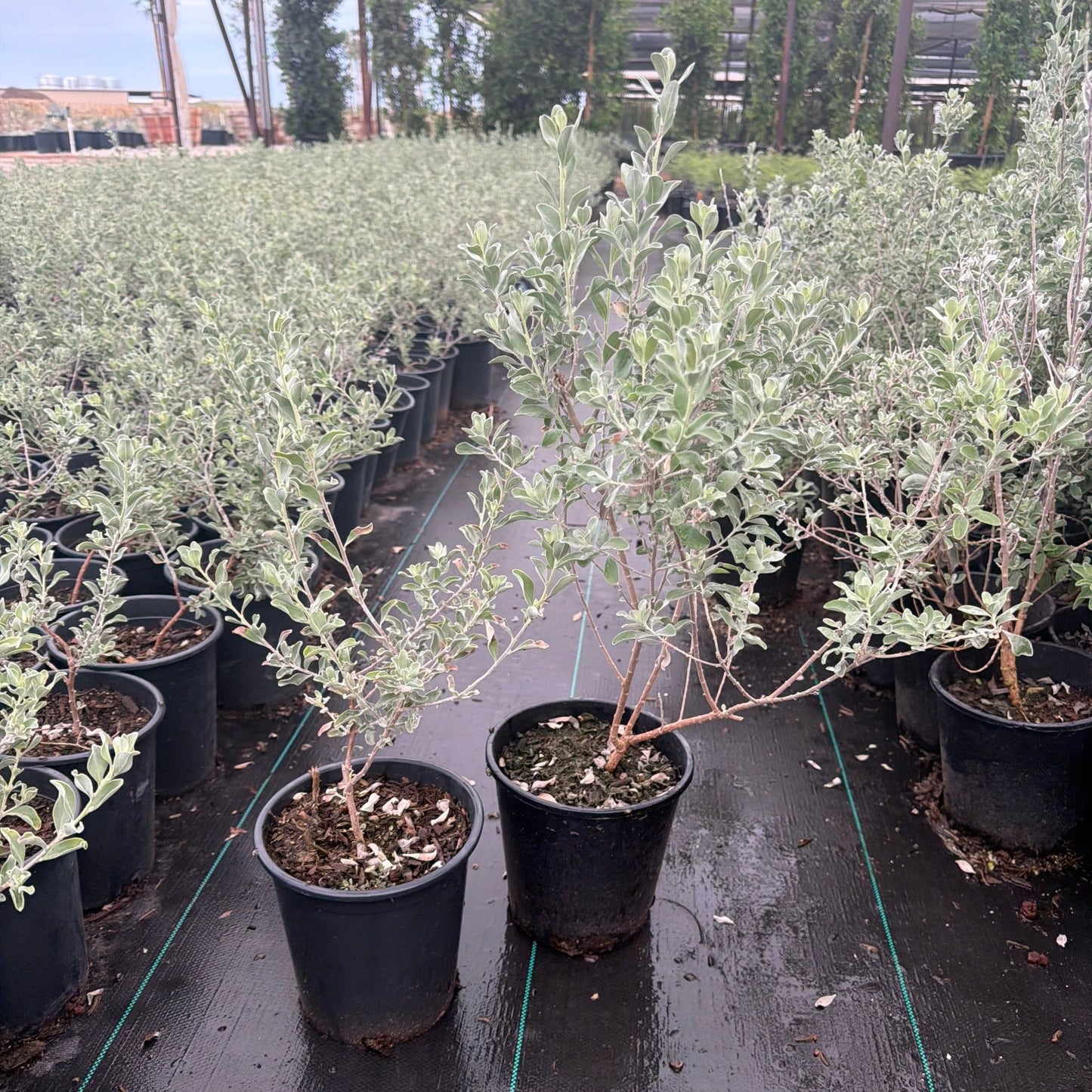
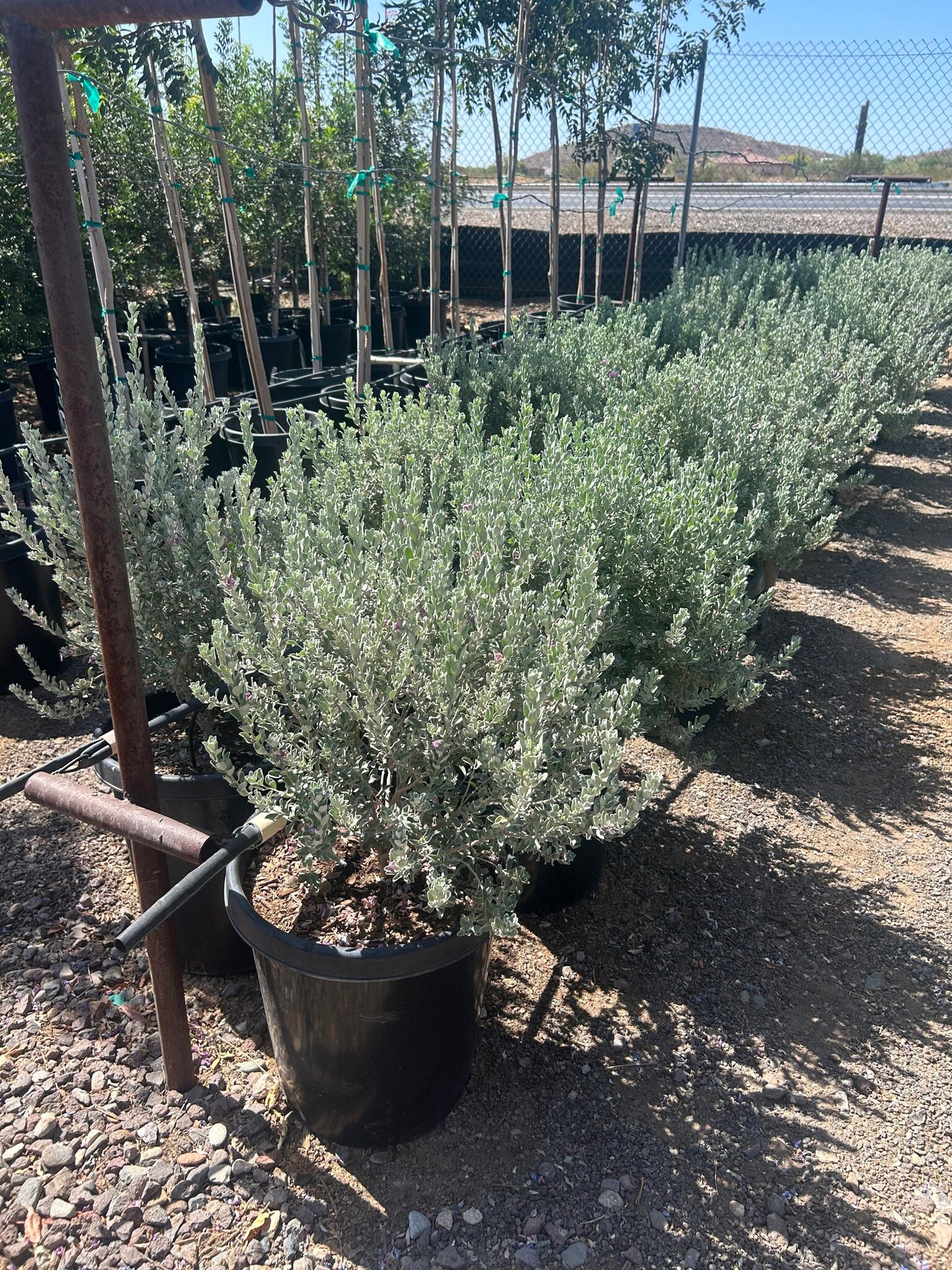
Texas Sage Compacta (Leucophyllum frutescens ‘Compacta’) delivers everything Phoenix homeowners love about classic Texas Sage — silvery-gray foliage, stunning purple blooms after summer rain, and bulletproof drought tolerance — in a tidy 3–4 foot package. This dwarf variety is perfect for foundation plantings, borders, and small gardens throughout Scottsdale, Chandler, Mesa, Gilbert, and Tempe where full-size Texas Sage would be too large.
Texas Sage Compacta Details
| Attribute | Detail |
|---|---|
| Scientific Name | Leucophyllum frutescens ‘Compacta’ |
| Common Names | Texas Sage Compacta, Compact Texas Ranger, Dwarf Barometer Bush |
| Mature Height | 3–4 feet |
| Mature Width | 3–4 feet |
| Growth Rate | Moderate — 1–2 feet per year in Phoenix |
| Sun | Full sun (6+ hrs). Thrives in reflected heat from walls and pavement. |
| Water | Very low once established. Extremely drought-tolerant. |
| USDA Zones | 8–11 (Phoenix is Zone 9b–10a) |
| Soil | Well-draining. Thrives in rocky or Arizona caliche soils. Avoid overwatering. |
| Foliage | Evergreen — silvery-gray leaves year-round |
| Bloom Color | Lavender to purple (blooms after summer monsoon rains) |
Texas Sage Compacta Uses in Phoenix Landscapes
Foundation Planting & Borders
Texas Sage Compacta’s tidy, rounded form makes it perfect for foundation plantings along the front of homes and buildings. Space plants 3–4 feet apart for a seamless, low-maintenance border that never needs heavy pruning. For a 20 ft foundation bed, use 5–6 plants.
Low-Water Hedge
Plant in a row for a compact, drought-tolerant hedge that provides soft screening without blocking views. The silvery foliage looks attractive year-round, and the purple summer blooms add seasonal drama. Space 2.5–3 feet apart for a tight hedge.
Desert Color Garden
Pair Texas Sage Compacta with other desert bloomers like Red Bird of Paradise, Baja Fairy Duster, and Yellow Bells for a low-water garden that delivers waves of color from spring through fall. The silvery foliage provides beautiful contrast against green and red-toned plants.
Best Time to Plant Texas Sage Compacta in Phoenix
Fall (October–November) is the ideal planting window. Warm soil encourages fast root establishment while cooler air reduces transplant stress. Your plant gets 6–8 months to settle in before its first Phoenix summer. Spring (February–April) is a solid second choice. Avoid summer planting when possible.
How to Plant Texas Sage Compacta
- Dig wide, not deep — 2–3x the root ball width, same depth
- Check for caliche — break through any hardpan layer for drainage
- Backfill with native soil only — Texas Sage prefers lean, unamended soil
- Spacing — 3–4 ft apart for border plantings; 2.5–3 ft for tight hedges
- Water basin — build a 3–4 inch ring to direct water to roots
- Mulch — 2–3 inches of gravel mulch (avoid organic mulch that holds moisture)
Watering Texas Sage Compacta in Phoenix
First Year Watering Schedule
- Weeks 1–2: Every 2–3 days, deep and slow
- Month 1–2: Every 5–7 days
- Month 3–6: Every 10–14 days
- After Year 1: Every 2–4 weeks summer; monthly or less in winter
Drip Irrigation
Place one 1–2 GPH emitter 12–18 inches from the base. Texas Sage is extremely drought-tolerant and actually blooms better with less water. Overwatering is the #1 killer of Texas Sage — always let soil dry completely between waterings.
How big does Texas Sage Compacta get?
Texas Sage Compacta stays compact at 3–4 feet tall and wide — about half the size of standard Texas Sage. It maintains a naturally rounded form with minimal pruning.
When does Texas Sage Compacta bloom?
It blooms primarily after summer monsoon rains (July–September in Phoenix). The increased humidity triggers masses of lavender-purple flowers that cover the entire plant. It may also bloom sporadically after other rain events.
Is Texas Sage Compacta drought tolerant?
Extremely. Once established, it thrives on rainfall alone in most Phoenix landscapes. It’s one of the most drought-tolerant shrubs available and actually performs better with less irrigation.
What’s the difference between Compacta and regular Texas Sage?
Compacta grows to about half the size (3–4 feet vs. 6–8 feet) with the same silvery foliage and purple blooms. It’s ideal for smaller spaces, foundation plantings, and borders where standard Texas Sage would be too large.
You May Also Like
- Green Cloud Texas Sage — Green-leafed variety with magenta blooms for a different color contrast
- Thunder Cloud Sage — Deep purple blooms on a larger frame
- Red Bird of Paradise — Fiery red-orange blooms pair beautifully with Compacta’s purple flowers
- Baja Fairy Duster — Red puffball flowers complement the silvery foliage
How Many Texas Sage Compacta Do I Need?
This dwarf Leucophyllum matures to about 3 to 4 feet wide. Space plants roughly 3 feet apart for a foundation row or low hedge, or tighten to 2.5 feet for a denser screen. Use this guide at 3 ft spacing:
| Border / hedge length | Plants needed (3 ft spacing) |
|---|---|
| 6 ft | 2 plants |
| 12 ft | 4 plants |
| 20 ft | 7 plants |
| 30 ft | 10 plants |
As a single accent, one rounded plant tucks neatly under a window or beside an entry without ever needing heavy pruning.
Texas Sage Compacta Season-by-Season in Phoenix
- Spring (Feb to Apr): Fresh silver growth and light sporadic bloom. Best second planting window before summer. Minimal shaping keeps the rounded form.
- Summer (May to Sep): Peak season. Fully heat and reflected-heat tolerant, and the monsoon humidity (Jul to Sep) sets off masses of lavender-purple bloom after each rain. Thrives on very little water.
- Fall (Oct to Nov): Prime planting season with continued occasional bloom as nights cool. Establishes fast in warm fall soil.
- Winter (Dec to Jan): Evergreen and cold-hardy for the Valley to about 10°F. Keeps its silver structure through winter with no frost cover needed.
At a Glance
✔ Pollinator-Friendly ✔ Heat-Loving (Reflected-Heat Tolerant) ✔ Drought-Tolerant ✔ Pool-Friendly (Low-Litter) ✔ Evergreen ✔ Low-Maintenance ✔ Deer & Rabbit-Resistant ✔ Cold-Hardy to 10°F
Plant It With
- Thunder Cloud Sage: deep purple blooms on a larger Leucophyllum for a layered silver-and-purple planting.
- Green Cloud Sage: green-leafed cousin with magenta bloom for foliage contrast.
- Red Bird of Paradise: fiery red-orange flowers that pop against the silver and purple.
- Baja Fairy Duster: red puffball blooms and fine foliage that feed hummingbirds nearby.
Is Texas Sage Compacta Right for Your Yard?
Texas Sage Compacta is an ideal low shrub for a full-sun foundation bed, border, or small xeriscape where you want silver foliage, purple monsoon bloom, and almost zero care on a tidy 3 to 4 foot frame. It is pool-friendly, frost-hardy, and loves caliche and reflected heat. It is not the best fit in a shady or poorly drained spot, where too much water and too little sun cause rot and weak, sparse growth.
Customer Reviews
Share