

Leucophyllum ‘Convent’
Leucophyllum ‘Convent’
Couldn't load pickup availability
The Best Compact Texas Sage for Phoenix Privacy Hedges
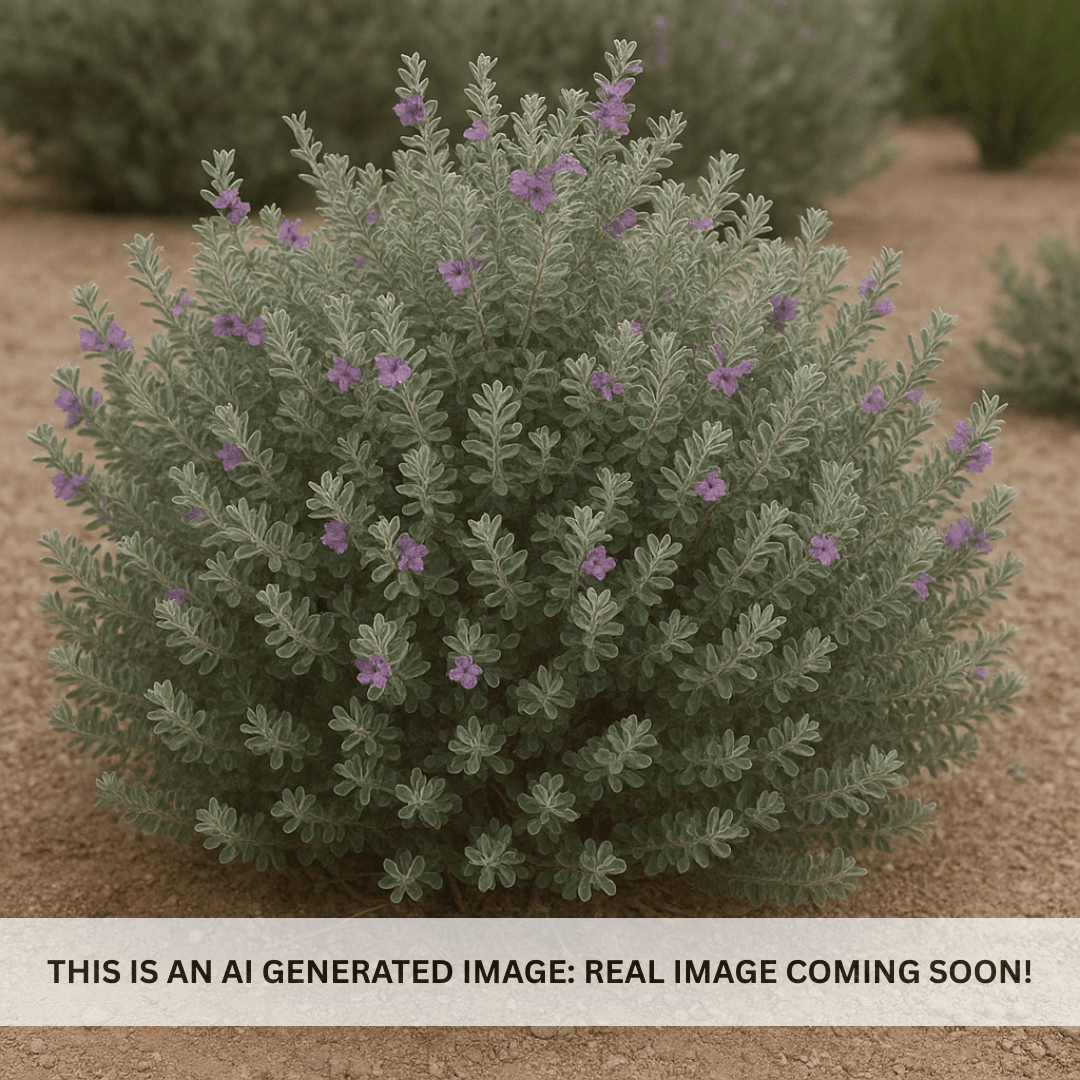
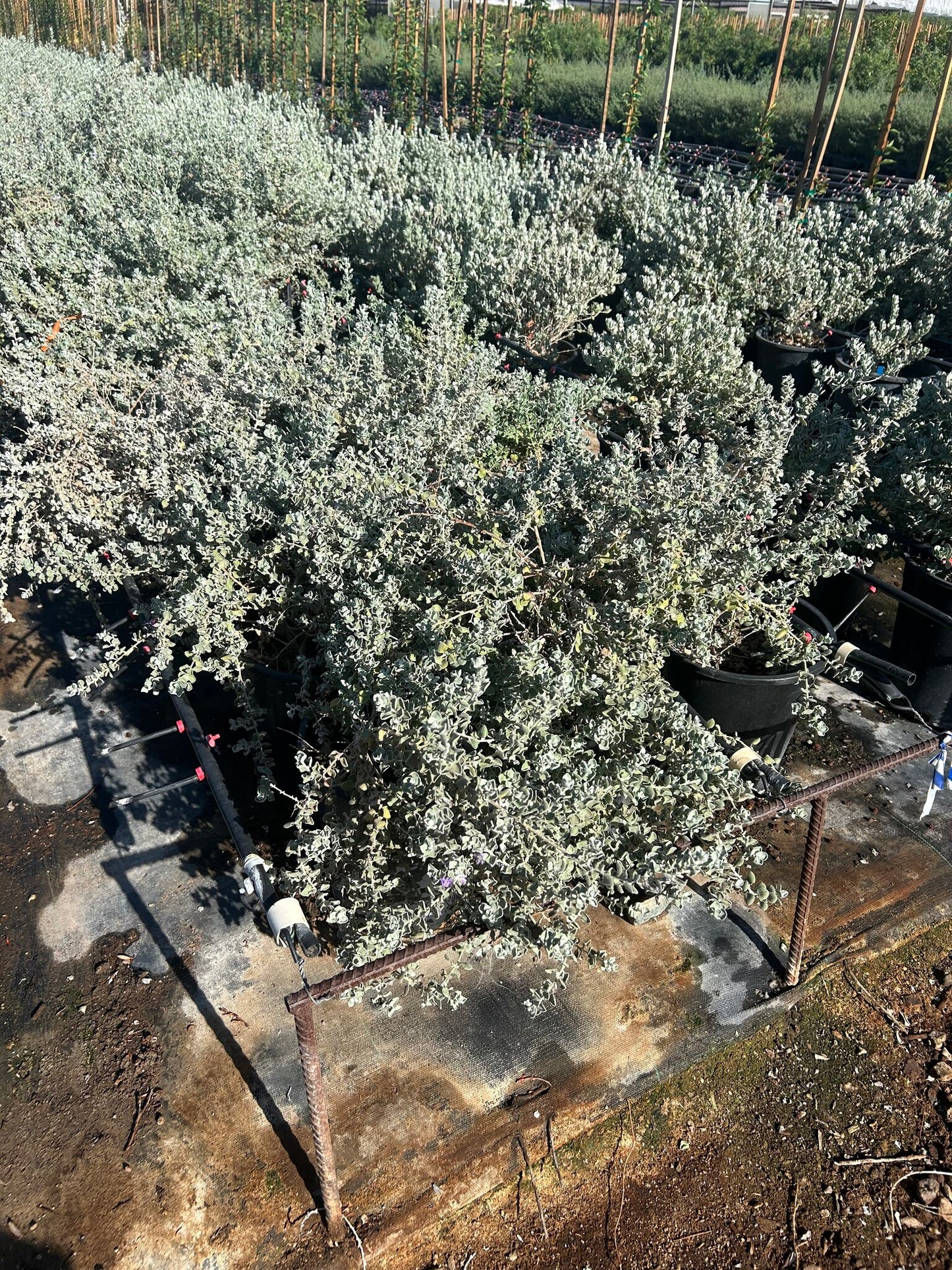
Leucophyllum frutescens 'Convent', commonly known as Convent Texas Sage or Convent Sage, is one of the most reliable compact evergreen shrubs for Phoenix Valley landscapes. This dense, rounded shrub features beautiful silvery-gray foliage and erupts with lavender-purple tubular blooms after summer monsoon rains — earning it the beloved nickname "barometer bush." Smaller and tidier than many Texas Sage varieties, Convent is highly prized for its neat form, extreme drought tolerance, and low maintenance needs. Whether you're building a privacy hedge in Scottsdale, framing an entryway in Mesa, or adding monsoon color to a Chandler xeriscape — Convent Texas Sage is a proven desert performer.
Convent Texas Sage Plant Details
| Attribute | Detail |
|---|---|
| Scientific Name | Leucophyllum frutescens 'Convent' |
| Common Names | Convent Texas Sage, Convent Sage, Convent Texas Ranger, Barometer Bush |
| Mature Height | 4–6 feet |
| Mature Width | 4–5 feet |
| Growth Rate | Moderate — 1–2 feet per year in Phoenix |
| Sun | Full sun (6+ hours). Handles reflected heat from walls and pavement. |
| Water | Very low once established. Extremely drought-tolerant — overwatering causes leggy growth. |
| USDA Zones | 8–11 (Phoenix is Zone 9b–10a) |
| Soil | Well-draining required. Thrives in rocky, alkaline soil and Arizona caliche. |
| Foliage | Evergreen — silvery-gray leaves year-round |
| Bloom Color | Lavender to purple tubular flowers, triggered by monsoon humidity |
Convent Texas Sage Uses in Phoenix Landscapes
Privacy Hedge & Screen
Convent Texas Sage's dense branching and evergreen foliage make it an excellent privacy hedge plant. Plant 3–4 feet apart for a solid screen that fills in within 2–3 years. For a 20-foot fence line, plan on 5–7 plants. The silvery foliage provides year-round visual interest even when not in bloom, and the compact form requires minimal shearing to maintain a tidy hedge line.
Foundation & Entryway Planting
The neat, rounded form of Convent Texas Sage makes it ideal for foundation plantings along house walls, garage fronts, and entryways throughout Gilbert, Tempe, and Peoria. Its moderate height won't block windows, and the silvery foliage contrasts beautifully against warm-toned stucco and stone exteriors common in Phoenix.
Monsoon Color & Xeriscape Accent
Few plants deliver the dramatic monsoon bloom show that Texas Sage provides. When summer humidity rises, Convent explodes with purple blooms seemingly overnight — transforming entire streetscapes across the Valley. Plant in groups of 3–5 for maximum visual impact. Pairs beautifully with Yellow Bells and Red Bird of Paradise for a classic Arizona color palette.
Best Time to Plant Convent Texas Sage in Phoenix
Fall (October–November) is the ideal planting window. Warm soil promotes rapid root establishment while cooler air reduces transplant stress, giving the plant 6–8 months to build a strong root system before its first Phoenix summer. Spring (February–April) is the second-best window. Avoid planting in peak summer heat if possible.
How to Plant Convent Texas Sage
- Dig wide, not deep — hole should be 2–3x the root ball width, same depth as the container.
- Check for caliche — break through any hardpan layer for drainage. Texas Sage cannot tolerate waterlogged roots.
- Backfill with native soil only — do not amend with compost or organic material. Texas Sage thrives in lean, alkaline desert soil.
- Spacing — 3–4 feet apart for hedges; 5 feet for individual specimens.
- Water basin — build a 3–4 inch ring to direct water to the root zone during establishment.
- Gravel mulch — 2–3 inches of decomposed granite or rock mulch. Avoid organic mulch which retains too much moisture.
Watering Convent Texas Sage in Phoenix
First Year Watering Schedule
Weeks 1–2: Every 3–4 days, deep and slow. Month 1–3: Every 7–10 days. Month 3–12: Every 10–14 days. After Year 1: Every 2–3 weeks in summer; monthly or less in winter. Texas Sage is extremely drought-tolerant and overwatering is the most common mistake — it causes leggy, open growth and reduces blooming.
Drip Irrigation
Place one 1-GPH emitter 12–18 inches from the trunk. Established Texas Sage needs very little supplemental water. In many Phoenix landscapes, mature specimens thrive on rainfall alone with only occasional deep watering during extreme summer drought.
How fast does Convent Texas Sage grow?
Convent grows at a moderate rate of 1–2 feet per year in Phoenix, reaching its mature 4–6 foot size in 3–4 years from a 5-gallon container. A 15-gallon plant provides near-instant screening.
Why isn't my Texas Sage blooming?
Texas Sage blooms are triggered by high humidity, not rain directly. They typically bloom after monsoon moisture events in July–September. Overwatering and over-fertilizing can actually reduce blooming by promoting leafy growth over flower production. Plant in full sun with lean soil for the best bloom show.
Does Convent Texas Sage need pruning?
Minimal pruning is needed. Convent naturally maintains a compact, rounded form. If shaping is desired, prune lightly in early spring before new growth begins. Never shear into a flat-topped box shape — this destroys the natural form and reduces blooming.
Is Texas Sage native to Arizona?
Texas Sage (Leucophyllum) is native to the Chihuahuan Desert of Texas and northern Mexico. While not technically native to Arizona, it has been widely adopted as an honorary native due to its perfect adaptation to the Sonoran Desert climate and is one of the most commonly planted shrubs in the Phoenix Valley.
You May Also Like
Green Cloud Sage — Larger Texas Sage variety with green foliage and violet blooms.
Chihuahuan Sage — Compact Leucophyllum with intense purple flowers and fine-textured foliage.
Cherry Red Sage — Vivid red-flowering perennial sage for Phoenix gardens.
Bush Germander — Silvery-leafed shrub with purple flowers, great Texas Sage companion.
How Many Convent Texas Sage Do I Need?
Convent is a compact 4 to 5 foot shrub. For a privacy hedge or screen, space plants about 3.5 feet apart on center so they knit into a solid line. Space single accents 5 feet apart, or plant in odd-numbered groups of 3 to 5 for a natural drift.
| Hedge / Screen Run | Plants Needed (3.5 ft spacing) |
|---|---|
| 10 ft | 3 plants |
| 20 ft | 6 plants |
| 30 ft | 9 plants |
| 40 ft | 12 plants |
| 50 ft | 15 plants |
Convent Texas Sage Season-by-Season in Phoenix
- Spring (Feb–Apr): Silvery new growth flushes out and the shrub tightens its rounded form. Best time for a light shaping prune and the second-best planting window of the year. Occasional light bloom on humid days.
- Summer (May–Sep): Thrives in extreme heat and reflected warmth off walls and pavement. The signature show comes with the monsoon (Jul–Sep): rising humidity triggers waves of lavender-purple bloom, often overnight. Hold back on water during this stretch to keep growth tight.
- Fall (Oct–Nov): Prime planting season and continued bloom flushes after late humidity. Growth slows as nights cool.
- Winter (Dec–Jan): Holds its silvery evergreen foliage through the season. Cold-hardy to about 10°F, so it shrugs off normal Valley frosts with no protection needed.
At a Glance
✔ Evergreen ✔ Drought-Tolerant ✔ Heat-Loving (Reflected-Heat Tolerant) ✔ Pool-Friendly (Low-Litter) ✔ Pollinator-Friendly ✔ Low-Maintenance ✔ Deer & Rabbit-Resistant ✔ Cold-Hardy to 10°F
Plant It With
- Green Cloud Sage: a larger green-leaved Texas Sage for layering taller backdrop behind the compact Convent.
- Chihuahuan Sage: fine-textured Leucophyllum with intense purple flowers for a coordinated sage hedge.
- Cherry Red Sage: vivid red salvia blooms that pop against the silvery foliage.
- Bush Germander: another silver-leaved, purple-flowering shrub that blends seamlessly in a low-water bed.
Is Convent Texas Sage Right for Your Yard?
It thrives in full sun and reflected heat, in lean, fast-draining alkaline soil broken free of caliche, and rewards neglect: too much water or fertilizer makes it leggy and cuts the bloom. Its compact 4 to 5 foot size makes it perfect for hedges, foundations under windows, and tidy xeriscape accents. It is not the right fit for a shady spot or a low area with poor drainage, where it will grow open and sparse and is prone to root rot.
Customer Reviews
Share