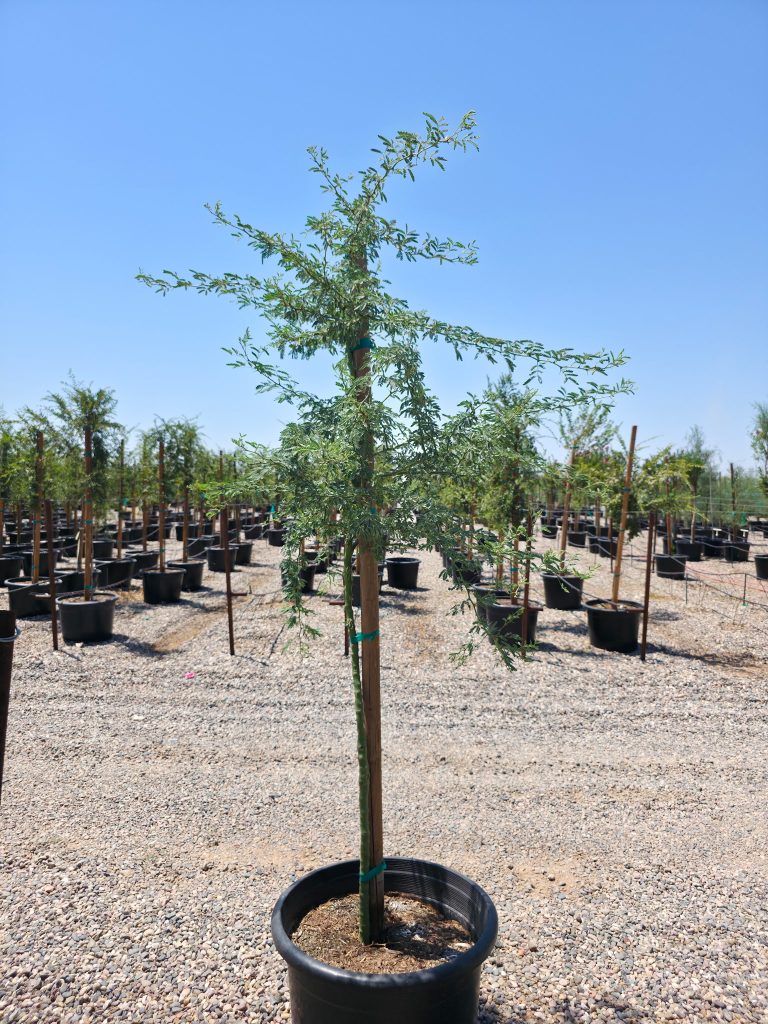


Foothill Palo Brea CCF
Foothill Palo Brea CCF
Couldn't load pickup availability
Phoenix's Premier Desert Flowering Shade Tree — Foothill Palo Brea CCF
Foothill Palo Brea CCF (Parkinsonia praecox Crown Canopy Form) is Phoenix's finest desert-native flowering shade tree — delivering stunning yellow spring blooms, beautiful green bark year-round, and refined canopy structure that surpasses standard Palo Brea selections. The Crown Canopy Form (CCF) designation indicates this tree has been specifically selected for superior branching structure, a fuller rounded canopy, and cleaner overall form — making it the premium choice for homeowners and designers who want Palo Brea's native toughness with a more polished appearance. Whether you're designing a low-water desert landscape in Scottsdale, adding a flowering focal point in Mesa, or creating a shade canopy in a xeriscape design in Chandler — Foothill Palo Brea CCF is the desert tree that does it all.
Foothill Palo Brea CCF Plant Details
| Attribute | Detail |
|---|---|
| Scientific Name | Parkinsonia praecox (Crown Canopy Form) |
| Common Names | Foothill Palo Brea, Palo Brea, Horsebean |
| Mature Height | 20–25 feet |
| Mature Width | 20–25 feet |
| Growth Rate | Moderate to fast — 2–3 feet per year in Phoenix |
| Sun | Full sun (6+ hrs). Thrives in reflected heat from walls and hardscape. |
| Water | Very low once established. Highly drought-tolerant native tree. |
| USDA Zones | 9–11 (Phoenix is Zone 9b–10a) |
| Soil | Well-draining. Excellent tolerance for Arizona caliche and rocky native soils. |
| Foliage | Semi-deciduous — small compound leaves; sheds in drought or cold stress |
| Bloom Color | Bright yellow spring flowers; sporadic bloom after summer monsoon rains |
| Bark | Distinctive smooth green bark — photosynthetic even when leafless |
Foothill Palo Brea CCF Uses in Phoenix Landscapes
Desert Focal Point and Specimen Tree
The Foothill Palo Brea CCF earns its place as the centerpiece of any Phoenix desert landscape. Its combination of brilliant yellow spring blooms, signature green photosynthetic bark, and refined rounded canopy makes it one of the most visually dynamic native trees available for Scottsdale and Phoenix yards. Plant it as a standalone specimen where its full form can be appreciated — paired with boulders, desert gravel, and native groundcovers for maximum visual impact.
Low-Water Desert Shade Tree
For homeowners designing xeriscape or low-water landscapes in Phoenix, Foothill Palo Brea CCF provides genuine canopy shade with almost no supplemental irrigation once established. Its 20–25 foot canopy spread casts meaningful shade over seating areas, patios, and play spaces while using a fraction of the water that traditional ash or ficus shade trees require. A natural fit for drought-conscious homeowners in Peoria, Gilbert, and Tempe.
Native Desert Design — Paired with Desert Plants
Foothill Palo Brea CCF is native to the Sonoran Desert region and thrives alongside other desert-adapted plants. Pair it with Saguaro Cactus, Agave, Desert Spoon, Brittlebush, or Penstemon for an authentic low-water Sonoran desert garden. Its green bark and yellow flowers complement the golden tones of desert gravel and the blue-gray foliage of Agave perfectly.
Pool-Friendly Shade Tree
Unlike many flowering trees, Palo Brea is relatively pool-friendly — its small compound leaves and bloom petals are easy to skim and don't clog pool filters the way larger-leafed trees do. Planted 15–20 feet from the pool edge, the CCF form provides a beautiful canopy overhead with manageable cleanup. Pair with Ruellia or Desert Marigold for color at the base.
Best Time to Plant Foothill Palo Brea CCF in Phoenix
Spring planting (March through May) is ideal for Foothill Palo Brea in Phoenix — warm soil temperatures accelerate root establishment while the tree is coming out of dormancy. Fall planting (September through November) is an equally excellent option as soil is still warm from summer and air temperatures are dropping. Avoid planting during December–February when cold nights can stress newly transplanted desert trees, or during peak summer heat in June–July before the monsoon arrives.
How to Plant Foothill Palo Brea CCF
- Dig wide, not deep — excavate a hole 2–3 times the width of the root ball, but only as deep as the root ball itself. Palo Brea is particularly sensitive to crown rot from improper planting depth.
- Check for caliche — break through any hardpan caliche layer to ensure excellent drainage. Standing water is the #1 killer of desert native trees in Phoenix landscapes.
- Backfill with native soil only — Palo Brea thrives in lean native soils; do not add heavy organic amendments which can hold too much moisture. A very light compost blend (10%) is fine.
- Spacing — plant 20–25 feet apart for desert landscape groupings; single specimens need 20+ feet from walls and structures to achieve full canopy expression.
- Build a wide water basin — create a 3–4 inch soil ring extending 3–4 feet from the trunk to encourage roots to spread wide.
- Gravel mulch — apply 2–3 inches of decomposed granite or pea gravel mulch rather than bark mulch; gravel dries faster and mimics the tree's natural desert habitat.
Watering Foothill Palo Brea CCF in Phoenix
First Year Watering Schedule
- Weeks 1–2: Every 2–3 days, deep and slow (20–30 minutes per session)
- Months 1–2: Every 4–5 days
- Months 3–6: Every 10–14 days (every 7–10 days in peak summer)
- After Year 1: Every 14–21 days summer; every 4–6 weeks winter (or none)
Drip Irrigation Setup
Use 1–2 GPH emitters placed 18–24 inches from the trunk. Water deeply and infrequently — Palo Brea roots seek deep moisture and will fail if kept constantly moist near the surface. Established Foothill Palo Brea CCF (2+ years) typically thrives on rainfall alone in Phoenix, needing supplemental irrigation only during extended dry periods in summer.
What does CCF mean on Foothill Palo Brea? CCF stands for Crown Canopy Form — a designation indicating this tree has been selected for superior branching structure, a fuller and more rounded canopy shape, and cleaner overall growth habit compared to standard nursery Palo Brea selections. It's the premium choice for landscape applications where tree form matters.
How fast does Foothill Palo Brea grow in Phoenix? Expect 2–3 feet of growth per year in Phoenix with adequate irrigation during establishment. Once established, Palo Brea is naturally slower-growing but long-lived, developing a more refined character over time than fast-growing ash or ficus trees.
Is Foothill Palo Brea truly drought-tolerant? Yes — once established after 1–2 seasons, Foothill Palo Brea is one of the most drought-tolerant shade trees available for Phoenix landscapes. It survives entirely on Phoenix's natural rainfall once established, though a monthly deep soak in summer keeps it looking its best.
When does Foothill Palo Brea bloom in Phoenix? Primary bloom is in spring (March–April) when the tree is covered in brilliant yellow flowers. Sporadic re-bloom can occur after monsoon rains in late summer (August–September), providing a second wave of yellow color.
Is Palo Brea the same as Palo Verde? No — while both are desert-native flowering trees with green bark, Palo Brea (Parkinsonia praecox) and Palo Verde (Parkinsonia florida or P. microphylla) are distinct species. Palo Brea typically has denser foliage, a more refined canopy form, and larger individual flower clusters than most Palo Verde varieties.
You May Also Like
- Blue Palo Verde — Arizona's iconic state tree with brilliant yellow spring blooms and distinctive blue-green bark, native to Sonoran Desert washes.
- Desert Willow — a graceful native flowering tree with showy pink-purple blooms and a weeping, airy canopy perfect for low-water Phoenix gardens.
- Shoestring Acacia — a dramatic weeping evergreen tree with long, ribbon-like foliage, ideal for adding vertical structure to Phoenix desert landscapes.
- Little Leaf Ash — Arizona's compact native ash for small spaces and patios, offering fine-textured foliage and drought tolerance.
- Texas Ebony — a slow-growing, dense evergreen native tree ideal for hedges, screens, and wildlife habitat in Phoenix low-water landscapes.
How Many Foothill Palo Brea CCF Do I Need?
Foothill Palo Brea CCF is a rounded flowering shade tree (20 to 25 ft wide), planted as a specimen or in a loose desert grouping rather than a hedge. Use one as a focal point where its green bark and yellow bloom can be seen in full, or plant in odd-numbered groups of 3 to 5 spaced 20 to 25 ft apart so each canopy stands clear.
| Effect | Spacing and count |
|---|---|
| Single focal specimen | 1 tree, 20+ ft from walls and structures |
| Desert grove | 3 trees at 22 ft apart |
| Low-water shade row | 1 tree every 22 to 25 ft |
Foothill Palo Brea CCF Season-by-Season in Phoenix
- Spring (Mar to May): Peak bloom: the canopy covers in bright yellow flowers that draw native bees. Best planting window as the tree breaks dormancy.
- Summer (May to Sep): Filtered canopy shade through the heat, taking full reflected sun off walls and pavement. Monsoon rains can trigger a sporadic second flush of yellow bloom. Needs little water once established.
- Fall (Oct to Nov): Excellent second planting window while the soil stays warm. The green photosynthetic bark keeps the tree handsome as growth slows.
- Winter (Dec to Jan): Semi-deciduous; it sheds some leaves under cold or drought stress, but the green bark holds year-round interest. Mature trees handle Valley winters down to about 20°F; protect young trees on hard frost nights.
At a Glance
✔ Pollinator-Friendly ✔ Heat-Loving (Reflected-Heat Tolerant) ✔ Drought-Tolerant ✔ Pool-Friendly (Low-Litter) ✔ Shade-Providing ✔ Low-Maintenance ✔ Cold-Hardy to 20°F
Plant It With
- Blue Palo Verde: Arizona's native state tree, a classic green-bark companion for a desert wash look.
- Foothill Palo Verde: a slower native palo verde that layers bloom timing alongside the brea.
- Desert Willow: pink trumpet flowers and an airy form for a low-water grove.
- Shoestring Acacia: weeping evergreen that adds vertical structure beside the rounded brea canopy.
Is Foothill Palo Brea CCF Right for Your Yard?
Foothill Palo Brea CCF thrives in full Phoenix sun and reflected heat, in lean, fast-draining caliche or rocky soil, and asks for very little water once established. Its small leaves and petals make it one of the cleaner flowering trees for pool decks. Give it 20+ ft of room for its rounded crown. Not a fit in low spots that hold water, where it is prone to crown rot, or in deep shade.
Customer Reviews
Share