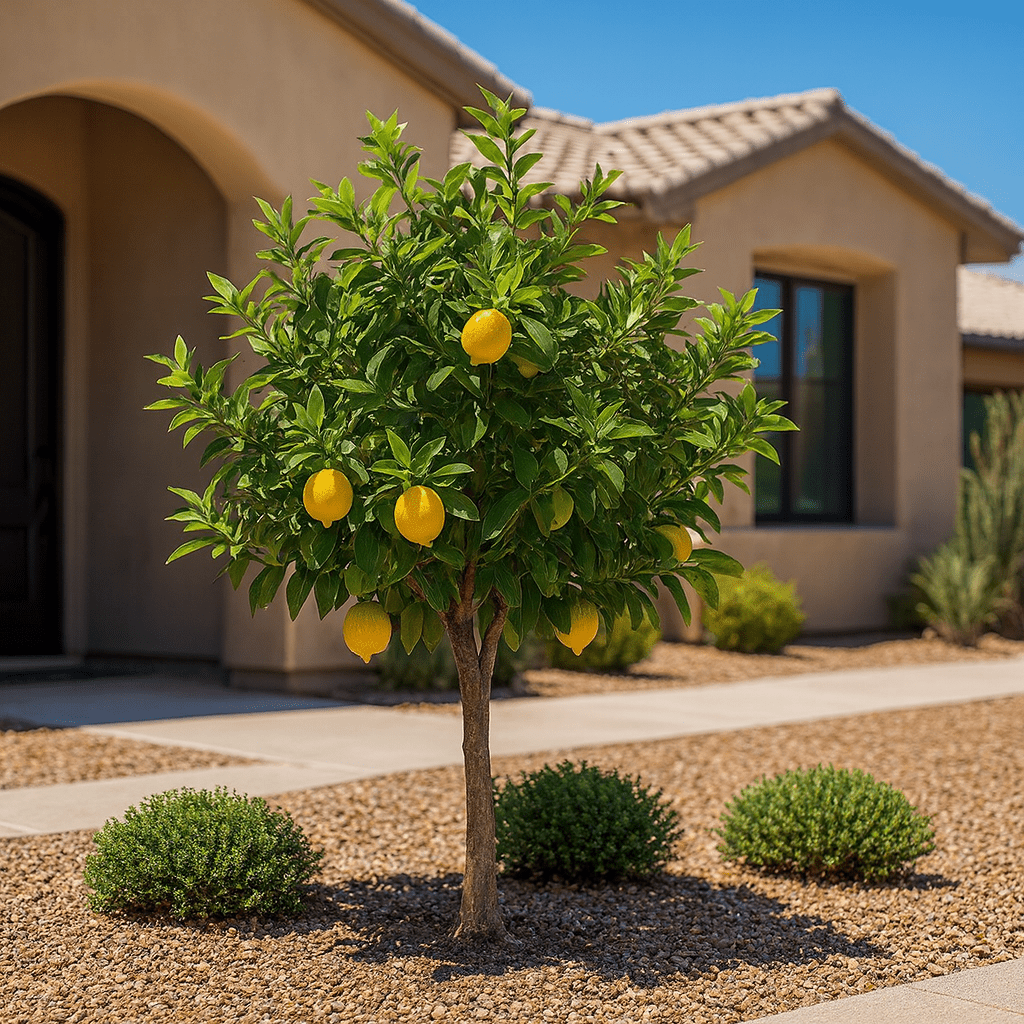


Cocktail Citrus
Cocktail Citrus
Couldn't load pickup availability
Grow Multiple Citrus Varieties on One Tree — Cocktail Citrus Tree
Cocktail Citrus (Citrus spp., multi-graft) is Phoenix's most versatile fruit tree — a single tree grafted with multiple citrus varieties so you can harvest lemons, oranges, limes, and more from one trunk. This evergreen fruit tree produces fragrant white blossoms spring through summer, followed by an abundant harvest of fresh citrus throughout the year. Once established in the Phoenix Valley, it thrives on full sun and moderate water, tolerates the intense desert heat, and rewards you with fresh homegrown citrus you can pick right from your backyard. Whether you're in Scottsdale, Chandler, Gilbert, or Mesa — Cocktail Citrus is the ultimate space-saving citrus solution for Arizona homeowners.
Cocktail Citrus Tree Plant Details
| Attribute | Detail |
|---|---|
| Scientific Name | Citrus spp. (multi-graft variety) |
| Common Names | Cocktail Citrus, Multi-Graft Citrus Tree, Fruit Salad Citrus |
| Mature Height | 12–18 feet (can be kept at 6–10 ft with pruning) |
| Mature Width | 10–15 feet |
| Growth Rate | Moderate — 1–2 feet per year in Phoenix |
| Sun | Full sun (6+ hrs). Thrives in Phoenix's intense desert sun. |
| Water | Moderate — deeper, less frequent irrigation once established |
| USDA Zones | 9–11 (Phoenix is Zone 9b–10a — ideal citrus territory) |
| Soil | Well-draining. Amend Arizona caliche soils with compost at planting. |
| Foliage | Evergreen — stays lush green year-round |
| Bloom Color | White, intensely fragrant (classic citrus blossom scent) |
| Bloom Season | Spring–Summer (February–June); intermittent year-round |
| Fruit | Multiple citrus varieties on one tree (varies by graft) |
| Pet Friendly | Yes — non-toxic to dogs and cats |
Cocktail Citrus Tree Uses in Phoenix Landscapes
Fresh Citrus Harvest in a Small Space
Cocktail Citrus solves the number one problem Phoenix citrus growers face: wanting multiple varieties but not having room for multiple trees. With 2–4 different citrus varieties grafted onto one rootstock, you get lemon, orange, lime, and more from a single planting footprint. Perfect for Scottsdale and Chandler backyards where space is at a premium but fresh citrus is a priority.
Fragrant Accent Tree for Patios and Courtyards
Few things in a Phoenix landscape rival the intoxicating fragrance of citrus blossoms in spring. Plant Cocktail Citrus within 10–15 feet of a patio, courtyard, or outdoor dining area for an incredible sensory experience from February through June. The glossy evergreen foliage provides year-round visual appeal, and the colorful mixed citrus fruits add ornamental interest throughout the harvest season.
Edible Landscape Feature Tree
Cocktail Citrus anchors a functional edible landscape beautifully. Pair it with a Bearss Lime, herbs like rosemary and thyme, and low-water groundcovers for a productive, ornamental garden bed that delivers fresh ingredients for your kitchen. The upright evergreen form also works well along fence lines or property borders in Tempe and Peoria neighborhoods.
Low-Maintenance Backyard Orchard Starter
For Phoenix homeowners new to fruit trees, Cocktail Citrus is an ideal starting point. It requires less maintenance than managing multiple separate trees, and Phoenix's climate is genuinely one of the best in the country for citrus production. Plant in a sunny south- or west-facing location with good drainage for maximum fruit production.
Best Time to Plant Cocktail Citrus Tree in Phoenix
Spring (March–April) is the ideal planting window for citrus in Phoenix. Warm soil and warming air temperatures promote fast root establishment before summer. Fall (September–October) is the second-best window — avoiding summer's extreme heat stress on newly planted trees. Avoid planting during Phoenix's peak summer months (June–August) if possible, as newly planted citrus requires intensive irrigation to survive transplant stress.
How to Plant Cocktail Citrus Tree
- Dig wide, not deep — Dig a hole 2–3 times the root ball width but only as deep as the root ball. Never plant citrus too deep.
- Break through caliche — Arizona caliche hardpan causes drainage problems fatal to citrus. Break through any layer beneath the planting hole.
- Amend the backfill — Mix 30% compost into native soil backfill. Citrus appreciates slightly richer soil than most desert plants.
- Spacing — 10–15 feet from structures and other trees; 8–10 feet for a hedge or row.
- Water basin — Build a 4–6 inch earthen ring extending to the drip line to hold irrigation water over the root zone.
- Mulch — Apply 3–4 inches of bark mulch around the tree, keeping mulch 6 inches away from the trunk to prevent collar rot.
Watering Cocktail Citrus Tree in Phoenix
First Year Watering Schedule
- Weeks 1–4: Water every 2–3 days, deep and slow (30–45 minutes per session)
- Months 2–3: Water every 4–5 days
- Months 4–6: Water every 7 days (every 5 days during peak summer)
- After Year 1: Every 7–14 days in summer; every 2–3 weeks in winter
Drip Irrigation
Citrus needs deep, infrequent watering — not frequent shallow watering. Place emitters at the drip line (outer canopy edge), not at the trunk. Use 2 GPH emitters, running 60–90 minutes per session. In summer, citrus needs more water than most desert trees — never let it completely dry out during fruit development.
How many citrus varieties come on a Cocktail Citrus Tree?
Most Cocktail Citrus trees are grafted with 2–4 different citrus varieties on one rootstock. Common combinations include lemon, navel orange, mandarin, and lime. The exact varieties vary by the nursery and production batch.
Can I keep it smaller with pruning?
Yes — Cocktail Citrus can be maintained at 6–10 feet with annual pruning after the main harvest. Prune in late winter (January–February) before the spring bloom flush. Avoid heavy pruning in summer as it stresses the tree during Phoenix's most demanding weather.
Does Cocktail Citrus produce fruit in Phoenix?
Absolutely — Phoenix is one of the best citrus-growing climates in the world. The long warm season, full sun, and mild winters (with rare frost) create ideal citrus production conditions. Most established trees in the Valley produce heavy crops annually.
How do I protect it from frost?
Phoenix's Zone 9b–10a climate rarely experiences frost damaging to established citrus. Young trees (under 2 years) should be covered with frost cloth if temperatures drop below 28°F. Once established, mature Cocktail Citrus handles the occasional Phoenix frost event without significant damage.
Is it pet-friendly?
Yes — Cocktail Citrus is considered non-toxic to dogs and cats. However, the fruit rinds and oils can cause minor digestive upset if pets consume large quantities. The tree itself poses no serious toxicity risk.
You May Also Like
- Bearss Lime — Phoenix's most popular backyard citrus; prolific producer of seedless limes, grows 8–12 feet tall.
- Sour Orange Tree — Ornamental and edible; stunning fragrant white blooms and colorful fruit that brightens the landscape.
- Lemon Bottle Brush Tree — Bright red bottlebrush flowers on an evergreen accent tree; great companion planting near citrus.
- Desert Willow — Native flowering tree that pairs beautifully in an edible-ornamental mixed landscape.
- Chitalpa — Fast-growing flowering shade tree that pairs well with citrus in full-sun Phoenix gardens.
How Many Cocktail Citrus Trees Do I Need?
The whole point of a multi-graft tree is that one plant does the work of several. A single Cocktail Citrus, mature at 10 to 15 feet wide, gives you two to four citrus types from one footprint, which is plenty for most households. Plant it 10 to 15 feet from walls and other trees, or hold it at 6 to 10 feet with light annual pruning. If you want a citrus row or screen, use this guide at 9 foot spacing:
| Row length | Trees needed |
|---|---|
| 9 ft | 1 to 2 trees |
| 18 ft | 3 trees |
| 27 ft | 4 trees |
| 36 ft | 5 trees |
Each grafted variety is self-fruitful, so a single tree crops fully with no second tree required.
Cocktail Citrus Season-by-Season in Phoenix
- Spring (Feb to Jun): Peak bloom of intensely fragrant white blossoms that feed bees and set the main crop. Best planting window. Prune lightly in late winter before this flush if shaping the tree.
- Summer (May to Sep): Heat drives fruit sizing across all the grafted varieties. Water deep and infrequent at the drip line, and never let it dry out during fruit fill. Watch for iron chlorosis in alkaline soil and correct with chelated iron.
- Fall (Sep to Nov): Earliest varieties begin coloring up and a second mild planting window opens. Ease back slightly on irrigation as temperatures drop.
- Winter (Dec to Feb): Main harvest across varieties, staggered so the tree can supply fruit for weeks. Citrus is frost-sensitive: cover young trees below 28°F with frost cloth. Established trees shrug off the occasional Valley frost.
At a Glance
✔ Edible ✔ Evergreen ✔ Heat-Loving (Reflected-Heat Tolerant) ✔ Pollinator-Friendly ✔ Low-Maintenance
Plant It With
- Bearss Lime: a dedicated seedless-lime tree to back up the lime graft and stretch the harvest.
- Sour Orange Tree: fragrant blooms and ornamental fruit that complement the cocktail tree in an edible landscape.
- AZ Sweet Orange: a full-size sweet orange for households that want a heavier orange crop than one graft provides.
- Navel Orange: classic easy-peel winter fruit that widens the citrus mix in a backyard grove.
Is the Cocktail Citrus Tree Right for Your Yard?
Cocktail Citrus is the best pick when you want variety from a single tree and have a sunny, well-draining spot with the caliche broken through. It rewards deep, infrequent water at the drip line and three-times-a-year citrus feeding. It is not for frost pockets or no-irrigation desert beds: young trees need cold-night protection and all citrus needs regular summer water. One caution specific to multi-grafts: the most vigorous variety can crowd out the others, so prune to keep each branch balanced. Give it sun, drainage, and a hose schedule and it delivers a backyard citrus bar from one trunk.
Customer Reviews
Share