

Chocolate Drops
Chocolate Drops
Couldn't load pickup availability
The Dark-Stemmed Euphorbia Tree That Commands Every Landscape
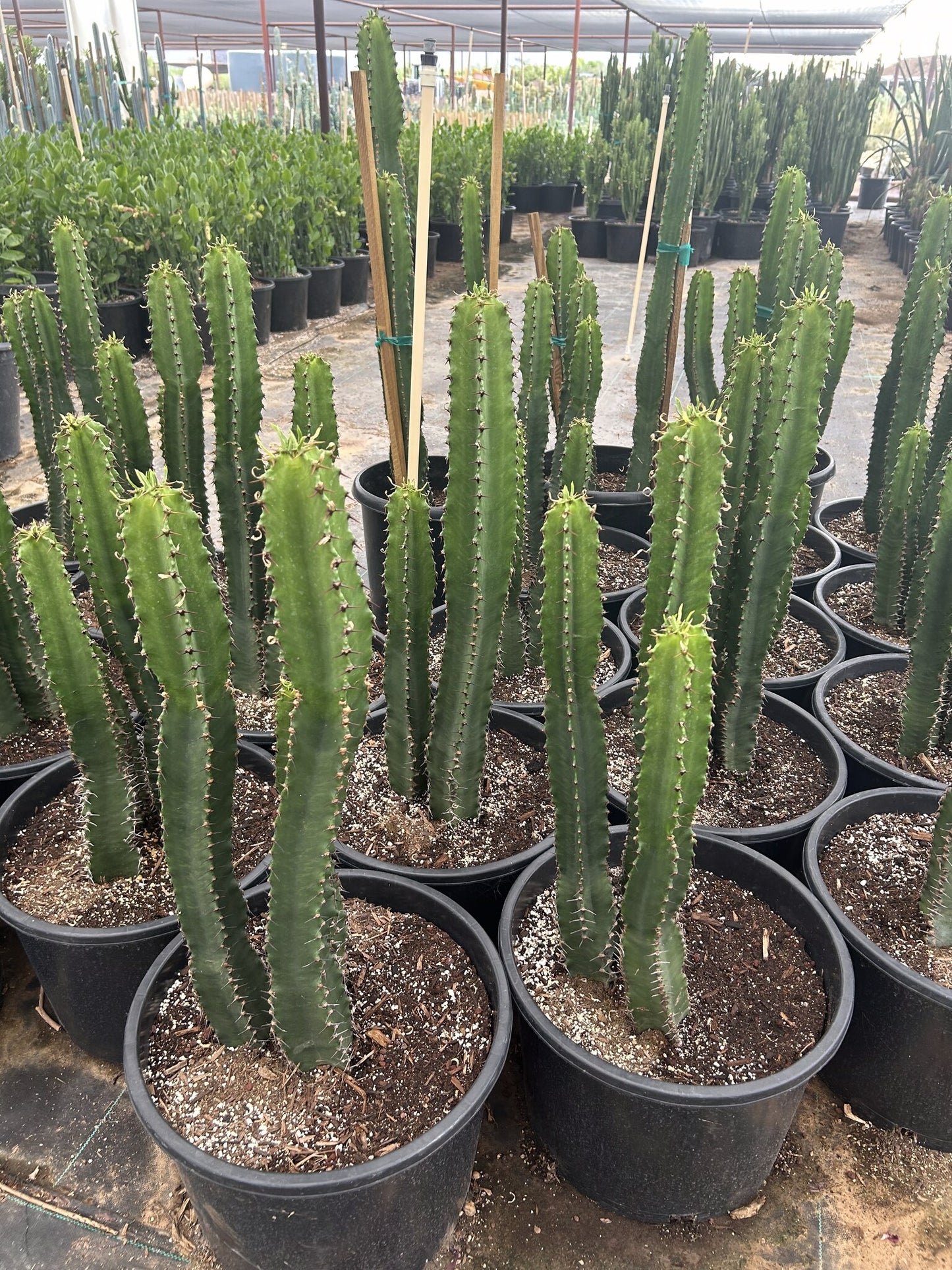
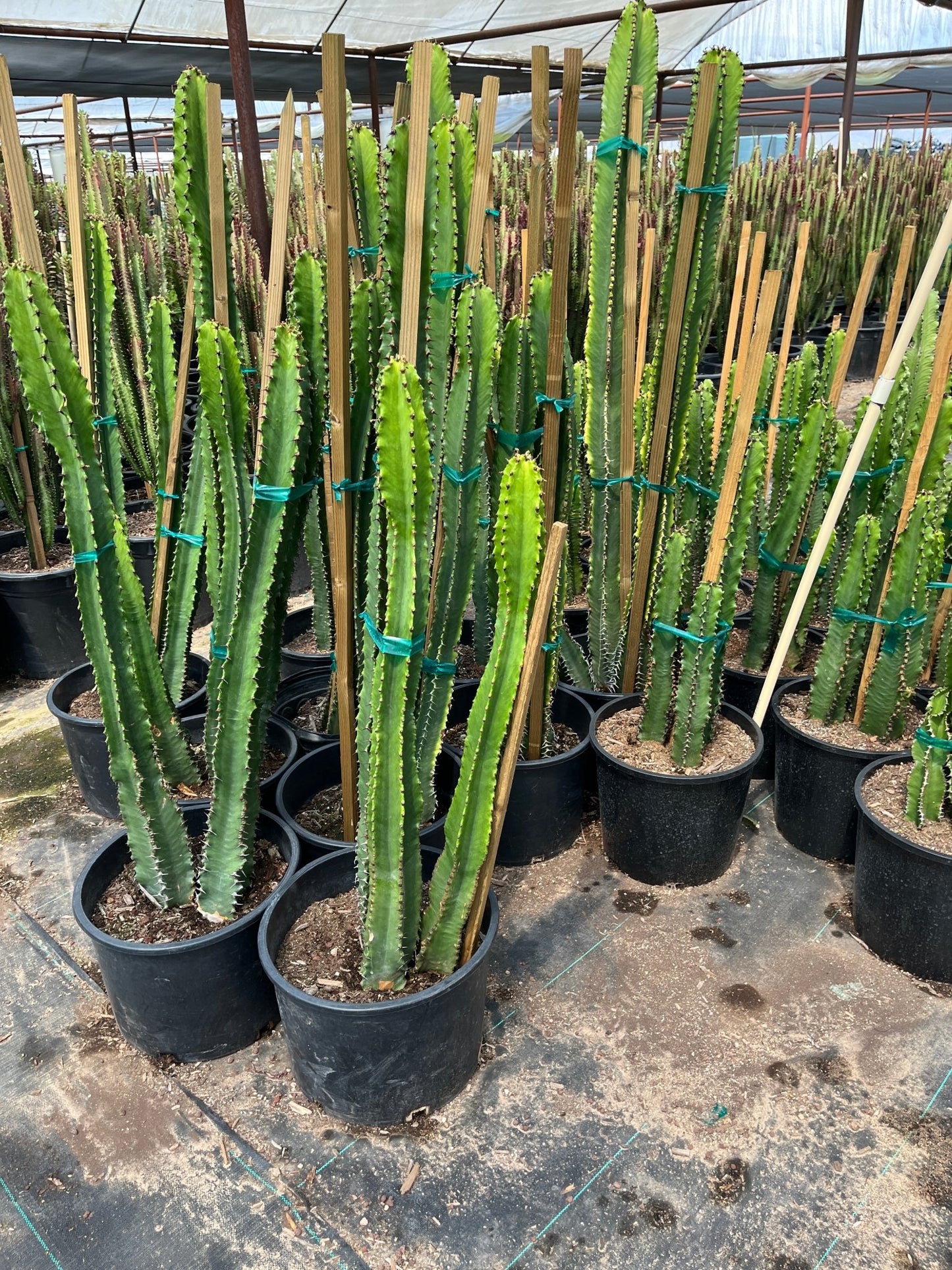
Chocolate Drops (Euphorbia ingens 'Chocolate Drops') is one of the most visually dramatic succulent trees you can plant in the Phoenix Valley. This striking cultivar features deep chocolate-brown to burgundy-tinted stems that create bold contrast against the desert sky and light-colored desert hardscaping. Fast-growing, extremely drought-tolerant, and built for the intense heat of Scottsdale, Chandler, Mesa, Gilbert, and Tempe, Chocolate Drops delivers the same bulletproof toughness as standard Euphorbia ingens — but with a dark, moody color palette that elevates any landscape from ordinary to unforgettable.
Chocolate Drops Plant Details
| Attribute | Detail |
|---|---|
| Scientific Name | Euphorbia ingens 'Chocolate Drops' |
| Common Names | Chocolate Drops, Chocolate Euphorbia |
| Mature Height | 6–15 feet (can reach 25 ft in ideal conditions) |
| Mature Width | 4–8 feet |
| Growth Rate | Fast — 2–4 feet per year in Phoenix |
| Sun | Full sun (6+ hrs). Handles reflected heat from walls and pavement. |
| Water | Very low once established. Highly drought-tolerant. |
| USDA Zones | 9–11 (Phoenix is Zone 9b–10a) |
| Soil | Well-draining required. Adapts to Arizona caliche soils with proper drainage. |
| Foliage | Evergreen — dark chocolate-brown to burgundy stems year-round |
| Stem Color | Deep chocolate-brown to burgundy (darkens in full sun) |
Chocolate Drops Uses in Phoenix Landscapes
Dramatic Dark Focal Point
Chocolate Drops creates instant visual drama as a standalone focal point in modern desert landscapes. The dark stems pop against light-colored stucco walls, decomposed granite, and pale desert hardscaping — a designer's dream for high-contrast compositions. Place a single mature specimen in a front yard or courtyard for a living art installation that grows more impressive every year.
Contrast Planting with Light-Colored Succulents
Pair Chocolate Drops with silver, blue, and green succulents for maximum visual impact. Plant alongside Ghost Aloe, Blue Elf Aloe, Silver Nickle Dyckia, or Ponytail Palm for a light-vs-dark contrast garden. The chocolate-colored stems serve as the anchor for the entire composition in Scottsdale and Paradise Valley luxury landscapes.
Pool-Friendly Architectural Specimen
With no messy leaf drop or invasive roots, Chocolate Drops is ideal near pools and outdoor living spaces. The upright candelabra form takes minimal footprint while delivering maximum visual impact. Plant 6–8 feet from the pool edge for a resort-style look in Mesa, Gilbert, and Chandler backyards.
Best Time to Plant Chocolate Drops in Phoenix
Fall (October–November) is ideal: warm soil supports strong root establishment while cooler air reduces transplant stress. Your Chocolate Drops gets 6–8 months of root growth before its first Phoenix summer. Spring (February–April) is the second-best window. Avoid summer planting when possible — extreme heat stresses newly transplanted succulents.
How to Plant Chocolate Drops
- Dig wide, not deep — excavate 2–3× the root ball width at the same depth as the container.
- Check for caliche — break through any hardpan layer for drainage. Euphorbia ingens cannot sit in standing water.
- Backfill with native soil — mix in 20% pumice or perlite for extra drainage in heavy clay.
- Spacing — 8–10 ft apart for grouped plantings; 12+ ft from structures for mature specimens.
- Water basin — build a 3–4 inch berm ring to direct water to roots during establishment.
- Mulch — 2–3 inches of gravel mulch (not bark) to retain moisture and keep the crown dry.
Watering Chocolate Drops in Phoenix
First Year Watering Schedule
- Weeks 1–2: Every 3–4 days, deep and slow (20–30 min drip)
- Month 1–3: Every 5–7 days
- Month 3–6: Every 10–14 days (7–10 days in peak summer)
- After Year 1: Every 2–3 weeks in summer; monthly or less in winter
Drip Irrigation
Place two 2-GPH emitters 18–24 inches from the trunk on opposite sides. Once established (after year two), Chocolate Drops needs very little supplemental water. Overwatering is the number one killer — always err on the dry side.
What makes Chocolate Drops different from regular Lucky Cactus?
The stem color. Standard Euphorbia ingens has green stems, while Chocolate Drops develops deep chocolate-brown to burgundy-tinted stems — especially in full sun. The growth habit, size, and care requirements are identical. The dark color intensifies with more sun exposure.
How fast does Chocolate Drops grow in Phoenix?
Very fast — expect 2–4 feet of new growth per year under ideal conditions. A 5-gallon starter can reach 8–10 feet within 3–4 years with regular watering during establishment.
Does Chocolate Drops stay dark-colored year-round?
Yes — the chocolate-brown coloring is persistent year-round in Phoenix. Full sun exposure deepens the color. Plants in partial shade may show more green undertones but still maintain their distinctive dark appearance.
Is the milky sap irritating?
Yes — like all Euphorbias, Chocolate Drops produces milky white latex sap when cut that irritates skin and eyes. Always wear gloves when pruning or handling. Plant away from areas where the sap could contact children or pets.
You May Also Like
- Lucky Cactus — the standard green columnar form of Euphorbia ingens for classic architectural impact.
- Lucky Cactus - Variegated — the cream-and-green striped version with red-purple highlights.
- Crested Lucky Cactus — the rare crested mutation form for collectors.
- Moroccan Mound — a dome-shaped Euphorbia that pairs perfectly with the tall Chocolate Drops.
- Firestick Euphorbia — vibrant red-orange pencil stems that contrast with Chocolate Drops' dark columns.
How Many Chocolate Drops Do I Need?
Chocolate Drops is a tall architectural specimen, so plant it for the statement rather than as a hedge. Its dark candelabra form reads best with open space around it. Mature width runs 4 to 8 feet.
- Single focal point: One specimen anchors a courtyard, entry bed, or gravel island and pops against light stucco and decomposed granite.
- Odd-numbered groups: Plant in groups of 3 or 5 spaced 8 to 10 feet apart so each dark column stands clear.
- Clearance: Keep specimens at least 12 feet from structures and 6 to 8 feet from a pool edge to allow for the fast vertical growth.
Set it back from walkways and seating: the stems carry small paired spines and the milky sap is caustic, so you do not want people brushing past it.
Chocolate Drops Season-by-Season in Phoenix
- Spring (Feb–Apr): Second-best planting window. Warm soil drives the season's fast new growth and the chocolate stem color deepens as sun intensity climbs.
- Summer (May–Sep): Peak growth, often 2 to 4 feet in a season. Thrives in full sun and reflected heat that would scorch leafy plants. Monsoon humidity is fine if the soil drains fast. Ease off water if stems look soft or swollen.
- Fall (Oct–Nov): Ideal planting season. Strong root establishment with 6 to 8 months before the next summer. Color stays rich.
- Winter (Dec–Jan): Holds its evergreen dark columns but stops growing. Frost-tender below about 32°F: cover with frost cloth on hard-freeze nights, especially in cooler pockets like north Scottsdale, Cave Creek, and Queen Creek.
At a Glance
✔ Heat-Loving (Reflected-Heat Tolerant) ✔ Drought-Tolerant ✔ Evergreen ✔ Pool-Friendly (Low-Litter) ✔ Low-Maintenance
Plant It With
- Lucky Cactus: the green columnar form of the same species for a tonal grouping of light and dark stems.
- Lucky Cactus - Variegated: cream-and-green striped columns that brighten the dark anchor.
- Moroccan Mound: a low dome-shaped euphorbia to ground the tall vertical form.
- Firestick Euphorbia: coral-orange pencil stems that contrast the dark columns.
Is Chocolate Drops Right for Your Yard?
It thrives in full sun and reflected heat, needs fast-draining soil broken free of caliche, and wants vertical room to reach 6 to 15 feet with a 4 to 8 foot spread. The dark stems make it one of the most striking modern-desert focal plants, clean enough for poolside. Not a fit if you have a small bed with no headroom, a hard-frost microclimate where you cannot cover it, or young children and pets who might contact the caustic milky sap or the small stem spines.
Customer Reviews
Share