
Lucky Cactus - Variegated
Lucky Cactus - Variegated
Couldn't load pickup availability
Phoenix's Most Colorful Columnar Succulent — Variegated Lucky Cactus
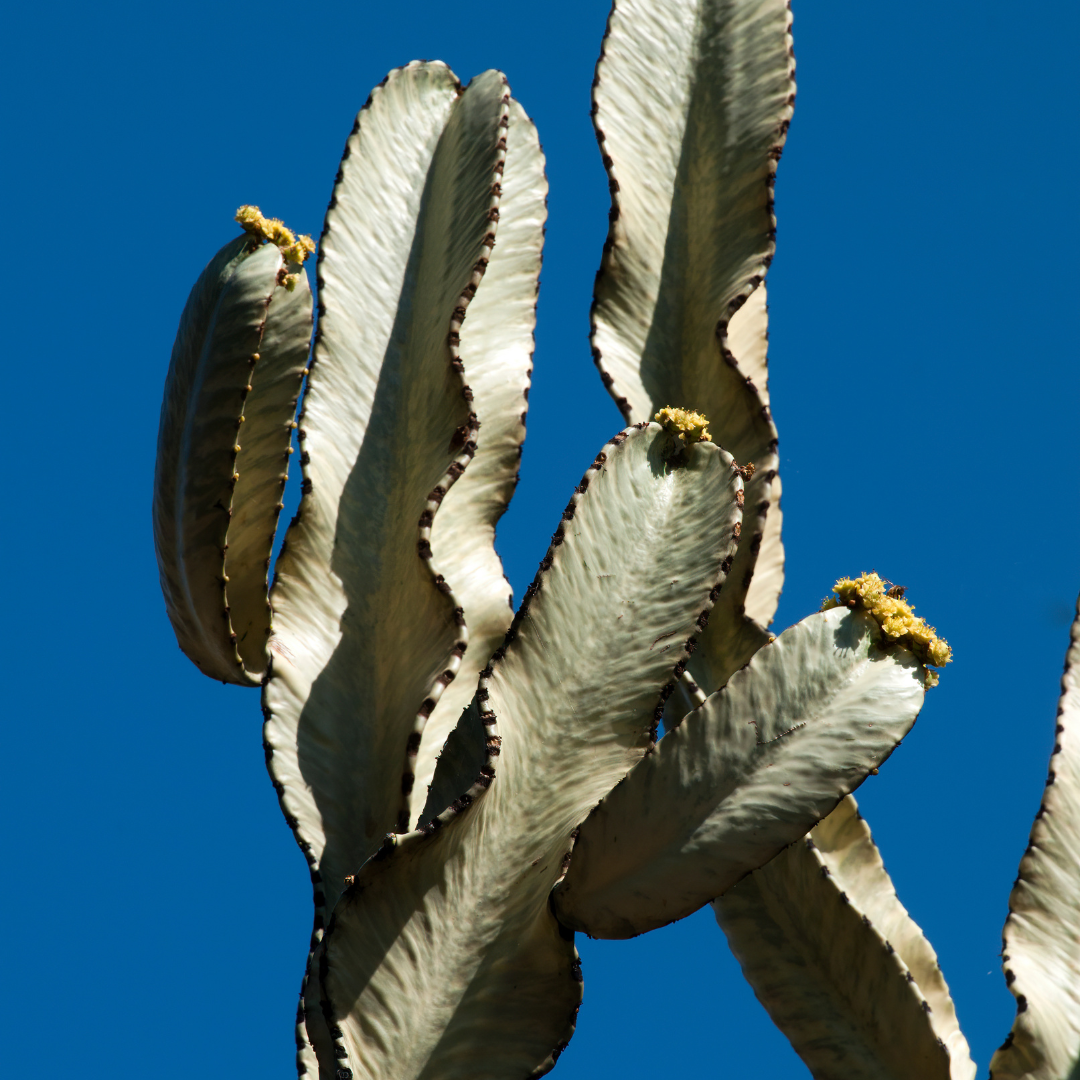
Euphorbia trigona 'Rubra' (also sold as 'Variegata'), commonly known as the Variegated Lucky Cactus or African Milk Tree, is one of the most striking columnar succulents for the Phoenix Valley. Its upright, three-sided stems feature bold variegation — green to deep red-purple with creamy pink-white edges — that intensifies in full sun. Fast-growing, drought-tolerant, and virtually pest-free, this Euphorbia makes a dramatic vertical accent for Scottsdale xeriscapes, Mesa patio containers, Chandler courtyard plantings, and Gilbert modern desert designs. If you want height, color, and architectural form without the work, Variegated Lucky Cactus delivers.
Variegated Lucky Cactus Plant Details
| Attribute | Detail |
|---|---|
| Scientific Name | Euphorbia trigona 'Rubra' / 'Variegata' |
| Common Names | Variegated Lucky Cactus, African Milk Tree, Cathedral Cactus |
| Mature Height | 6–12 inches per stem (multi-branching, can reach 3–5 feet as a clump) |
| Mature Width | 6–12 inches per stem; clumps spread wider over time |
| Growth Rate | Fast — 6–12 inches per year in Phoenix conditions |
| Sun | Full sun (6+ hrs). More sun = deeper red-purple color. |
| Water | Low once established. Drought-tolerant. |
| USDA Zones | 9–11 (Phoenix is Zone 9b–10a) |
| Soil | Well-draining. Adapts to Arizona caliche soils with gravel amendment. |
| Foliage | Evergreen — variegated green, red-purple, and creamy pink-white year-round |
| Bloom | Small white, pink, or red flowers (rare in cultivation) |
Variegated Lucky Cactus Uses in Phoenix Landscapes
Vertical Accent & Architectural Focal Point
Variegated Lucky Cactus's upright, branching form adds instant vertical drama to desert plantings. Use as a bold accent against stucco walls, near entryways, or at patio corners where its colorful variegation and columnar silhouette can be fully appreciated. Groups of 3–5 stems create a striking architectural statement in Scottsdale and Paradise Valley landscapes.
Container & Patio Specimen
Variegated Lucky Cactus thrives in containers on patios, balconies, and courtyards across the Phoenix Valley. Use a well-draining cactus mix in a pot with drainage holes. The multi-colored stems look stunning in modern concrete, glazed ceramic, or rusted steel planters. Great for Tempe apartments and Mesa townhome patios.
Privacy Screen & Living Fence
Plant Variegated Lucky Cactus in a row 12–18 inches apart to create a colorful, fast-growing privacy screen or living fence. The branching stems fill in within 1–2 seasons, creating a dense, thorny barrier that's both beautiful and functional for Chandler, Gilbert, and Peoria yards.
Mixed Succulent & Desert Color Garden
Combine with other Three Timbers succulents for layered color and texture. The red-purple stems contrast beautifully with blue-green Agaves, silver Ghost Aloe, and bright green Moroccan Mound. Its vertical form adds height to low-growing succulent beds.
Best Time to Plant Variegated Lucky Cactus in Phoenix
Fall (October–November) or spring (February–April) are the best planting windows. Variegated Lucky Cactus establishes quickly in warm soil. It can tolerate summer planting with extra water attention, as it loves Phoenix heat.
How to Plant Variegated Lucky Cactus
- Dig wide, not deep — hole should be 2–3x the root ball width, same depth
- Check for caliche — break through any hardpan layer to ensure drainage
- Backfill with native soil — mix in 20–30% pumice or perlite for extra drainage
- Spacing — 12–18 inches for screening; 18–24 inches for specimen groupings
- Water basin — build a 2–3 inch ring around the plant for initial establishment
- Mulch — 1–2 inches of gravel mulch; avoid organic mulch against stems
Watering Variegated Lucky Cactus in Phoenix
First Year Watering Schedule
Weeks 1–2: Every 3–4 days, deep and slow. Month 1–2: Every 5–7 days. Month 3–6: Every 7–10 days (every 5–7 days in peak summer). After Year 1: Every 10–14 days in summer; monthly in winter.
Drip Irrigation
Place one 1-GPH emitter 8–12 inches from the plant base. Like all Euphorbias, it prefers to dry out between waterings. Overwatering causes root rot and stem softening. Established plants need very little supplemental irrigation.
How fast does Variegated Lucky Cactus grow in Phoenix?
Fast — expect 6–12 inches of new growth per year in Phoenix. It freely branches from the base, forming a multi-stemmed clump that reaches 3–5 feet tall within a few years.
Is Variegated Lucky Cactus drought-tolerant?
Yes. Once established, it thrives on minimal water and can go 2–3 weeks between waterings in summer. In winter, monthly watering or rainfall alone is sufficient.
What's the difference between Variegated and regular Lucky Cactus?
Regular Lucky Cactus (Euphorbia trigona) has solid green stems. The Variegated variety ('Rubra'/'Variegata') adds dramatic red-purple coloring with creamy pink-white variegation along the edges, making it significantly more colorful.
Is Variegated Lucky Cactus toxic?
Yes — like all Euphorbias, it produces a milky white latex sap that irritates skin and eyes. Wear gloves when handling or pruning. Keep away from pets and children.
Can Variegated Lucky Cactus handle full Phoenix summer sun?
Yes — full sun intensifies the red-purple coloring. It handles reflected heat from walls and pavement. Some afternoon shade is tolerated but may reduce color intensity.
You May Also Like
Lucky Cactus — The solid green original for a more understated columnar accent.
Crested Lucky Cactus — A fan-shaped crested mutation for collectors of unusual plants.
Firestick Euphorbia — Bright coral-red stick succulent for contrasting form and color.
Moroccan Mound — Dense mounding Euphorbia cousin for a complementary low accent.
Gopher Plant — Blue-green Euphorbia for a softer textural companion.
Share