

White Oleander
White Oleander
Couldn't load pickup availability
Phoenix's Most Heat-Tolerant Privacy Hedge — White Oleander
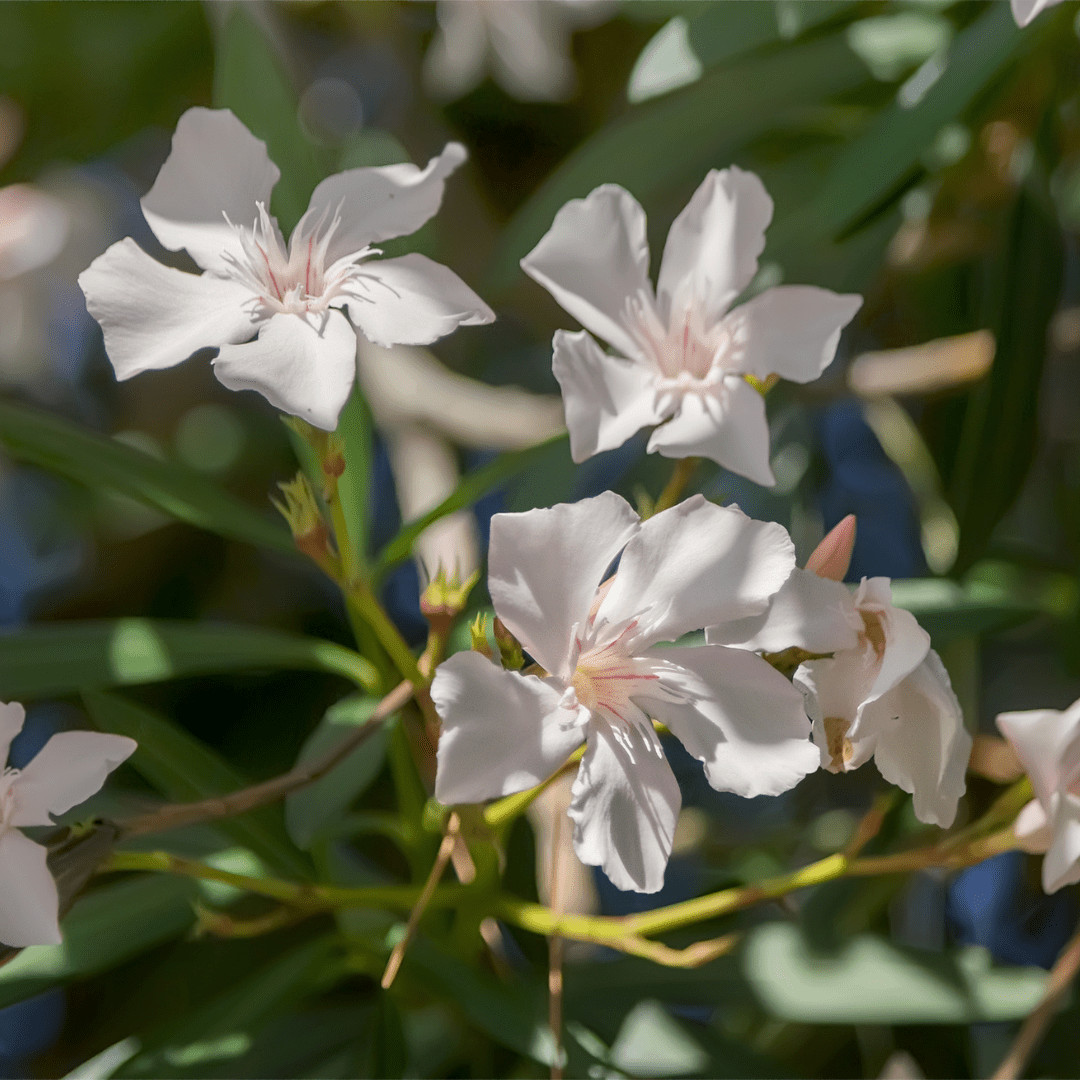
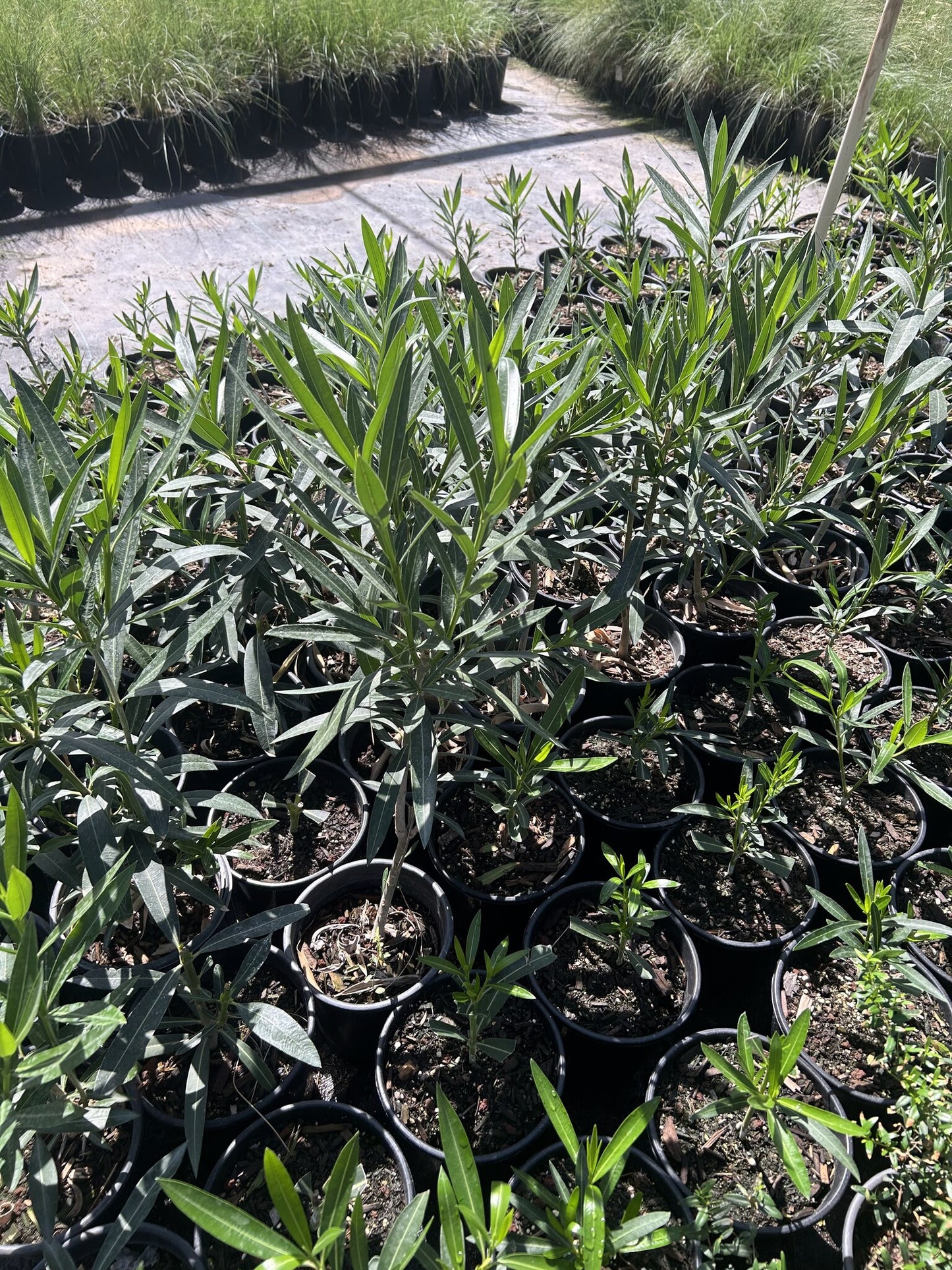
White Oleander (Nerium oleander) is the undisputed champion of Phoenix privacy hedges. Growing 3–5 feet per year and reaching 8–12 feet tall, it forms a dense, flowering screen faster than almost any other shrub in the Valley. Completely evergreen and thriving on neglect, White Oleander delivers pure white blooms from late spring through fall. Whether you're screening a neighbor's view in Scottsdale, blocking street noise in Mesa, or creating a lush barrier in Gilbert — White Oleander gets the job done beautifully.
White Oleander Plant Details
| Attribute | Detail |
|---|---|
| Scientific Name | Nerium oleander |
| Common Names | White Oleander, Oleander, White Nerium |
| Mature Height | 8–12 feet |
| Mature Width | 6–10 feet |
| Growth Rate | Fast — 3–5 feet per year in Phoenix |
| Sun | Full sun (6+ hrs). Handles reflected heat from walls. |
| Water | Low once established. Highly drought-tolerant. |
| USDA Zones | 9–11 (Phoenix is Zone 9b–10a) |
| Soil | Well-draining. Adapts to Arizona caliche soils. |
| Foliage | Evergreen — stays green year-round |
| Bloom Color | Pure white, summer through fall |
White Oleander Uses in Phoenix Landscapes
Privacy Screening & Sound Barriers
White Oleander is the #1 privacy hedge in Phoenix for good reason — it grows fast, stays dense, and never drops its leaves. Plant in a row to create a solid visual and sound barrier along walls, fences, or property lines. It thrives in reflected heat environments where other plants fail. Planting density guide: 20 ft fence — 3–4 plants spaced 5–6 ft apart; 40 ft fence — 7–8 plants.
Pool-Friendly Landscaping
White Oleander is one of the few fast-growing hedges that works well near pools. Its narrow foliage drops minimally and it tolerates the heat reflected off pool decks and concrete. Pair it with Desert Spoon or Texas Sage for a layered, low-maintenance pool surround.
Street-Facing and Roadside Plantings
No shrub handles Phoenix road heat and pollution better than White Oleander. It's a staple along Valley medians and streets for a reason — it thrives on zero irrigation once established and creates a clean, white-flowering barrier against traffic. Perfect for front yards in Chandler, Tempe, or Peoria facing busy roads.
Heat Barrier Along South & West Walls
South- and west-facing walls in Phoenix generate intense reflected heat that kills most plants. White Oleander loves it. Plant it as a living heat shield along block walls to reduce ambient temperatures near your home while adding beauty and privacy.
Best Time to Plant White Oleander in Phoenix
Fall planting (October–November) is ideal. The warm soil encourages root establishment while cooler air reduces transplant stress — giving your plant 6–8 months to get rooted before the first Phoenix summer. Spring (February–April) is the second-best window. Avoid summer planting if possible, though White Oleander is tough enough to survive even summer transplanting with adequate water.
How to Plant White Oleander
- Dig wide, not deep — 2–3x the root ball width, same depth as the container.
- Check for caliche — break through any hardpan layer with a caliche bar to ensure drainage.
- Backfill with native soil — a light 20% organic compost blend is fine but not required.
- Spacing — 5–6 ft apart for a privacy hedge; 8–10 ft apart as individual accent plants.
- Water basin — build a 3–4 inch earthen ring around the plant to direct water to the root zone.
- Mulch — apply 2–3 inches of bark or gravel mulch to retain moisture and regulate soil temperature.
Watering White Oleander in Phoenix
First Year Watering Schedule
- Weeks 1–2: Every 1–2 days, deep and slow (20–30 min drip)
- Months 1–2: Every 3–4 days
- Months 3–6: Every 7–10 days (every 5–7 days during peak summer)
- After Year 1: Every 10–14 days in summer; every 3–4 weeks in winter
Drip Irrigation
Place drip emitters 18–24 inches from the base of the plant. A 2 GPH emitter per plant is sufficient for establishment. Once mature, White Oleander survives on rainfall alone in most Phoenix winters — it's one of the Valley's most water-wise privacy hedges.
How fast does White Oleander grow in Phoenix?
Exceptionally fast — expect 3–5 feet of growth per year in the Phoenix Valley with regular watering during the first year. Once established, it continues to grow vigorously with minimal irrigation.
Is White Oleander drought tolerant?
Yes — it's one of the most drought-tolerant flowering shrubs you can grow in Phoenix. After year one, White Oleander typically survives on natural rainfall alone during cooler months and needs only occasional deep watering in summer.
Is White Oleander safe near pools?
Yes. White Oleander's narrow, lance-shaped leaves are not a significant litter problem. It tolerates reflected heat from concrete and pool decking extremely well, making it one of the better choices for pool perimeter screening in the Valley.
Can White Oleander handle Phoenix summer heat?
Absolutely. White Oleander is one of the few shrubs that actually thrives in reflected heat from walls, driveways, and streets. It's a staple of Phoenix landscaping precisely because of its extreme heat tolerance.
How does White Oleander differ from Pink or Red Oleander?
The care requirements are identical — the only difference is flower color. White Oleander gives a clean, classic look that pairs beautifully with modern desert architecture, white block walls, and blue pool water.
You May Also Like
- Pink Oleander — Same fast growth and toughness as White Oleander with soft pink blooms, ideal for adding color alongside white-flowering varieties.
- Red Oleander — Bold red flowers on the same reliable, fast-growing hedge — a striking contrast to white or pink varieties in multi-variety plantings.
- Purple Hopseed — A slightly shorter privacy option with attractive bronze-purple seed pods, great for layered hedgerows with Oleander.
- Texas Sage — A lower-growing companion that blooms after monsoon rains, perfect for planting at the base of an Oleander hedge.
- Photinia — An evergreen privacy shrub with red new growth and white spring flowers — a refined alternative for front-yard settings.
How Many White Oleander Do I Need?
For a fast privacy screen, space plants about 6 feet on center. Use this guide to estimate plant counts by fence or wall length:
| Hedge Run Length | Plants Needed (6 ft spacing) |
|---|---|
| 10 feet | 3 plants |
| 20 feet | 4 plants |
| 30 feet | 6 plants |
| 40 feet | 8 plants |
As a standalone accent or specimen, allow 8 to 10 feet between plants so each oleander can reach its full rounded size.
White Oleander Season-by-Season in Phoenix
- Spring (Feb–Apr): Strong flush of new growth and the start of the long bloom season. Best secondary planting window before summer heat arrives.
- Summer (May–Sep): Peak performance. White Oleander flowers right through the hottest months and shrugs off reflected heat from walls, pool decks, and pavement. Deep-water every 10 to 14 days once established.
- Fall (Oct–Nov): Prime planting season and continued bloom into the cooler weeks. New plants root in quickly before winter.
- Winter (Dec–Jan): Stays fully evergreen for year-round privacy. Cold-hardy to about 15°F, so normal Valley winters cause no damage. A hard freeze can nip tender tips, which flush back in spring.
At a Glance
✔ Evergreen ✔ Heat-Loving (Reflected-Heat Tolerant) ✔ Drought-Tolerant ✔ Pool-Friendly (Low-Litter) ✔ Low-Maintenance ✔ Pollinator-Friendly ✔ Deer & Rabbit-Resistant ✔ Cold-Hardy to 15°F
Plant It With
- Pink Oleander: the same tough, fast hedge in soft pink for a multi-color screen.
- Purple Hopseed: a shorter bronze-purple shrub that layers in front of the oleander row.
- Texas Sage: a low-water monsoon bloomer that fills the base of the hedge with purple flowers.
- Photinia: an evergreen screen with red new growth for a refined front-yard pairing.
Is White Oleander Right for Your Yard?
White Oleander thrives in full sun, loves reflected heat off south and west walls, and adapts to caliche as long as the hole drains. It is the go-to choice for fast, tall, evergreen privacy screening on low water. One honest caveat: every part of the plant is toxic if eaten, so it is not the right pick for yards with young children or pets that chew foliage, and pruning clippings should never be burned or composted near edibles.
Share