

Photinia
Photinia
Couldn't load pickup availability
Phoenix's Fastest Growing Privacy Hedge — Red Tip Photinia for Tall Screens
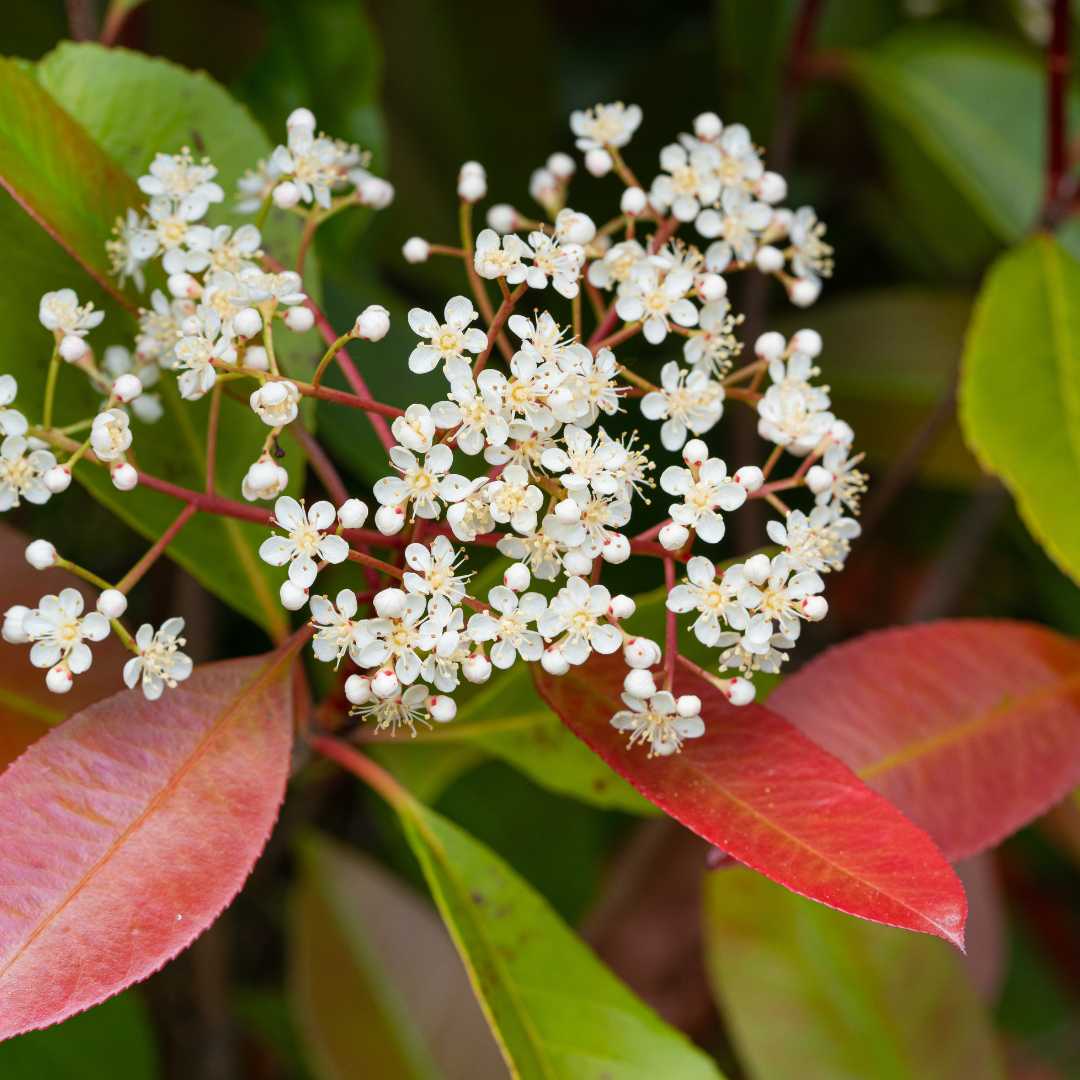
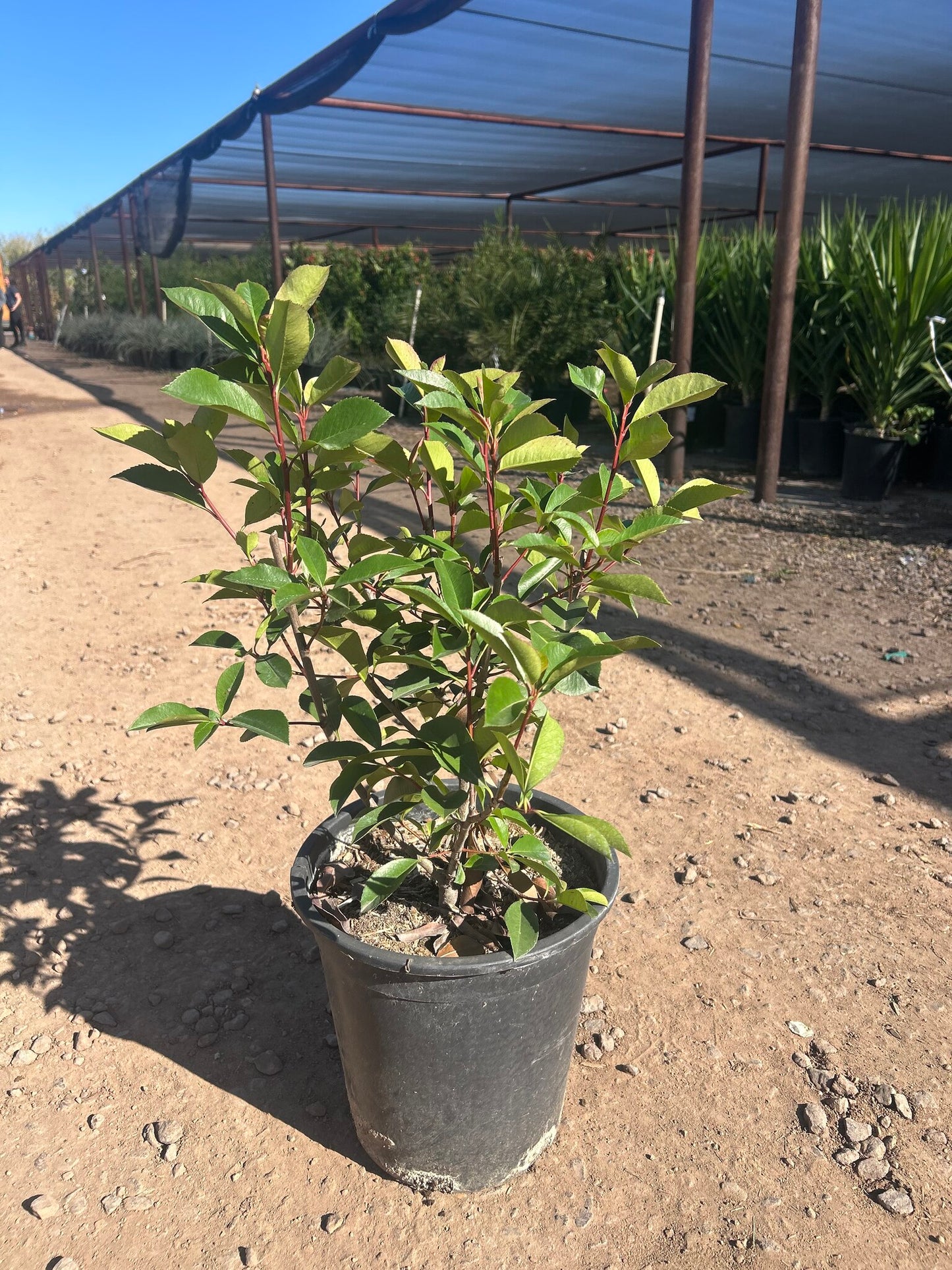
Photinia (Photinia x fraseri), also known as Red Tip Photinia or Fraser Photinia, is one of the most popular and fastest-growing privacy hedge plants in the Phoenix Valley. Its stunning flush of brilliant red new growth in spring makes it as ornamental as it is functional — providing a living privacy screen that's equally beautiful and practical. With minimal pruning it reaches 10–15 feet, delivering a dense, tall screen that blocks views from two-story homes. Whether you're creating a tall privacy hedge in Scottsdale, screening a side yard in Chandler, or establishing a fast windbreak in Mesa — Photinia gets the job done fast.
Photinia Plant Details
| Attribute | Detail |
| Scientific Name | Photinia x fraseri |
| Common Names | Photinia, Red Tip Photinia, Fraser Photinia |
| Mature Height | 10–15 feet (pruned to 6–8 ft for hedges) |
| Mature Width | 6–10 feet |
| Growth Rate | Fast — 3–5 feet per year in Phoenix |
| Sun | Full sun to partial shade. Performs best with 6+ hours of direct sun in Phoenix. |
| Water | Low to moderate once established. Drought-tolerant after year one. |
| USDA Zones | 7–11 (Phoenix is Zone 9b–10a) |
| Soil | Well-draining. Adapts to Arizona caliche soils with adequate drainage. |
| Foliage | Evergreen — dark green glossy leaves year-round; brilliant red new growth in spring |
| Bloom | Small white flower clusters in spring |
Photinia Uses in Phoenix Landscapes
Tall Privacy Hedges and Two-Story Screening
Red Tip Photinia is one of the few privacy shrubs in Phoenix that can reliably grow tall enough to screen second-story windows. Left to its natural height of 12–15 feet, it creates a complete visual barrier that block walls simply can't match for beauty. For large-scale screening: plant 5–6 feet apart in a single row for a hedge that fills in within 2–3 seasons. 30 ft fence — 6 plants / 60 ft fence — 12 plants. Pair with Green Hopseed for a mixed-texture privacy screen.
Ornamental Hedge with Year-Round Interest
Unlike many privacy shrubs that offer only green foliage, Photinia delivers a spectacular spring color display when the bold red new growth emerges — one of the most striking sights in a Scottsdale or Tempe garden. As the season progresses, new leaves mature to glossy dark green, creating the classic two-tone look that makes this shrub so recognizable across the Phoenix Valley. Prune lightly after each growth flush to encourage more red new growth.
Windbreak and Property Line Screening
Photinia's dense branching structure makes it an excellent windbreak along exposed property lines in Peoria, Glendale, and Surprise where desert winds can be significant. Its fast growth rate — 3–5 feet per year — means a newly planted row of 1-gallon plants can establish a meaningful windbreak within 18–24 months. Space plants 6 feet apart for windbreaks; 4–5 feet apart for dense privacy hedges.
Foundation Planting and Accent Shrub
In smaller garden settings, Photinia works beautifully as a large accent shrub or foundation planting against walls and fences. Prune to 6–8 feet to maintain a formal, columnar shape. Its reflective glossy leaves brighten shaded areas and its evergreen habit means the landscape always looks finished. Combine with Texas Sage and Mexican Bird of Paradise for a layered, low-water border.
Best Time to Plant Photinia in Phoenix
Fall (October–November) is the ideal planting window for Photinia in Phoenix. Cooler air temperatures combined with warm soil allow root development to continue without the stress of summer heat. Plants established in fall have 6–8 months to develop strong root systems before their first Phoenix summer. Spring (February–March) is the second-best window — plant before April to give roots time to establish before the intense heat arrives. Avoid summer planting; Photinia is susceptible to stress and root disease in waterlogged soil during monsoon heat.
How to Plant Photinia
- Dig wide, not deep — excavate 2–3x the root ball width and the same depth. Wide holes encourage lateral root spread.
- Check for caliche — break through any hardpan layer. Caliche causes drainage problems that can lead to root rot in Photinia.
- Backfill with native soil — mix in 15–20% organic compost to support root establishment. Don't over-amend.
- Spacing — 4–5 feet apart for dense hedges; 6 feet apart for windbreaks; 8 feet for individual specimens.
- Water basin — build a 3–4 inch soil ring around the root zone to capture and direct irrigation water.
- Mulch — 2–3 inches of bark mulch or decomposed granite retains moisture and keeps root temperatures stable.
Watering Photinia in Phoenix
First Year Watering Schedule
- Weeks 1–2: Every 1–2 days, deep and slow (20–30 min per session)
- Month 1–2: Every 3–4 days, deep watering
- Month 3–6: Every 7–10 days (every 5 days during July–September peak heat)
- After Year 1: Every 14–21 days in summer; every 3–4 weeks in winter
Drip Irrigation
Install 2 GPH drip emitters 18–24 inches from the base of each plant. Run 45–60 minutes per cycle during year one. Once established, Photinia is quite drought-tolerant and needs minimal supplemental irrigation. Important: avoid overwatering — Photinia is susceptible to root rot in consistently wet soil, especially during monsoon season.
How fast does Photinia grow in Phoenix?
Very fast — Red Tip Photinia typically grows 3–5 feet per year in Phoenix's warm climate. A 3-gallon plant can reach 6 feet in one to two seasons, and 10–12 feet within 3–4 years without pruning.
How tall does Photinia get as a hedge in Phoenix?
Left unpruned, Photinia reaches 12–15 feet in Phoenix. Most homeowners prune to 6–10 feet for manageable privacy hedges. To maintain a specific height, trim lightly 2–3 times per year after each flush of new red growth matures to green.
Is Photinia drought tolerant in Phoenix?
Yes, once established after its first year. Photinia develops a deep root system that allows it to access sub-surface moisture. It handles Phoenix summers well with drip irrigation every 14–21 days once fully established.
What causes Photinia leaves to turn black or brown in Phoenix?
The most common issue is Entomosporium leaf spot, a fungal disease that thrives in humid conditions. In Phoenix, this is most common during monsoon season. Improve air circulation by not overwatering and spacing plants properly. Remove affected leaves and apply a copper-based fungicide if needed.
Can Photinia handle Phoenix's full sun and summer heat?
Yes — Photinia thrives in Phoenix's full sun. It handles reflected heat from walls and driveways well once established. The key is adequate watering during the first summer to help roots establish before cutting back irrigation frequency.
You May Also Like
Green Hopseed Bush — Fast privacy screen for Phoenix; reaches 10–12 feet with a more informal, open habit.
Purple Hopseed Bush — Striking bronze-purple foliage privacy hedge, similar size and sun requirements.
Wax Leaf Privet — Fast-growing, dense evergreen hedge shrub — a classic Phoenix privacy plant.
Myoporum — Extremely fast-growing screening shrub for large Phoenix property borders.
Boxwood Beauty — More compact hedge option for lower screening in Phoenix landscapes.
How Many Photinia Do I Need?
For a fast, dense privacy screen, plant Photinia about 5 feet apart on center in a single row. Open it up to 6 feet for windbreaks, or tighten to 4 feet where you want the hedge to close in as quickly as possible. Use this as a starting guide at 5 foot spacing:
| Hedge / fence length | Plants needed (5 ft spacing) |
|---|---|
| 15 ft | 3 plants |
| 30 ft | 6 plants |
| 60 ft | 12 plants |
| 90 ft | 18 plants |
Do not crowd plants tighter than 4 feet: good airflow between them is the best defense against leaf spot in our humid monsoon weeks.
Photinia Season-by-Season in Phoenix
- Spring (Feb–Apr): The signature show: brilliant red new-growth flush plus clusters of small white flowers. A strong second planting window. Prune lightly once the red matures to green to trigger another colorful flush.
- Summer (May–Sep): Fast growth continues in the heat, and an established hedge tolerates reflected heat off walls and pavement. Monsoon humidity (Jul–Sep) is the main risk window for Entomosporium leaf spot, so ease off watering and keep air moving through the hedge.
- Fall (Oct–Nov): Prime planting season in the Valley, often with a second red flush as nights cool.
- Winter (Dec–Jan): Holds its glossy evergreen screen all winter. Hardy to roughly 10°F, so no frost protection is needed in Phoenix.
At a Glance
✔ Heat-Loving (Reflected-Heat Tolerant) ✔ Drought-Tolerant ✔ Evergreen ✔ Pollinator-Friendly ✔ Cold-Hardy to 10°F
Plant It With
- Green Hopseed: a fast informal screen that mixes texture into a tall Photinia privacy row.
- Purple Hopseed: bronze-purple foliage of similar size and sun needs for a two-tone hedge.
- Japanese Privet: another fast dense evergreen for classic Phoenix privacy screening.
- Boxwood Beauty: a compact evergreen for lower screening in front of the taller Photinia.
Is Photinia Right for Your Yard?
It is a strong choice when you need a tall, fast privacy screen or windbreak in full sun with room for a 6 to 10 foot wide hedge and reasonably draining soil. Give it space for airflow and water deeply but infrequently once established. It is not a fit for tight, poorly drained spots or heavily watered beds, where waterlogged roots and monsoon-season leaf spot can set it back; in those conditions a hopseed or privet screen is the safer pick.
Share