

White Crape Myrtle
White Crape Myrtle
Couldn't load pickup availability
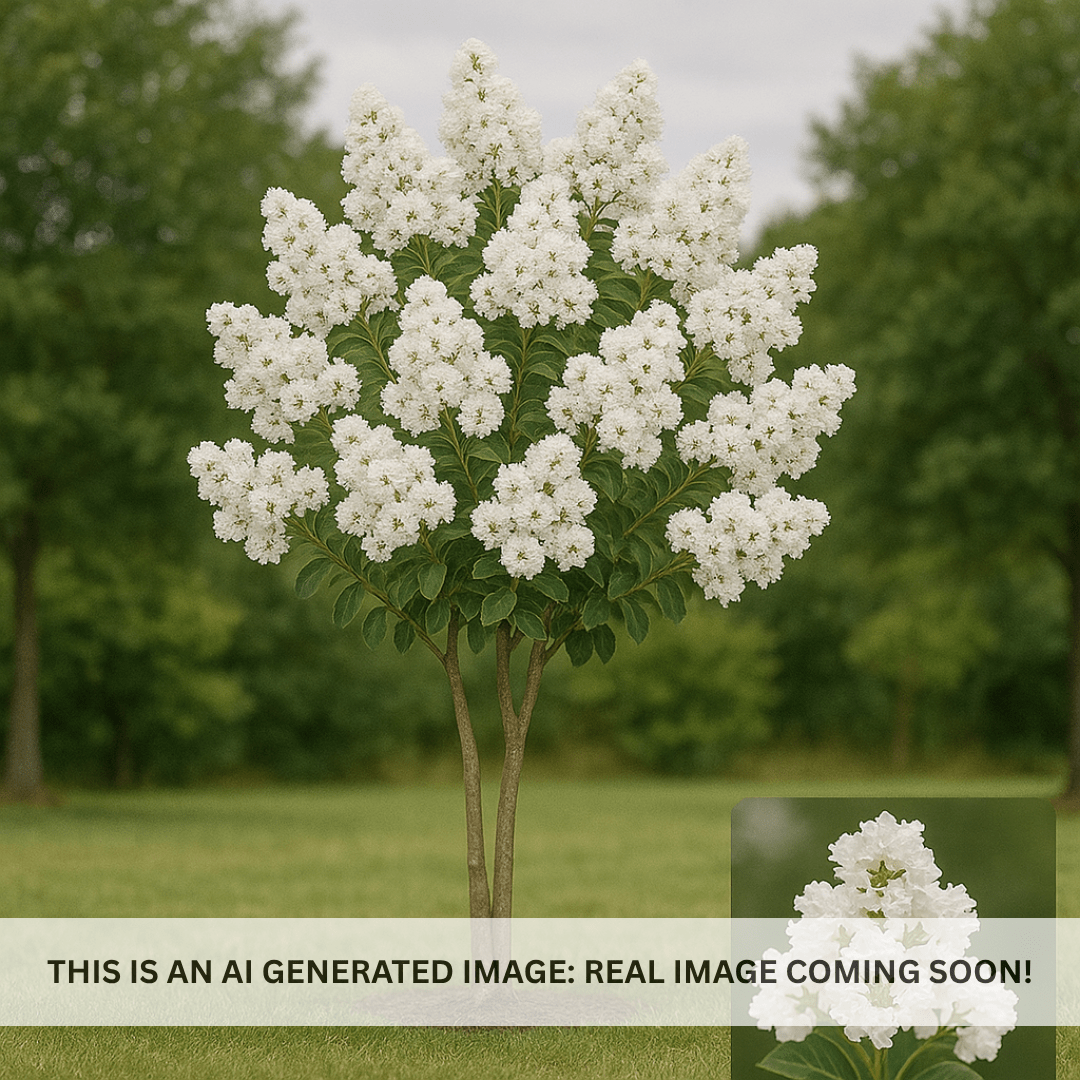
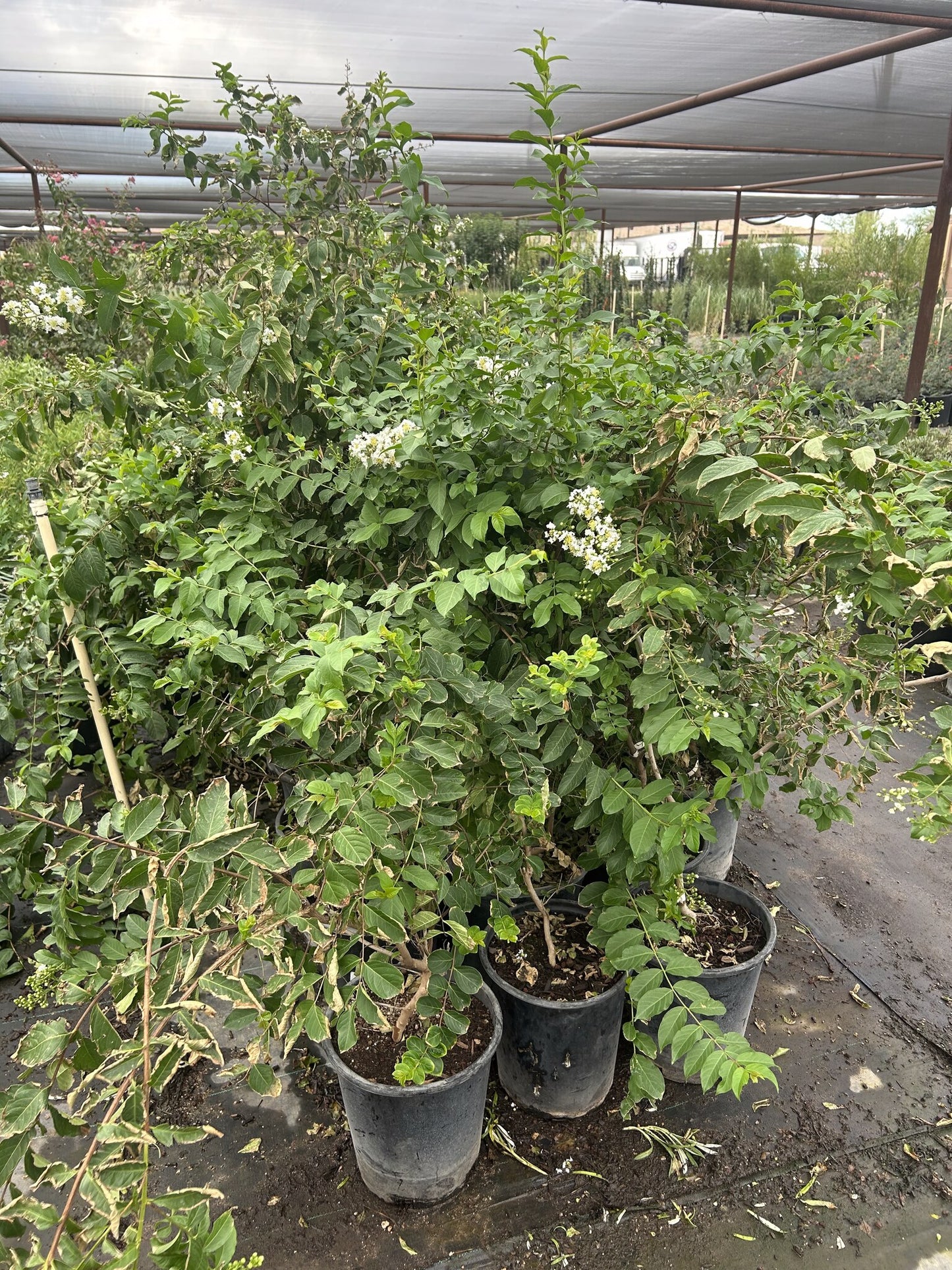
Phoenix's Best Fast-Growing White Flowering Tree — White Crape Myrtle
White Crape Myrtle (Lagerstroemia indica 'Natchez') is the premier fast-growing flowering tree for the Phoenix Valley. This stunning deciduous tree produces massive clusters of pure white blooms all summer long — from June through September — making it an unmatched seasonal showstopper. It grows 3–5 feet per year and reaches 20–30 feet tall with zero fuss. Whether you're landscaping a new build in Chandler, adding curb appeal in Scottsdale, or creating a shaded retreat in Gilbert or Mesa — White Crape Myrtle delivers fast results, season after season.
White Crape Myrtle Plant Details
| Attribute | Detail |
|---|---|
| Scientific Name | Lagerstroemia indica 'Natchez' |
| Common Names | White Crape Myrtle, Natchez Crape Myrtle, Crape Myrtle Tree |
| Mature Height | 20–30 feet |
| Mature Width | 15–20 feet |
| Growth Rate | Fast — 3–5 feet per year in Phoenix |
| Sun | Full sun (6+ hrs). Thrives with Phoenix's intense reflected heat. |
| Water | Low once established. Highly drought-tolerant after year one. |
| USDA Zones | 7–11 (Phoenix is Zone 9b–10a) |
| Soil | Well-draining. Adapts to Arizona caliche soils. |
| Foliage | Deciduous — drops leaves in winter; stunning orange-red fall color |
| Bloom Season | June through September |
| Bloom Color | Pure white |
| Pet Friendly | Yes — safe for dogs and cats |
White Crape Myrtle Uses in Phoenix Landscapes
Fast Privacy Screen and Street Tree
With a 3–5 foot annual growth rate, White Crape Myrtle is one of the fastest ways to add height and structure to a Phoenix landscape. Its upright, vase-shaped canopy provides excellent screening from neighbors and streets without taking up excessive ground space. Plant 8–10 feet apart for a dense privacy row along a fence line — three to five trees will cover a standard 30-foot front yard within a couple of seasons.
Planting density: 30 ft fence line — 3 trees / 60 ft fence line — 6 trees
Summer Shade Tree for Patios and Courtyards
By midsummer, White Crape Myrtle forms a full canopy that shades patios, courtyards, and outdoor living spaces during Phoenix's brutal heat. The white blooms stay vibrant even in extreme heat — unlike many flowering plants that stop blooming above 105°F. Pair it with a flagstone patio and decomposed granite ground cover for a clean, low-maintenance outdoor space in Peoria, Glendale, or Tempe.
Curb Appeal and Front Yard Focal Point
Few trees command as much visual attention as a mature White Crape Myrtle in full summer bloom. The pure white flower clusters set against the bright blue Phoenix sky make it a natural focal point in any front yard. Combined with a Texas Sage hedge or Desert Spoon accents, this tree anchors a desert-modern landscape design with bold seasonal color from June through September.
Fall Color in the Desert
Unlike most Arizona trees, White Crape Myrtle delivers two seasons of visual interest — white summer blooms followed by vibrant orange and red fall foliage before it drops its leaves in November. This makes it one of the only trees in the Phoenix Valley that offers a genuine autumn color show, a rare and welcome treat for homeowners in Scottsdale, Chandler, and Gilbert.
Best Time to Plant White Crape Myrtle in Phoenix
Fall planting (October–November) is ideal. The warm soil encourages root establishment while cooler air temperatures reduce transplant stress. A fall-planted White Crape Myrtle gets a full 6–8 months of root development before its first Phoenix summer — giving it the deep root system it needs to handle 115°F heat. Spring planting (February–April) is the second-best window. Avoid planting in summer (June–August) as the combination of heat stress and transplant shock can stall growth significantly.
How to Plant White Crape Myrtle
- Dig wide, not deep — Dig the hole 2–3x the width of the root ball, but no deeper than the root ball itself. Planting too deep is the #1 cause of crape myrtle failure in Arizona.
- Check for caliche — Break through any hardpan caliche layer with a breaker bar to ensure drainage. Standing water will rot roots.
- Backfill with native soil — A light 20% organic compost blend works well. Avoid heavy amendment mixes that prevent roots from extending into native soil.
- Spacing — Plant 8–10 feet apart for a privacy row; 15–20 feet apart as individual specimen trees. Give them room — they get wide.
- Build a water basin — Form a 3–4 inch earthen ring 18–24 inches from the trunk to direct water to the root zone during establishment.
- Mulch — Apply 2–3 inches of bark mulch or decomposed granite around the base (keep it away from the trunk) to retain moisture and regulate soil temperature.
Watering White Crape Myrtle in Phoenix
First Year Watering Schedule
Weeks 1–2: Water every 1–2 days, deep and slow (20–30 minutes per session). The goal is to saturate the entire root ball. Month 1–2: Reduce to every 3–4 days. Month 3–6: Every 7–10 days (every 5–7 days during June–September peak heat). After Year 1: Every 10–14 days in summer; every 3–4 weeks in winter. Once fully established, White Crape Myrtle is highly drought-tolerant and can survive on minimal supplemental irrigation.
Drip Irrigation
Place drip emitters 18–24 inches from the trunk, not at the base. Use 2–4 GPH emitters and run them for 1–2 hours per session to ensure deep water penetration. Established crape myrtles (3+ years in the ground) often need only supplemental summer irrigation — Phoenix's monsoon season helps significantly from July through September.
How fast does White Crape Myrtle grow in Phoenix?
White Crape Myrtle is one of the fastest-growing flowering trees in Phoenix, adding 3–5 feet per year under good conditions. A 5-gallon tree planted in fall can reach 10–15 feet within 2–3 seasons. The combination of Phoenix's long hot summers, intense sun, and warm soil creates ideal conditions for rapid crape myrtle growth.
Is White Crape Myrtle drought tolerant once established?
Yes. After the first full year in the ground, White Crape Myrtle becomes highly drought-tolerant and thrives on deep, infrequent watering. It can survive periods of drought but will bloom most heavily with regular summer irrigation. Avoid overwatering — soggy soil is the most common cause of root rot and early decline in Phoenix landscapes.
Does White Crape Myrtle bloom in Phoenix summer heat?
Absolutely — this is one of its greatest strengths. White Crape Myrtle blooms heavily even when temperatures exceed 110°F, making it one of the few trees that actually thrives in Phoenix's brutal summers. The white blooms stay vibrant from June through September, providing months of color when most other flowering plants shut down.
Should I prune White Crape Myrtle?
Avoid "crape murder" — the practice of drastically cutting back crape myrtle trunks each year. This creates ugly knobs, weak growth, and fewer blooms. Instead, remove only dead or crossing branches in late winter. If you want to keep the tree smaller, select a more compact variety at planting rather than topping an established tree.
Is White Crape Myrtle pet friendly?
Yes. White Crape Myrtle is considered non-toxic and safe for dogs and cats, making it an excellent choice for pet-friendly Phoenix backyards. It's tagged as pet-friendly and is a great option for homes where pets roam the yard freely.
You May Also Like
Purple Crape Myrtle — Same fast growth and summer bloom habit as the White, but with bold purple-lavender flower clusters for a different color palette.
Dynamite Red Crape Myrtle — The red-flowering counterpart to White Crape Myrtle, with identical heat and drought tolerance but vivid crimson summer blooms.
Desert Willow — Another fast-growing Arizona flowering tree with orchid-like blooms that complement crape myrtle's structure in mixed landscapes.
Texas Mountain Laurel — A slower-growing evergreen tree with fragrant purple blooms in spring — perfect for pairing with Crape Myrtle for year-round interest.
Cascalote Tree — A bold desert-native flowering tree with yellow blooms in winter and spring, providing color when the deciduous White Crape Myrtle is bare.
How Many White Crape Myrtle Do I Need?
White Crape Myrtle matures 15 to 20 ft wide with an upright, vase-shaped form. Space trees 8 to 10 ft on center for a fast privacy row, or give them 15 to 20 ft as individual specimens. Use this guide for a screen:
| Run length | Trees needed (8 to 10 ft on center) |
|---|---|
| 20 ft | 2 to 3 trees |
| 30 ft | 3 to 4 trees |
| 60 ft | 6 to 7 trees |
As a front-yard focal point, plant a single tree or a matched pair to frame an entry. Note that the upright canopy screens best from mid height up; pair with a lower shrub if you need privacy right at ground level.
White Crape Myrtle Season-by-Season in Phoenix
- Spring (Feb to Apr): Leafs out from bare winter branches and puts on fast new growth. Strong second planting window before the heat.
- Summer (May to Sep): The headline season. Pure white clusters bloom heavily right through 110°F+ heat and reflected heat off walls, and monsoon humidity (Jul to Sep) keeps the show going. Peak growth period.
- Fall (Oct to Nov): Prime planting season in Phoenix, plus a rare desert bonus: orange-red fall foliage before leaf drop in November.
- Winter (Dec to Jan): Fully deciduous and bare, with no frost worry: crape myrtle is cold-hardy well below Valley lows. Prune only dead or crossing wood in late winter, and never top it.
At a Glance
✔ Pollinator-Friendly ✔ Heat-Loving (Reflected-Heat Tolerant) ✔ Drought-Tolerant ✔ Low-Maintenance ✔ Cold-Hardy to 0°F
Plant It With
- White Crape Myrtle Tree: the single-trunk standard form for a more formal street-tree or specimen look.
- Desert Willow: fast native flowering tree with orchid-like blooms that complements the crape myrtle's structure.
- Texas Mountain Laurel: evergreen with fragrant spring bloom that holds green while the crape myrtle is bare in winter.
- Cascalote Tree: desert flowering tree that blooms in winter and spring, covering the crape myrtle's off-season.
Is White Crape Myrtle Right for Your Yard?
White Crape Myrtle is an excellent fit for full-sun Phoenix yards that want fast height, months of summer bloom, and rare desert fall color, including hot reflected-heat spots against walls and pavement. It needs a hole that drains, since soggy soil and planting too deep are the main causes of failure here. It is not the right pick if you need year-round evergreen screening, since it is fully deciduous in winter, and it drops spent flowers and leaves, so it is not a no-cleanup tree right at the pool edge.
Customer Reviews
Share