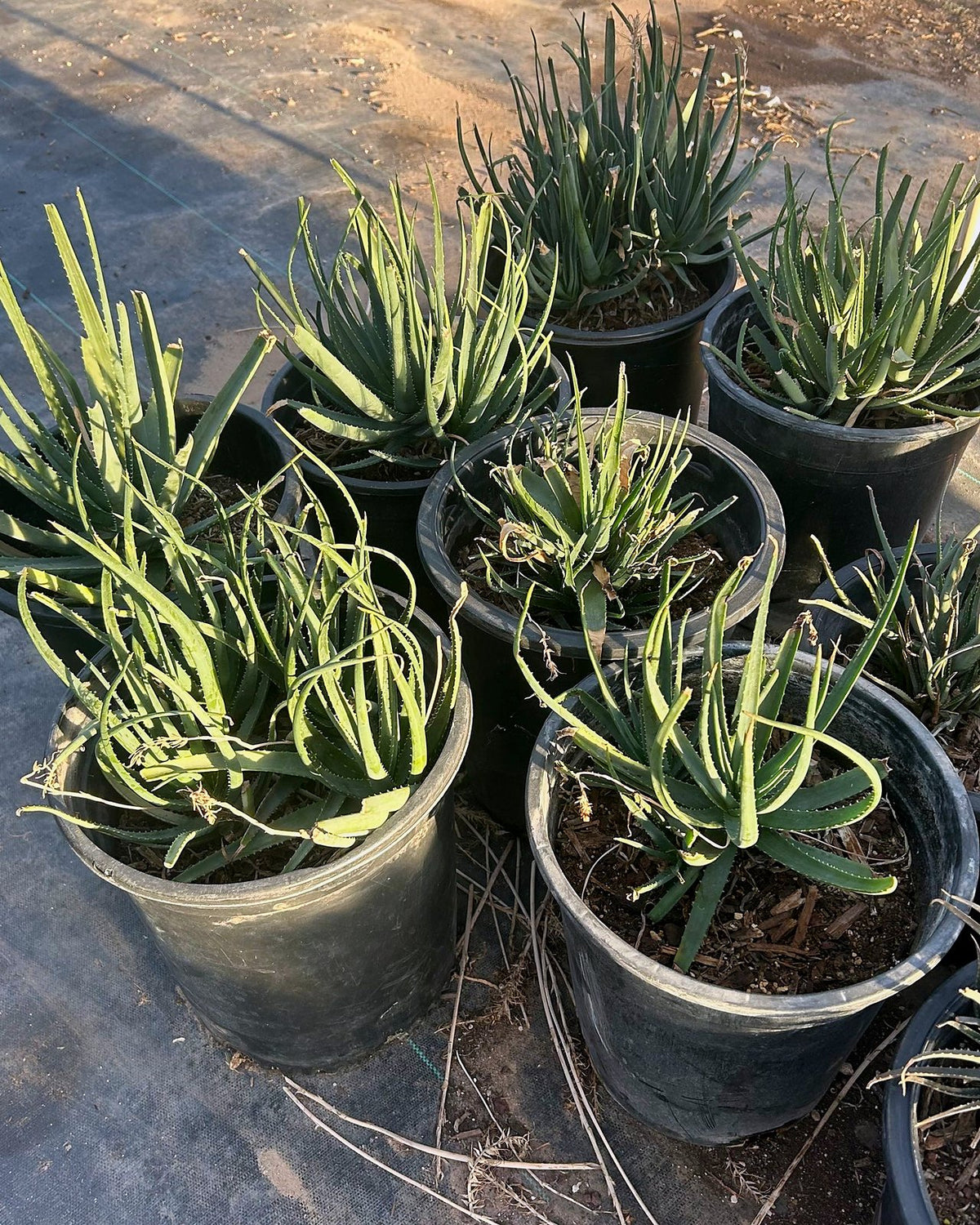

Safari Sunrise Aloe
Safari Sunrise Aloe
Couldn't load pickup availability
Soft Desert Color That Blooms Again and Again — Safari Sunrise Aloe
Safari Sunrise Aloe (Aloe ‘Safari Sunrise’) is a compact hybrid succulent that produces elegant two-toned flower spikes in soft peach, coral-pink, and creamy yellow from fall through winter, when most of the garden is resting. Growing 12–18 inches tall and slowly spreading 2–3 feet wide in tidy rosette clumps, this prolific bloomer brings warm, sunset-inspired color to any desert garden. Bred for repeat flowering and extreme heat tolerance, Safari Sunrise Aloe is perfect for Scottsdale, Chandler, Mesa, Gilbert, and Tempe landscapes.
Safari Sunrise Aloe Plant Details
| Attribute | Detail |
|---|---|
| Scientific Name | Aloe ‘Safari Sunrise’ |
| Common Names | Safari Sunrise Aloe, Safari Sunrise |
| Mature Height | 12–18 inches (flower spikes rise to about 3 feet) |
| Mature Width | 2–3 feet (clumping) |
| Growth Rate | Moderate — forms attractive clumps within 1–2 seasons |
| Sun | Full sun to partial shade |
| Water | Very low once established. Highly drought-tolerant. |
| USDA Zones | 9–11 (Phoenix is Zone 9b–10a) |
| Soil | Well-draining. Thrives in sandy, rocky, and gravelly Arizona soils. |
| Flower Color | Soft peach to coral-pink with creamy yellow tips |
| Bloom Season | Repeat flushes from fall through winter (can start in late summer) |
Why Safari Sunrise Aloe Thrives in Phoenix Landscapes
The Safari series of hybrid aloes was developed specifically for hot, arid climates with a focus on compact form, repeat blooming, and vivid flower color. Safari Sunrise Aloe handles full desert sun and reflected heat beautifully, and its succulent leaves store water efficiently for extended dry periods. The soft peach and coral tones of its flower spikes offer a warm, sophisticated color palette that complements both modern and traditional desert landscape designs.
Perfect Uses for Safari Sunrise Aloe
Safari Sunrise Aloe is ideal for rock gardens, succulent borders, and xeriscape beds where its compact size and warm-toned flowers create beautiful ground-level interest. Mass plant a step back from walkways and patio borders for waves of peach-coral color throughout the season. It looks stunning in mixed succulent containers and decorative planters for courtyards, entryways, and outdoor dining areas. Pair with Safari Rose Aloe for a complementary color combination, or mix with agaves, euphorbias, and low groundcovers for textural contrast.
How to Plant Safari Sunrise Aloe in Arizona
Choose a location with full sun to light afternoon shade and excellent drainage. Dig a hole slightly wider than the root ball and the same depth. Backfill with native soil — do not add compost or organic amendments that retain excessive moisture. Space plants about 2 feet apart (18 inches for faster fill-in) for a full, clumped appearance. Top-dress with decomposed granite or decorative gravel to mimic its natural habitat and keep the rosette base dry. Plant in fall or spring for easiest establishment.
How to Water Safari Sunrise Aloe in Phoenix
During establishment (first 3–4 weeks), water every 5–7 days. Once established, water deeply every 2–3 weeks in summer and monthly or less in winter. Safari Sunrise Aloe is extremely drought-tolerant and prefers dry conditions. Overwatering is the most common cause of failure — soggy soil leads to root rot. In containers, use a fast-draining cactus and succulent mix and water only when the soil is completely dry.
Frequently Asked Questions
How often does Safari Sunrise Aloe bloom?
Safari Sunrise Aloe is bred for repeat blooming, sending up flushes of flower spikes from fall through winter, sometimes starting in late summer, for months of warm-toned cool-season color with virtually no maintenance.
What’s the difference between Safari Sunrise and Safari Rose?
Both are compact Safari series hybrid aloes with similar growth habits. Safari Sunrise produces softer peach-to-coral flowers with creamy yellow tips, while Safari Rose blooms in deeper rose-pink to coral-orange tones. Plant both together for a beautiful warm-color gradient effect.
Is Safari Sunrise Aloe frost-hardy?
Safari Sunrise Aloe tolerates light frost down to about 25–28°F. In most Phoenix winters, it performs well without protection. During rare hard freeze events, cover with frost cloth or move containers to a sheltered spot overnight.
Can I divide Safari Sunrise Aloe?
Yes, Safari Sunrise gradually forms clumps by producing offsets (pups) around the mother plant. Divide clumps every 2–3 years in spring to create new plants, or allow them to fill in naturally for a lush colony effect in your garden bed or container.
You May Also Like
Safari Rose Aloe · Blue Elf Aloe · Coral Aloe · Aloe Vera · Mangave
How Many Safari Sunrise Aloe Do I Need?
Safari Sunrise Aloe stays low at 12 to 18 inches tall and clumps slowly to 2 to 3 feet wide, so it works as low, repeat-blooming color rather than a standalone specimen. Space plants about 2 feet on center to fill in as a continuous carpet of rosettes. Use this coverage guide:
| Area to Cover | Plants Needed (24 in spacing) |
|---|---|
| 10 sq ft | 2 to 3 plants |
| 25 sq ft | 6 to 7 plants |
| 50 sq ft | 12 to 13 plants |
| 100 sq ft | 25 plants |
For a single-row border set just back from a walkway or bed edge, set plants 18 to 24 inches apart: roughly 5 to 7 plants per 10 linear feet.
Safari Sunrise Aloe Season-by-Season in Phoenix
- Spring (Feb to Apr): The last winter spikes finish and fresh rosette growth begins. A prime planting window once nights hold above 45F.
- Summer (May to Sep): Thrives in full sun and reflected heat that fades most flowering color. Mostly foliage now, with the first spikes possible in late summer; monsoon humidity is fine as long as drainage is sharp. Light afternoon shade in the hottest west-facing spots protects leaf color.
- Fall (Oct to Nov): Prime planting season and the start of the main warm-toned bloom season as temperatures ease. Roots establish fast before winter.
- Winter (Dec to Jan): Evergreen and in bloom, with repeat flower spikes through the cool months. Hardy to about 25 to 28F: most Valley winters need no protection, but cover with frost cloth during a hard freeze and keep containers near a warm wall.
At a Glance
✔ Hummingbird-Friendly ✔ Pollinator-Friendly ✔ Heat-Loving (Reflected-Heat Tolerant) ✔ Drought-Tolerant ✔ Evergreen ✔ Low-Maintenance ✔ Deer & Rabbit-Resistant ✔ Cold-Hardy to 25°F
Plant It With
- Safari Rose Aloe: a sister Safari hybrid in deeper rose tones for a warm-color gradient.
- Blue Elf Aloe: similar compact clumping habit with orange winter spikes to extend the bloom window.
- Coral Aloe: a larger smooth-leaved aloe that anchors the bed behind the low Safari rosettes.
- Red Yucca: arching grassy form and coral flower stalks that pick up the sunrise palette and feed hummingbirds.
Is Safari Sunrise Aloe Right for Your Yard?
Safari Sunrise Aloe is a fit for full-sun to lightly shaded beds with fast-draining, gritty or decomposed-granite soil where you want soft, repeat-blooming color with almost no upkeep. It handles reflected heat along walls, pavement, and patios with ease. It is not a fit if your soil holds water or sits in a low, soggy spot, since standing moisture and dense caliche without drainage will rot the roots.
Customer Reviews
Share