

Lemon Bottle Brush Tree
Lemon Bottle Brush Tree
Couldn't load pickup availability
Phoenix's Best Year-Round Red Flowering Accent Tree — Lemon Bottle Brush Tree
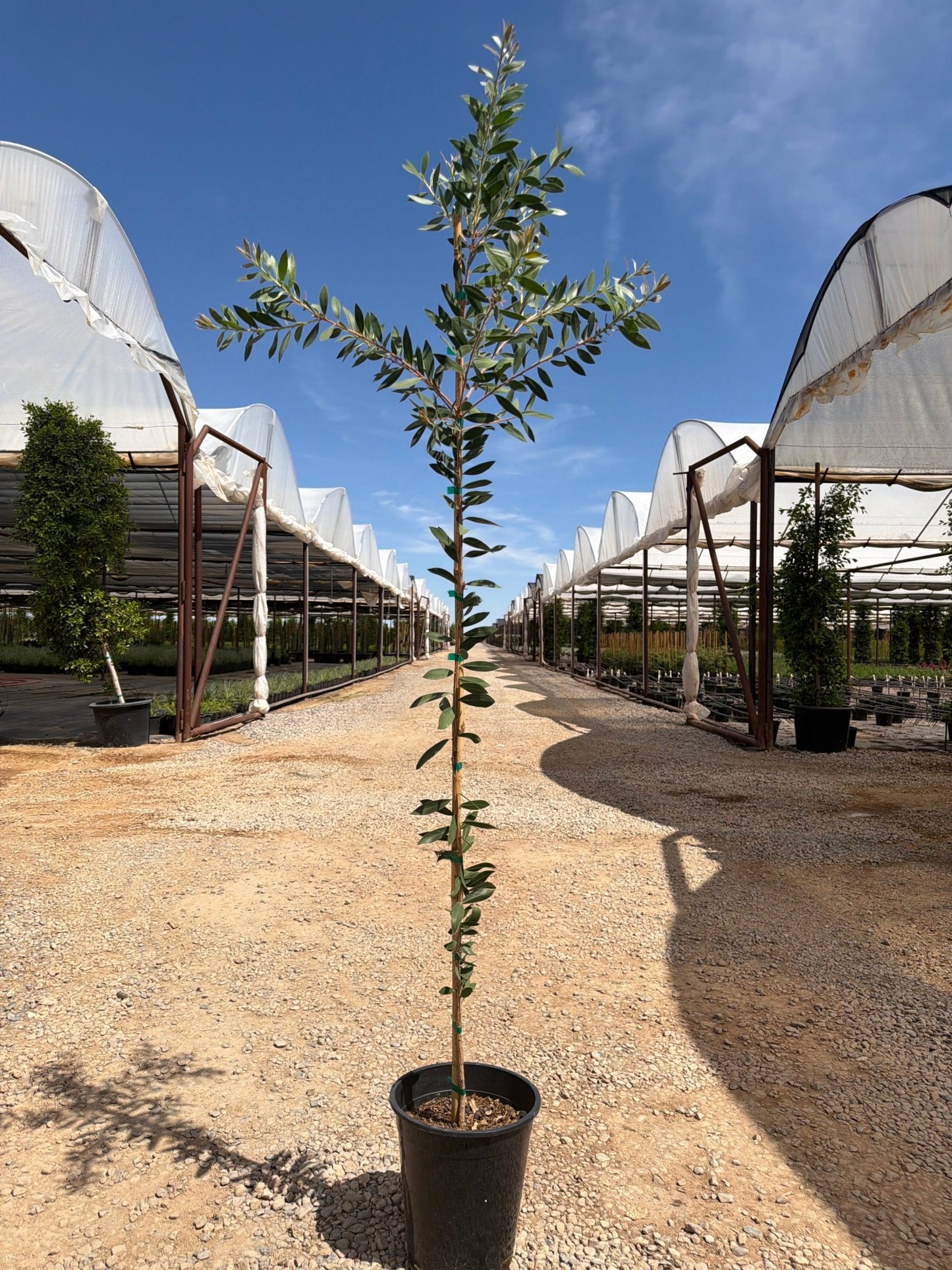
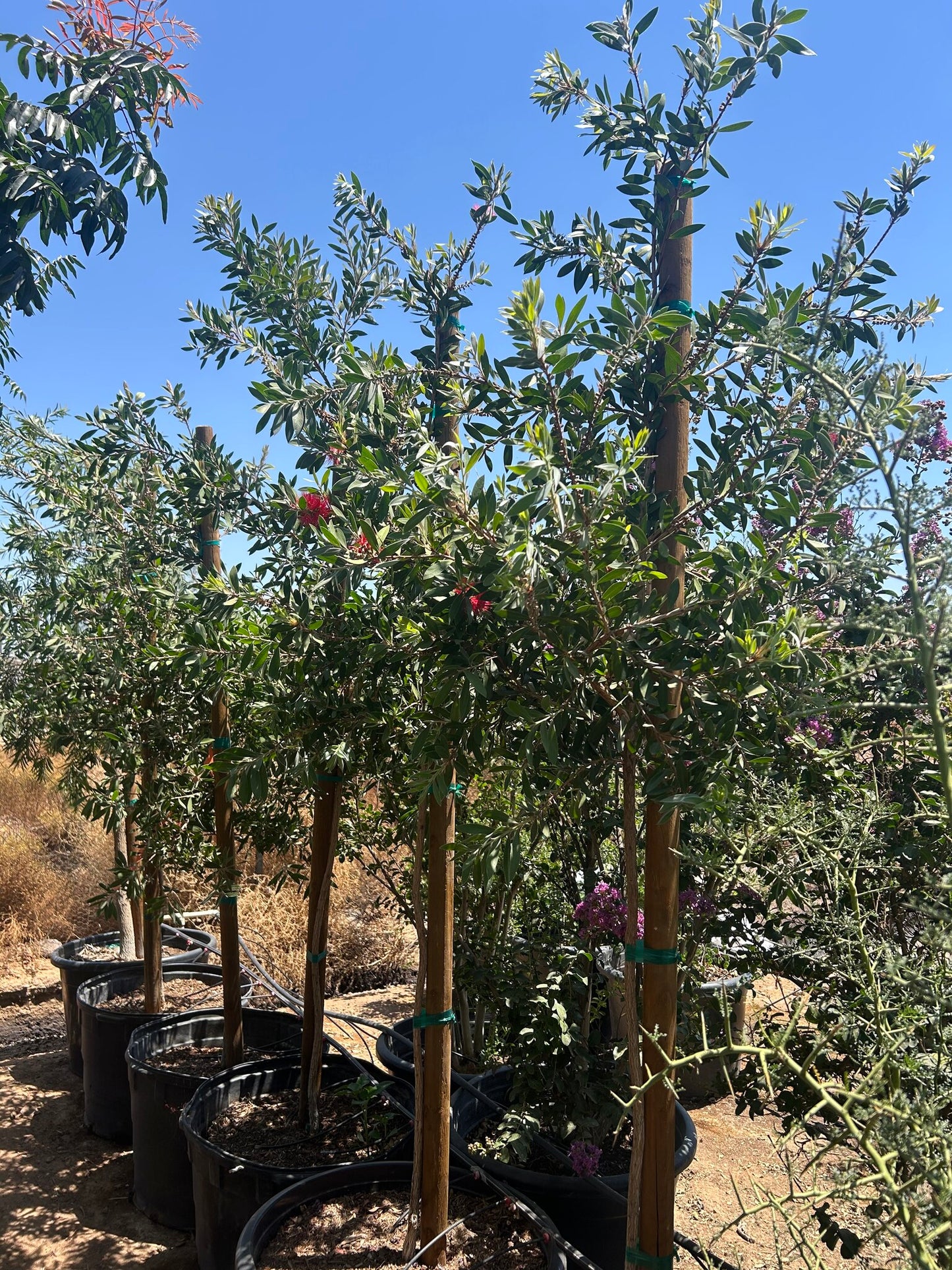
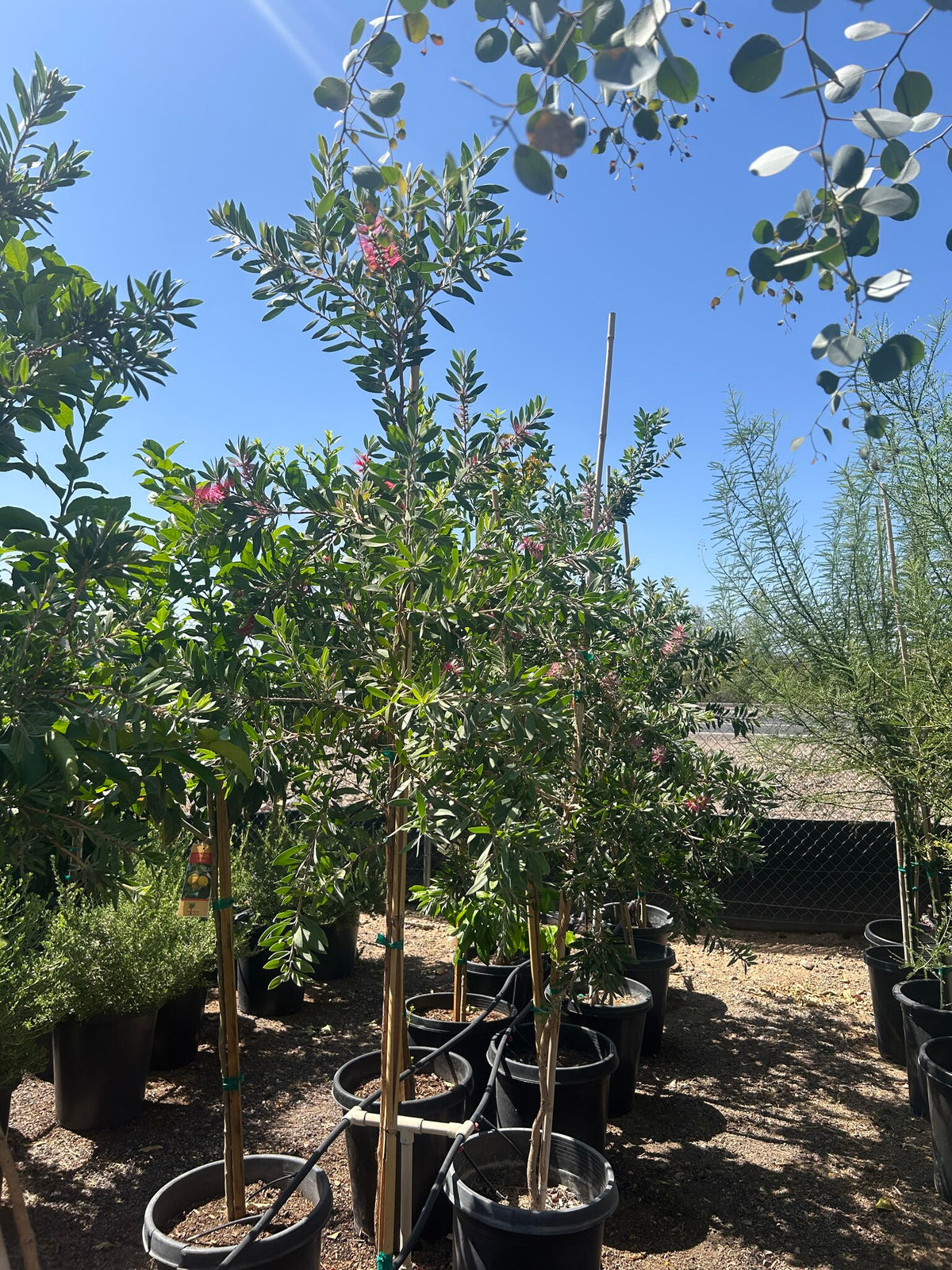
Lemon Bottle Brush Tree (Callistemon citrinus) is Phoenix's most striking year-round flowering accent tree — producing brilliant crimson, brush-like flower spikes that bloom heavily in spring and fall while maintaining dense evergreen foliage all year long. The aromatic lemon-scented leaves release a fresh citrus fragrance when brushed, making it as sensory as it is visual. A reliable hummingbird and pollinator magnet, this versatile evergreen works equally well as a patio shade accent, privacy screen, or bold focal point in the landscape. Whether you're designing a low-maintenance garden in Scottsdale, adding year-round color to a Chandler backyard, or screening a fence line in Mesa — Lemon Bottle Brush Tree delivers consistent beauty with minimal effort.
Lemon Bottle Brush Tree Plant Details
| Attribute | Detail |
|---|---|
| Scientific Name | Callistemon citrinus |
| Common Names | Lemon Bottlebrush, Crimson Bottlebrush, Lemon Bottle Brush Tree |
| Mature Height | 10–15 feet |
| Mature Width | 8–12 feet |
| Growth Rate | Moderate to Fast — 2–3 feet per year in Phoenix |
| Sun | Full sun (6+ hrs). Thrives in Phoenix's intense desert sun and reflected heat. |
| Water | Low to moderate once established. Very drought-tolerant after year one. |
| USDA Zones | 8–11 (Phoenix is Zone 9b–10a — ideal bottlebrush territory) |
| Soil | Well-draining. Adaptable to Arizona caliche soils with proper drainage. |
| Foliage | Evergreen — dense lemon-scented foliage stays green year-round |
| Bloom Color | Bright crimson-red, cylindrical brush-like flower spikes |
| Bloom Season | Spring and Fall (heaviest); intermittent blooms year-round |
| Wildlife | Exceptional hummingbird magnet; attracts bees and butterflies |
| Pet Friendly | Yes — non-toxic to dogs and cats |
Lemon Bottle Brush Tree Uses in Phoenix Landscapes
Year-Round Flowering Accent Tree
Few trees in the Phoenix landscape bloom as reliably as Lemon Bottle Brush Tree. With heavy flushes in spring and fall — plus intermittent color throughout the year — it provides more months of flowering interest than almost any other evergreen accent tree available in Arizona. Plant it as a standalone focal point in a rock garden bed or as a repeating accent along a fence line in Scottsdale, Gilbert, or Tempe for a dramatic, low-maintenance color display.
Privacy Screen and Living Hedge
Lemon Bottle Brush Tree's dense evergreen foliage makes it an excellent privacy screen or living hedge. Planted 6–8 feet apart, multiple trees create a dense year-round screen that also delivers waves of brilliant red blooms. For a 30-foot fence line, plant 4–5 trees spaced 6–7 feet apart. Much more colorful than standard privacy plants — it screens without sacrificing beauty.
Hummingbird and Pollinator Garden
The Lemon Bottle Brush Tree's tubular red flower spikes are irresistible to hummingbirds, making it one of the best hummingbird-attracting trees for Phoenix Valley gardens. Pair it with Desert Sage, Red Bird of Paradise, and Hummingbird Mint for a dedicated pollinator habitat that blooms from February through November. An excellent choice for Chandler and Peoria homeowners who want to attract wildlife to their landscape.
Patio Accent and Small Shade Tree
At 10–15 feet tall with a 8–12 foot canopy, Lemon Bottle Brush Tree provides light filtered shade — perfect for patios, outdoor dining areas, and courtyard plantings in Scottsdale and Mesa. The lemon-scented foliage adds aromatherapy benefits, and the densely branched form creates a clean, rounded silhouette that works beautifully in both modern desert and Mediterranean landscape styles.
Best Time to Plant Lemon Bottle Brush Tree in Phoenix
Fall (October–November) is the ideal planting window — warm soil promotes root development while cooler air reduces transplant stress, giving your tree 6–8 months to establish before its first Phoenix summer. Spring (February–April) is the second-best window. Avoid summer planting if possible, as newly planted trees require intensive irrigation during Phoenix's peak heat months.
How to Plant Lemon Bottle Brush Tree
- Dig wide, not deep — Excavate a hole 2–3 times the width of the root ball, same depth as the root ball.
- Break through caliche — Check for and break through any hardpan caliche layer to ensure proper drainage in Arizona soils.
- Backfill with native soil — A light 20% organic amendment blend with native soil promotes healthy root development.
- Spacing — 8–10 feet apart for privacy screening; 10–12 feet for individual accent specimens.
- Water basin — Build a 3–4 inch earthen berm around the drip line to concentrate irrigation at the root zone.
- Mulch — Apply 2–3 inches of bark mulch or decomposed granite to retain moisture and moderate soil temperature.
Watering Lemon Bottle Brush Tree in Phoenix
First Year Watering Schedule
- Weeks 1–2: Water every 1–2 days, deep and slow (20–30 minutes per session)
- Months 1–2: Water every 3–4 days
- Months 3–6: Water every 7–10 days (every 5–7 days during peak summer)
- After Year 1: Every 10–14 days in summer; every 3–4 weeks in winter
Drip Irrigation
Place 2 emitters 18–24 inches from the trunk, using 1–2 GPH emitters. Run for 30–45 minutes per session. Once established (after year 2), Lemon Bottle Brush Tree is highly drought-tolerant and requires minimal supplemental water beyond Phoenix's natural winter rainfall.
How fast does Lemon Bottle Brush Tree grow in Phoenix?
In Phoenix's warm climate, Lemon Bottle Brush Tree typically grows 2–3 feet per year. A newly planted 5-gallon tree can reach 8–10 feet within 3–4 years; a 25-gallon tree may reach full height within 2–3 years.
Does it really smell like lemons?
Yes — the leaves of Callistemon citrinus release a pleasant citrus-lemon fragrance when brushed, crushed, or after rain. This aromatic quality makes it a popular choice near patios, pathways, and outdoor seating areas throughout the Phoenix Valley.
How often does it bloom?
Lemon Bottle Brush Tree produces its heaviest blooms in spring (March–May) and again in fall (September–November). In Phoenix's mild climate, it often flowers intermittently throughout the year, providing more months of color than most flowering trees.
Does it attract hummingbirds?
Absolutely — it's one of the top hummingbird-attracting plants available in Phoenix. The tubular red flower spikes are perfectly shaped for hummingbird feeding. Anna's Hummingbirds, which stay year-round in the Phoenix Valley, are frequent visitors when the tree is in bloom.
Can it handle Phoenix heat?
Yes — Lemon Bottle Brush Tree is remarkably heat-tolerant and thrives in Phoenix's intense summer sun. It handles reflected heat from walls and pavement well, making it a great choice for hot, south-facing exposures in Scottsdale, Peoria, and Glendale.
You May Also Like
- Desert Willow — Arizona native flowering tree with pink trumpet blooms; a drought-tolerant companion that extends the bloom season.
- Chitalpa — Fast-growing flowering shade tree with pink blooms; excellent low-water companion for Lemon Bottle Brush.
- Anacacho Orchid Tree — Stunning white orchid-like flowers; a compact flowering tree that pairs beautifully with the Bottlebrush's red blooms.
- Texas Mountain Laurel — Fragrant purple blooms in spring; outstanding companion plant for a fragrant, colorful Phoenix landscape.
- Purple Crape Myrtle — Long-blooming summer color with lavender flowers; spectacular color contrast with Bottlebrush's crimson red.
How Many Lemon Bottle Brush Trees Do I Need?
Used as a flowering privacy screen, space Lemon Bottle Brush Trees about 8 feet on center so the canopies knit into a continuous evergreen wall. As a single accent or focal specimen, give it 10 to 12 feet of clearance so the rounded form stands clear. For odd-numbered groupings of 3, plant on 8 to 10 foot centers.
| Screen / Fence Run | Trees Needed (8 ft spacing) |
|---|---|
| 16 ft | 3 |
| 24 ft | 4 |
| 32 ft | 5 |
| 40 ft | 6 |
| 48 ft | 7 |
Lemon Bottle Brush Tree Season-by-Season in Phoenix
- Spring (Feb–Apr): Heaviest bloom flush of crimson spikes, drawing in returning hummingbirds and bees. Prime second planting window once nights warm above 50°F. Light new growth flush on the branch tips.
- Summer (May–Sep): Holds dense evergreen foliage through extreme heat and reflected heat off walls and pavement. Monsoon humidity (Jul–Sep) often triggers a secondary bloom and a fresh growth push. Keep first-year trees on regular water during peak heat.
- Fall (Oct–Nov): Second major bloom flush and the best planting season in Phoenix. Roots establish quickly in still-warm soil ahead of winter.
- Winter (Dec–Jan): Stays fully evergreen and green through Valley winters. Hardy to roughly 20°F, so it shrugs off normal Phoenix frost. In a hard cold snap young trees can show minor leaf-tip burn but recover in spring.
At a Glance
✔ Pollinator-Friendly ✔ Hummingbird-Friendly ✔ Heat-Loving (Reflected-Heat Tolerant) ✔ Drought-Tolerant ✔ Evergreen ✔ Low-Maintenance ✔ Cold-Hardy to 20°F
Plant It With
- Desert Willow: Arizona native flowering tree whose pink trumpets extend the bloom season alongside the crimson spikes.
- Anacacho Orchid Tree: Delicate white orchid-like blooms that contrast beautifully against the bottlebrush red.
- Chitalpa: Fast low-water flowering shade tree that pairs well in a mixed flowering border.
- Bottlebrush Bush: The shrub form of the same family for layering red bloom at a lower height.
Is Lemon Bottle Brush Tree Right for Your Yard?
It thrives in full sun and reflected heat, tolerates Phoenix caliche as long as the planting hole drains, and asks for little once established, which makes it a strong pick for hot south- and west-facing exposures and for homeowners who want year-round color with low effort. It is not the best fit if you need a clean, litter-free poolside tree, since spent flower bristles and fine leaves drop steadily, or if your only planting spot stays wet and poorly drained.
Customer Reviews
Purchased 2 weeks ago and it is already showing new growth. Looking forward to what it will look like in a few months while it fills out a bit more. Perfect fit for filling in the space I had and to provide some much needed shade,
Share