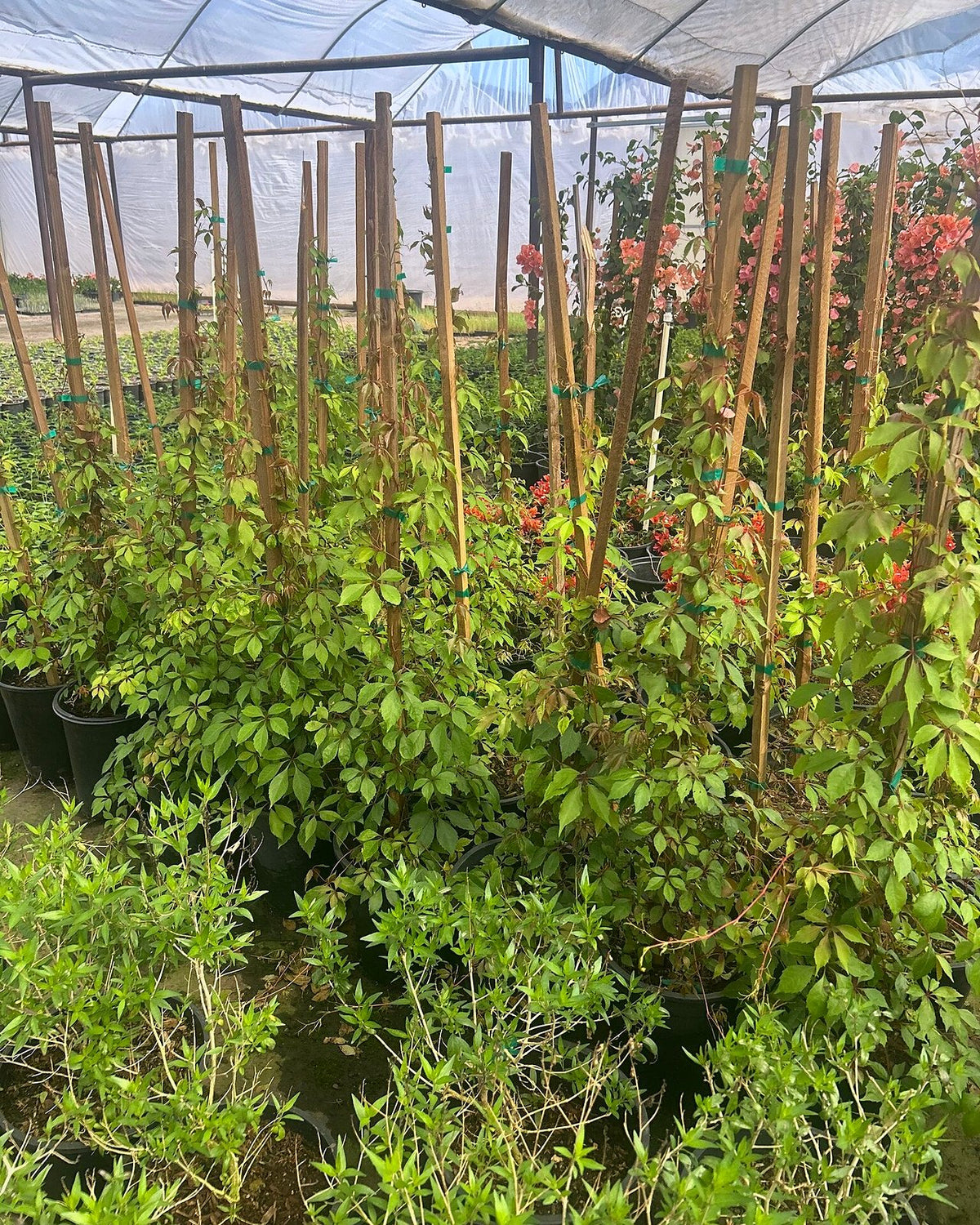


Hacienda Creeper
Hacienda Creeper
Couldn't load pickup availability
Hacienda Creeper – Fast-Growing Privacy Vine for Phoenix, Scottsdale & Tempe
Transform bare walls and fences into lush green screens with Hacienda Creeper (Parthenocissus sp. 'Hacienda Creeper'), the Valley's go-to climbing vine for rapid coverage. Beloved by homeowners across Phoenix, Scottsdale, and Tempe, this vigorous vine clings to almost any surface with adhesive tendrils, delivering rich emerald foliage all spring and summer before putting on a spectacular show of fiery red and orange in fall. Whether you need a living privacy screen for a block wall, a shady canopy over an arbor, or erosion control on a slope, Hacienda Creeper delivers—fast and with minimal fuss. Available in 1 Gallon, 3/5 Gallon, and 10/15 Gallon sizes.
Plant Details
| Scientific Name | Parthenocissus sp. 'Hacienda Creeper' |
|---|---|
| Plant Type | Deciduous to semi-evergreen climbing vine |
| Mature Height | 20–30 ft (with support) |
| Spread | 10–20 ft |
| Growth Rate | Fast — can add 10+ ft per season |
| Sun Exposure | Full sun to partial shade |
| Flower Color | Inconspicuous; grown for bold seasonal foliage |
| Fall Color | Brilliant red and orange |
| Hardiness Zone | Zone 9b–10a (ideal for greater Phoenix Valley) |
| Water Needs | Moderate to low once established |
| Soil Tolerance | Adaptable; handles caliche and poor soils with amendment |
| Available Sizes | 1 Gallon, 3/5 Gallon, 10/15 Gallon |
Why Phoenix Homeowners Love Hacienda Creeper
Lightning-Fast Wall & Fence Coverage
Hacienda Creeper earns its reputation as Phoenix's fastest privacy vine. Using adhesive pads at the tips of its tendrils, it clings directly to stucco, block walls, wood fences, and metal trellises—no additional hardware needed. In a single growing season it can race up a 6-foot wall, giving you the privacy screen you want without waiting years. Plant 8–10 feet apart along a fence line for seamless coverage within one to two seasons.
Spectacular Seasonal Color in the Desert
While most desert plants sacrifice fall color for heat tolerance, Hacienda Creeper delivers both. The deep green summer canopy transforms into vivid shades of red and orange as temperatures drop, creating a dramatic focal point even in the low desert landscape. More sun exposure during the growing season intensifies the fall color display.
Heat & Drought Tolerance
Once established in Zone 9b–10a conditions, Hacienda Creeper handles Phoenix summers with deep, infrequent watering every 2–4 weeks. It tolerates the alkaline, caliche-laden soils common across the Valley—just amend the planting hole with compost to improve drainage and give roots a healthy start. No regular fertilizer is needed; a single spring application of balanced fertilizer is plenty.
Arbors, Trellises & Shade Structures
Beyond fences and walls, Hacienda Creeper excels at covering arbors, pergolas, and shade structures. A mature vine can reduce surface temperatures dramatically, making covered patios noticeably cooler—a significant benefit during Phoenix's 110°F summers. Space vines 8–10 feet apart along the base of a pergola for full overhead coverage.
Slopes, Groundcover & Erosion Control
Hacienda Creeper isn't limited to vertical surfaces. On grades and slopes it spreads as a dense groundcover, binding soil and preventing erosion while smothering weeds. Plant 6–8 feet apart for groundcover use on embankments or open areas.
Best Time to Plant Hacienda Creeper in Phoenix
The optimal planting windows are late February through April and September through November. Spring planting gives roots the mild weather they need to establish before summer heat; fall planting takes advantage of cooler soil temperatures and winter rains. Avoid planting during the peak of summer (June–August) unless you can provide shade and consistent daily watering.
How to Plant Hacienda Creeper — 6 Steps
- Choose Your Location: Select a spot with full sun to partial shade. South- or west-facing walls maximize fall color intensity.
- Prepare the Soil: Dig a hole 2–3× wider than the container and equal in depth. In heavy caliche soils, break through the hardpan layer and mix in 30–40% compost to improve drainage.
- Set the Plant: Position the vine so the crown sits level with or slightly above the surrounding soil. Backfill with amended native soil and press firmly to eliminate air pockets.
- Water Thoroughly: Soak the root zone deeply right after planting to settle the soil and give roots first contact with moisture.
- Mulch the Base: Apply 2–3 inches of organic mulch around the base, keeping it 2 inches away from the stem, to retain moisture and moderate soil temperature.
- Train the Vine: Guide initial shoots toward your fence, wall, or trellis. Self-adhesive tendrils will take over from there; on smooth or sealed surfaces, use vine clips to direct early growth.
Watering Schedule for Hacienda Creeper
Consistent watering during the establishment period is the key to a fast-growing, resilient vine.
After Planting
- Weeks 1–2: Water every 2–3 days, soaking the root zone 8–10 inches deep each time.
- Weeks 3–8: Reduce to every 4–5 days as roots begin to anchor.
- Months 2–4: Transition to weekly deep watering, monitoring soil moisture 3–4 inches down before each session.
Once Established (3–4 Months)
- Summer (May–Sept): Deep water every 2–4 weeks; more frequently during extreme heat waves above 110°F.
- Winter (Oct–Apr): Water monthly if rainfall is insufficient; established vines can often go longer between cycles in cool weather.
Drip Irrigation Setup
- Emitter Placement: Position 1–2 emitters 12–18 inches from the base of each vine.
- Flow Rate: 1–2 gallons per hour per emitter.
- Run Time (Summer): 2–4 hours per cycle; adjust based on soil type and vine size.
- Seasonal Adjustment: Increase frequency during heat spikes; reduce in fall and winter as growth slows.
Frequently Asked Questions
Is Hacienda Creeper the same as Virginia Creeper?
Hacienda Creeper is a closely related species in the Parthenocissus genus, selected for superior heat and drought performance in desert climates like Phoenix compared to standard Virginia Creeper varieties.
Will Hacienda Creeper damage my stucco or block wall?
The adhesive tendrils bond to surfaces without penetrating them, but can leave marks on painted or finished surfaces if the vine is removed. Most homeowners find it ideal for unpainted block or brick walls; for painted surfaces, use a trellis a few inches off the wall instead.
How fast does Hacienda Creeper grow in Phoenix?
Expect 10 or more feet of new growth per season once established. In Phoenix's long warm season this vine is one of the fastest coverage options available.
Does it lose its leaves in winter?
In the greater Phoenix area Hacienda Creeper is semi-evergreen. It may drop some or all of its leaves during cooler winters, but regrows vigorously in spring. In warmer microclimates it may retain foliage year-round.
How far apart should I plant for privacy screening?
Space plants 8–10 feet apart for wall or fence coverage. Vines will fill in the gaps within one to two growing seasons.
Does it need fertilizer?
Rarely. Apply a balanced slow-release fertilizer once in spring if you want to push growth; otherwise the vine does well without supplemental feeding in most Valley soils.
You May Also Like
- Queen's Wreath Vine – Stunning purple blooms on a fast-climbing desert vine
- Variegated Pittosporum – Compact evergreen shrub for refined Phoenix privacy hedges
- Green Euonymus – Dense, manageable evergreen for low walls and borders
How Many Hacienda Creeper Do I Need?
Hacienda Creeper is a fast self-clinging vine that fills in quickly, so you can space starter plants generously. Use about 9 feet apart for wall and fence coverage, or 6 to 8 feet apart when using it as a slope groundcover.
| Wall or fence run | Plants needed (at ~9 ft spacing) |
|---|---|
| 10 ft | 2 plants |
| 20 ft | 3 plants |
| 30 ft | 4 plants |
| 40 ft | 5 plants |
For an arbor or pergola, set vines at the base of each post (8 to 10 feet apart) and let them race across the top for an overhead canopy within one to two seasons.
Hacienda Creeper Season-by-Season in Phoenix
- Spring (Feb–Apr): Vigorous emerald growth flush. Prime planting window so roots settle before summer.
- Summer (May–Sep): Dense green canopy shades walls and patios and shrugs off reflected heat once established. Monsoon rains push fast new growth. Water deeply during 110°F+ heat waves.
- Fall (Oct–Nov): The signature show: foliage turns brilliant red and orange. Second prime planting window of the year.
- Winter (Dec–Jan): Deciduous to semi-evergreen in the Valley. It drops some or all of its leaves in cooler winters and regrows vigorously in spring; in warm microclimates it may hold foliage.
At a Glance
✔ Heat-Loving (Reflected-Heat Tolerant) ✔ Drought-Tolerant ✔ Low-Maintenance ✔ Shade-Providing
Plant It With
- Queen's Wreath 'Pink': a fast-climbing vine that adds showy pink bloom clusters to the green canopy.
- Virginia Creeper: its close cousin, for matching red fall color across a larger run.
- Creeping Fig Staked: a fine-textured evergreen wall cover to hold green when the creeper drops its leaves.
- Green Hopseed Bush: a tall evergreen screen to layer in front of the wall base for year-round privacy.
Is Hacienda Creeper Right for Your Yard?
Hacienda Creeper is the right pick when you want the fastest possible coverage on an unpainted block wall, fence, arbor, or slope, with bonus red and orange fall color in the low desert. It handles full sun, reflected heat, and caliche soil amended for drainage. Not a fit if you need year-round evergreen screening (it is deciduous to semi-evergreen here), or if your wall is painted or sealed, since the adhesive pads can mark finished surfaces when removed.
Customer Reviews
Great quality and delivery options.
Share