
Giant Lily Turf
Giant Lily Turf
Couldn't load pickup availability
Phoenix's Boldest Shade-Tolerant Groundcover — Giant Lily Turf
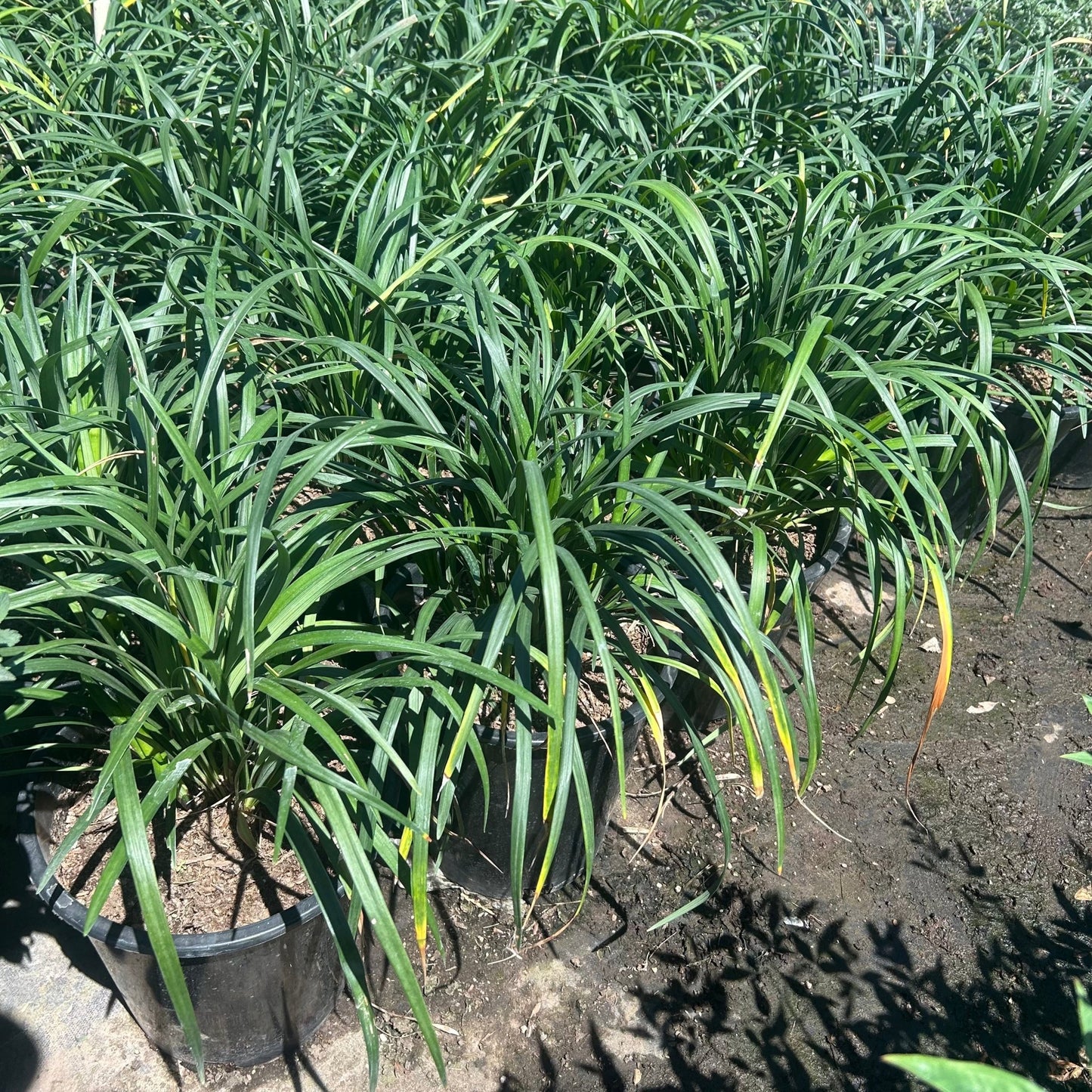
Giant Lily Turf (Liriope gigantea) is one of the most versatile and striking evergreen groundcovers available for Phoenix Valley landscapes. Its bold, deep green strap-like leaves grow in dramatic, arching clumps that maintain lush, tropical-looking foliage year-round — even in the shade, where most desert plants struggle to look presentable. In mid-to-late summer, tall spikes of lavender-purple flower clusters rise above the foliage, adding a showy seasonal display that attracts pollinators. Whether you're filling a shaded bed under trees in Scottsdale, creating a lush border along a wall in Chandler, or replacing struggling grass under a patio overhang in Mesa — Giant Lily Turf delivers bold, reliable beauty with minimal maintenance.
Giant Lily Turf Plant Details
| Attribute | Detail |
|---|---|
| Scientific Name | Liriope gigantea |
| Common Names | Giant Lily Turf, Giant Lilyturf, Big Blue Liriope |
| Mature Height | 2–3 feet (foliage); up to 4 feet with flower spikes |
| Mature Width | 2–3 feet per clump |
| Growth Rate | Moderate — fills in steadily over 1–2 seasons in Phoenix |
| Sun | Full sun to partial shade. Performs best with afternoon shade in Phoenix's intense heat. |
| Water | Low to moderate. Drought-tolerant once established; looks best with regular irrigation. |
| USDA Zones | 6–10 (Phoenix is Zone 9b–10a) |
| Soil | Adaptable. Tolerates Arizona caliche soils — break hardpan for best root development. |
| Foliage | Evergreen — deep green strap-like leaves year-round |
| Bloom Color | Lavender-purple flower spikes, mid-to-late summer |
| Pool Friendly | Yes — tidy, non-invasive clumps with minimal litter |
Giant Lily Turf Uses in Phoenix Landscapes
Shade Garden Groundcover
Giant Lily Turf truly shines in the shaded areas of Phoenix landscapes — under mesquite trees, along north-facing walls, or beneath patio covers in Tempe and Gilbert — where most desert-adapted plants fail to thrive. Its deep green foliage maintains excellent color even in filtered or heavy shade, providing a lush, tropical-looking groundcover that requires little maintenance. Plant 18–24 inches apart for a solid groundcover that fills in within 2 growing seasons.
Bold Border and Accent Planting
Giant Lily Turf's dramatic, fountain-like form makes it an excellent bold accent plant along walkways, driveways, and garden borders throughout Scottsdale and Peoria. Its tall, arching leaves create strong vertical interest while the clumping habit stays tidy and contained. Plant in groups of 3–5 at 2–3 foot spacing for a dramatic massed border, or use as a single specimen anchor at the corners of beds.
Pool-Friendly Landscaping
Giant Lily Turf is one of the best pool-side plants available for Phoenix Valley landscapes. Its evergreen clumps don't shed leaves or seeds excessively, keeping pool maintenance to a minimum. The tall, graceful foliage adds a lush, tropical look to pool areas in Glendale and Chandler without the mess of many other landscape plants. Plant 2–3 feet from pool edges for best effect.
Erosion Control on Slopes
The deep, fibrous root system of Giant Lily Turf makes it excellent for stabilizing slopes and berms throughout the Phoenix Valley. In mass plantings at 18–24 inch spacing, it creates a dense, weed-suppressing groundcover that holds soil effectively while reducing irrigation requirements once established. It outperforms turf grass on difficult slopes in terms of water efficiency and long-term maintenance.
Best Time to Plant Giant Lily Turf in Phoenix
Fall (October–November) is ideal — warm soil temperatures encourage quick root establishment while cooler air reduces transplant stress. This gives plants 6–8 months of prime growing conditions before their first Phoenix summer. Spring (February–April) is the next best window, providing time for roots to establish before the heat arrives. Avoid summer planting if possible; Giant Lily Turf can be established in summer with extra irrigation and afternoon shade, but fall-planted specimens establish far more vigorously.
How to Plant Giant Lily Turf
- Dig wide, not deep — Dig a hole 2–3 times the root ball width at the same depth. Keep the crown at or slightly above soil level to prevent crown rot.
- Check for caliche — Break through any caliche hardpan layer to ensure proper drainage. Giant Lily Turf tolerates many soil types but will not thrive in standing water.
- Backfill with native soil — Native Arizona soil works well; adding 20–30% compost improves performance in full-sun locations.
- Spacing — 18–24 inches apart for dense groundcover; 2–3 feet apart for individual specimen clumps.
- Water basin — Build a 3–4 inch soil ring around each plant to direct water to the root zone during establishment.
- Mulch — Apply 2–3 inches of bark mulch around the clump (not over the crown) to retain moisture and moderate soil temperature.
Watering Giant Lily Turf in Phoenix
First Year Watering Schedule
- Weeks 1–2: Every 1–2 days, deep and slow (20–30 minutes per session)
- Months 1–2: Every 3–4 days
- Months 3–6: Every 7–10 days (every 5–7 days during peak summer heat)
- After Year 1: Every 7–14 days in summer; every 3–4 weeks in winter
Drip Irrigation
Place 1–2 GPH emitters 12–18 inches from the base of each clump. Giant Lily Turf benefits from more regular irrigation than true desert plants — in full-sun Phoenix locations, consistent watering every 7–10 days during summer produces the lushest, most attractive foliage. In partial shade, water needs are reduced by roughly 30%.
How fast does Giant Lily Turf grow in Phoenix?
Giant Lily Turf grows at a moderate pace in Phoenix — expect clumps to roughly double in size in the first 1–2 growing seasons. Once established, it fills beds steadily without becoming invasive. Plants in afternoon shade or with consistent irrigation establish faster than those in full-sun, drier conditions.
Does Giant Lily Turf bloom in Phoenix?
Yes — Giant Lily Turf produces tall spikes of lavender-purple flower clusters in mid-to-late summer (typically July through September in Phoenix). The blooms attract bees and butterflies and are followed by small dark berries. In full sun, plants tend to flower more prolifically; in deep shade, flowering may be reduced but foliage remains excellent.
Is Giant Lily Turf truly evergreen in Phoenix?
Yes — in Phoenix's mild climate (Zone 9b–10a), Giant Lily Turf stays evergreen year-round. The foliage maintains its deep green color through winter without going dormant. In unusually cold winters with frost, the leaf tips may brown slightly but the plant recovers quickly as temperatures warm.
Can Giant Lily Turf grow in full sun in Phoenix?
Yes, but with caveats. Giant Lily Turf tolerates full sun in Phoenix, especially with adequate irrigation, but it performs best with afternoon shade protection. In full western or southern exposure without shade, leaves may develop a yellowish tint — providing afternoon shade from a wall or tree eliminates this issue and keeps plants looking their lushest.
Does Giant Lily Turf spread aggressively?
No — Giant Lily Turf forms contained, clumping mounds that expand gradually outward without running or spreading aggressively. It is not invasive, making it a safe and well-behaved choice for borders, beds, and pool areas throughout Phoenix Valley landscapes.
You May Also Like
Silvery Sunproof Liriope — A variegated liriope variety with striking green and yellow striped leaves that provides beautiful contrast alongside Giant Lily Turf in mixed plantings.
Little Rev Flax Lily — A compact flax lily with rich purple foliage that pairs wonderfully with Giant Lily Turf for a bold color contrast in borders and beds.
Varigated Flax Lily — A striking flax lily with green and cream striped leaves that creates beautiful textural contrast when planted with Giant Lily Turf.
Mexican Thread Grass — A fine-textured, airy ornamental grass that provides a beautiful light contrast to Giant Lily Turf's bold, strappy leaves.
Purple Fountain Grass — A dramatic ornamental grass with deep burgundy foliage that creates a striking color complement to Giant Lily Turf's deep green.
How Many Giant Lily Turf Do I Need?
Each clump matures to about 2 to 3 feet wide, so space on 18 to 24 inch centers for a dense groundcover. Use this coverage guide (at 2 ft spacing):
| Area to cover | Plants needed |
|---|---|
| 25 sq ft | 6 plants |
| 50 sq ft | 13 plants |
| 100 sq ft | 25 plants |
| 200 sq ft | 50 plants |
For a bold massed border, plant in odd-numbered groups of 3 to 5 at 2 to 3 foot spacing so each fountain-shaped clump reads clearly, or set a single clump as an accent anchor at a bed corner.
Giant Lily Turf Season-by-Season in Phoenix
- Spring (Feb to Apr): New strap-leaf growth flushes from the center of each clump. Best second planting window of the year, and a good time to shear off any winter-tipped leaves.
- Summer (May to Sep): Lavender-purple flower spikes rise above the foliage from July through September, often boosted by monsoon humidity. Foliage stays lush with afternoon shade; in full western sun the leaves can yellow, so give it protection or steady water.
- Fall (Oct to Nov): Prime planting season. Cooler nights and warm soil drive strong root establishment, and the clumps hold their deep green.
- Winter (Dec to Jan): Stays evergreen in the Valley. A hard frost may brown the leaf tips, but the plant is cold-hardy well below freezing and recovers quickly as it warms.
At a Glance
✔ Pollinator-Friendly ✔ Drought-Tolerant ✔ Pool-Friendly (Low-Litter) ✔ Evergreen ✔ Low-Maintenance ✔ Cold-Hardy to -10°F
Plant It With
- Silvery Sunproof Liriope: variegated green-and-gold liriope that brightens the deep green clumps in a mixed shade bed.
- Little Rev Flax Lily: compact upright flax lily for fine contrast at the front of the border.
- Variegated Flax Lily: cream-striped strappy foliage that echoes the form with a lighter tone.
- Foxtail Fern: soft plume-textured shade companion that contrasts the bold straps.
Is Giant Lily Turf Right for Your Yard?
Giant Lily Turf is the right pick for shaded and part-shade beds: under trees, along north walls, beneath patio covers, and tidy pool-side clumps where you want lush, tropical-looking foliage with little fuss. It is cold-hardy and non-invasive. It is not the best choice for a hot, unshaded western exposure, where the leaves yellow without extra water, or for spots that stay waterlogged, since a wet crown will rot.
Customer Reviews
Share