
Variegated Flapjacks
Variegated Flapjacks
Couldn't load pickup availability
Phoenix's Most Colorful Paddle Succulent for Desert Gardens
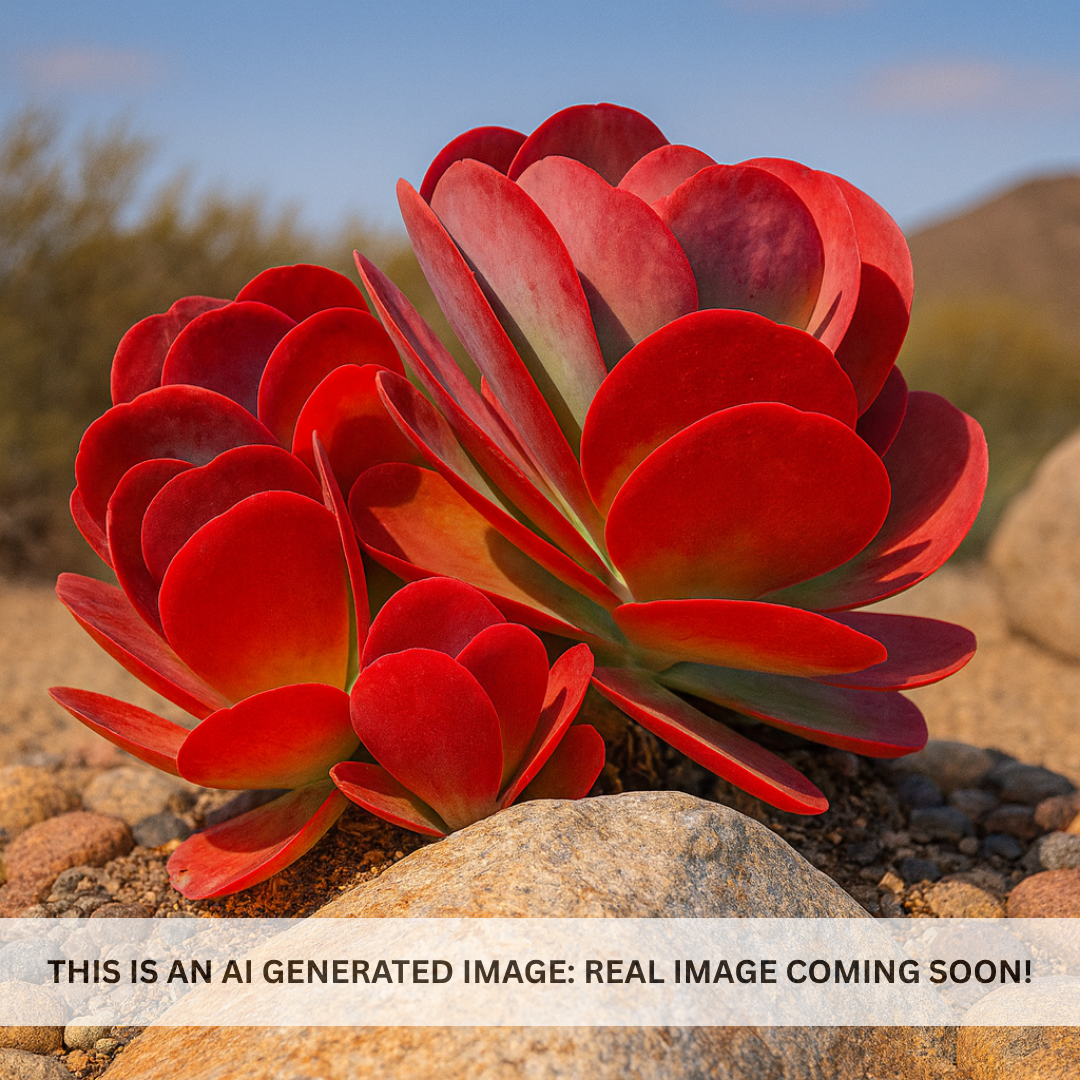
Variegated Flapjacks (Kalanchoe luciae 'Fantastic') is a showstopper succulent that brings year-round color to any Phoenix Valley landscape. Its large, paddle-shaped leaves feature bold variegation in cream, green, and pink-red that intensifies with sun exposure and cool winter temperatures. This compact, clumping succulent requires almost no maintenance and thrives in the extreme heat that defines Scottsdale, Mesa, Gilbert, and Chandler summers. Whether you're building a container garden, designing a succulent border, or adding a pop of color to a rock garden — Variegated Flapjacks delivers tropical vibrancy with true desert toughness.
Variegated Flapjacks Plant Details
| Attribute | Detail |
|---|---|
| Scientific Name | Kalanchoe luciae 'Fantastic' (variegated form) |
| Common Names | Variegated Flapjacks, Variegated Paddle Plant, Variegated Desert Cabbage |
| Mature Height | 1–2 feet |
| Mature Width | 1–2 feet (clumping) |
| Growth Rate | Moderate — fills out quickly in warm months |
| Sun | Full sun to partial shade. More sun = more vivid variegation and red edging. |
| Water | Very low once established. Highly drought-tolerant. |
| USDA Zones | 9–11 (Phoenix is Zone 9b–10a) |
| Soil | Well-draining. Adapts to Arizona caliche soils with good drainage. |
| Foliage | Evergreen — cream, green, and red-pink variegated paddles year-round |
| Bloom | Tall yellow flower stalk in spring on mature rosettes (monocarpic — rosette dies after bloom but offsets continue) |
Variegated Flapjacks Uses in Phoenix Landscapes
Container Gardens & Patio Accents
Variegated Flapjacks is a container garden superstar throughout the Phoenix Valley. The bold cream-and-red paddle leaves create instant visual impact in ceramic pots, raised planters, and poolside containers. Plant alone as a statement piece or combine with trailing succulents like String of Pearls for a layered look. The compact size makes it perfect for patios, balconies, and entryways in Scottsdale, Tempe, and Gilbert.
Rock Gardens & Succulent Beds
Mass-plant Variegated Flapjacks in decomposed granite beds for a striking groundcover effect. Space 12–18 inches apart and the clumping habit fills in within one growing season. The variegated foliage contrasts beautifully with blue-toned aloes, dark agaves, and grey-green euphorbias available at Three Timbers. The color pops against warm-toned boulders and gravel.
Colorful Borders & Edging
Line walkways, driveways, or garden bed edges with Variegated Flapjacks for a low-maintenance border that stays colorful year-round. The paddle leaves create a clean, layered look at 1–2 feet tall — short enough to edge without blocking views, but bold enough to define spaces. Works particularly well along the front of mixed plantings with taller succulents or agaves behind.
Best Time to Plant Variegated Flapjacks in Phoenix
Fall (October–November) is the ideal planting window. Warm soil encourages root establishment while cooler air brings out the most vivid variegation colors. This gives plants 6–8 months to establish before the intense Phoenix summer. Spring (February–April) is the second-best window. Avoid planting in peak summer — variegated plants are slightly more sensitive to transplant stress in extreme heat than their non-variegated counterparts.
How to Plant Variegated Flapjacks
- Dig wide, not deep — hole should be 2x the root ball width, same depth as the container.
- Check for caliche — break through any hardpan layer for drainage. Kalanchoe roots rot quickly in standing water.
- Backfill with native soil — mix in 20–30% perlite or pumice for improved drainage.
- Spacing — 12–18 inches apart for borders and mass plantings; 2 feet for individual specimens.
- Water basin — build a shallow 2–3 inch ring to direct water to the root zone.
- Mulch — 2–3 inches of gravel or decomposed granite. Avoid bark mulch that traps moisture against stems.
Watering Variegated Flapjacks in Phoenix
First Year Watering Schedule
- Weeks 1–2: Every 2–3 days, light and targeted
- Month 1–2: Every 5–7 days
- Month 3–6: Every 10–14 days (weekly in peak summer)
- After Year 1: Every 2–3 weeks in summer; monthly or less in winter
Drip Irrigation
Place one 0.5-GPH emitter 4–6 inches from the plant base. Variegated Flapjacks stores water in its thick paddle leaves, so less is more. Overwatering causes leggy growth and washed-out colors. Let soil dry completely between waterings for the most vivid variegation.
How do I get the best color on Variegated Flapjacks?
More sun equals more color. Full sun exposure brings out the deepest cream, pink, and red tones. Cool winter temperatures (below 60°F) intensify the red edging. Light shade produces more green with less dramatic variegation.
Is Variegated Flapjacks drought tolerant?
Very much so. Once established (about 3–4 months in the ground), Variegated Flapjacks can survive on rainfall alone in the Phoenix Valley. Its thick paddle leaves store water efficiently. Established plants actually look their best when kept slightly dry.
What happens when Variegated Flapjacks blooms?
Kalanchoe luciae is monocarpic — the rosette that blooms will die after flowering. However, the plant produces offsets (pups) around its base before blooming, so the colony continues growing. You can remove the spent flower stalk and the surrounding pups take over.
What's the difference between Variegated Flapjacks and regular Flapjacks?
Regular Flapjacks (Kalanchoe luciae) has solid grey-green leaves with red edges. The variegated form adds dramatic cream and pink striping across each leaf, making it far more colorful year-round. Three Timbers carries both varieties.
You May Also Like
- Flapjacks — The classic non-variegated form with bold red-edged grey-green paddles.
- Blue Elf Aloe — Compact blue-green rosette aloe that contrasts beautifully with Flapjacks' warm tones.
- Pink Jade Plant — Another colorful succulent with pink-blushed foliage for container pairings.
- Ghost Aloe — Silvery-white rosette that provides cool-toned contrast in mixed succulent beds.
- Candy Corn Aloe — Compact aloe with striking red and yellow coloring, great companion plant.
Share