

Variegated Elephant's food
Variegated Elephant's food
Couldn't load pickup availability
The Most Decorative Low-Water Shrub for Phoenix — Variegated Elephant's Food
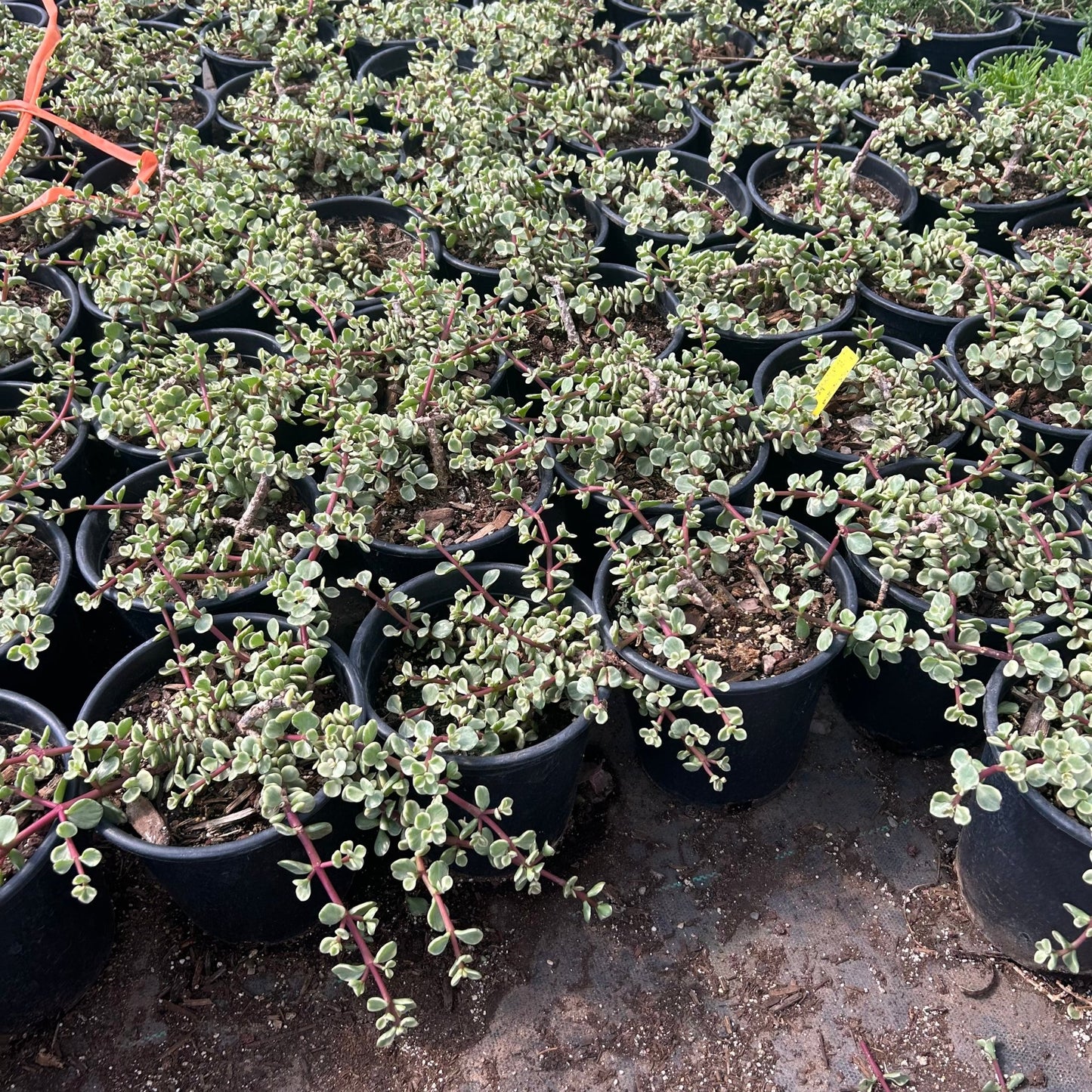
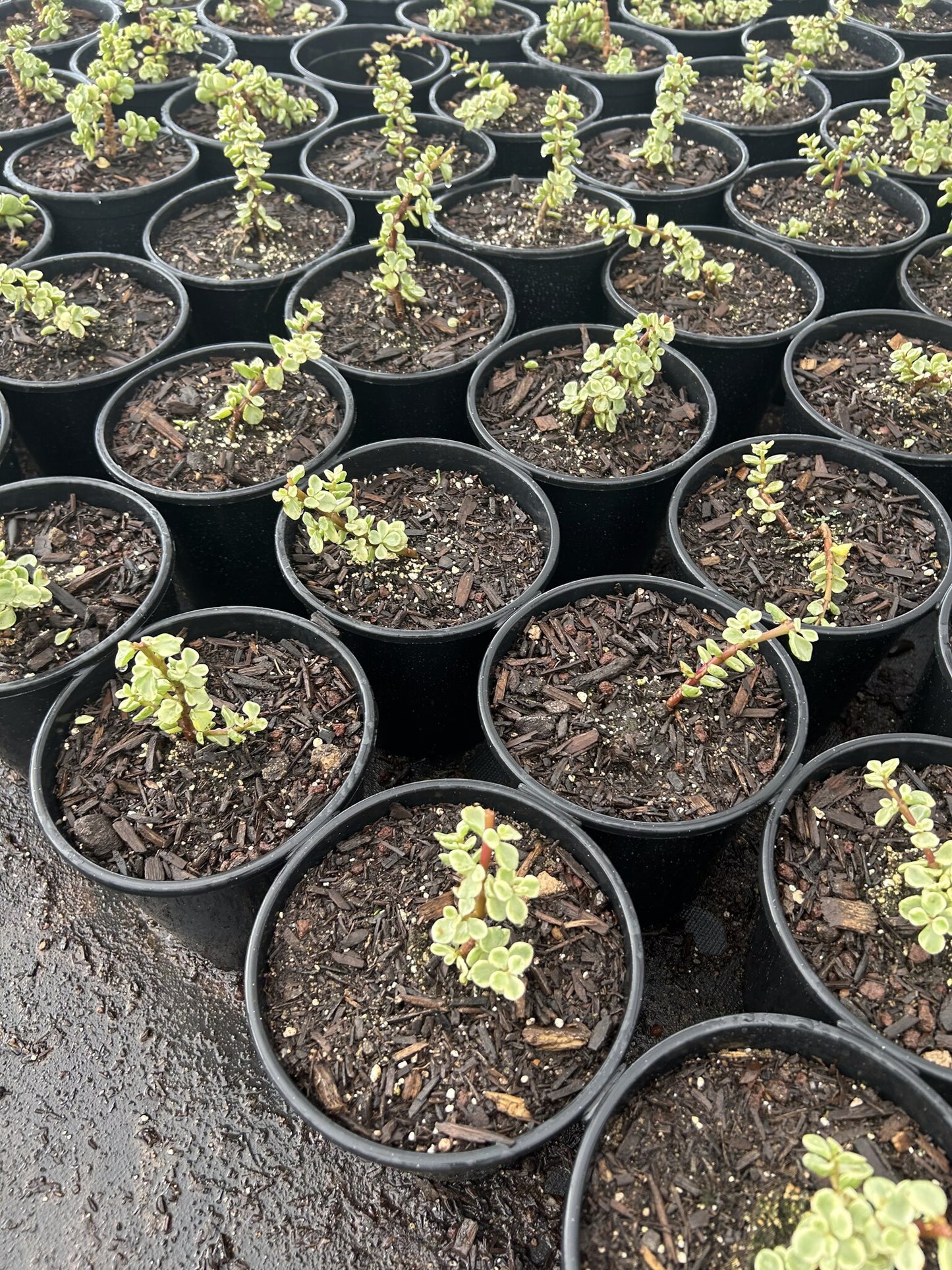
Variegated Elephant's Food (Portulacaria afra 'Variegata') is the showier, more ornamental cousin of the popular green Elephant Bush — a stunning South African native whose small cream-and-green variegated leaves create a bright, eye-catching texture year-round in Phoenix landscapes. It offers all the same extraordinary drought tolerance and low maintenance of the standard Elephant's Food, but with an added decorative twist: the creamy-white leaf margins glow against the reddish stems, creating a luminous, airbrushed appearance that few other desert shrubs can match. Whether you're adding a bright accent to a Scottsdale modern garden, a poolside focal point in Chandler, or a textured border in Mesa or Gilbert — Variegated Elephant's Food is a one-of-a-kind choice.
Variegated Elephant's Food Plant Details
| Attribute | Detail |
|---|---|
| Scientific Name | Portulacaria afra 'Variegata' |
| Common Names | Variegated Elephant's Food, Rainbow Bush, Variegated Elephant Bush, Variegated Spekboom |
| Mature Height | 3–6 feet (slightly slower growing than the green form) |
| Mature Width | 3–6 feet |
| Growth Rate | Moderate — slightly slower than standard Portulacaria afra; ~6–12 inches per year in Phoenix |
| Sun | Full sun to partial shade. Best color in bright light; some afternoon shade prevents leaf scorch in extreme heat. |
| Water | Very low once established. One of Arizona's most drought-tolerant ornamental shrubs. |
| USDA Zones | 9–11 (Phoenix is Zone 9b–10a) |
| Soil | Well-draining. Highly adaptable to Arizona caliche soils with proper drainage. |
| Foliage | Evergreen — cream-and-green variegated succulent leaves on reddish stems year-round |
| Bloom Color | Tiny pink star-shaped flowers in spring (same as standard form) |
| Special Feature | Cream-white leaf margins create striking variegated texture; glow in low light conditions |
Variegated Elephant's Food Uses in Phoenix Landscapes
Ornamental Accent and Focal Point
The creamy-white and green variegated foliage of this Portulacaria makes it stand out dramatically in Phoenix landscapes where most desert plants feature monotone grey or green foliage. Its bright, luminous appearance creates visual interest even when not in bloom, and it catches the eye year-round. In Scottsdale and Paradise Valley modern desert gardens, Variegated Elephant's Food is used as a high-value specimen plant surrounded by dark gravel or sleek hardscape — where its cream-and-green foliage creates a stunning contrast. Pair with dark-leafed plants like Purple Queen or Bronze Fennel for a striking color-contrast composition.
Privacy Hedge with Decorative Interest
Like its green counterpart, Variegated Elephant's Food can be used effectively as a privacy hedge or screening plant. The cream-variegated leaves add a decorative quality to what would otherwise be a plain green privacy hedge — making it a premium choice for visible fence lines, entry garden areas, and street-facing borders. Plant 4–5 feet apart for a privacy screen; 3–4 feet apart for a tighter hedge. In Chandler, Peoria, and Glendale, this plant is increasingly popular as a decorative alternative to standard green shrub hedges. Pair with Green Hopseed Bush for a layered hedge with textural variety.
Container and Patio Planting
Variegated Elephant's Food excels in containers on Phoenix patios, where its compact habit and year-round visual interest make it a premium ornamental choice. In a large 15–20 gallon container, the plant develops a naturally sculptural form — especially beautiful against dark-colored pots. The variegated foliage catches light beautifully in both sun and shade conditions, making container Variegated Elephant's Food equally effective on bright patios or partially shaded outdoor dining areas. In Tempe and Mesa condo and townhome settings, a large specimen container Variegated Elephant's Food can serve as a permanent focal point that replaces seasonal color plants.
Rock and Succulent Gardens
The variegated foliage pairs beautifully with other succulent plants in rock garden settings across Phoenix. Its soft, rounded leaves provide a textural counterpoint to the spiky forms of agave, yucca, and cactus — creating a naturalistic desert planting that looks professionally designed. In Gilbert, Tempe, and Mesa landscapes, Variegated Elephant's Food is increasingly used in succulent garden compositions as the "fine-textured filler" that holds design compositions together while contributing distinctive color interest.
Best Time to Plant Variegated Elephant's Food in Phoenix
Fall (October–November) is the ideal planting window. The warm soil encourages root development while cooler air reduces transplant stress — and the plant gets 6–8 months of establishment before its first Phoenix summer. Spring (February–April) is the second-best option. Avoid summer planting if possible; in extreme heat, provide light afternoon shade for the first few weeks and water daily until established. The variegated form is slightly more sensitive to extreme reflected heat than the standard green form, so planting it away from intensely west-facing walls is recommended.
How to Plant Variegated Elephant's Food
- Dig wide, not deep — excavate a hole 2–3 times the width of the root ball at the same depth. Wide planting holes encourage lateral root spread.
- Check for caliche — break through any hardpan caliche layer. Well-draining soil is critical; standing water is the main threat to Portulacaria in Arizona.
- Backfill with native soil — a light 20% organic amendment is fine. These plants thrive in lean, well-draining soil.
- Spacing — 3–4 feet apart for hedges; 5–6 feet apart for individual specimen plants.
- Water basin — build a 3-inch raised ring around the outer edge of the root zone to direct irrigation water to the roots during establishment.
- Mulch — apply 2–3 inches of bark or gravel mulch, keeping mulch 3 inches away from the stem to prevent rot.
Watering Variegated Elephant's Food in Phoenix
First Year Watering Schedule
Despite its drought tolerance, Variegated Elephant's Food needs consistent moisture during the first year to establish its root system:
- Weeks 1–2: Water every 1–2 days, deep and slow (20–30 minutes per session)
- Month 1–2: Every 3–4 days as roots expand
- Month 3–6: Every 7–10 days (every 5–7 days during Phoenix summer peak heat)
- After Year 1: Every 10–14 days in summer; every 3–4 weeks in winter. This plant handles extended dry spells with ease.
Drip Irrigation
Place 1–2 GPH emitters 18–24 inches from the trunk. Run for 30–45 minutes per session. Once established, Variegated Elephant's Food needs very little supplemental irrigation in Phoenix — one of the most water-efficient ornamental shrubs available for desert landscapes.
What's the difference between Variegated and regular Elephant's Food?
The main difference is leaf color: regular Portulacaria afra has solid green succulent leaves, while the Variegated form has cream-and-green margins on each leaf, creating a brighter, more ornamental appearance. The variegated form grows slightly slower than the standard, but offers the same exceptional drought tolerance and low maintenance. Both are excellent choices — the variegated form is premium for decorative applications where ornamental value is the priority.
How much sun does Variegated Elephant's Food need?
Full sun to partial shade works well in Phoenix. The plant produces its best variegation color in bright light, but some afternoon shade (especially in summer) can prevent leaf tip burn during extreme heat waves above 110°F. East-facing and north-facing exposures with bright indirect light produce excellent results. Avoid deep shade, which causes the variegation pattern to fade and growth to become sparse.
Can Variegated Elephant's Food be used as a privacy hedge?
Yes — with regular light trimming, it maintains a dense, attractive hedge form. It's slower to fill in than the standard green form, so budget more time for it to reach screening height. At maturity, plants reach 3–6 feet, providing effective screening for most residential fence applications in Scottsdale, Chandler, and Gilbert.
Does Variegated Elephant's Food produce flowers?
Yes — small, star-shaped pink flowers appear in spring, typically in late February through April. The flowers are small but attract native bees and butterflies. The main ornamental value of this plant is its striking year-round variegated foliage rather than its flowers.
You May Also Like
Elephant's Food (Portulacaria afra) — The classic green form of the same species — faster growing, equally drought-tolerant, and perfect for large hedges or screening applications where speed matters.
Dwarf Elephant's Food — A compact, low-growing form that tops out at 2–3 feet — ideal for borders, rock gardens, and container plantings where smaller scale is preferred.
Texas Sage (Leucophyllum frutescens) — A silvery-grey native-adapted shrub with purple blooms that pairs beautifully with Variegated Elephant's Food in light-toned desert borders.
Desert Spoon (Dasylirion) — A bold architectural accent plant whose dramatic spiky form contrasts perfectly with the soft, rounded texture of Variegated Elephant's Food.
Firecracker Bush (Hamelia patens) — A flowering shrub whose vibrant orange-red blooms create a beautiful color contrast against the cream-and-green variegated foliage.
How Many Variegated Elephant's Food Do I Need?
At a mature 3 to 6 ft spread, this shrub works as a decorative screen or a stand-alone accent. Space plants about 4 ft apart for a privacy hedge and 5 to 6 ft apart as specimens. Use this run-length guide for hedges and borders:
| Hedge / Run Length | Plants Needed (4 ft spacing) |
|---|---|
| 10 ft | 3 plants |
| 20 ft | 5 plants |
| 30 ft | 8 plants |
| 40 ft | 10 plants |
As an accent, plant single against dark gravel or a dark pot, or in a group of 3 spaced 4 ft apart so the cream variegation reads as one bright mass.
Variegated Elephant's Food Season-by-Season in Phoenix
- Spring (Feb to Apr): Fresh growth brightens the cream margins and tiny pink star flowers draw bees. Excellent second planting window.
- Summer (May to Sep): Thrives in heat with very little water, though the variegated form appreciates light afternoon shade off west-facing walls to avoid leaf-tip scorch above 110 degrees. New growth flushes with monsoon humidity.
- Fall (Oct to Nov): Prime planting season. Color stays bright as temperatures ease.
- Winter (Dec to Jan): Holds its evergreen variegated foliage. This is a frost-tender species: cover or site under eaves on nights below about 30°F, since hard frost can damage the soft stems.
At a Glance
✔ Heat-Loving (Reflected-Heat Tolerant) ✔ Drought-Tolerant ✔ Pool-Friendly (Low-Litter) ✔ Evergreen ✔ Low-Maintenance ✔ Pollinator-Friendly ✔ Spineless
Plant It With
- Dwarf Elephant's Food: the compact green form for the front of the same bed.
- Texas Sage: silvery foliage and purple blooms for a light-toned border pairing.
- Desert Spoon: a spiky architectural accent that contrasts the soft rounded leaves.
- Green Hopseed: a fast green screen to layer behind the variegated hedge.
Is Variegated Elephant's Food Right for Your Yard?
Variegated Elephant's Food thrives in full sun to bright partial shade, in well-draining or amended caliche soil, and needs very little water once established. Its bright cream-and-green foliage makes it a premium accent, screen, or container plant that is pool-safe and spineless. It is not a fit for deep shade, where variegation fades and growth thins, or for spots that see hard frost without protection.
Customer Reviews
Share