

Red Hybrid Argentine
Red Hybrid Argentine
Couldn't load pickup availability
Phoenix's Most Stunning Blooming Cactus — Vibrant Red Flowers All Season
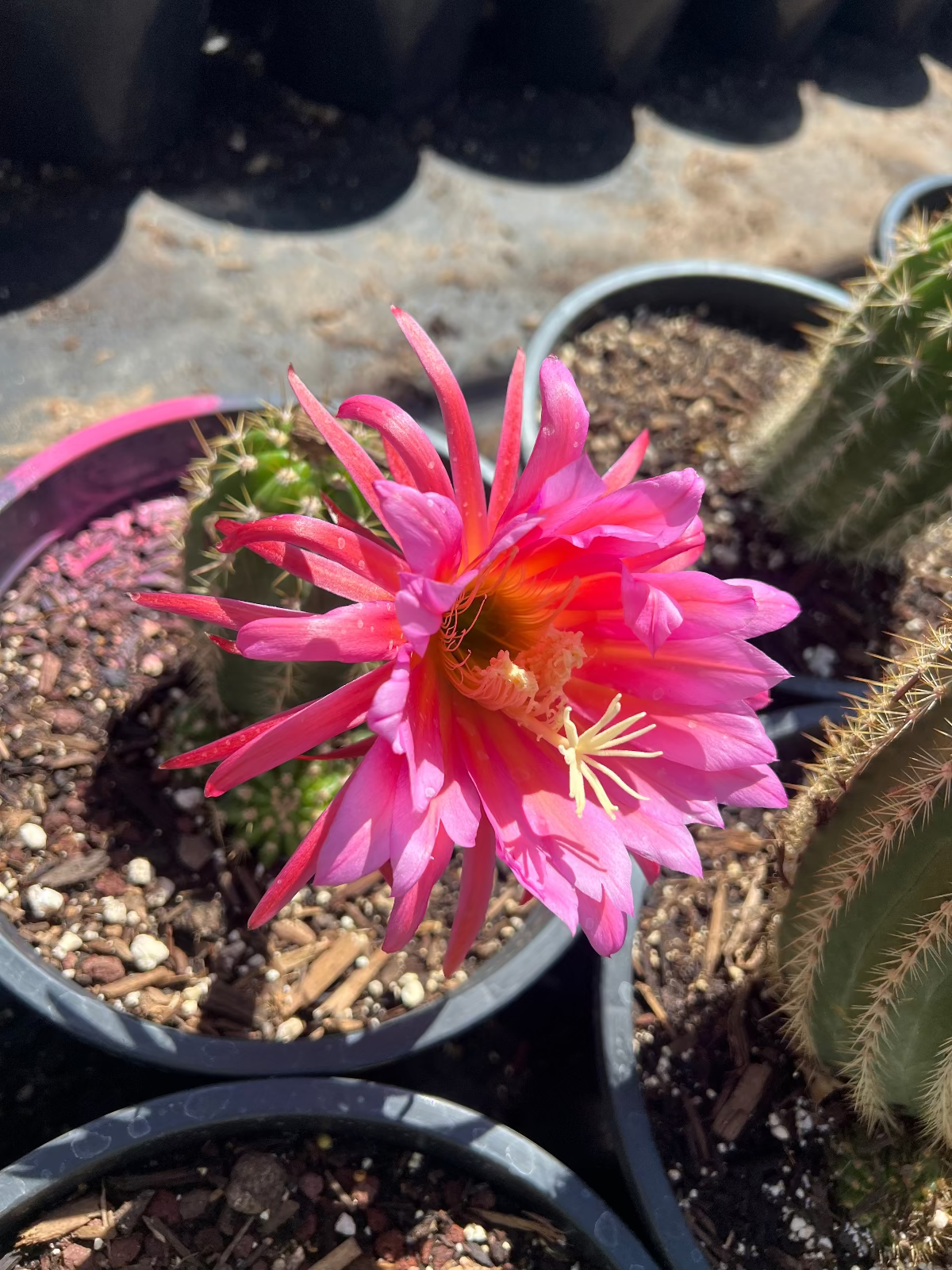
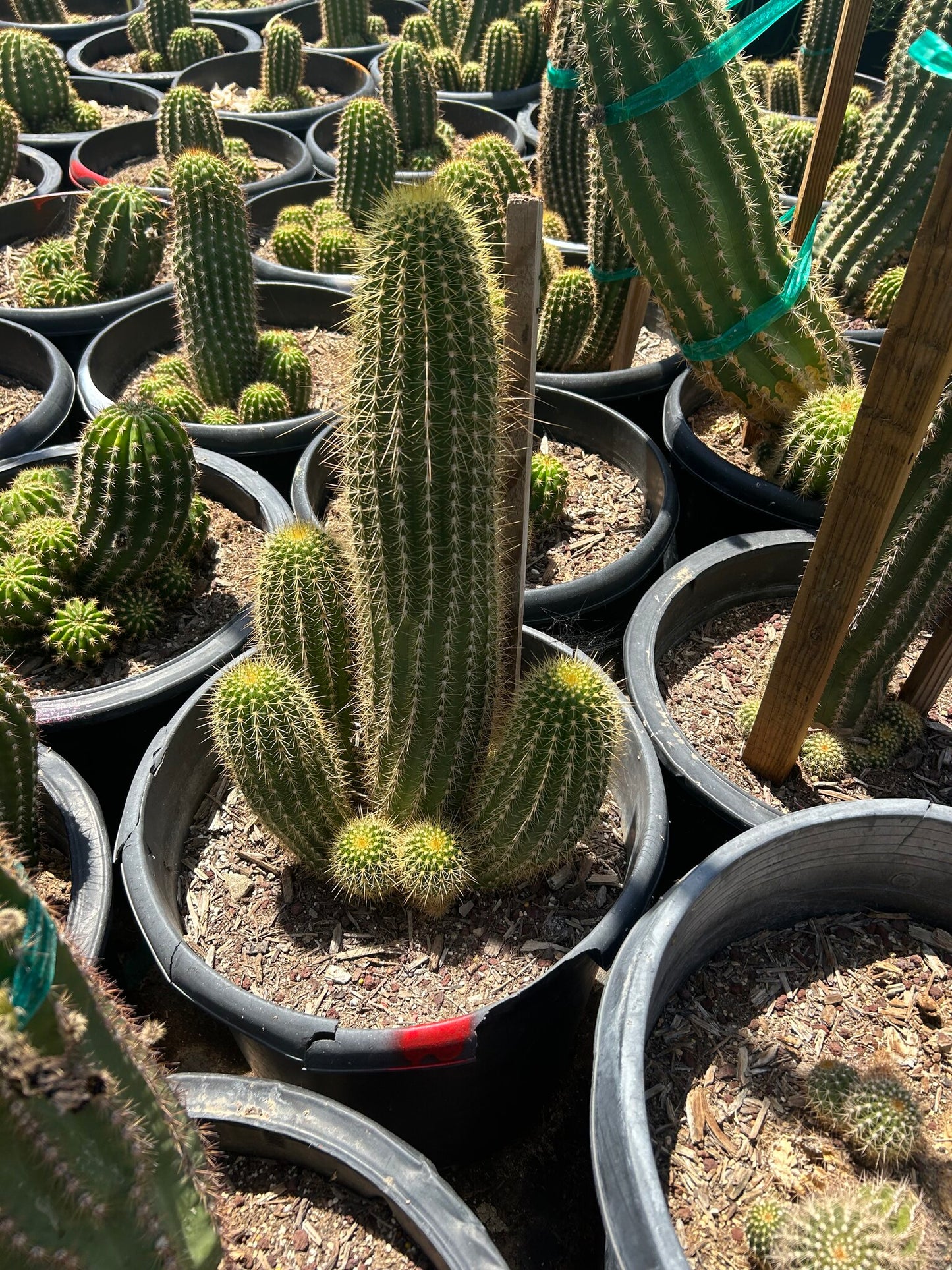
The Red Hybrid Argentine (Echinopsis hybrid) is one of the most spectacular flowering cacti you can grow in the Phoenix Valley. Bred from South American Echinopsis species for maximum flower size and color intensity, this hybrid produces enormous red blooms that can reach 6 inches across. It thrives in full sun, laughs at triple-digit heat, and barely needs water once established. Whether you're adding a pop of color to a Scottsdale rock garden, creating a showpiece container planting in Chandler, or building a low-water flower border in Mesa — the Red Hybrid Argentine delivers jaw-dropping blooms with almost zero effort.
Red Hybrid Argentine Plant Details
| Attribute | Detail |
|---|---|
| Scientific Name | Echinopsis hybrid |
| Common Names | Red Hybrid Argentine, Red Argentine Cactus, Echinopsis Red Hybrid |
| Mature Height | 1–2 feet |
| Mature Width | 2–4 feet (clumping habit) |
| Growth Rate | Moderate — offsets freely to form clusters |
| Sun | Full sun (6+ hrs). Tolerates partial shade but blooms best in full sun. |
| Water | Very low once established. Highly drought-tolerant. |
| USDA Zones | 9–11 (Phoenix is Zone 9b–10a) |
| Soil | Well-draining sandy or gravelly soil. Adapts to Arizona caliche with drainage. |
| Bloom Color | Vibrant red — large 4–6 inch trumpet-shaped flowers |
| Bloom Season | Spring through summer, with peak blooms April–June |
Red Hybrid Argentine Uses in Phoenix Landscapes
Desert Rock Gardens & Focal Points
The Red Hybrid Argentine's dramatic red flowers make it a natural centerpiece in rock gardens and desert beds. Plant it among decorative boulders with a gravel mulch surround and let the blooms steal the show every spring. It pairs beautifully with Golden Barrel cactus, Blue Elf Aloe, and Agave for a layered desert composition that looks designed but needs almost no maintenance.
Container & Patio Planting
This cactus thrives in large containers, making it perfect for patios, pool decks, and courtyard entries throughout Scottsdale and Gilbert. Use a wide, shallow pot with cactus mix and position it where it gets morning sun. The clumping habit fills a container beautifully, and the blooms create a stunning seasonal display visitors will notice immediately.
Low-Water Flower Borders
Line a walkway or driveway edge with Red Hybrid Argentines spaced 3–4 feet apart for a blooming border that uses a fraction of the water traditional flowering plants require. Combine with Ruellia, Desert Marigold, or Angelita Daisy for a succession of color from spring through fall with minimal irrigation.
Xeriscape Mass Plantings
For HOA common areas or large residential lots in Peoria, Glendale, or Tempe, mass plantings of Red Hybrid Argentine create a carpet of color when blooms peak in spring. Space plants 3 feet apart and let them fill in naturally through offsetting. The result is a dense, low-growing cactus bed that explodes with red flowers each year.
Best Time to Plant Red Hybrid Argentine in Phoenix
Fall (October–November) is the ideal planting window. The soil is still warm enough to encourage root growth, but cooler air temperatures reduce transplant stress. Your cactus gets 6–8 months of root establishment before its first Phoenix summer. Spring (February–April) is the second-best window. Avoid planting in the peak of summer — the combination of transplant shock and extreme heat can stress even tough cacti.
How to Plant Red Hybrid Argentine
- Dig wide, not deep — excavate a hole 2–3x the width of the root ball but only as deep as the root ball itself.
- Check for caliche — if you hit a hardpan layer, break through it completely to ensure drainage. Standing water will rot cactus roots.
- Backfill with native soil — mix in a small amount (20%) of coarse sand or pumice if your native soil is heavy clay.
- Spacing — 3–4 feet apart for mass plantings or borders; 4–5 feet for standalone specimens.
- No burying the crown — keep the soil line at the same level as the nursery pot. Planting too deep invites rot.
- Gravel mulch — spread 2–3 inches of decorative gravel around the base. Avoid organic bark mulch directly against cactus stems.
Watering Red Hybrid Argentine in Phoenix
First Year Watering Schedule
Weeks 1–2: Water every 3–4 days, deep and slow. Month 1–3: Every 7–10 days. Month 3–6: Every 10–14 days (every 7 days in peak summer heat). After Year 1: Every 2–3 weeks in summer; once a month or less in winter. Established plants are extremely drought-tolerant and can survive on rainfall alone in normal years.
Drip Irrigation Tips
Place one 2 GPH emitter 12–18 inches from the base. For clumping plants that have spread, add a second emitter on the opposite side. Reduce run times significantly after the first year — overwatering is the number one killer of Echinopsis in Phoenix landscapes.
How fast does Red Hybrid Argentine grow in Phoenix?
The individual stems grow slowly in height (staying 1–2 feet), but the plant offsets freely, spreading outward to form attractive clusters 2–4 feet wide within a few years. Blooming typically begins within the first year of planting.
Is Red Hybrid Argentine drought-tolerant?
Extremely. Once established, it needs very little supplemental water — every 2–3 weeks in summer and almost nothing in winter. It stores water in its thick stems and is built for arid climates.
When do the flowers bloom?
Peak bloom season is April through June in the Phoenix Valley. Individual flowers open in late afternoon or evening and last about 24 hours. A healthy clump can produce dozens of blooms over the season.
Can it handle full Phoenix summer sun?
Yes. Red Hybrid Argentine handles full sun and reflected heat from walls and hardscape. It actually blooms better with more sun exposure. Just ensure good drainage to prevent issues during monsoon season.
Is it frost-sensitive?
It's hardy to about 20–25°F, which covers most Phoenix Valley winters. In unusually cold snaps, a light frost cloth provides sufficient protection. Avoid planting in low frost pockets.
You May Also Like
Argentine Giant — the parent species with massive white flowers, reaching up to 6 feet tall for a bold vertical accent.
Pink Hybrid Argentine — same easy-care habit with gorgeous pink blooms for a softer color palette.
Golden Barrel Cactus — a classic round desert specimen that pairs perfectly with the Red Hybrid Argentine in rock garden designs.
Toothpick Cactus — a tall columnar cactus with dramatic golden spines that adds height behind a clump of Red Hybrid Argentine.
How Many Red Hybrid Argentine Do I Need?
Each plant stays low (1 to 2 ft tall) and clumps to 2 to 4 ft wide, so space them about 3 to 4 ft on center for a blooming border or mass. Use the table to plan a run:
| Border / Bed Length | Plants at 3.5 ft Centers |
|---|---|
| 10 ft | 3 |
| 20 ft | 6 |
| 40 ft | 11–12 |
One well-grown clump also stands on its own as a spring focal point in a rock garden or large container.
Red Hybrid Argentine Season-by-Season in Phoenix
- Spring (Feb–Apr): New growth resumes and the first big red trumpet blooms open, peaking April through June. Best second planting window once nights warm.
- Summer (May–Sep): Loves full sun and reflected heat and keeps flowering into early summer. Watch drainage during monsoon rains, since wet soil is the main warm-season risk.
- Fall (Oct–Nov): Prime planting season. Warm soil and cooler air let the clump root in before winter.
- Winter (Dec–Jan): Goes semi-dormant. Hardy to about 20°F, which covers most Valley winters, but drape frost cloth in rare hard freezes and skip low frost pockets.
At a Glance
✔ Heat-Loving (Reflected-Heat Tolerant) ✔ Drought-Tolerant ✔ Pollinator-Friendly ✔ Hummingbird-Friendly ✔ Evergreen ✔ Low-Maintenance ✔ Deer & Rabbit-Resistant ✔ Cold-Hardy to 20°F
Plant It With
- Pink Hybrid Argentine: the same easy clump in soft pink for a two-tone spring display.
- Toothpick Cactus: a tall golden-spined column that adds height behind the low red blooms.
- Blue Myrtle Cactus: bold blue columns that contrast with the red flowers.
- Golden Ball: a round golden-spined cactus that completes a colorful rock-garden grouping.
Is Red Hybrid Argentine Right for Your Yard?
It thrives in full sun and reflected heat with fast-draining soil, making it ideal for rock gardens, low borders, and containers across the Valley. Break through caliche and add coarse sand or pumice so water never stands at the roots. It is not a fit in wet or heavily shaded beds, since shade cuts the bloom show and soggy soil invites rot.
Share