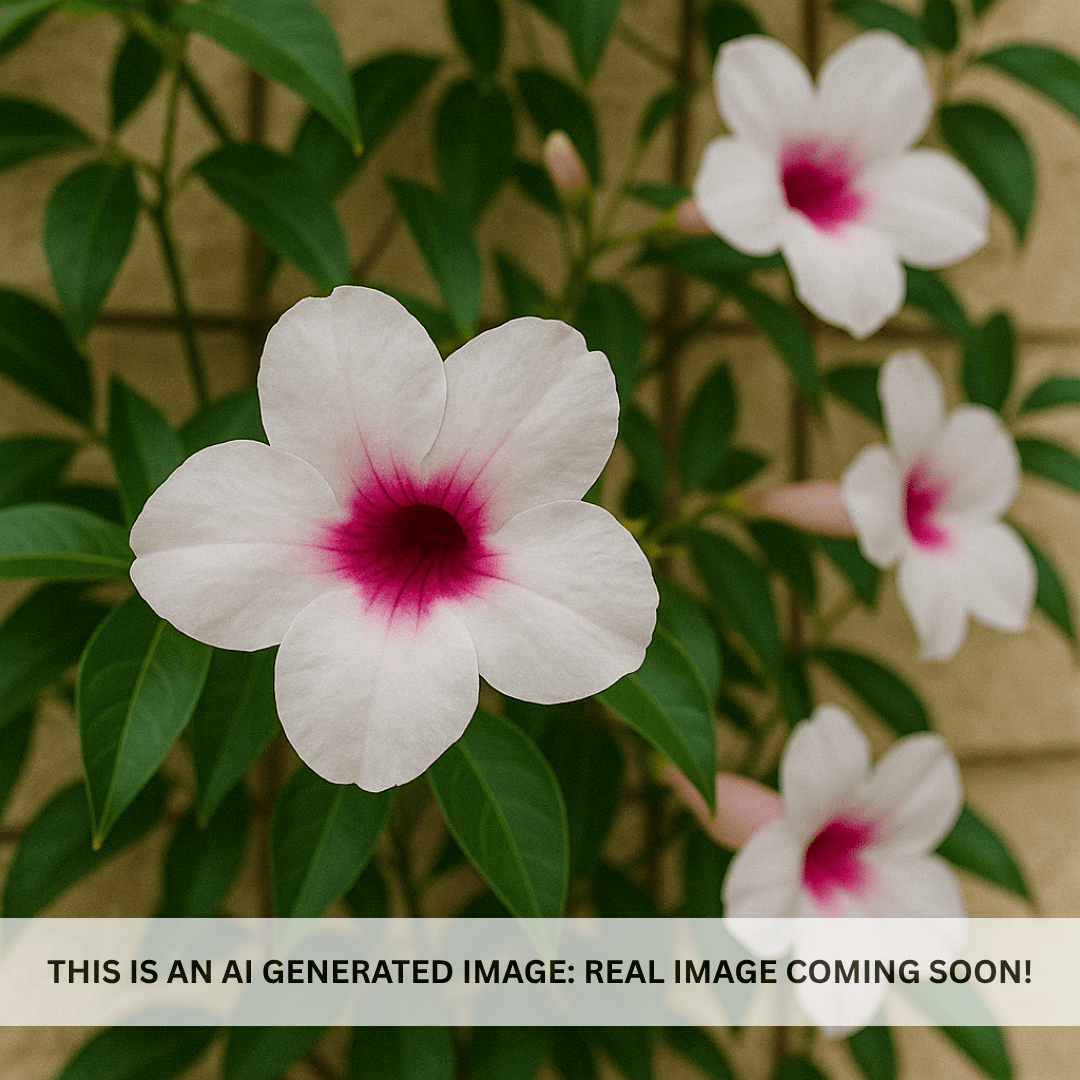


Pink Trumpet Espalier
Pink Trumpet Espalier
Couldn't load pickup availability
Pink Trumpet Espalier — Soft Pink Blooms Trained for Arizona Walls
Pink Trumpet Vine (Podranea ricasoliana), also known as Port St. Johns Creeper, is a graceful flowering vine that produces clusters of soft pink trumpet-shaped flowers from spring through fall. Trained flat on an espalier frame, it creates an elegant vertical display of pastel blooms and lush green foliage. This semi-evergreen climber is heat-tolerant, low-maintenance, and grows vigorously in the Phoenix Valley. Whether you're softening a courtyard wall in Scottsdale, adding romantic color to a patio fence in Chandler, or framing a garden gate in Mesa — Pink Trumpet Espalier delivers gentle beauty season after season.
Pink Trumpet Vine Espalier — Plant Details
| Attribute | Detail |
|---|---|
| Scientific Name | Podranea ricasoliana |
| Common Names | Pink Trumpet Vine, Port St. Johns Creeper, Queen of Sheba Vine |
| Mature Height | 10–15 ft (on espalier frame) |
| Mature Width | 6–10 ft spread |
| Growth Rate | Fast — 4–6 ft per year in Phoenix |
| Sun | Full sun to partial shade. Handles reflected heat from walls. |
| Water | Low to moderate once established. Drought-tolerant. |
| USDA Zones | 9–11 (Phoenix is Zone 9b–10a) |
| Soil | Well-draining. Adapts to Arizona caliche soils. |
| Foliage | Semi-evergreen — holds most leaves in Phoenix winters |
| Bloom Color | Soft pink trumpet flowers with darker pink veining |
Pink Trumpet Vine Uses in Phoenix Landscapes
Romantic Wall Accent & Courtyard Feature
The soft pink trumpet flowers create a romantic, almost cottage-garden feel on any wall or fence. The espalier form keeps the vine tidy while showcasing cascading flower clusters against a clean backdrop. Perfect for courtyard accent walls, entryway arches, and patio boundaries where you want elegant color without an overgrown look.
Fence & Block Wall Softening
Pink Trumpet Vine is excellent for transforming plain block walls and fences into flowering features. The dense foliage and abundant blooms provide both coverage and color. For full fence coverage: space espalier frames 6–8 ft apart. A 20 ft fence section needs 3 espalier plants for complete coverage within 2 seasons.
Hummingbird & Butterfly Garden
The tubular pink flowers attract hummingbirds and butterflies throughout the bloom season. Plant along a patio wall or garden fence for a front-row seat to pollinator activity. Pairs beautifully with other Three Timbers espaliers like Cape Honeysuckle and Tangerine Beauty Cross Vine for continuous bloom rotation in warm tones.
Best Time to Plant Pink Trumpet Vine in Phoenix
Fall (October–November) is ideal for planting espaliers in Phoenix. The soil stays warm for root establishment while cooler air temperatures reduce transplant stress. Your vine gets 6–8 months of root growth before facing its first Phoenix summer. Spring (February–April) is the second-best window. Avoid summer planting if possible.
How to Plant Pink Trumpet Espalier
- Position the frame first — Set your espalier trellis 4–6 inches from the wall for air circulation and to prevent heat damage.
- Dig wide, not deep — Dig the hole 2–3x the width of the root ball, same depth.
- Check for caliche — Break through any hardpan layer to ensure proper drainage.
- Backfill with native soil — A light 20% organic blend is fine.
- Build a water basin — Create a 3–4 inch soil ring around the root zone to direct water to the roots.
- Mulch — Apply 2–3 inches of bark or gravel mulch to retain moisture and keep roots cool.
Watering Pink Trumpet Vine in Phoenix
First Year Watering Schedule
- Weeks 1–2: Every 1–2 days, deep and slow (20–30 min)
- Month 1–2: Every 3–4 days
- Month 3–6: Every 7–10 days (5–7 days in peak summer)
- After Year 1: Every 10–14 days in summer; every 3–4 weeks in winter
Drip Irrigation
Place two 2-GPH emitters 18–24 inches from the trunk on opposite sides. Established Pink Trumpet Vine needs minimal supplemental water — deep soakings every 2 weeks in summer keep it blooming vigorously.
How fast does Pink Trumpet Vine grow in Phoenix?
Fast — expect 4–6 feet of new growth per year in full sun. On an espalier frame, you'll have excellent wall coverage within 1–2 growing seasons.
Is Pink Trumpet Vine drought-tolerant?
Yes. Once established after the first year, it's quite drought-tolerant and thrives with deep watering every 10–14 days in summer. It blooms best with consistent but infrequent water.
Does Pink Trumpet Vine lose its leaves in winter?
Semi-evergreen in Phoenix. It typically holds most of its leaves through mild winters but may drop some during cold snaps below 30°F. New growth returns quickly in spring.
What's the difference between Pink Trumpet Vine and Bower Vine?
They're different plants. Pink Trumpet Vine (Podranea ricasoliana) has larger pink trumpets and grows more vigorously. Bower Vine (Pandorea jasminoides) has smaller white-to-pink flowers and is more compact. Both make excellent espaliers.
You May Also Like
- Bower Vine Espalier — Smaller pink-and-white trumpet flowers for a more compact wall display.
- Lilac Vine Espalier — Purple blooms for a cool-toned flowering wall accent.
- Cape Honeysuckle Espalier — Bright orange trumpet flowers for vibrant wall color.
- Star Jasmine Espalier — Fragrant white blooms on a classic evergreen espalier.
How Many Pink Trumpet Espaliers Do I Need?
Trained flat on a frame, each espalier covers a defined run of wall or fence. Use this guide to plan coverage at roughly 8 ft of mature spread per plant:
| Wall / Fence Run | Espaliers Needed (8 ft spread) |
|---|---|
| 8 ft | 1 |
| 16 ft | 2 |
| 24 ft | 3 |
| 40 ft | 5 |
| 80 ft | 10 |
For a fuller, faster screen on a feature wall, set frames 6 ft apart instead of 8. In partial shade the vine grows a little slower, so tighten spacing on north- and east-facing walls.
Pink Trumpet Espalier Season-by-Season in Phoenix
- Spring (Feb-Apr): New growth flushes and the first soft pink trumpets open. A strong secondary planting window once nights stay above frost.
- Summer (May-Sep): Main bloom season. Handles full reflected heat off block walls and often flushes a fresh wave of flowers with monsoon humidity (Jul-Sep). Deep, infrequent soakings keep color coming without leggy green growth.
- Fall (Oct-Nov): Bloom continues into the cooler weeks and this is the prime planting window, giving roots months to establish before summer.
- Winter (Dec-Jan): Semi-evergreen. Holds most leaves through mild winters but can drop some and show tip damage during cold snaps below about 30°F. Cover young plants on hard frost nights; growth returns quickly in spring.
At a Glance
✔ Heat-Loving (Reflected-Heat Tolerant) ✔ Drought-Tolerant ✔ Hummingbird-Friendly ✔ Pollinator-Friendly ✔ Low-Maintenance
Plant It With
- Bower Vine Espalier: smaller pink-and-white trumpets for a more compact companion wall.
- Cape Honeysuckle Espalier: bright orange trumpets that extend the warm-tone bloom season.
- Lilac Vine Espalier: cool purple bloom for contrast on an adjacent panel.
- Pink Pearl Bougainvillea Espalier: pastel pink bracts to echo the soft color palette.
Is Pink Trumpet Espalier Right for Your Yard?
It thrives on a full-sun to lightly shaded wall with sharp drainage, tolerates reflected heat, and asks for only deep, infrequent water once established. It is ideal for softening a block wall or courtyard with romantic pink color and pollinator traffic. Not a fit if you need an evergreen screen that never drops a leaf or a plant for a hard frost pocket: it is semi-evergreen and will show some cold damage in an unprotected low spot below 30°F.
Customer Reviews
Share