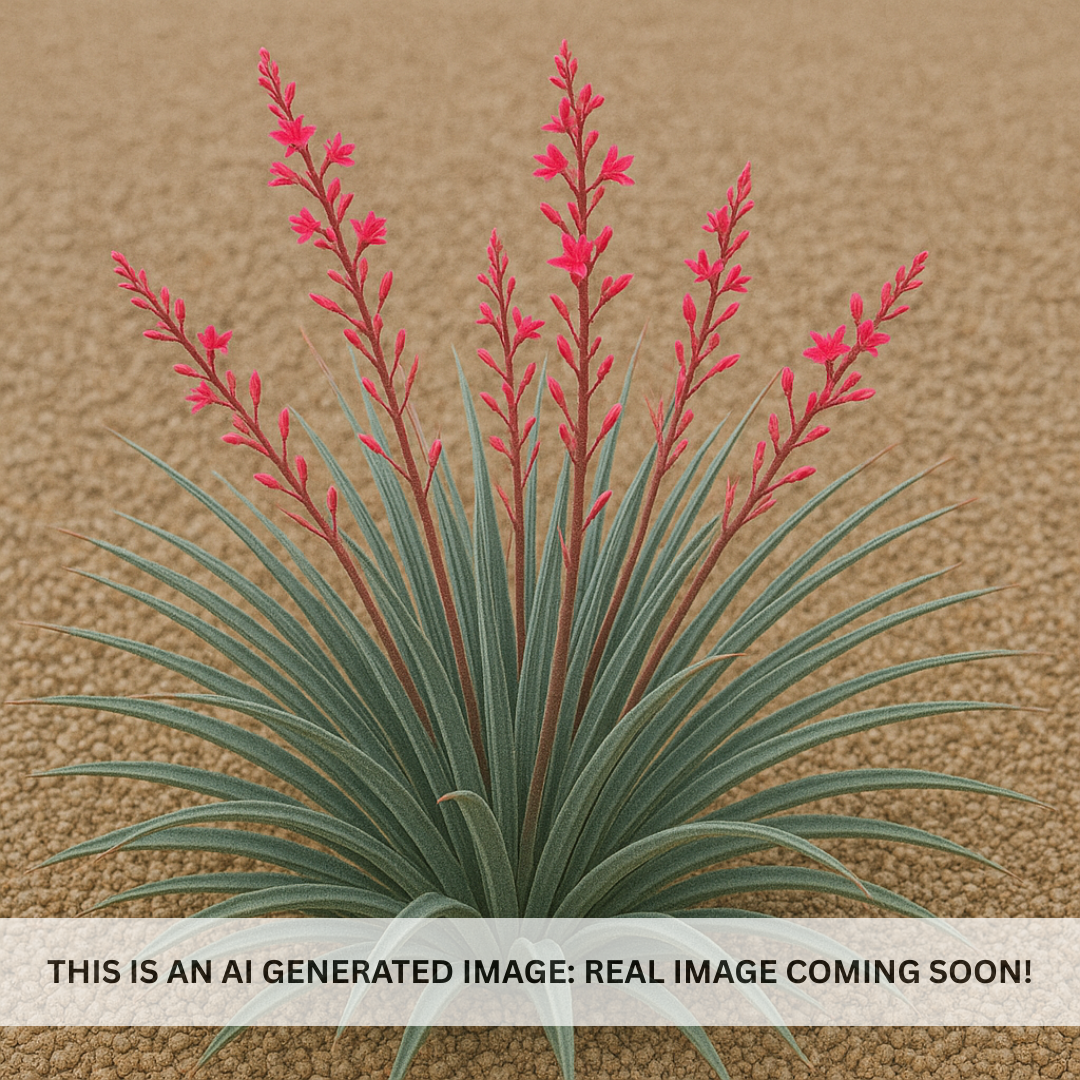


Pink Parade Hesperaloe
Pink Parade Hesperaloe
Couldn't load pickup availability
A Vivid Pink-Blooming Desert Succulent That Thrives in Phoenix Heat
Pink Parade Hesperaloe (Hesperaloe × 'Pink Parade') is a showstopping hybrid succulent that delivers bold color in the toughest desert conditions. Rising 2–3 feet of graceful, arching evergreen foliage sends up dramatic 5–6 foot flower stalks loaded with vivid rose-pink tubular blooms that attract hummingbirds all season long. This Agave relative is virtually indestructible — thriving on extreme heat, reflected surfaces, and minimal water. Whether you're adding color to a Scottsdale xeriscape, lining a walkway in Gilbert, or creating a hummingbird garden in Tempe — Pink Parade Hesperaloe gets the job done.
Pink Parade Hesperaloe Plant Details
| Attribute | Detail |
|---|---|
| Scientific Name | Hesperaloe × 'Pink Parade' |
| Common Names | Pink Parade Hesperaloe, Pink Parade False Yucca |
| Mature Height | 2–3 feet (foliage); 5–6 feet (flower stalks) |
| Mature Width | 3–4 feet |
| Growth Rate | Moderate — reaches full clump size within 2–3 years in Phoenix |
| Sun | Full sun (6+ hrs). Handles reflected heat from walls and pavement. |
| Water | Very low once established. Extremely drought-tolerant. |
| USDA Zones | 5–11 (Phoenix is Zone 9b–10a) |
| Soil | Well-draining. Thrives in Arizona caliche and rocky desert soils. |
| Foliage | Evergreen — arching green strappy leaves with curling white fibers |
| Bloom Color | Bright pink to rose-pink tubular flowers, spring through fall |
Pink Parade Hesperaloe Uses in Phoenix Landscapes
Hummingbird & Pollinator Garden
The tubular pink flowers are irresistible to hummingbirds and native pollinators. Pink Parade blooms from spring through fall — one of the longest bloom seasons of any desert plant. Plant 3–5 specimens in a sunny bed for a hummingbird haven. Pair with Red Yucca, Ruellia, and Lantana for continuous color and pollinator activity.
Xeriscape Color Accent
Few desert plants match Pink Parade Hesperaloe's combination of bold color and zero-fuss care. Use as a focal point in gravel beds, median strips, or commercial landscapes where irrigation is minimal. The vivid pink flower stalks rising above the strappy green foliage create year-round visual interest even without blooms.
Walkway & Border Plant
The compact 3–4 foot spread makes Pink Parade ideal for lining walkways, driveways, and property borders. Plant 3 feet apart for a continuous flowering border. The arching foliage stays tidy without pruning, and the plant remains attractive even in winter dormancy.
Best Time to Plant Pink Parade Hesperaloe in Phoenix
Fall (October–November) is the ideal planting window. Warm soil promotes root growth while cooler air reduces transplant stress. Spring (February–April) is the second-best option. Unlike many plants, Hesperaloe can also be planted in summer — it's tough enough to establish even in Phoenix heat with proper initial watering.
How to Plant Pink Parade Hesperaloe
- Dig wide, not deep — 2–3× the root ball width, same depth as the container.
- Check for caliche — break through any hardpan layer for fast drainage.
- Backfill with native soil — Hesperaloe prefers unamended, lean desert soil.
- Spacing — 3 feet apart for borders; 4 feet for individual accent specimens.
- Water basin — build a shallow 2–3 inch soil ring for establishment watering.
- Top dress — 2 inches of decomposed granite or gravel mulch to match desert aesthetic.
Watering Pink Parade Hesperaloe in Phoenix
First Year Watering Schedule
Weeks 1–2: Every 3–4 days, deep and slow (15–20 minutes). Month 1–2: Every 5–7 days. Month 3–6: Every 10–14 days. After Year 1: Every 2–3 weeks in summer; monthly or less in winter.
Drip Irrigation
Place one 1-GPH emitter 8–12 inches from the crown. Established plants are extremely drought-tolerant and may survive on rainfall alone in many years. Overwatering is more harmful than underwatering.
How fast does Pink Parade Hesperaloe grow? It is a moderate grower that reaches its full clump size within 2–3 years. Flower stalks typically appear in the first spring after a fall planting from a 15 gallon specimen.
Is Pink Parade Hesperaloe the same as Red Yucca? They are closely related — both are Hesperaloe species. Pink Parade is a hybrid with larger, more vivid pink flowers than the standard Red Yucca (Hesperaloe parviflora). Pink Parade also tends to bloom more prolifically.
Does it attract hummingbirds? Absolutely. The tubular pink flowers are among the best hummingbird magnets in the Phoenix plant palette. Expect regular hummingbird visits from spring through fall.
Is Pink Parade Hesperaloe deer and rabbit resistant? Yes. Like most Hesperaloe species, it is highly resistant to deer and rabbit browsing, making it excellent for unfenced desert properties.
You May Also Like
Red Yucca — The classic Hesperaloe with coral-red flowers, a perfect companion for Pink Parade.
Ruellia — Purple-flowering perennial that provides color contrast alongside pink Hesperaloe.
Desert Spoon — Dramatic silvery rosette succulent for architectural desert garden pairings.
Outback Sunrise Emu Bush — Colorful flowering shrub that complements Hesperaloe in xeriscape beds.
Share