

Nashville Grass
Nashville Grass
Couldn't load pickup availability
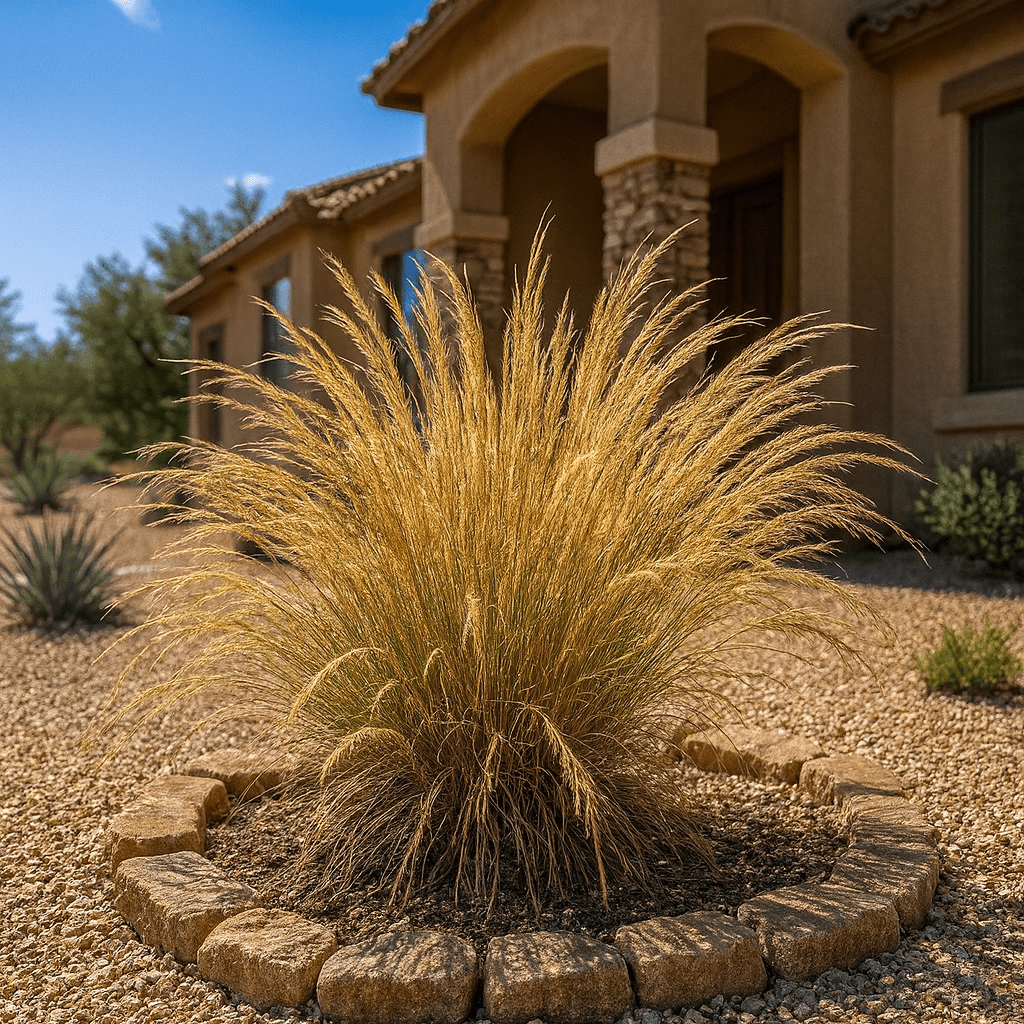
Golden-Bronze Ornamental Grass for Phoenix's Low-Water Landscapes
Nashville Grass (Muhlenbergia rigida 'Nashville') is one of the most striking ornamental grasses for the Phoenix Valley — bringing golden-bronze seasonal color and fine-textured movement to water-wise desert gardens. Its graceful plumes emerge in late summer and persist through winter, offering months of visual interest without irrigation. Heat-tolerant and low-maintenance, Nashville Grass thrives in the intense sun of Scottsdale, Chandler, and Mesa. Whether you're creating a naturalistic desert border in Gilbert, softening a modern design in Tempe, or adding seasonal drama to a Phoenix xeriscape — Nashville Grass delivers exceptional beauty with minimal effort.
Nashville Grass Plant Details
| Attribute | Detail |
|---|---|
| Scientific Name | Muhlenbergia rigida 'Nashville' |
| Common Names | Nashville Grass, Purple Muhly, Nashville Muhly |
| Mature Height | 2–4 feet (including bloom plumes) |
| Mature Width | 2–3 feet |
| Growth Rate | Moderate — 1–2 feet per year in Phoenix |
| Sun | Full sun (6+ hrs). Handles reflected heat from walls and pavement. |
| Water | Low once established. Highly drought-tolerant. |
| USDA Zones | 7–11 (Phoenix is Zone 9b–10a) |
| Soil | Well-draining. Adapts to Arizona caliche soils. |
| Foliage | Evergreen to semi-evergreen — fine-textured green leaves year-round |
| Bloom Color | Golden-bronze aging to tan — late summer through winter |
| Native Status | Native to the Southwest USA and Mexico |
Nashville Grass Uses in Phoenix Landscapes
Seasonal Color and Texture in Desert Borders
Nashville Grass shines from late summer through winter when its golden-bronze plumes emerge above the fine-textured green foliage. Unlike most plants that look tired in fall, Nashville Grass hits its visual peak just as the Phoenix heat breaks — making it a standout choice for borders, entryways, and front-yard landscapes in Scottsdale and Mesa. For a 20 ft border — use 6–8 plants spaced 3 ft apart; for a 40 ft border — use 12–14 plants.
Modern Desert and Minimalist Design
The compact, tidy clumping habit of Nashville Grass makes it ideal for clean, structured desert designs. Its upright form and golden bloom plumes provide architectural interest without the messiness of larger grasses. Pair with Blue Palo Verde, Agave americana, or Desert Spoon for a cohesive, low-water palette that looks sharp year-round.
Mass Plantings and Slopes
When planted in sweeping drifts of 10 or more plants, Nashville Grass creates a stunning sea of golden movement in fall and winter. It's excellent for stabilizing slopes and embankments in Peoria, Glendale, and Chandler while providing seasonal drama that surpasses traditional groundcovers. Space plants 2.5–3 ft apart for full coverage.
Container and Patio Planting
Nashville Grass performs beautifully in large decorative containers on patios and pool decks. Its compact size (2–3 ft) and non-invasive clumping root system make it well-suited to container life, and the golden plumes add a warm seasonal glow to outdoor entertaining spaces through the fall and winter months.
Best Time to Plant Nashville Grass in Phoenix
Fall (October–November) is the ideal planting window — you'll get to enjoy the beautiful golden bloom plumes immediately after planting while roots establish in warm soil. Spring (February–April) is the second-best window. Avoid summer planting when possible; newly transplanted grasses struggle in Phoenix's 110°F+ summer heat without intensive irrigation support.
How to Plant Nashville Grass
- Dig wide, not deep — excavate 2–3x the width of the root ball, matched to root ball depth.
- Check for caliche — break through any hardpan beneath the hole to ensure proper drainage.
- Backfill with native soil — a light 20% organic amendment is fine; Nashville Grass adapts well to native Arizona soils.
- Spacing — 2.5–3 ft apart for borders and mass plantings; 4 ft for individual specimens.
- Build a water basin — create a 3–4 inch raised ring to direct irrigation to the root zone.
- Apply mulch — 2–3 inches of bark or gravel mulch to retain moisture and moderate soil temperature.
Watering Nashville Grass in Phoenix
First Year Watering Schedule
Weeks 1–2: Water every 1–2 days, deep and slow (20–30 minutes). Month 1–2: Reduce to every 3–4 days as roots establish. Month 3–6: Every 7–10 days (every 5–7 days during peak summer). After Year 1: Every 10–14 days in summer; every 3–4 weeks in winter. Nashville Grass is highly drought-tolerant once established.
Drip Irrigation
Place drip emitters 18–24 inches from the plant base. A 1–2 GPH emitter per plant is sufficient. Run cycles long enough to wet soil 12–18 inches deep. Established Nashville Grass thrives on minimal supplemental irrigation beyond monsoon season and will look stunning for decades with very little water.
How fast does Nashville Grass grow in Phoenix?
Nashville Grass is a moderate grower, adding 1–2 feet per year under good Phoenix conditions. Most plants reach full size within 2–3 seasons and begin blooming in their first fall after planting.
Is Nashville Grass drought tolerant once established?
Yes — it's one of the most drought-tolerant ornamental grasses available for Arizona landscapes. Once established after the first year, it needs very little supplemental irrigation and handles Phoenix's heat and low humidity beautifully.
What's the difference between Nashville Grass and Pink Muhly?
Nashville Grass (Muhlenbergia rigida 'Nashville') produces golden-bronze to tan bloom plumes, while Pink Muhly (Muhlenbergia capillaris) produces pink to purple plumes. Nashville Grass is generally more compact and hardy, making it an excellent choice for smaller Phoenix landscapes or formal plantings where you want tidy, controllable size.
When does Nashville Grass bloom in Phoenix?
Nashville Grass blooms from late summer (August–September) through winter, with peak plume display in October–December. This makes it one of the most valuable fall and winter-interest plants for Phoenix-area gardens.
Does Nashville Grass need to be cut back?
You can cut Nashville Grass back to 6–8 inches from the ground in late winter (February) before new growth emerges. This is optional but helps rejuvenate older clumps and promotes dense, fresh growth through spring and summer.
You May Also Like
Pine Muhly Grass — A fine-textured native grass with similar low-water needs and excellent performance in full-sun Phoenix landscapes.
Blonde Ambition Grama Grass — A striking native grass with eye-catching eyelash-like seed heads that pairs beautifully with Nashville Grass in naturalistic plantings.
Desert Spoon (Dasylirion) — A bold, architectural desert native that provides dramatic contrast to Nashville Grass's soft, flowing texture.
Autumn Sage — A low-water flowering perennial that layers beautifully with ornamental grasses for color through fall and winter.
Bull Grass — A large, dramatic native grass for bold sweeps and visual impact on larger Phoenix properties.
How Many Nashville Grass Do I Need?
Nashville Grass forms a compact, tidy clump 2 to 3 feet wide, so space it for the rounded mound rather than a clipped hedge. Use these groupings:
- Single specimen: Plant one as a tidy accent at an entry or among agaves, leaving 3 to 4 feet of clear space for the plumes to arch.
- Drift or mass: For a sea of golden fall movement, plant in odd-numbered groups of 3, 5, 7 or more spaced 2.5 to 3 feet apart center to center. A 20 foot border takes about 6 to 8 plants.
- Slope or embankment: Set plants 2.5 to 3 feet apart in staggered rows for full coverage and erosion control.
Nashville Grass Season-by-Season in Phoenix
- Spring (Feb-Apr): Optionally cut clumps to 6 to 8 inches in February to rejuvenate, then a flush of fine green blades fills in. Best second planting window.
- Summer (May-Sep): Holds its green clump in full sun and reflected heat on very little water. The first golden-bronze plumes begin to rise in late summer.
- Fall (Oct-Nov): Visual peak. Golden-bronze plumes glow above the foliage just as the heat breaks. Prime planting season.
- Winter (Dec-Jan): Plumes age to tan and persist, the base stays evergreen, and the plant is cold-hardy well below freezing, so no frost protection is needed.
At a Glance
✔ Arizona Native ✔ Heat-Loving (Reflected-Heat Tolerant) ✔ Drought-Tolerant ✔ Evergreen ✔ Low-Maintenance ✔ Pool-Friendly (Low-Litter) ✔ Cold-Hardy to 5°F
Plant It With
- Pine Muhly Grass: a fine-textured native muhly with matching low-water needs for a layered grass planting.
- Blonde Ambition: eyelash-like grama seed heads that pair beautifully in naturalistic drifts.
- Desert Spoon: a bold architectural native that contrasts with the soft flowing texture.
- Bull Grass: a large native grass for bold sweeps and scale on bigger properties.
Is Nashville Grass Right for Your Yard?
It thrives in full sun and reflected heat, grows in any well-draining desert soil once caliche is opened up, and needs very little water once established, making it a tidy, low-effort choice for borders, entries, and modern desert designs. Its golden plumes peak in fall and winter. It is not the right pick if you want bold summer flower color or if the spot stays constantly wet, which can rot the crown.
Customer Reviews
Share