

Mediterranean Carpet
Mediterranean Carpet
Couldn't load pickup availability
Phoenix's Best Fragrant Groundcover for Low-Water Desert Landscapes
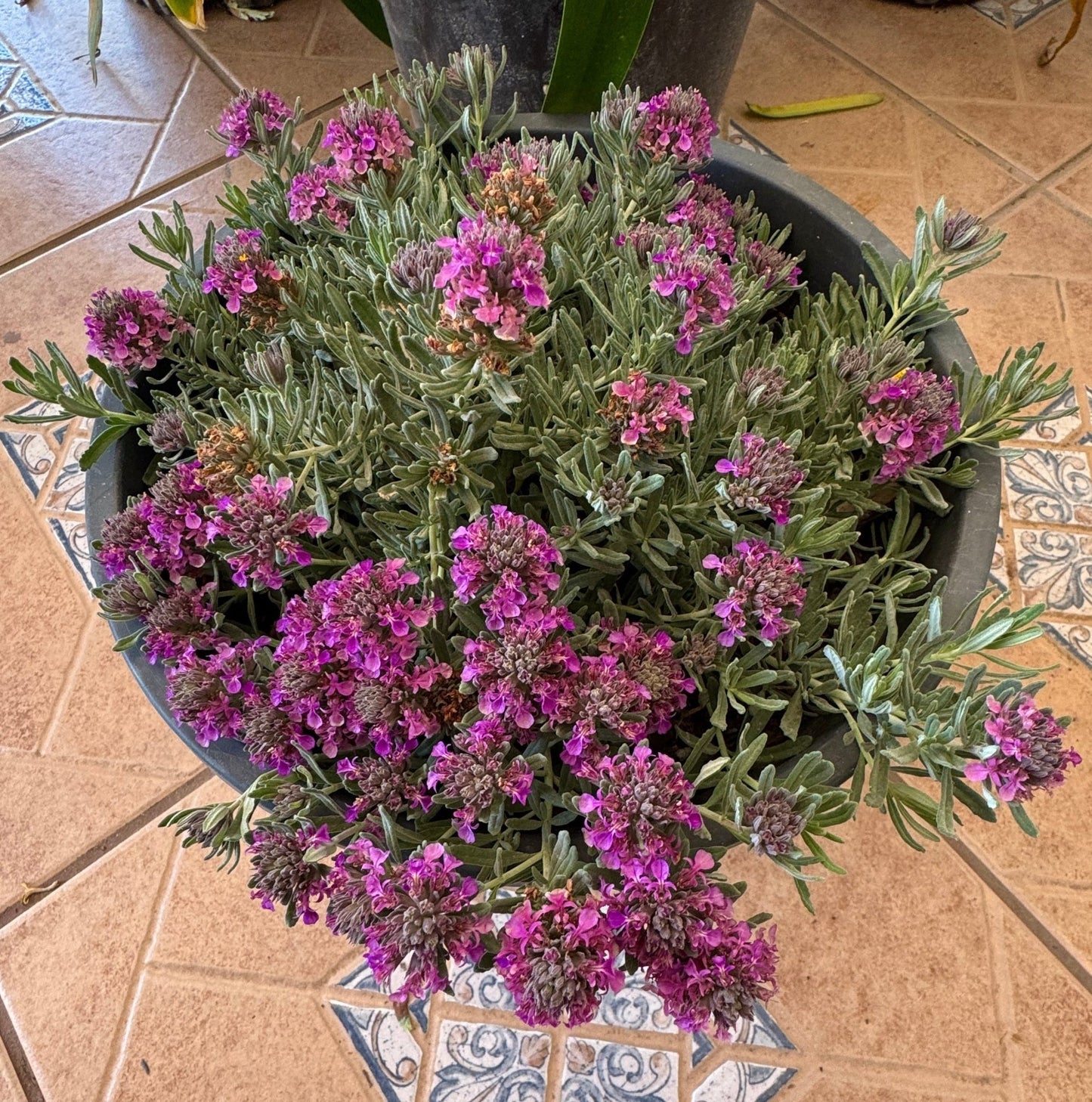
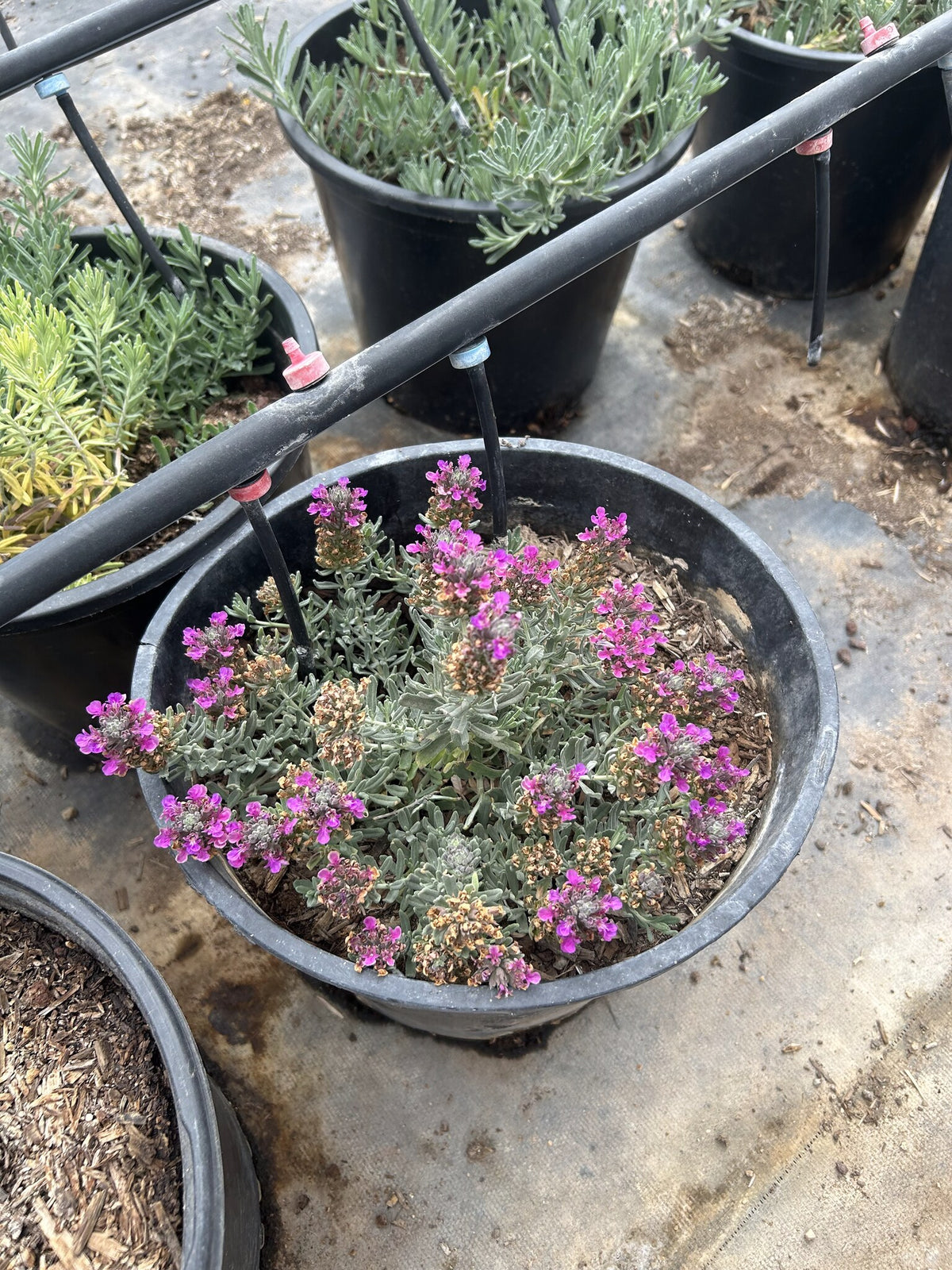
Mediterranean Carpet (Teucrium majoricum) is one of the most versatile and rewarding low-growing groundcovers for Phoenix Valley landscapes. This compact evergreen spreads 2–3 feet wide while staying just 6–12 inches tall, filling in quickly under desert sun without demanding much water. Its soft lavender-purple blooms appear in spring and fall, and the silvery-green foliage gives off a pleasant herbal fragrance when brushed. Whether you're creating a seamless groundcover carpet in Scottsdale, lining walkways in Gilbert, or filling in tight spaces between boulders in Peoria — Mediterranean Carpet delivers year-round beauty with minimal maintenance.
Mediterranean Carpet Plant Details
| Attribute | Detail |
|---|---|
| Scientific Name | Teucrium majoricum |
| Common Names | Mediterranean Carpet, Germander Carpet |
| Mature Height | 6–12 inches |
| Mature Width | 2–3 feet |
| Growth Rate | Moderate — 6–12 inches per year in Phoenix |
| Sun | Full sun to partial shade. Handles reflected heat from walls and pavers. |
| Water | Low once established. Highly drought-tolerant. |
| USDA Zones | 7–11 (Phoenix is Zone 9b–10a) |
| Soil | Well-draining. Adapts well to Arizona caliche soils. |
| Foliage | Evergreen — stays green and fragrant year-round |
| Bloom Color | Lavender-purple |
| Bloom Season | Spring and fall; sporadic bloom in mild winters |
Mediterranean Carpet Uses in Phoenix Landscapes
Low-Water Groundcover for Sun-Baked Beds
Mediterranean Carpet is built for Phoenix's intense summer sun and caliche-heavy soils. Once established, it thrives on minimal supplemental irrigation and will spread to fill open desert bed areas without the maintenance demands of lawn or perennial beds. Its dense, low mat crowds out weeds naturally, making it an ideal no-fuss solution for hot, dry areas in Chandler, Tempe, or Surprise.
Edging and Pathway Borders
At just 6–12 inches tall, Mediterranean Carpet stays perfectly in scale along walkways, driveway edges, and landscape borders. The soft lavender blooms in spring and fall create a seasonal color show right at ground level, and the herbal scent is a bonus when planted near entryways. Plant 18–24 inches apart for a solid border; space 12–15 inches for faster fill-in coverage.
Rock and Xeriscape Gardens
Mediterranean Carpet looks at home tucked between boulders and decorative gravel in xeriscape designs. Its small, aromatic leaves and spreading habit complement cacti, agave, and desert shrubs without competing for space. This makes it a go-to plant for Mesa and Scottsdale homeowners designing low-water yards with authentic desert character.
Pollinator and Wildlife-Friendly Plantings
The lavender-purple flowers attract bees and butterflies during spring and fall blooming seasons, making Mediterranean Carpet a smart choice for anyone building a pollinator-friendly landscape. It pairs beautifully with Texas Sage, Desert Marigold, and Autumn Sage for a continuous bloom cycle through the growing season.
Best Time to Plant Mediterranean Carpet in Phoenix
Fall planting (October–November) is ideal. The soil stays warm enough to encourage root development while cooler air temperatures reduce transplant stress. Plants get 6–8 months to establish before their first Phoenix summer. Spring planting (February–April) is a strong second option. Avoid summer planting if possible — the heat amplifies transplant shock and increases water demand during the critical establishment period.
How to Plant Mediterranean Carpet
- Dig wide, not deep — excavate a hole 2–3x the root ball width and the same depth.
- Check for caliche — break through any hardpan layer to ensure proper drainage below the root zone.
- Backfill with native soil — a light 20% organic amendment mix is fine; avoid heavy compost that holds excess moisture.
- Spacing — plant 18–24 inches apart for groundcover fill; 12–15 inches for faster, denser coverage.
- Water basin — build a 3–4 inch soil ring around each plant to direct water to the root zone during establishment.
- Mulch — apply 2–3 inches of bark or gravel mulch to retain soil moisture and moderate root temperature.
Watering Mediterranean Carpet in Phoenix
First Year Watering Schedule
- Weeks 1–2: Every 1–2 days, deep and slow (20–30 minutes per session)
- Months 1–2: Every 3–4 days
- Months 3–6: Every 7–10 days (every 5–7 days during peak summer heat)
- After Year 1: Every 10–14 days in summer; every 3–4 weeks in winter
Drip Irrigation
Place drip emitters 12–18 inches from the plant center. A 1 GPH emitter per plant works well during establishment; reduce frequency (not duration) as the plant matures. Once fully established, Mediterranean Carpet requires very little supplemental water in Phoenix — its deep roots access residual soil moisture efficiently.
How fast does Mediterranean Carpet grow in Phoenix?
Expect 6–12 inches of spread per year under Phoenix conditions. Growth accelerates during the mild spring and fall seasons and slows during peak summer heat.
Is Mediterranean Carpet drought-tolerant once established?
Yes. After its first full growing season, Mediterranean Carpet is highly drought-tolerant. Established plants in Phoenix typically need watering every 10–14 days in summer and even less in winter. It's one of the lowest-maintenance groundcovers for Arizona desert landscapes.
Can it handle full Phoenix summer sun?
Absolutely. Mediterranean Carpet performs well in full sun and can handle the reflected heat from block walls, driveways, and pavers — a key trait for Phoenix and Scottsdale landscapes where reflected heat is a major plant stressor.
Does it work near pools?
Yes — Mediterranean Carpet is pool-friendly. It doesn't produce significant litter and its compact habit keeps it tidy along pool edges. Its low profile also won't block sight lines from the pool deck.
Is it safe for pets?
Mediterranean Carpet is considered non-toxic and is generally regarded as pet-safe. It's a smart choice for households with dogs or cats that access outdoor landscape areas.
You May Also Like
Purple Trailing Lantana — a fast-spreading groundcover with vibrant purple blooms and exceptional drought tolerance, perfect for slopes and open desert beds.
Rosemary Tuscan Blue — a fragrant, upright Mediterranean shrub that pairs naturally with Mediterranean Carpet for a cohesive low-water planting scheme.
Ground Morning Glory — a sprawling, blue-flowering groundcover ideal for Phoenix Valley landscapes needing quick coverage with minimal water.
Gooding's Verbena — a low-growing Arizona native with vivid purple blooms that complement Mediterranean Carpet in xeriscape and pollinator gardens.
How Many Mediterranean Carpet Do I Need?
Each plant spreads 2 to 3 feet wide, so 18 inch on-center spacing gives a dense, weed-smothering carpet within a season or two. Use the table below to estimate plant counts for a solid groundcover fill:
| Area to Cover | Plants Needed (18 in o.c.) |
|---|---|
| 25 sq ft | 12 |
| 50 sq ft | 22 |
| 100 sq ft | 44 |
| 200 sq ft | 89 |
For a faster fill or a tighter border, drop to 12 to 15 inch spacing and add roughly 25 to 40 percent more plants.
Mediterranean Carpet Season-by-Season in Phoenix
- Spring (Feb–Apr): Lavender-purple blooms open and fresh growth flushes across the mat. This is a prime second planting window and the best time to fill gaps in an existing planting.
- Summer (May–Sep): Holds up to extreme heat and reflected heat off walls and pavers. Growth slows during the hottest stretch but the foliage stays green. Monsoon rains (Jul–Sep) give it a welcome free soak; ease back on the drip during wet weeks.
- Fall (Oct–Nov): The best planting season in Phoenix and a strong second bloom flush as temperatures ease. Roots establish fast in warm soil ahead of winter.
- Winter (Dec–Jan): Stays evergreen and fragrant through Valley winters, with sporadic bloom in mild years. Hardy well below typical Phoenix lows, so no frost protection is needed here.
At a Glance
✔ Evergreen ✔ Drought-Tolerant ✔ Heat-Loving (Reflected-Heat Tolerant) ✔ Pool-Friendly (Low-Litter) ✔ Pollinator-Friendly ✔ Low-Maintenance ✔ Cold-Hardy to 10°F
Plant It With
- Texas Sage: a purple-blooming desert shrub that echoes the carpet's lavender flowers above a low groundcover layer.
- Desert Spoon: an architectural, drought-tough accent that rises cleanly above the spreading mat in xeriscape beds.
- AZ Ice Plant (Copper): a complementary succulent groundcover for contrasting color and texture in full-sun beds.
- Hearts & Flowers: another low-water spreading mat that fills neighboring pockets between boulders and pavers.
Is Mediterranean Carpet Right for Your Yard?
Mediterranean Carpet thrives in full sun, takes reflected heat off walls and walkways, and shrugs off Phoenix winters once its roots break past the caliche into well-draining soil. It is ideal for low-water borders, xeriscape pockets, and pool-edge beds where you want a tidy, fragrant carpet with little upkeep. It is not a fit for soggy, poorly drained spots or heavy-traffic areas walked on like turf, where the mat can thin and rot.
Customer Reviews
Nice healthy plant was delivered. Planted it the next day and 3 weeks no later no issues and is thriving.
Share