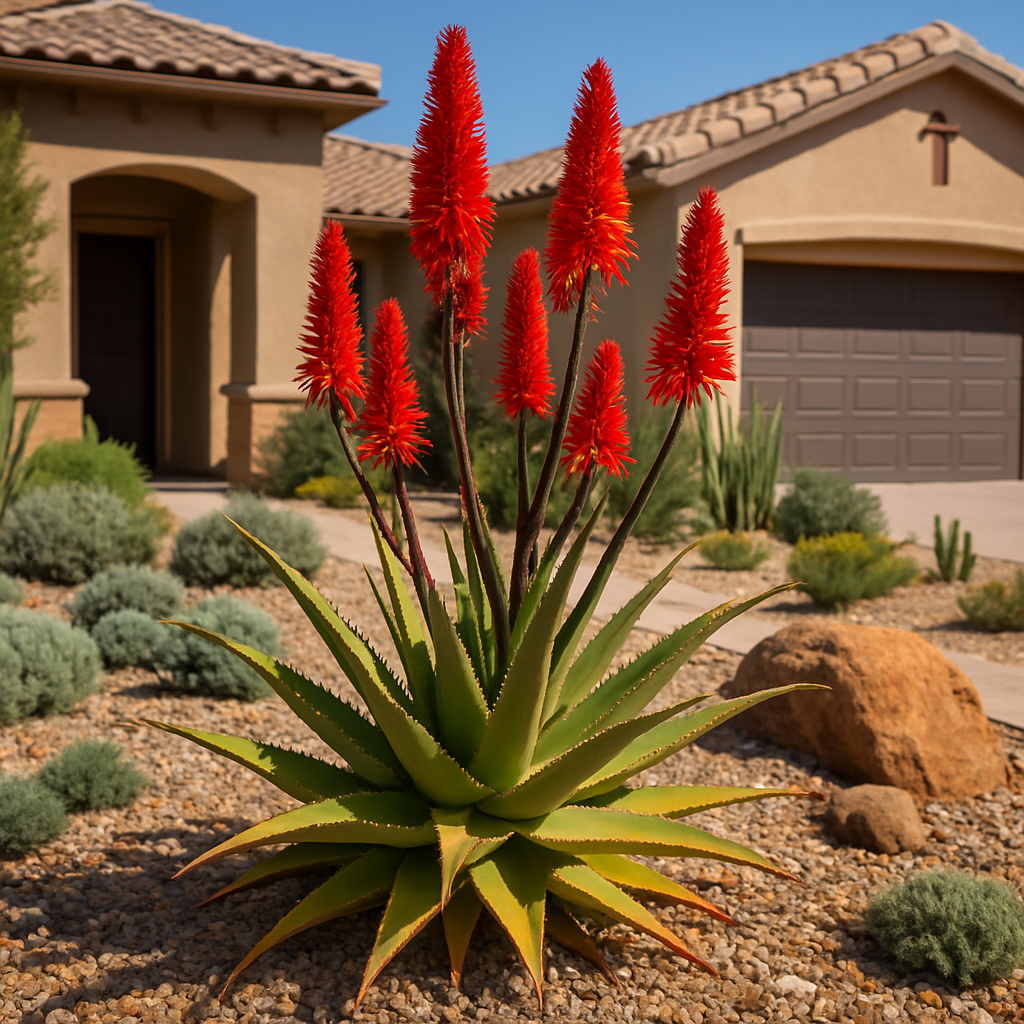

Erik the Red
Erik the Red
Couldn't load pickup availability
A Fiery Red Statement Aloe for Phoenix Winter Gardens
Erik the Red Aloe (Aloe 'Erik the Red') is one of the most dramatic hybrid aloes you can grow in the Phoenix Valley. Rising 4–6 feet tall on sturdy stems, this striking succulent produces towering spikes of fiery red-orange flowers from late fall through winter — exactly when most gardens need color the most. The toothed green rosettes stack along upright stems, creating bold vertical architecture year-round. Whether you're adding a sculptural focal point in Scottsdale, anchoring a succulent border in Chandler, or creating a hummingbird magnet in Mesa — Erik the Red delivers jaw-dropping winter color with almost zero water or maintenance.
Erik the Red Aloe Plant Details
| Attribute | Detail |
|---|---|
| Scientific Name | Aloe 'Erik the Red' (hybrid) |
| Common Names | Erik the Red Aloe, Erik the Red |
| Mature Height | 4–6 feet (stems + flower spikes) |
| Mature Width | 2–4 feet |
| Growth Rate | Moderate — 1–2 feet per year in Phoenix |
| Sun | Full sun to partial shade. Handles reflected heat. |
| Water | Very low once established. Extremely drought-tolerant. |
| USDA Zones | 9–11 (Phoenix is Zone 9b–10a) |
| Soil | Well-draining essential. Thrives in rocky Arizona caliche soils. |
| Foliage | Evergreen — green toothed rosettes on upright stems year-round |
| Bloom Season | Late fall through winter (November–February in Phoenix) |
| Bloom Color | Bright red to red-orange flower spikes |
Erik the Red Aloe Uses in Phoenix Landscapes
Sculptural Focal Point
Erik the Red's tall, upright habit and dramatic winter blooms make it a perfect specimen plant for modern desert landscapes. Place it near an entryway, in a courtyard, or at the center of a succulent bed where its architecture and color can be fully appreciated. The vertical form contrasts beautifully with low-growing agaves and groundcovers.
Succulent & Xeriscape Borders
Use Erik the Red as a mid-height anchor in mixed succulent borders. It pairs well with Blue Elf Aloe, Torch Aloe, Agave attenuata, and Desert Spoon for layered texture and staggered bloom times. Plant 3–4 feet apart for a full look without crowding.
Hummingbird & Pollinator Garden
The bright red tubular flowers are irresistible to hummingbirds, especially during winter when other nectar sources are scarce. Combine with Chuparosa, Red Yucca, and Firecracker Penstemon for a year-round hummingbird habitat.
Best Time to Plant Erik the Red Aloe in Phoenix
Fall (October–November) is ideal. Warm soil promotes root establishment while cooler temperatures reduce transplant stress. Spring (March–April) works well too. Avoid planting in the peak of summer heat. Container-grown aloes from Three Timbers can be planted year-round with proper watering.
How to Plant Erik the Red Aloe
- Dig wide, not deep — 2x the root ball width, same depth as the container.
- Check for caliche — break through any hardpan layer. Aloes cannot tolerate sitting in water.
- Backfill with native soil — no amendments needed. Good drainage is more important than rich soil.
- Spacing — 3–4 ft apart for a border; give individual specimens 4 ft of space.
- No water basin — unlike most plants, aloes prefer water to drain away quickly. Skip the basin.
- Gravel mulch — 2–3 inches of decomposed granite or gravel (not bark) to keep the crown dry.
Watering Erik the Red Aloe in Phoenix
First Year Watering Schedule
- Weeks 1–2: Every 3–4 days, light watering
- Month 1–3: Every 7–10 days
- Month 3–6: Every 10–14 days
- After Year 1: Every 2–3 weeks summer; monthly or less in winter
Drip Irrigation
Place one 1 GPH emitter 12–18 inches from the base. Established Erik the Red aloes are extremely drought-tolerant and need very little supplemental water. Overwatering is the most common cause of problems — when in doubt, don't water.
How fast does Erik the Red grow?
Moderate — expect 1–2 feet of height per year in full sun. It reaches its mature 4–6 foot size within 3–4 years from a 1-gallon start.
Is it frost tolerant?
Erik the Red handles light frost down to about 25°F. In most Phoenix Valley locations, it sails through winter without protection. Cover or bring containers indoors only during rare hard freeze events.
When does it bloom?
Late fall through winter — typically November through February in Phoenix. The bright red flower spikes appear just when the garden needs color most.
Does it attract hummingbirds?
Absolutely. The red tubular flowers are a top winter food source for hummingbirds in the Phoenix area. You'll see Anna's and Costa's hummingbirds visiting regularly.
You May Also Like
- Torch Aloe — similar upright habit with orange-red winter blooms
- Blue Elf Aloe — compact blue-gray aloe for borders and containers
- Coral Aloe — flat rosette form with coral-pink winter blooms
- Red Yucca — native desert plant with year-round red flower spikes
Share