

Dwarf Elephant's food
Dwarf Elephant's food
Couldn't load pickup availability
Phoenix's Best Low-Water Succulent Groundcover for Desert Landscapes
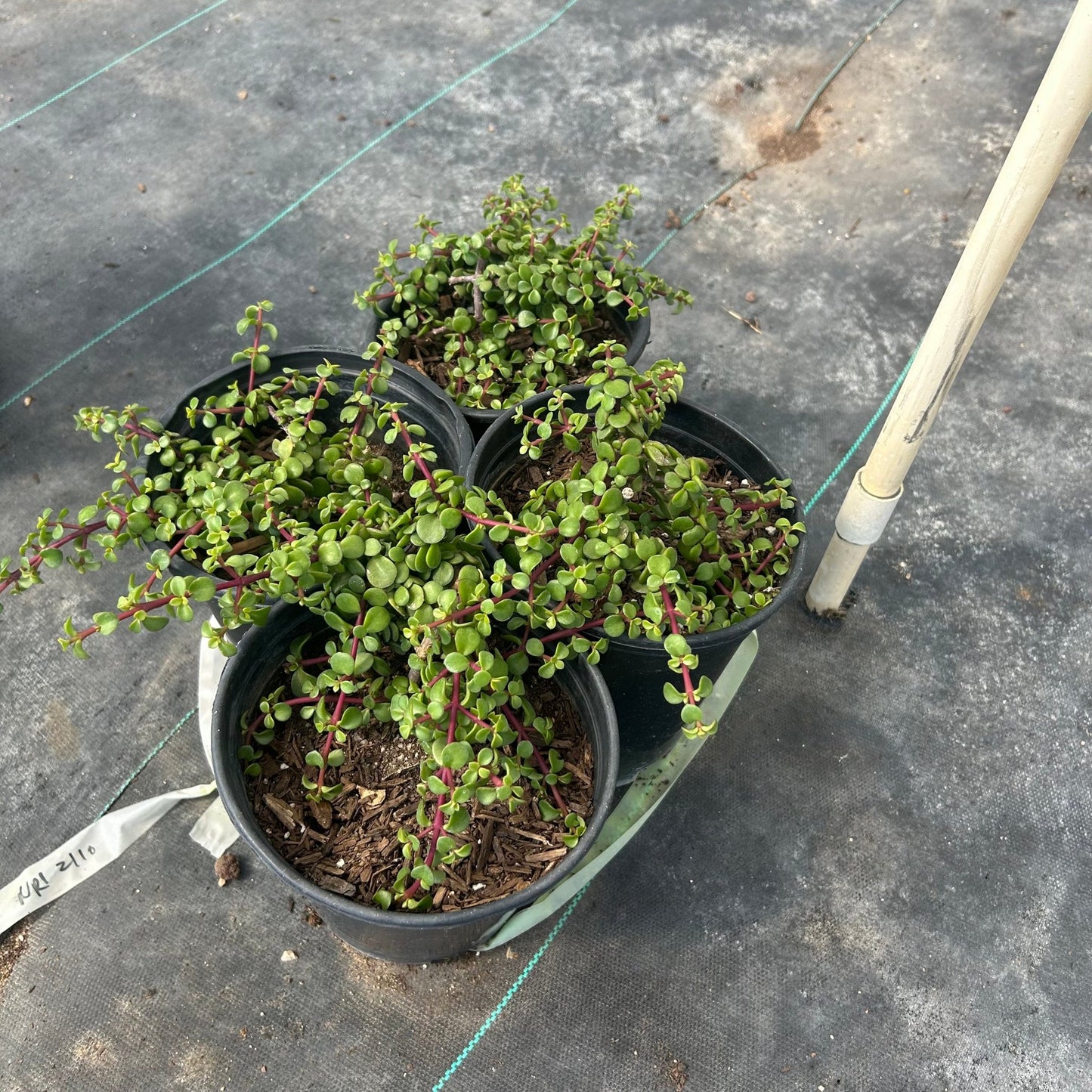
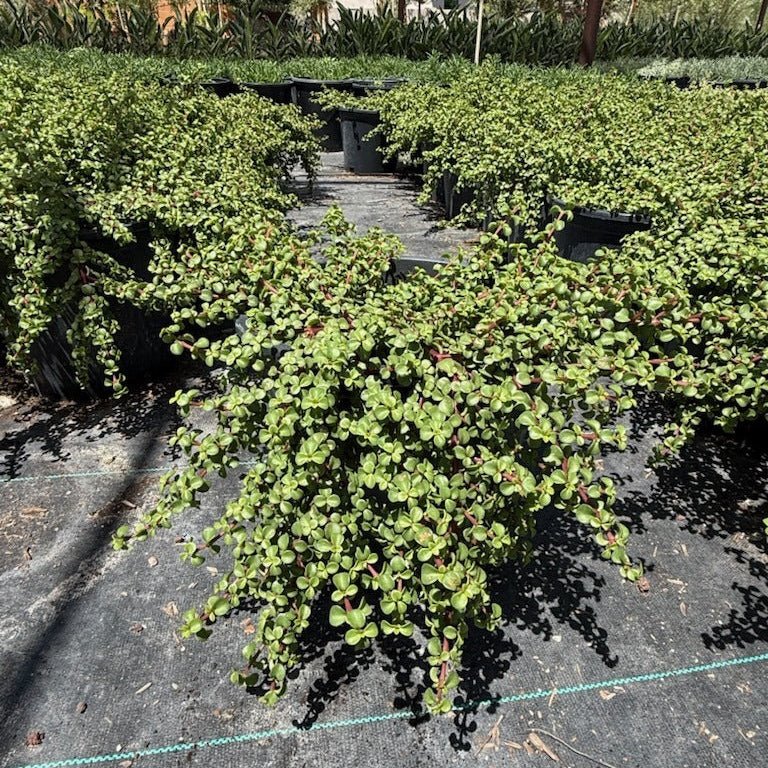
Dwarf Elephant's Food (Portulacaria afra 'Minima') is one of Phoenix's most versatile and forgiving low-water succulents. This compact, spreading groundcover stays under 18 inches tall but spreads 2–3 feet wide, creating a dense carpet of small, jade-like leaves without any fuss. Native to South Africa, it thrives in Phoenix's intense summer heat, reflected sun from walls, and caliche soils that would kill most plants. Whether you're filling dry slopes in Scottsdale, creating a pool-friendly border in Chandler, or adding low-maintenance texture to a desert garden in Mesa — Dwarf Elephant's Food delivers every time.
Dwarf Elephant's Food Plant Details
| Attribute | Detail |
|---|---|
| Scientific Name | Portulacaria afra 'Minima' |
| Common Names | Dwarf Elephant's Food, Miniature Elephant Bush, Dwarf Elephant Bush |
| Mature Height | 12–18 inches |
| Mature Width | 2–3 feet |
| Growth Rate | Moderate — 6–12 inches of spread per year in Phoenix |
| Sun | Full sun to partial shade. Handles reflected heat from walls and pavement. |
| Water | Very low once established. Extremely drought-tolerant. |
| USDA Zones | 9–11 (Phoenix is Zone 9b–10a) |
| Soil | Well-draining. Adapts readily to Arizona caliche soils. |
| Foliage | Evergreen — stays green year-round |
| Pet Safety | Non-toxic — safe for dogs and cats |
| Native Status | South Africa; naturalized in warm desert climates |
Dwarf Elephant's Food Uses in Phoenix Landscapes
Low-Water Groundcover
Dwarf Elephant's Food is one of the best groundcover options for low-water Phoenix landscapes. Its spreading habit fills in bare spots between boulders, pavers, and larger accent plants without requiring constant irrigation. Plant 18–24 inches apart for a dense groundcover mat — it'll fill in completely within one to two growing seasons in Gilbert, Tempe, or Peoria.
Pool-Friendly Border Plant
With no messy leaf litter, no thorns, and no invasive roots, Dwarf Elephant's Food is an excellent choice for pool decks and spa surrounds in Chandler, Glendale, and Scottsdale. Its compact size keeps it from overwhelming pool areas, and it thrives in the warm reflected heat from pool decks and patio pavers. Pair it with Desert Spoon or Blue Chalk Sticks for a refined poolside planting.
Slope and Bank Stabilization
The trailing stems of Dwarf Elephant's Food root as they spread, making it an effective groundcover for stabilizing dry slopes and hillsides across the East Valley. It prevents erosion while creating a living mulch that suppresses weeds and retains soil moisture — all on minimal water. Space plants 18 inches apart on slopes for full coverage within two seasons.
Rock Gardens and Modern Desert Design
The small, rounded jade-green leaves of Dwarf Elephant's Food pair beautifully with decomposed granite, white gravel, and black river rock. In Scottsdale's modern desert landscapes, it's frequently used as a soft filler between angular cacti, agaves, and sculptural boulders. Try it alongside Blue Glow Agave, Texas Sage, or Golden Barrel Cactus for a refined, low-maintenance look.
Best Time to Plant Dwarf Elephant's Food in Phoenix
Fall planting (October–November) is ideal. Cooler air temperatures reduce transplant stress while warm soil promotes root establishment. Plants set out in fall get a full 6–8 months of root growth before facing their first Phoenix summer. Spring planting (February–April) also works well. Avoid summer installation if possible — if you must plant in summer, water more frequently through September and provide temporary shade cloth for the first few weeks.
How to Plant Dwarf Elephant's Food
- Dig wide, not deep — dig a hole 2–3x the width of the root ball at the same depth. Never plant deeper than the soil line in the pot.
- Check for caliche — break through any hardpan layer to ensure good drainage. Succulents sitting in water will rot.
- Backfill with native soil — a 20% blend of organic compost with native soil helps get the plant established faster.
- Spacing — 18–24 inches apart for groundcover use; 24–36 inches for individual accent plants.
- Water basin — build a 2–3 inch berm around the planting hole to direct water straight to the roots.
- Mulch — 2–3 inches of decomposed granite or bark mulch keeps roots cool and reduces water loss.
Watering Dwarf Elephant's Food in Phoenix
First Year Watering Schedule
Even though Dwarf Elephant's Food is drought-tolerant, it needs regular water while establishing roots during year one:
- Weeks 1–2: Every 1–2 days, slow and deep (20–30 minutes)
- Month 1–2: Every 3–4 days
- Month 3–6: Every 7–10 days (every 5–7 days during peak Phoenix summer)
- After Year 1: Every 14–21 days in summer; every 4–6 weeks in winter
Drip Irrigation
Place drip emitters 12–18 inches from the plant center. A 1 GPH emitter per plant is sufficient for established specimens. Once fully established after year two, Dwarf Elephant's Food can survive on rainfall alone during Phoenix winters and needs only occasional supplemental irrigation in summer.
How fast does Dwarf Elephant's Food grow in Phoenix?
Expect 6–12 inches of spread per year once established. In Phoenix's long growing season, a plant from a 1-gallon container can cover 2–3 square feet within two to three years.
Is Dwarf Elephant's Food drought tolerant once established?
Yes — it's one of the most drought-tolerant groundcovers available. After the first year, it can survive on minimal irrigation. Established plants are remarkably resilient during Phoenix's summer heat as long as they have excellent drainage.
What's the difference between Dwarf Elephant's Food and regular Elephant's Food?
Regular Portulacaria afra grows 6–15 feet tall and is used as a privacy shrub or large landscape accent. Dwarf Elephant's Food ('Minima') stays under 18 inches with smaller leaves and a spreading groundcover habit — bred specifically for use as a low border or filler plant.
Is Dwarf Elephant's Food safe for pets?
Yes — Portulacaria afra is non-toxic to dogs and cats, making it one of the few succulents that's genuinely pet-safe. An excellent choice for households with pets who roam the yard.
Can Dwarf Elephant's Food handle Phoenix summer heat?
Absolutely. Native to hot, arid South Africa, this plant thrives in Phoenix's full sun and extreme heat. It handles reflected heat from walls and pavement better than most plants. The main threat to this plant is overwatering, not heat — ensure excellent drainage and it will reward you year-round.
You May Also Like
Elephant's Food (Portulacaria afra) — The full-size version growing 6–15 feet tall, used as a privacy hedge or large landscape accent in Phoenix yards.
Variegated Elephant's Food — The same tough low-water plant with cream-and-green variegated foliage for added color contrast in desert gardens.
Blue Chalk Sticks (Senecio) — A low-growing, low-water succulent groundcover with silvery-blue foliage that pairs beautifully with Dwarf Elephant's Food.
Texas Sage (Leucophyllum) — A drought-tolerant flowering shrub that works well as a colorful backdrop behind Dwarf Elephant's Food in Phoenix landscapes.
Desert Spoon (Dasylirion) — A bold architectural accent plant that contrasts with the soft, rounded texture of Dwarf Elephant's Food in rock gardens.
How Many Dwarf Elephant's Food Do I Need?
Used as a spreading groundcover, count plants by the area you want to fill. Tighter 18 inch spacing closes in faster; 24 inch spacing covers more ground per plant over two seasons. Each plant matures 2 to 3 feet wide.
| Area to Cover | Plants at 18 in spacing | Plants at 24 in spacing |
|---|---|---|
| 25 sq ft | 11 | 6 |
| 50 sq ft | 22 | 13 |
| 100 sq ft | 44 | 25 |
| 200 sq ft | 89 | 50 |
Dwarf Elephant's Food Season-by-Season in Phoenix
- Spring (Feb-Apr): Growth picks up as soil warms and stems begin spreading again. A strong second planting window, and small pink flowers can appear on established mats.
- Summer (May-Sep): Peak performer in full sun and reflected heat off walls and pavers. Through the monsoon (Jul-Sep) ease off irrigation: the only real threat is overwatering, so make sure drainage is sharp to prevent rot.
- Fall (Oct-Nov): Prime planting season. Cooler air plus warm soil drives fast root establishment and steady spread.
- Winter (Dec-Jan): Stays evergreen and green. It is frost-tender, so stem tips can show cosmetic burn below about 25 to 28°F. Cover young plants on hard frost nights; established mats usually shrug off light Valley frost.
At a Glance
✔ Heat-Loving (Reflected-Heat Tolerant) ✔ Drought-Tolerant ✔ Pool-Friendly (Low-Litter) ✔ Evergreen ✔ Low-Maintenance ✔ Fire-Wise
Plant It With
- Variegated Elephant's Food: same tough plant with cream-and-green leaves for color contrast.
- Blue Fingers: silvery-blue chalk-stick succulent that plays off the jade-green mat.
- Texas Sage: a flowering shrub backdrop that lifts above the low groundcover.
- Desert Spoon: an architectural accent that contrasts the soft, rounded texture.
Is Dwarf Elephant's Food Right for Your Yard?
Dwarf Elephant's Food is a fit for full-sun and reflected-heat spots with fast-draining soil, including poolside borders, dry slopes, and rock gardens, and it is pet-safe and non-toxic. It asks for very little water once established. It is not a fit if the ground stays wet or the soil is heavy caliche that holds water, since soggy roots are the one thing that will rot it.
Customer Reviews
Share