

Chuparosa - Yellow
Chuparosa - Yellow
Couldn't load pickup availability
Chuparosa Yellow — Hummingbird Magnet for Phoenix Desert Gardens
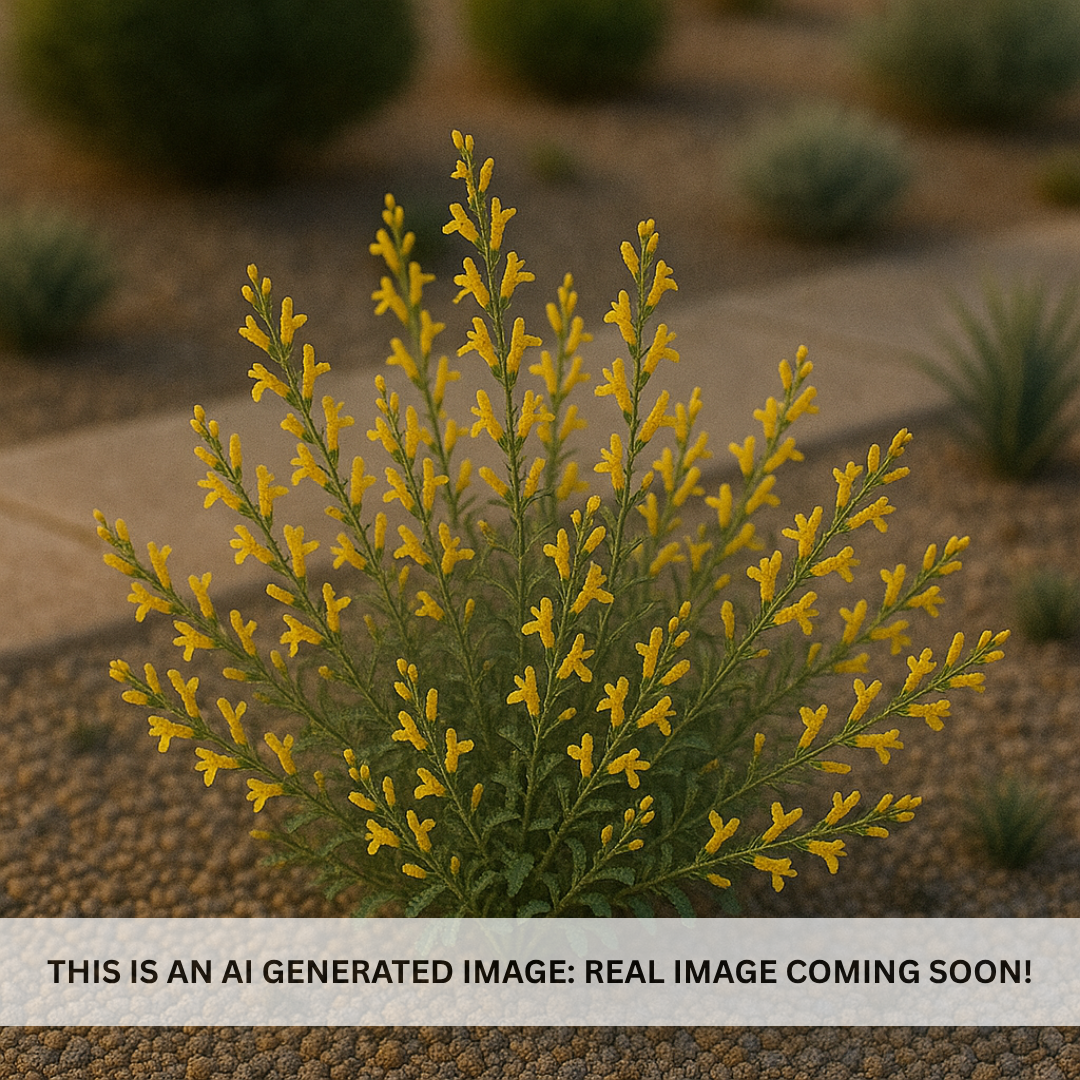
Chuparosa Yellow (Justicia californica – Yellow Form) is one of the most beloved hummingbird plants native to the Sonoran Desert — and this golden-yellow form turns heads wherever it's planted. A natural selection of the classic red Chuparosa, the yellow form produces the same abundance of tubular flowers beloved by hummingbirds, but with a warm, brilliant yellow color that stands out beautifully against desert gravel and rock. Deciduous to semi-evergreen depending on winter temperatures, Chuparosa Yellow is virtually indestructible in the right conditions — thriving in the heat and alkaline soils of Phoenix, Scottsdale, and Tempe with minimal water and care.
| Common Name | Chuparosa Yellow, Yellow Hummingbird Bush |
|---|---|
| Scientific Name | Justicia californica (Yellow Form) |
| Plant Type | Deciduous to semi-evergreen shrub |
| Mature Height | 3–5 feet |
| Mature Spread | 4–5 feet |
| Flower Color | Bright golden yellow |
| Bloom Season | Spring and fall; sporadic blooms year-round |
| Sun Exposure | Full sun to part shade |
| Water Needs | Very low — drought tolerant once established |
| USDA Hardiness Zone | Zone 9–11 (ideal for Zone 9b–10a) |
| Soil Tolerance | Rocky, sandy, caliche — excellent drainage required |
| Wildlife Value | Major hummingbird and pollinator plant |
| Native Range | Sonoran Desert (Arizona, Baja California) |
| Growth Rate | Moderate to fast |
Why Chuparosa Yellow Thrives in the Phoenix Valley
As a Sonoran Desert native, Chuparosa Yellow is perfectly adapted to Phoenix's climate — the relentless summer heat, minimal rainfall, and alkaline caliche soils that defeat most flowering shrubs are exactly what Chuparosa evolved to handle. Its most dramatic blooms appear in spring and fall, but it produces flowers sporadically throughout the year, providing nectar for hummingbirds that overwinter in the Phoenix Valley. In Chandler, Mesa, and Gilbert, where hummingbird-friendly gardens are growing in popularity, Chuparosa Yellow is one of the top recommended plants for wildlife-supporting xeriscape designs.
Landscape Uses
Chuparosa Yellow works beautifully as a loose, naturalistic shrub in native plant and wildlife gardens. Its open, arching structure and bright yellow flowers pair elegantly with the blue-gray tones of Desert Spoon and agave, or with the red blooms of Autumn Sage and Brake Lights Hesperaloe for a stunning warm-toned desert palette. Use it as a mid-border accent, a slope stabilizer on rocky terrain, or a naturalistic screen along fences and walls. Its moderate to fast growth rate means it fills in quickly in new landscapes.
Planting Density Guide
For individual specimens, allow 4–5 feet of clearance on all sides. For a wildlife hedge or informal screen, plant 3–4 feet on center for a full, blooming mass within 2–3 seasons. In naturalistic desert plantings, irregular spacing of 4–6 feet creates a more organic, native-habitat look.
Best Time to Plant
Plant Chuparosa Yellow in early spring (February–March) or fall (October–November) for best establishment. Spring planting takes advantage of the plant's natural growth surge before summer, while fall planting allows roots to establish during the mild winter months. Container plants from Three Timbers transplant well year-round with appropriate irrigation.
How to Plant Chuparosa Yellow
- Choose a full-sun to part-shade location with excellent drainage — Chuparosa is native to rocky slopes and washes where water flows through quickly.
- Dig a hole twice the width of the container and the same depth as the root ball.
- Break through any caliche hardpan to allow drainage below the root zone.
- Remove the plant from its container; loosen any circling roots gently.
- Set the crown at or slightly above grade.
- Backfill with native soil — no amendments are needed for this desert native.
- Water deeply immediately after planting.
- Apply a 2–3 inch layer of decomposed granite or gravel mulch around (not touching) the base.
Watering Guide
Watering Schedule
During the first 60–90 days, water every 10–14 days with a deep soak. Chuparosa is one of the most drought-tolerant native shrubs in the Sonoran Desert — once established (typically after one growing season), it survives on Phoenix's natural rainfall with minimal supplemental irrigation. Established plants may require no supplemental water at all during the monsoon season (July–September).
Drip Irrigation Setup
Use a 1 GPH emitter placed 12 inches from the main stems. Run for 45–60 minutes every 10–14 days during establishment. After establishment, reduce to monthly deep watering during extended dry periods outside the monsoon season. In winter when the plant may be dormant or semi-dormant, reduce irrigation to once every 4–6 weeks or eliminate it entirely if winter rains occur.
Frequently Asked Questions
How is Chuparosa Yellow different from the red form?
Chuparosa Yellow (Justicia californica – Yellow Form) produces the same tubular flowers and has the same growth habit and care requirements as standard red Chuparosa — the only difference is flower color. Both forms are equally attractive to hummingbirds and equally tough in the desert landscape.
Will it attract hummingbirds?
Yes — Chuparosa is one of the most important hummingbird plants in the Sonoran Desert. Anna's Hummingbirds, Rufous Hummingbirds, and other species that winter in Phoenix depend heavily on Chuparosa blooms for nectar. Planting it near a window or patio creates an excellent hummingbird-viewing opportunity throughout the year.
Does it lose its leaves in winter?
Chuparosa Yellow is deciduous to semi-evergreen — in mild Phoenix winters it may retain most of its foliage, while in cooler years (or in slightly colder microclimates) it may drop leaves. This is normal behavior. The plant leafs out again vigorously in spring.
Can it handle full shade?
Chuparosa Yellow prefers full sun but tolerates part shade well. In hot Phoenix exposures (especially west-facing walls), afternoon shade can actually improve summer performance. Avoid deep shade, which reduces flowering significantly.
Does it need pruning?
Light shaping can be done after bloom cycles to maintain size. In late winter, prune back any frost-damaged or wayward stems. Heavy pruning is generally not needed — Chuparosa has a naturally attractive, open mounding form that looks beautiful without intervention.
You May Also Like
Explore other hummingbird-friendly and wildlife plants at Three Timbers: Autumn Sage Furman's Red for a red companion that blooms alongside Chuparosa Yellow, Desert Cassia for a pollinator-rich yellow-flowering native, and Brake Lights Hesperaloe for a bold coral accent that hummingbirds also love.
Share