

Chuparosa - Red
Chuparosa - Red
Couldn't load pickup availability
Phoenix's #1 Hummingbird Plant — Red Chuparosa
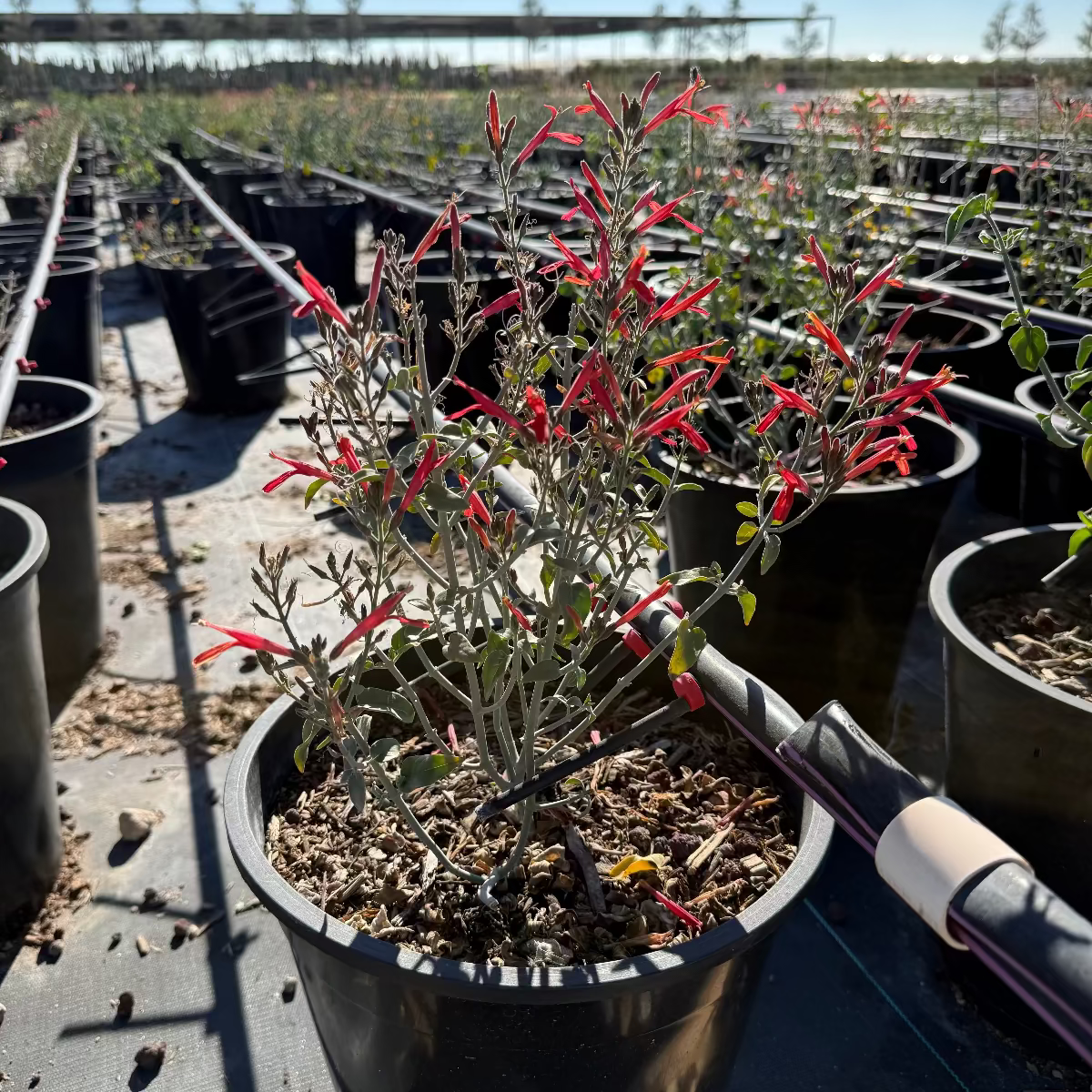
Chuparosa (Justicia californica) is the ultimate hummingbird plant for Phoenix Valley gardens — a native desert shrub so beloved by hummingbirds that its name literally means "hummingbird" in Spanish. With its brilliant tubular red flowers blooming through winter and spring when little else is in color, Red Chuparosa brings life to the garden when the landscape needs it most. Growing 3–5 feet tall and 4–5 feet wide with a soft, open habit, it thrives in blazing full sun with minimal irrigation. Whether you're creating a wildlife garden in Scottsdale, adding winter color to a Chandler xeriscape, or building a pollinator paradise in Mesa, Gilbert, or Tempe — Red Chuparosa is an irreplaceable native plant.
Red Chuparosa Plant Details
| Attribute | Detail |
|---|---|
| Scientific Name | Justicia californica |
| Common Names | Chuparosa, Red Chuparosa, Hummingbird Bush |
| Mature Height | 3–5 feet |
| Mature Width | 4–5 feet |
| Growth Rate | Moderate — 1–2 feet per year in Phoenix |
| Sun | Full sun (6+ hrs). Handles extreme reflected heat from walls and rock. |
| Water | Very low once established. One of Phoenix's most drought-tolerant natives. |
| USDA Zones | 8–11 (Phoenix is Zone 9b–10a) |
| Soil | Well-draining. Native to rocky desert soils; adapts easily to Arizona caliche. |
| Foliage | Deciduous to semi-evergreen — may thin in winter, greens up with warmth |
| Flower Color | Brilliant tubular red; blooms winter through spring (November–May in Phoenix) |
| Wildlife Value | Premier hummingbird plant; also attracts butterflies and native bees |
| Native Status | Native to Sonoran Desert (Arizona, California, Mexico) |
Red Chuparosa Uses in Phoenix Landscapes
Hummingbird and Wildlife Garden Anchor
No plant in the Phoenix Valley brings hummingbirds more reliably than Red Chuparosa. Anna's Hummingbirds, which overwinter in Phoenix, depend on it for nectar from November through May. Plant in groups of 3–5 near windows or outdoor seating areas where you can watch the show. Combine with Desert Ruellia, Autumn Sage, and Desert Bird of Paradise to create a complete four-season hummingbird corridor. Plant 5 feet apart for a loose grouping — a 20-foot wildlife bed needs 4 plants.
Winter Color in the Xeriscape
Red Chuparosa shines when almost everything else in the Phoenix desert landscape is dormant or dull. Its brilliant red tubular flowers provide vivid color through the drabbest months of winter, often beginning in November and peaking in February and March. This makes it an invaluable plant for winter-interest gardens in Peoria, Surprise, and Glendale where year-round color is a priority.
Natural Desert Hedge and Screen
With its arching 4–5 foot spread, Red Chuparosa makes an informal, flowing screen that softens walls and fences. It's thornless, making it safe for pathways and pool areas. Space plants 4 feet apart for a continuous natural screen — a 20-foot fence needs about 5 plants. Works beautifully paired with Fairy Duster or Brittlebush for a naturalistic Sonoran Desert hedge.
Rock Garden and Desert Slope Planting
Native to rocky hillsides, Red Chuparosa is one of the best plants for stabilizing slopes and rocky desert gardens. Its deep root system holds soil while its airy structure reduces wind resistance. Plant on south- or west-facing slopes in full reflected sun — it actually performs better in these challenging spots than in rich, amended garden beds.
Best Time to Plant Red Chuparosa in Phoenix
Fall (October–November) is the ideal planting window — warm soil encourages root establishment while cooler air reduces transplant stress. A fall-planted Chuparosa will be well-rooted and ready to bloom by its first winter, then put on a spectacular winter-spring show. Spring (February–March) is the next best option. Avoid summer planting; while established plants thrive in summer heat, new transplants struggle with the combined heat and establishment stress.
How to Plant Red Chuparosa
- Dig wide, not deep — excavate a hole 2–3 times the root ball width and the same depth as the container.
- Check for caliche — break through any hard white layer with a breaker bar to ensure proper drainage.
- Backfill with native soil — avoid over-amending; Chuparosa evolved in lean, rocky desert soil.
- Spacing — 4–5 feet apart for informal hedges; 6+ feet for specimen plants.
- Build a water basin — create a 3–4 inch berm around the drip line to direct water to the root zone.
- Mulch — 2–3 inches of gravel or bark mulch retains soil moisture and moderates root temperature.
Watering Red Chuparosa in Phoenix
First Year Watering Schedule
Weeks 1–2: Water every 1–2 days, deep and slow (20–30 minutes). Month 1–2: Every 3–4 days. Month 3–6: Every 7–10 days (every 5–7 days during peak summer). After Year 1: Every 14–21 days in summer; very little or no supplemental water in winter. Established Chuparosa is one of the most drought-tolerant natives in Phoenix — it often survives entirely on natural rainfall once roots are established.
Drip Irrigation
Place 1 GPH drip emitters 18 inches from the base. Run 30–45 minutes per session. Avoid overwatering — Chuparosa in overly rich, wet soil loses its drought-tolerant character, grows rank and floppy, and blooms less. Lean and dry is how this plant thrives. Let the monsoon season do most of the watering work.
How long does Chuparosa bloom in Phoenix? Red Chuparosa blooms primarily from November through May in the Phoenix Valley — a 6-month bloom season. It may rebloom intermittently in fall if late monsoon rains occur. This extended winter-spring bloom window is one of its greatest assets.
Is Red Chuparosa native to Arizona? Yes — Justicia californica is native to the Sonoran Desert, including southern Arizona, Baja California, and the Sonoran coast of Mexico. It's one of the most ecologically important native shrubs for wildlife in the region.
Does Chuparosa freeze in Phoenix? Established Chuparosa is cold-hardy to about 20°F and survives Phoenix winters reliably. It may lose some leaves in the coldest weeks of December and January but rebounds quickly. In Zone 9b–10a (Phoenix), it rarely experiences significant freeze damage.
What's the difference between Red Chuparosa and Yellow Chuparosa? Both are the same species (Justicia californica) but different color forms. Red Chuparosa produces the classic brilliant red flowers preferred by hummingbirds. Yellow Chuparosa produces soft yellow blooms and is equally drought-tolerant, with a slightly different aesthetic that works beautifully in naturalistic designs.
Is Chuparosa pet-friendly? Yes — Red Chuparosa is non-toxic to dogs and cats, making it a safe choice for pet-friendly landscapes.
You May Also Like
Chuparosa - Yellow — The yellow-blooming form of Chuparosa that provides similar wildlife value with a lighter, more naturalistic color palette.
Autumn Sage — A compact hummingbird favorite with red, pink, or white flowers that pairs perfectly with Chuparosa for year-round hummingbird habitat.
Desert Ruellia — A low-water purple bloomer that provides color contrast and extends the pollinator garden through summer and fall.
Desert Bird of Paradise — A dramatic yellow-blooming shrub that makes a bold companion to Chuparosa's fine-textured red display.
Autumn Sage Furman's Red — A deep red-blooming variety that echoes Chuparosa's color while extending bloom into fall and winter.
How Many Red Chuparosa Do I Need?
Red Chuparosa matures to 4–5 ft wide with an arching, open habit. For an informal screen or wildlife hedge, space plants about 4 ft on center. Use this table to estimate counts by run length:
| Hedge Run Length | Plants Needed (4 ft spacing) |
|---|---|
| 10 ft | 3 plants |
| 20 ft | 6 plants |
| 30 ft | 8 plants |
| 40 ft | 11 plants |
For a hummingbird garden, skip the formal hedge and plant in odd-numbered groups of 3–5 spaced about 5 ft apart near a window or patio so you can watch the show.
Red Chuparosa Season-by-Season in Phoenix
- Spring (Feb–Apr): Peak bloom continues as the plant covers itself in red tubular flowers; hummingbird traffic is heaviest. A good second planting window before summer.
- Summer (May–Sep): Shrugs off extreme and reflected heat. Bloom slows in the hottest stretch, then monsoon rains (Jul–Sep) can trigger a fresh flush. Very little supplemental water needed.
- Fall (Oct–Nov): Prime planting season and the start of the long winter-spring bloom cycle as nights cool.
- Winter (Dec–Jan): The signature season: red flowers feed overwintering Anna's Hummingbirds. Cold-hardy to about 20°F; it may drop some leaves in the coldest weeks but rebounds quickly, so no frost cover is needed in the Valley.
At a Glance
✔ Arizona Native ✔ Pollinator-Friendly ✔ Hummingbird-Friendly ✔ Heat-Loving (Reflected-Heat Tolerant) ✔ Drought-Tolerant ✔ Pool-Friendly (Low-Litter) ✔ Low-Maintenance ✔ Cold-Hardy to 20°F
Plant It With
- Chuparosa - Yellow: the soft-yellow form for a mixed red-and-yellow hummingbird planting.
- Autumn Sage Furman's Red: echoes the red bloom and extends the nectar season.
- Baja Ruellia: low-water purple flowers that contrast the red and stretch bloom into summer.
- Brittlebush: a Sonoran native with silver foliage and yellow daisies for a naturalistic desert pairing.
Is Red Chuparosa Right for Your Yard?
Red Chuparosa thrives in full sun and reflected heat, in lean, fast-draining caliche or rocky soil, on slopes and hot south- or west-facing walls, with very little water once established. It is a top pick for wildlife gardens, winter color, and naturalistic desert screens. Not a fit if you want a tidy, formal evergreen hedge: its habit is loose and open, and it can thin or drop leaves in the coldest weeks before flushing back.
Customer Reviews
Share