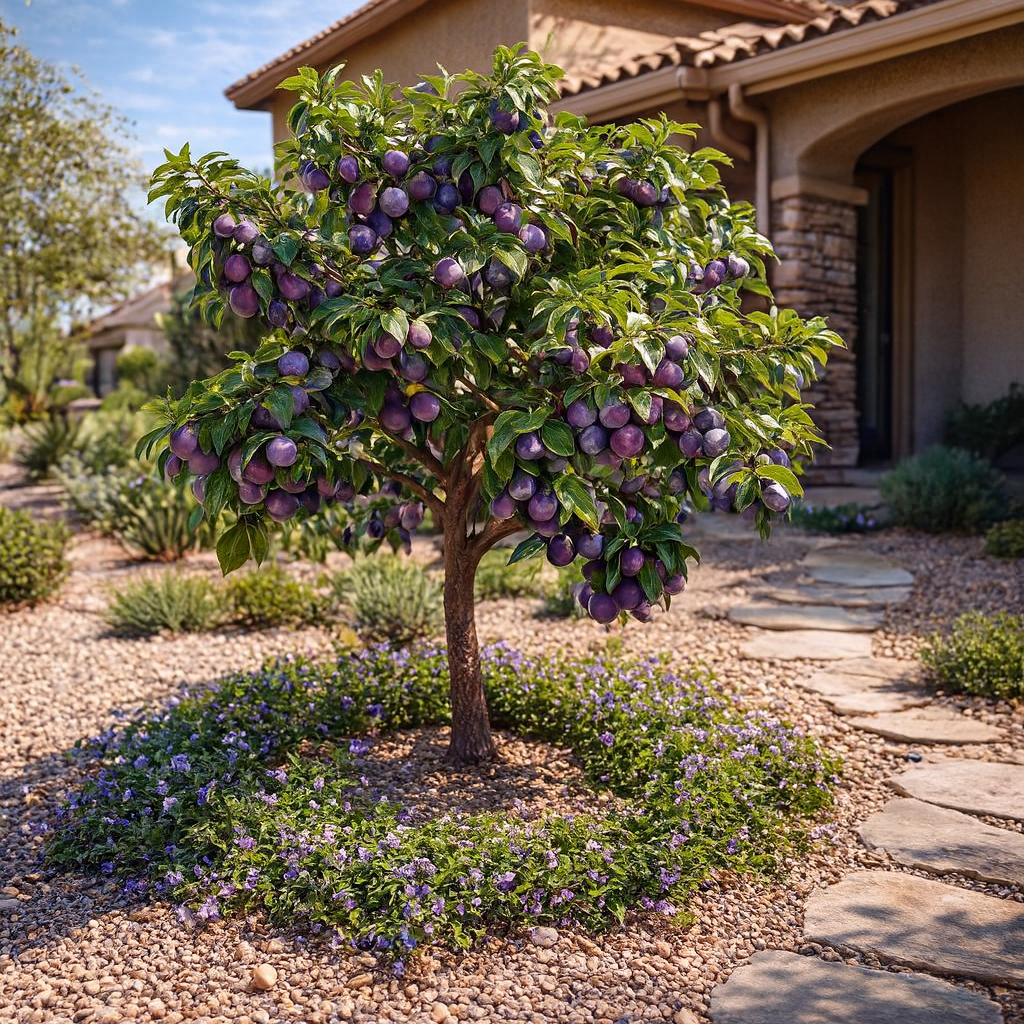

Burgundy Plum
Burgundy Plum
Couldn't load pickup availability
Phoenix's Best Purple-Leaf Plum Tree for Desert Landscapes
Burgundy Plum (Prunus cerasifera) is one of the most striking ornamental fruit trees you can plant in the Phoenix Valley. Known for its deep burgundy-purple foliage that holds color all season, this semi-dwarf deciduous tree reaches 12–15 feet tall and delivers a stunning spring show of fragrant pink-white blossoms. Low-chill, heat-tolerant, and surprisingly drought-adapted once established, Burgundy Plum is a favorite for homeowners in Scottsdale, Mesa, Chandler, and Tempe who want bold color and edible fruit without the fuss.
Burgundy Plum Plant Details
| Attribute | Detail |
|---|---|
| Scientific Name | Prunus cerasifera |
| Common Names | Burgundy Plum, Purple Leaf Plum, Cherry Plum |
| Mature Height | 12–15 feet |
| Mature Width | 10–12 feet |
| Growth Rate | Moderate to fast — 1–2 feet per year in Phoenix |
| Sun | Full sun (6+ hrs). Handles reflected heat from walls. |
| Water | Low to moderate once established. Drought-tolerant for a fruit tree. |
| USDA Zones | 5–9 (Phoenix is Zone 9b–10a) |
| Soil | Well-draining. Adapts to Arizona caliche soils with amendment. |
| Foliage | Deciduous — deep burgundy-purple leaves spring through fall |
| Bloom Color | Pink to white, fragrant — late winter to early spring |
| Chill Hours | 250–350 hours (reliable in Phoenix winters) |
Burgundy Plum Uses in Phoenix Landscapes
Bold Color Accent & Focal Point
Burgundy Plum's deep purple foliage creates instant visual contrast against the greens and grays of a typical desert landscape. Use it as a specimen tree in a front yard, courtyard, or entryway where its color draws the eye. It pairs beautifully with silver-leaf plants like Texas Sage or Desert Spoon for a dramatic, modern look.
Edible Landscape & Backyard Orchard
While primarily valued for its ornamental beauty, Burgundy Plum does produce small, sweet-tart fruit in late spring to early summer. Plant alongside other low-chill fruit trees like Pineapple Pear, Desert Gold Peach, or Fig Tree for a diverse backyard harvest. The fruit is excellent fresh or made into jams and preserves.
Shade & Screening
With its dense canopy and 10–12 foot spread, Burgundy Plum provides welcome shade during Phoenix summers. Plant 8–10 feet apart for a colorful informal screen or property border. The deciduous habit lets winter sun through when you want the warmth.
Best Time to Plant Burgundy Plum in Phoenix
Fall (October–November) is the ideal planting window. The soil is still warm enough to encourage root establishment, while cooler air temps reduce transplant stress. Your tree gets 6–8 months of root growth before its first Phoenix summer. Spring (February–April) is the second-best window. Avoid planting in peak summer if possible.
How to Plant Burgundy Plum
- Dig wide, not deep — Excavate a hole 2–3x the root ball width, same depth as the container.
- Check for caliche — Break through any hardpan layer to ensure proper drainage. Plum trees cannot tolerate waterlogged roots.
- Backfill with native soil — A light 20% compost blend is fine to boost early growth.
- Spacing — Plant 12–15 feet apart for individual specimens; 8–10 feet for a screen row.
- Water basin — Build a 3–4 inch soil ring to direct water straight to the root zone.
- Mulch — Apply 2–3 inches of bark or gravel mulch to retain moisture and keep roots cool. Keep mulch 4 inches from the trunk.
Watering Burgundy Plum in Phoenix
First Year Watering Schedule
- Weeks 1–2: Every 1–2 days, deep and slow (20–30 minutes per session)
- Months 1–2: Every 3–4 days
- Months 3–6: Every 5–7 days (every 3–5 days in peak summer)
- After Year 1: Every 7–10 days in summer; every 2–3 weeks in winter
Drip Irrigation
Place two 2-GPH emitters 18–24 inches from the trunk on opposite sides. As the tree matures, move emitters outward to the drip line. Established Burgundy Plums are surprisingly drought-tolerant for a fruit tree, but consistent deep watering during bloom and fruit set improves production.
How fast does Burgundy Plum grow in Phoenix?
Burgundy Plum grows at a moderate to fast rate of 1–2 feet per year with proper watering and full sun. Most trees reach their mature size of 12–15 feet within 6–8 years.
Does Burgundy Plum keep its purple color in Phoenix heat?
Yes — Burgundy Plum holds its deep purple foliage color well throughout the Phoenix growing season. Full sun actually intensifies the color. Leaves may fade slightly in extreme July–August heat but remain distinctly purple.
Is Burgundy Plum drought tolerant?
Once established (after the first year), Burgundy Plum is quite drought-tolerant for a fruit tree. It thrives on deep, infrequent watering — perfect for Phoenix xeriscaping that still wants color and shade.
Does Burgundy Plum produce edible fruit?
Yes. Burgundy Plum produces small, dark-skinned plums in late spring to early summer. The fruit is sweet-tart and great for fresh eating, jams, or attracting birds to your yard.
You May Also Like
- Pineapple Pear — A low-chill pear tree with sweet, tropical-flavored fruit and excellent Phoenix heat tolerance.
- Desert Gold Peach Tree — One of the earliest-ripening peaches for Phoenix, with juicy golden fruit by May.
- Red Baron Peach — Double-duty ornamental and fruit tree with stunning red foliage and delicious peaches.
- Fig Tree — The easiest fruit tree for Arizona, producing multiple harvests per season with minimal care.
- Texas Redbud — Another stunning ornamental tree with magenta spring blooms that pairs perfectly with Burgundy Plum.
Share