

Bull Grass
Bull Grass
Couldn't load pickup availability
Phoenix's Hardiest Native Ornamental Grass with Purple Seasonal Plumes
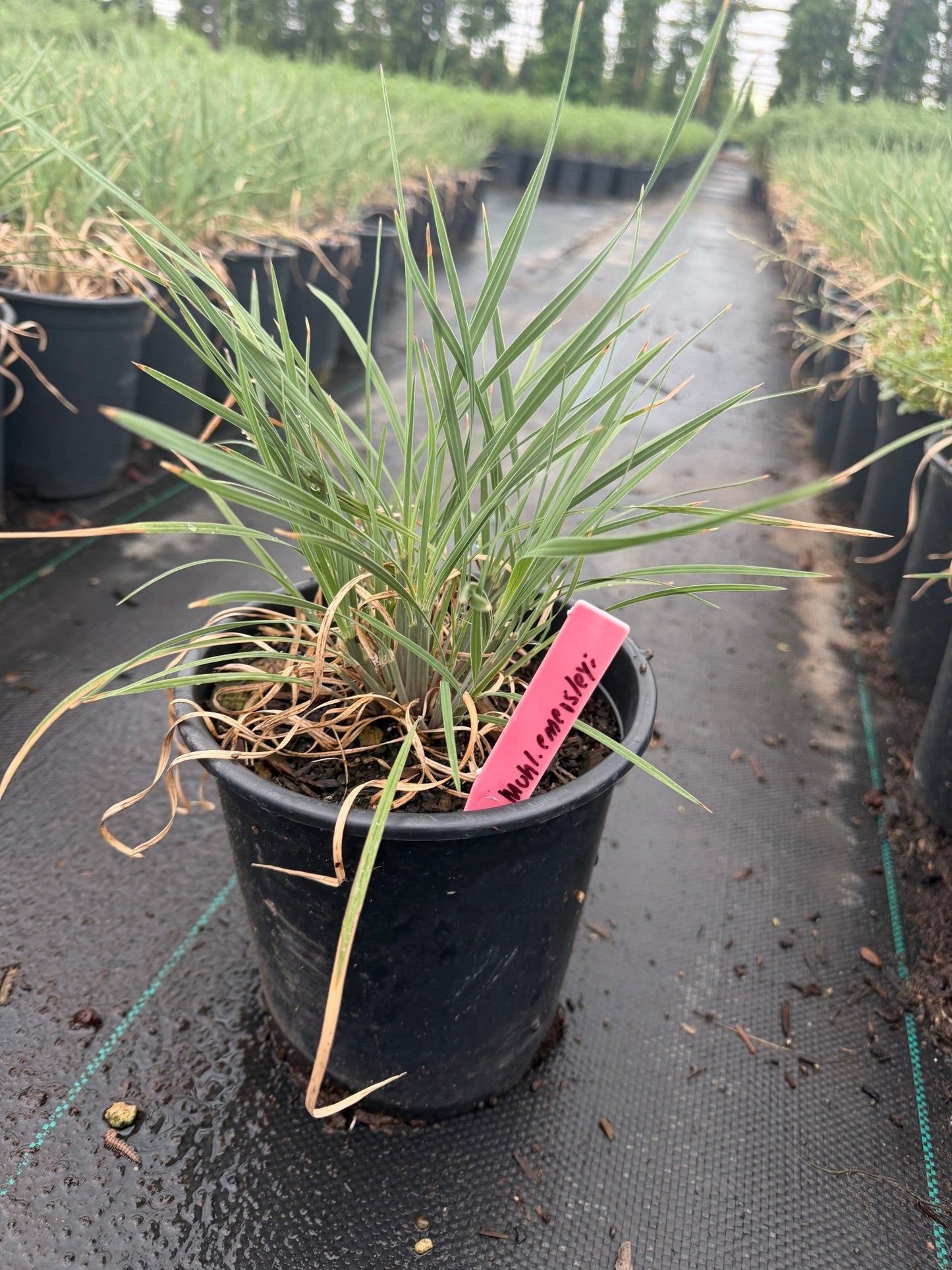
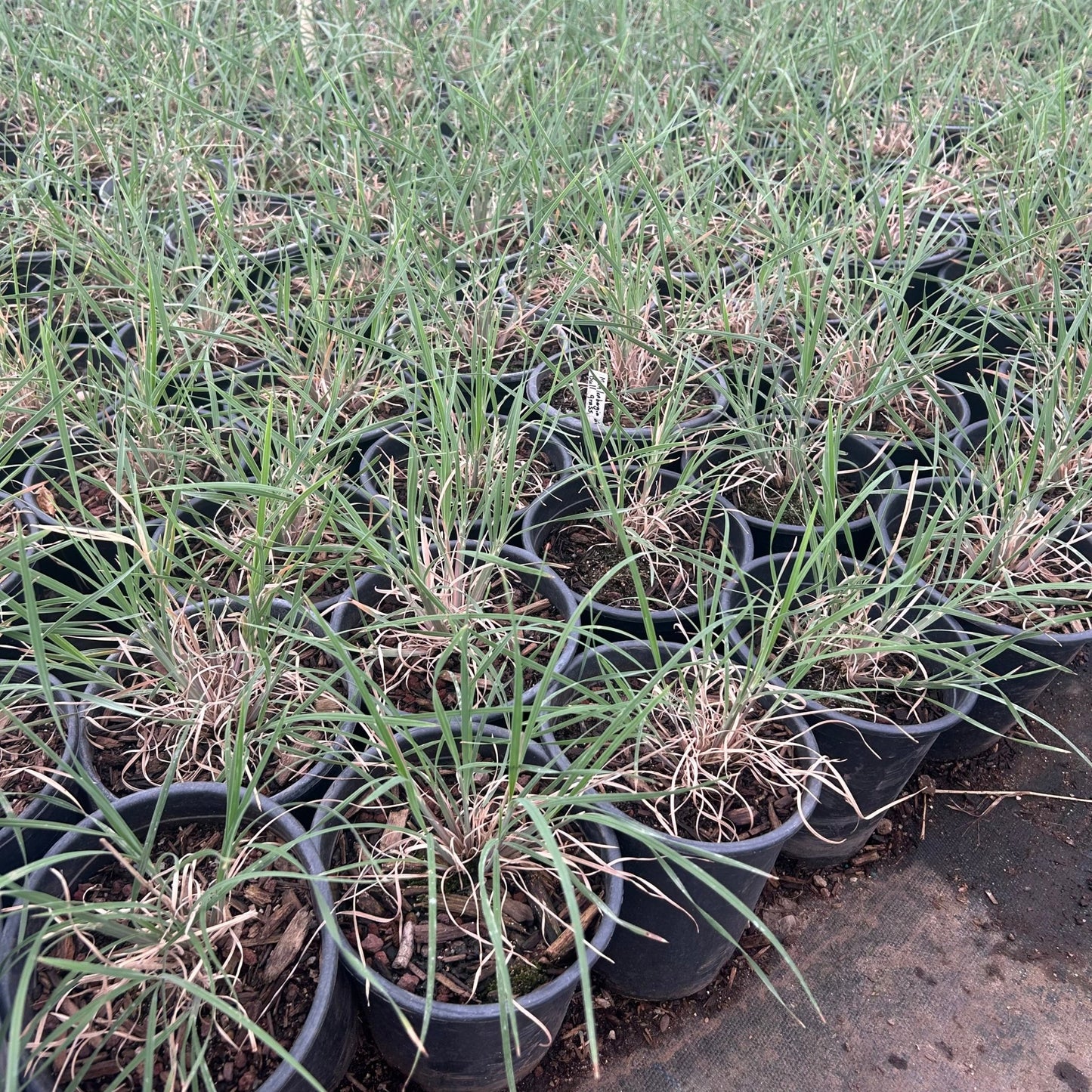
Bull Grass (Muhlenbergia emersleyi) is one of Arizona's toughest and most adaptable native ornamental grasses — thriving in full sun, partial shade, and even reflected heat from walls and pavement. Its graceful arching foliage forms dense clumps 3–4 feet tall, crowned by airy pinkish-purple plumes in late summer that fade to a warm tan through winter. Bull Grass is a staple of water-wise desert landscapes across Scottsdale, Phoenix, and Mesa — equally at home in naturalistic desert gardens, modern xeriscape designs, and commercial landscapes. Whether you're adding soft texture to a Chandler border, screening a fence line in Gilbert, or creating a wildlife-friendly garden in Peoria — Bull Grass delivers year-round beauty with very little water or care.
Bull Grass Plant Details
| Attribute | Detail |
|---|---|
| Scientific Name | Muhlenbergia emersleyi |
| Common Names | Bull Grass, Bullgrass, Plains Muhly |
| Mature Height | 3–5 feet (including bloom plumes) |
| Mature Width | 3–4 feet |
| Growth Rate | Moderate — 1–2 feet per year in Phoenix |
| Sun | Full sun to partial shade. Handles reflected heat from walls and hardscape. |
| Water | Low once established. Very drought-tolerant. |
| USDA Zones | 7–11 (Phoenix is Zone 9b–10a) |
| Soil | Well-draining. Adapts exceptionally well to Arizona caliche soils. |
| Foliage | Evergreen to semi-evergreen — fine-textured green blades year-round |
| Bloom Color | Pinkish-purple fading to tan — late summer through winter |
| Native Status | Native to Arizona, New Mexico, Texas, and northern Mexico |
Bull Grass Uses in Phoenix Landscapes
Mass Plantings and Naturalistic Desert Borders
Bull Grass is exceptional for large-scale mass plantings that create sweeping waves of texture and seasonal color. Plant in drifts of 7 or more for maximum impact in fall when the pinkish-purple plumes emerge above the green foliage. For a 20 ft border — use 5–6 plants spaced 4 ft apart; for a 40 ft border — use 10–12 plants. Outstanding for commercial and residential projects in Mesa, Chandler, and Gilbert.
Shade-Tolerant Underplanting
Unlike most ornamental grasses that require full sun, Bull Grass handles partial shade — making it one of the few grasses that thrives under the canopy of desert trees like Palo Verde and Mesquite. Use it to fill shaded areas beneath large trees in Scottsdale and Phoenix where other grasses would struggle. It maintains attractive foliage and still produces plumes even with limited direct sun.
Wildlife and Habitat Gardens
As a true Arizona native, Bull Grass provides valuable habitat for birds, lizards, and beneficial insects. Its dense clumps offer nesting cover and shelter, and the seed heads provide food for granivorous birds through fall and winter. An ideal choice for wildlife-friendly desert gardens in Tempe, Peoria, and Glendale where homeowners want to support local biodiversity while keeping water use low.
Slope Stabilization and Erosion Control
Bull Grass's deep, fibrous root system makes it an excellent choice for stabilizing slopes and embankments across the Phoenix Valley. Its spreading clumps help control erosion on grades that are difficult to irrigate, while providing attractive foliage and seasonal plume color. Space plants 3–4 feet apart on slopes for good coverage within 2–3 seasons.
Best Time to Plant Bull Grass in Phoenix
Fall (October–November) is the ideal window — warm soil promotes root establishment while cooling air temperatures reduce transplant stress, giving plants 6–8 months to establish before facing their first Phoenix summer. Spring (February–April) is the second-best option. Avoid summer planting when possible; even this tough native struggles when newly transplanted during Phoenix's most intense heat.
How to Plant Bull Grass
- Dig wide, not deep — excavate 2–3x the width of the root ball, matched to root ball depth.
- Check for caliche — break through any hardpan layer to ensure proper drainage.
- Backfill with native soil — Bull Grass thrives in native Arizona soil with minimal amendment.
- Spacing — 3–4 ft apart for mass plantings and screens; 5–6 ft for individual specimens.
- Build a water basin — create a 3–4 inch raised ring to direct water to the root zone.
- Apply mulch — 2–3 inches of bark or gravel mulch retains moisture and moderates soil temperature.
Watering Bull Grass in Phoenix
First Year Watering Schedule
Weeks 1–2: Water every 1–2 days, deep and slow (20–30 minutes). Month 1–2: Reduce to every 3–4 days as roots establish. Month 3–6: Every 7–10 days (every 5–7 days in peak summer). After Year 1: Every 14–21 days in summer; every 4–6 weeks in winter. Bull Grass is highly drought-tolerant once established and thrives on minimal supplemental irrigation.
Drip Irrigation
Place drip emitters 18–24 inches from the plant base. A 1–2 GPH emitter per plant is sufficient. Run long enough to wet soil 12–18 inches deep. Mature Bull Grass performs beautifully on minimal irrigation beyond monsoon rainfall and will thrive for decades with very little supplemental water.
How fast does Bull Grass grow in Phoenix?
Bull Grass grows at a moderate rate of 1–2 feet per year under good Phoenix conditions. Most plants reach their full 3–4 foot height within 2–3 seasons and begin producing bloom plumes reliably in their second fall after planting.
Is Bull Grass drought tolerant once established?
Yes — it's one of the most drought-tolerant native ornamental grasses in the Southwest. Once established after the first year, Bull Grass handles Phoenix's heat and low humidity on minimal supplemental irrigation, relying primarily on monsoon season rainfall.
How is Bull Grass different from Deer Grass?
Bull Grass (Muhlenbergia emersleyi) produces pinkish-purple plumes and tolerates partial shade, while Common Deer Grass (Muhlenbergia rigens) produces golden-tan plumes and prefers full sun. Bull Grass is typically slightly shorter and more shade-tolerant, making it more versatile in landscapes with mixed sun exposure.
Does Bull Grass need to be cut back?
You can cut Bull Grass back to 12 inches from the ground in late winter (February) before new growth emerges. This is optional but rejuvenates older clumps and promotes dense, fresh foliage through spring and summer.
Can Bull Grass handle reflected heat from walls?
Yes — as an Arizona native adapted to intense desert conditions, Bull Grass handles full sun and reflected heat well. It's also one of the few ornamental grasses that performs well in partial shade, giving it more placement flexibility than most grasses.
You May Also Like
Common Deer Grass — A taller native grass with golden-tan plumes, excellent for large focal points and mass plantings in full-sun Phoenix landscapes.
Nashville Grass — A more compact Muhly grass with golden-bronze plumes, ideal for smaller borders and patio-area plantings.
Pine Muhly Grass — A fine-textured, compact native grass that pairs beautifully with Bull Grass in naturalistic desert designs.
Desert Cassia — A drought-tolerant native shrub with bright yellow flowers that complements the purple plumes of Bull Grass beautifully.
Chuparosa — A low-water native shrub that layers well with ornamental grasses for wildlife-friendly, low-maintenance gardens.
How Many Bull Grass Do I Need?
This is a clumping grass 3 to 4 feet wide. Plan by role rather than a hedge count:
- Specimen / focal point: a single clump anchors a bed corner or entry. Give it 5 to 6 feet of clearance to show its full arching form and plumes.
- Drifts / naturalistic massing: plant in odd-numbered groups of 3, 5, or 7, spaced 3 to 4 feet on center, so the clumps read as one sweep of texture.
- Soft screen or slope cover: space 3 to 4 feet on center in a row. A 20-foot run needs about 5 to 6 plants; a 40-foot run about 10 to 12.
Bull Grass Season-by-Season in Phoenix
- Spring (Feb to Apr): Fine green blades flush from the clump. Best time to cut back old growth before new foliage fills in. A strong second planting window.
- Summer (May to Sep): Holds its texture through extreme and reflected heat on little water, and uniquely keeps performing in partial shade under desert trees. Pinkish-purple plumes begin forming in late summer with monsoon moisture.
- Fall (Oct to Nov): Peak show as airy purple plumes rise above the foliage and feed seed-eating birds. Prime planting season.
- Winter (Dec to Jan): Plumes fade to warm tan and persist for interest. Foliage stays largely evergreen here and is cold-hardy well below freezing for the Valley, so frost is not a concern.
At a Glance
✔ Arizona Native ✔ Drought-Tolerant ✔ Heat-Loving (Reflected-Heat Tolerant) ✔ Evergreen ✔ Low-Maintenance ✔ Cold-Hardy to 10°F
Plant It With
- Deer Grass: a taller full-sun native grass with golden plumes for layered height and color.
- Nashville Grass: a compact muhly that steps the height down at the front of the planting.
- Pine Muhly Grass: fine-textured native grass that blends naturally in mixed grass drifts.
- Desert Cassia: a yellow-flowered desert shrub that complements the purple plumes.
Is Bull Grass Right for Your Yard?
Bull Grass is one of the most flexible native grasses for the Valley: it thrives in full sun or partial shade, in caliche or other fast-draining soil, under desert trees, on slopes, and in mass borders. Give each clump 3 to 4 feet of room. It is not a fit for tight, narrow beds or constantly wet ground, where its full clump size and need for drainage both work against it.
Customer Reviews
Share