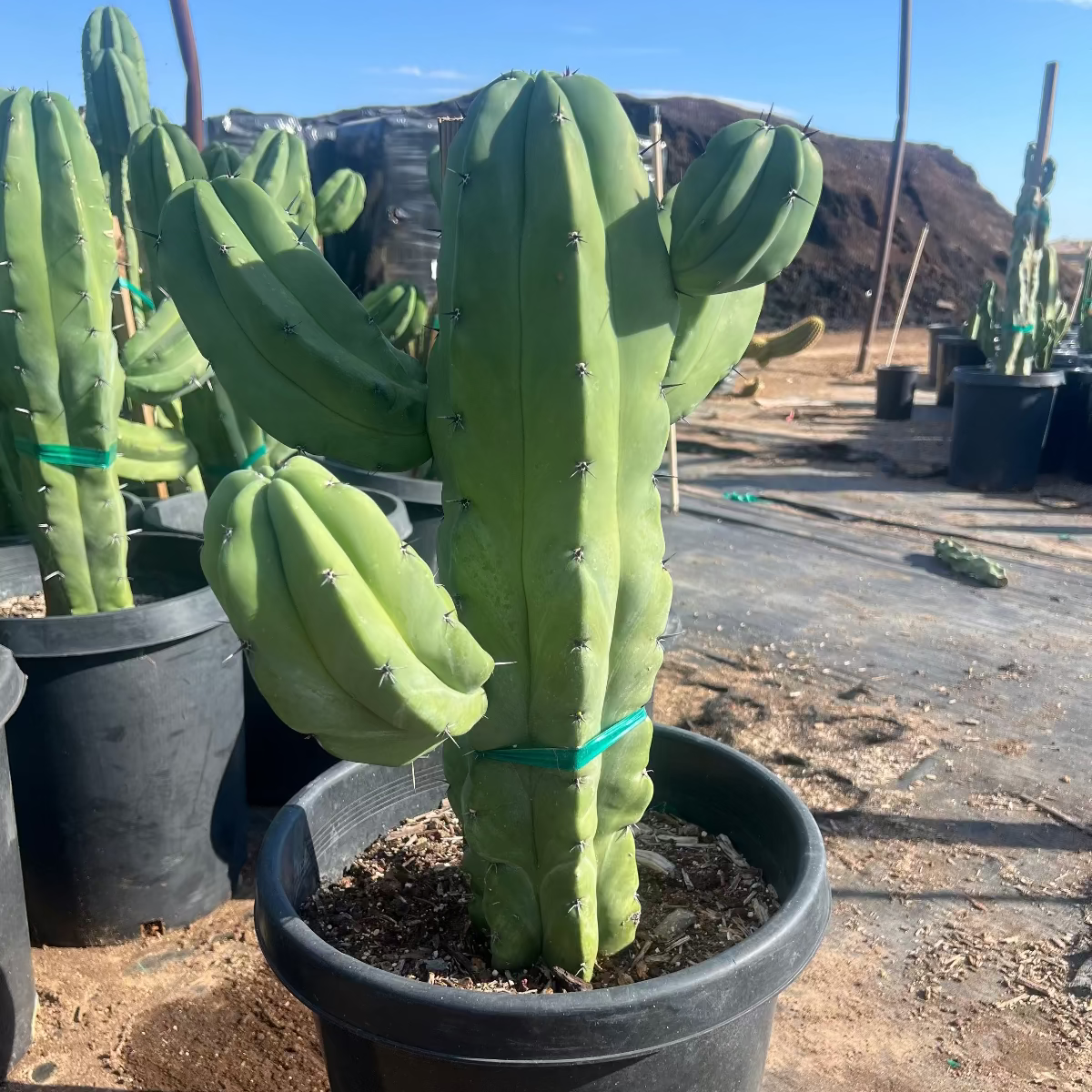


Blue Myrtle Cactus
Blue Myrtle Cactus
Couldn't load pickup availability
The Best Blue Columnar Cactus for Phoenix Landscapes
Blue Myrtle Cactus (Myrtillocactus geometrizans) is one of the most popular and versatile columnar cacti for Phoenix Valley landscapes. Its striking blue-green columns branch freely with age, creating a candelabra-like silhouette that adds bold desert character to any setting. Blue Myrtle grows fast, handles extreme heat without flinching, and thrives on almost no supplemental water once established. Whether you're building a privacy hedge in Scottsdale, anchoring a modern xeriscape bed in Chandler, or creating a columnar cactus collection in Mesa — Blue Myrtle Cactus is a proven performer that delivers year-round color and structure.
Blue Myrtle Cactus Plant Details
| Attribute | Detail |
|---|---|
| Scientific Name | Myrtillocactus geometrizans |
| Common Names | Blue Myrtle Cactus, Blue Candle Cactus, Bilberry Cactus, Whortleberry Cactus |
| Mature Height | 10–16 feet |
| Mature Width | 6–10 feet (multi-branching candelabra form) |
| Growth Rate | Fast — 1–2 feet per year in Phoenix |
| Sun | Full sun (6+ hrs). Handles reflected heat from walls and pavement. |
| Water | Very low once established. Highly drought-tolerant. |
| USDA Zones | 9–11 (Phoenix is Zone 9b–10a) |
| Soil | Well-draining. Adapts to Arizona caliche and rocky desert soils. |
| Foliage | Evergreen — distinctive blue-green columns year-round |
| Fruit | Small edible blue-purple berries (hence "Bilberry Cactus") |
Blue Myrtle Cactus Uses in Phoenix Landscapes
Privacy Screen & Living Fence
Blue Myrtle's fast growth and dense branching habit make it an excellent choice for living privacy screens along property lines and pool fences across Scottsdale, Gilbert, and Peoria. Plant 4–5 feet apart for a continuous screen. A 20-foot fence line needs 4–5 plants; a 40-foot run needs 8–10. The blue-green color adds visual interest that plain block walls can't match.
Columnar Cactus Garden
Blue Myrtle is the anchor plant in many Phoenix cactus gardens. Its blue-green color contrasts beautifully with the greens of Mexican Fence Post, the silver-blue of Blue Ghost Cereus, and the twisted ribs of Spiral Cereus. Group specimens of varying heights and species for a gallery-style display that looks amazing year-round with zero seasonal maintenance.
Modern Desert Focal Point
A single mature Blue Myrtle Cactus with its multi-branching candelabra form creates a striking architectural statement in Tempe, Paradise Valley, and Cave Creek landscapes. Plant against a clean stucco wall or in a decomposed granite bed for maximum visual impact. Pair with low-growing Ruellia, Blackfoot Daisy, or Angelita Daisy as groundcover contrast.
Low-Water Xeriscape Beds
For homeowners tired of high water bills, Blue Myrtle is a foundation plant for water-smart landscaping. Once established, it survives on rainfall alone in most Phoenix-area years. Combine with Agave, Desert Spoon, Golden Barrel, and Texas Sage for a lush-looking xeriscape that uses a fraction of the water.
Best Time to Plant Blue Myrtle Cactus in Phoenix
Fall (October–November) is the ideal planting window. Soil is still warm enough to encourage root growth, while cooler air reduces transplant stress, giving your Blue Myrtle 6–8 months of root establishment before its first Phoenix summer. Spring (February–April) is the second-best window. Summer planting is possible with extra watering attention, but fall gives the best results.
How to Plant Blue Myrtle Cactus
- Dig wide, not deep — excavate a hole 2–3× the root ball width, same depth as the container.
- Check for caliche — break through any hardpan layer to ensure good drainage. Blue Myrtle won't tolerate standing water.
- Backfill with native soil — a light 20% cactus mix or pumice blend is fine for loosening heavy clay.
- Spacing — 4–5 feet apart for a hedge or screen; 8–10 feet for individual specimens.
- Water basin — build a 3–4 inch soil ring around the root zone to direct water during establishment.
- Mulch — 2–3 inches of rock or gravel mulch (not bark) around the base to retain moisture and keep roots cool.
Watering Blue Myrtle Cactus in Phoenix
First Year Watering Schedule
- Weeks 1–2: Every 3–4 days, deep and slow (15–20 min drip).
- Month 1–3: Every 7–10 days.
- Month 3–6: Every 10–14 days (weekly in peak summer).
- After Year 1: Every 2–3 weeks in summer; monthly or less in winter. Established Blue Myrtle is extremely drought-tolerant.
Drip Irrigation
Place 1–2 emitters 12–18 inches from the trunk, each delivering 1–2 GPH. Run for 30–45 minutes per session. Once established (after 12–18 months), Blue Myrtle needs very little supplemental irrigation — just occasional deep soaks during extended dry periods in summer.
How fast does Blue Myrtle Cactus grow in Phoenix?
Blue Myrtle is one of the faster-growing columnar cacti, adding 1–2 feet per year in Phoenix's long growing season. Larger nursery stock (10–25 gallon) may grow even faster once the root system fills out. Expect multi-branching to begin once the plant reaches 3–4 feet tall.
What's the difference between Blue Myrtle and Fat Blue Myrtle?
Fat Blue Myrtle is a thicker-stemmed variety of the same species with wider, more robust columns. Standard Blue Myrtle has slightly narrower columns but branches more freely, creating a fuller candelabra shape at maturity. Both are equally tough and low-maintenance in Phoenix.
Is Blue Myrtle Cactus cold hardy in Phoenix?
Blue Myrtle handles Phoenix's typical winter lows (mid-30s°F) without issue. It can tolerate brief dips to 25–28°F, but extended hard freezes below 25°F can cause damage. In the rare event of an extreme freeze warning, cover the plant with frost cloth for protection.
Does Blue Myrtle Cactus produce fruit?
Yes — Blue Myrtle produces small blue-purple berries called garambullo in Mexico. The fruit is edible and sweet, similar to a small blueberry. It's a fun bonus but not the primary reason most people plant this cactus.
You May Also Like
- Fat Blue Myrtle Cactus — Thicker-stemmed variety with bolder columns. Same beautiful blue-green color.
- Crested Blue Myrtle — Rare crested mutation with spectacular fan-shaped growth. A collector's dream.
- Mexican Fence Post — Classic columnar cactus with white vertical stripes. Perfect companion planting.
- Blue Ghost Cereus — Powdery blue columns with a ghostly appearance. Stunning color contrast.
- San Pedro Cactus — Fast-growing blue-green columns with a similar growth habit and color palette.
How Many Blue Myrtle Cactus Do I Need?
Blue Myrtle is one of the few columnar cacti fast and dense enough to use as a living screen, so it works either as a hedge or as a branching specimen. For a privacy screen, plant at roughly 4.5 ft centers; for a single candelabra focal point, give one plant 8 to 10 ft of room to spread. Use the table below to estimate screen quantities, and keep the planting back from walkways and pool decks since mature columns carry spines.
| Screen length | Spacing | Plants needed |
|---|---|---|
| 20 ft | ~4.5 ft centers | 5 |
| 40 ft | ~4.5 ft centers | 10 |
| 60 ft | ~4.5 ft centers | 14 |
| Single specimen | 8 to 10 ft clearance | 1 |
Blue Myrtle Cactus Season-by-Season in Phoenix
- Spring (Feb to Apr): Strong new growth flush and the start of small creamy flowers along the ribs. Best second planting window once nights stay above the upper 40s.
- Summer (May to Sep): Fast growth in full Phoenix sun and reflected heat. Flowers give way to small edible blue-purple berries (garambullo). Monsoon humidity is fine as long as the soil drains; water deeply but space soaks 2 to 3 weeks apart.
- Fall (Oct to Nov): Prime planting season, and the best window to start a screen so roots establish before winter.
- Winter (Dec to Jan): Holds blue-green color and form through typical Valley lows in the mid-30s. Hardy into the mid-20s, but cover with frost cloth on the rare night forecast below 25 F to prevent stem damage.
At a Glance
✔ Heat-Loving (Reflected-Heat Tolerant) ✔ Drought-Tolerant ✔ Evergreen ✔ Low-Maintenance ✔ Pollinator-Friendly ✔ Edible ✔ Deer & Rabbit-Resistant ✔ Cold-Hardy to 25°F
Plant It With
- Fat Blue Myrtle Cactus: the thicker-stemmed form of the same species for varied column weight in a grouping.
- Crested Blue Myrtle: the rare fan-shaped mutation as a collector's accent in the same blue palette.
- Mexican Fence Post: clean green columns that contrast against the blue-green candelabra.
- Blue Ghost: silver-blue Pilosocereus column that deepens a cool-toned cactus garden.
Is Blue Myrtle Cactus Right for Your Yard?
Blue Myrtle thrives in full sun with fast-draining soil, grows quickly enough to form a real screen, and asks for almost no water once established, making it a top pick for a colorful low-water hedge or focal point. It is not a fit if your soil holds water or the spot stays shaded, since standing water causes rot, and it needs frost protection on the rare nights that drop below 25 F.
Customer Reviews
Share