
Barbara Karst Bougainvillea Espalier
Barbara Karst Bougainvillea Espalier
Couldn't load pickup availability
Bold Crimson Color That Thrives in Phoenix's Hottest Spots
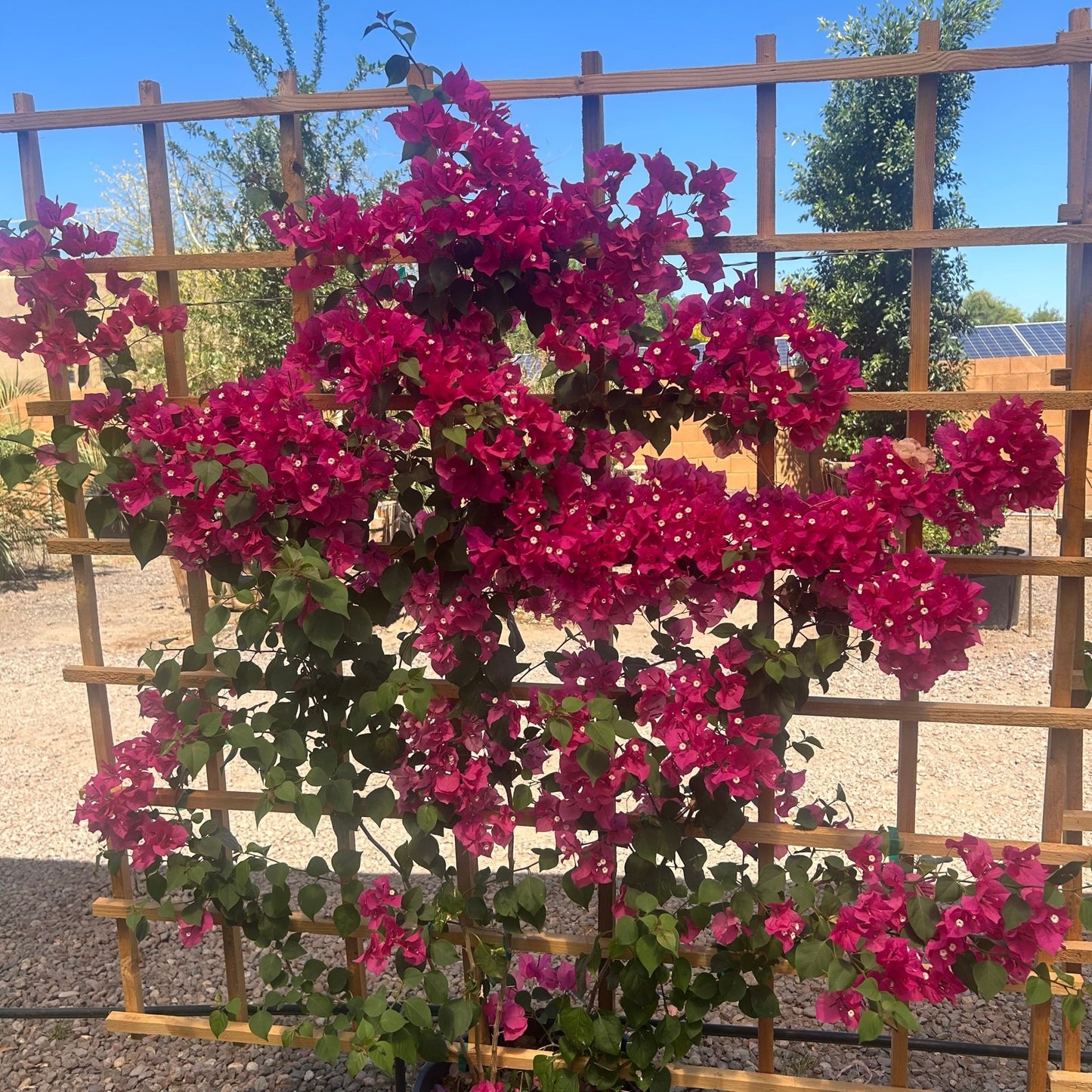
Barbara Karst Bougainvillea Espalier (Bougainvillea 'Barbara Karst') is the most popular bougainvillea variety in the Phoenix Valley — and for good reason. This heat-loving powerhouse produces waves of vivid magenta-red bracts from spring through fall, turning any wall, fence, or trellis into a show-stopping display of color. Trained as an espalier, Barbara Karst stays flat and manageable while delivering the dramatic impact bougainvillea is famous for. Whether you're creating a bold accent wall in Scottsdale, covering a Mesa block fence in crimson, or adding Mediterranean flair to a Gilbert entryway — Barbara Karst Bougainvillea Espalier is the undisputed champion of desert color.
Barbara Karst Bougainvillea Espalier Plant Details
| Attribute | Detail |
|---|---|
| Scientific Name | Bougainvillea 'Barbara Karst' |
| Common Names | Barbara Karst Bougainvillea, Red Bougainvillea |
| Mature Height | 8–15 feet (trained as espalier on support) |
| Mature Width | 6–10 feet (flat on trellis) |
| Growth Rate | Fast — 4–6 feet per year in Phoenix |
| Sun | Full sun (6+ hrs required for best blooming). Loves reflected heat. |
| Water | Very low once established. Extremely drought-tolerant. |
| USDA Zones | 9–11 (Phoenix is Zone 9b–10a) |
| Soil | Well-draining. Adapts to Arizona caliche soils. Prefers slightly dry conditions. |
| Foliage | Evergreen in Phoenix — may drop leaves briefly during cold snaps |
| Bloom Color | Vivid magenta-red bracts with tiny white flowers; blooms spring through fall |
| Thorns | Yes — has thorns along stems (handle with gloves during training) |
Barbara Karst Bougainvillea Espalier Uses in Phoenix Landscapes
Dramatic Color Wall & Focal Point
Nothing delivers more visual punch per square foot than Barbara Karst Bougainvillea trained flat against a wall. The vivid magenta-red bracts create a living mural that stops traffic — literally. This is the top pick for Scottsdale, Paradise Valley, and Chandler homeowners who want their landscape to make a bold statement. Plant against a light-colored stucco wall for maximum contrast.
Heat-Loving Fence Cover
Barbara Karst actually blooms more in the hottest spots — south- and west-facing walls where reflected heat would stress most plants. This makes it ideal for covering chain-link fences, block walls, and property lines in the toughest exposures across Mesa, Tempe, and Glendale. The thorns also provide a natural security barrier.
Mediterranean & Resort-Style Design
Bougainvillea is the signature plant of Mediterranean, Spanish Colonial, and resort-style landscapes. Trained as an espalier along an entryway, courtyard wall, or pool fence, Barbara Karst delivers that upscale Arizona resort look. Pair with Star Jasmine Espalier for fragrance or Lady Banks Rose Espalier for a romantic white-and-crimson color combination.
Best Time to Plant Barbara Karst Bougainvillea Espalier in Phoenix
Spring (March–May) is the ideal planting window for bougainvillea — warm soil and rising temperatures promote rapid root and shoot growth. Fall (October–November) is the second-best option. Avoid winter planting — bougainvillea is frost-sensitive and needs warm soil to establish. If a freeze is forecasted in the first winter, protect the base with frost cloth.
How to Plant Barbara Karst Bougainvillea Espalier
- Dig wide, not deep — excavate 2–3x the root ball width at the same depth as the container.
- Check for caliche — break through any hardpan layer to ensure drainage. Bougainvillea hates wet feet.
- Backfill with native soil — avoid heavy amendments. Bougainvillea blooms best in lean, well-drained soil.
- Handle the root ball gently — bougainvillea roots are delicate. Avoid disturbing the root ball during transplanting.
- Position the trellis — set the trellis 4–6 inches from the wall for airflow. Use gloves when tying canes.
- Mulch lightly — 1–2 inches of gravel mulch is ideal. Avoid thick organic mulch that retains too much moisture.
Watering Barbara Karst Bougainvillea Espalier in Phoenix
First Year Watering Schedule
- Weeks 1–2: Every 2–3 days, deep and slow (20–30 minutes per session)
- Months 1–2: Every 4–5 days
- Months 3–6: Every 7–10 days (every 5–7 days during peak summer)
- After Year 1: Every 10–14 days in summer; every 3–4 weeks in winter
Drip Irrigation Tips
Place two 2-GPH emitters 18–24 inches from the trunk on opposite sides. Key tip: bougainvillea blooms best when slightly stressed for water. Overwatering produces lush green growth but fewer blooms. Once established, let the soil dry out between waterings for maximum flower production.
How fast does Barbara Karst Bougainvillea grow in Phoenix?
Very fast — expect 4–6 feet of vigorous new growth per year. With regular training and tying to the trellis, it can cover a standard espalier frame in one to two growing seasons.
Is Barbara Karst Bougainvillea drought tolerant?
Extremely. Once established, it's one of the most drought-tolerant flowering plants you can grow in Phoenix. In fact, slight drought stress encourages heavier blooming — less water often means more color.
Does bougainvillea survive Phoenix winters?
Yes — Barbara Karst is one of the hardiest bougainvillea varieties and handles Phoenix winters well. It may drop some leaves during cold snaps below 32°F, but recovers quickly in spring. Cover the base with frost cloth during hard freezes for extra protection.
Does Barbara Karst Bougainvillea have thorns?
Yes — bougainvillea has thorns along its stems. Wear gloves when training and pruning. The thorns can also serve as a natural security deterrent when planted along fences and property lines.
When does Barbara Karst bloom in Phoenix?
Heaviest blooming occurs in spring (March–May) and fall (September–November), with lighter flushes through summer. In Phoenix's warm climate, you'll see color for 8–10 months of the year.
You May Also Like
- Cape Honeysuckle Espalier — Vibrant orange trumpet flowers year-round with the same heat-loving toughness.
- Orange Jubilee Espalier — Bright orange-yellow trumpet blooms on a fast-growing, low-water espalier.
- Pink Trumpet Vine Espalier — Showy pink trumpet flowers for a softer color palette.
- Star Jasmine Espalier — Fragrant white blooms and glossy evergreen foliage for shaded walls.
- Lady Banks Rose White Espalier — Cascading white double blooms for a romantic, thornless alternative.
How Many Barbara Karst Bougainvillea Espalier Do I Need?
Each espalier covers roughly 6 to 10 feet of wall once trained flat. Space plants about 8 feet apart for a continuous color panel along a wall or fence. Use this guide for a wall run:
| Wall Length | Espaliers Needed (8 ft spacing) |
|---|---|
| 10 ft | 2 plants |
| 20 ft | 4 plants |
| 30 ft | 5 plants |
| 40 ft | 6 plants |
For a single accent panel beside a door or garage, one espalier fills the frame within a season or two.
Barbara Karst Bougainvillea Espalier Season-by-Season in Phoenix
- Spring (Mar to May): Best planting window and the first heavy wave of magenta bracts. Train and tie new canes to the frame as they shoot.
- Summer (May to Sep): Thrives on hot south and west walls with reflected heat. Blooms in flushes; keep it slightly dry for the most color and lean on monsoon rain.
- Fall (Sep to Nov): Often the showiest bloom of the year as nights cool. Good second planting window and time to tidy the framework.
- Winter (Dec to Jan): Slows and may shed leaves. Frost-sensitive: leaf and tip damage below about 32°F, so cover on hard-freeze nights and hold pruning until spring.
At a Glance
✔ Heat-Loving (Reflected-Heat Tolerant) ✔ Drought-Tolerant ✔ Evergreen ✔ Low-Maintenance
Plant It With
- Cape Honeysuckle Espalier: orange trumpet flowers on a matching flat-trained frame for a warm color blend.
- Orange Jubilee Espalier: bright orange-yellow trumpets that play off the magenta on a long wall.
- Barbara Karst Bougainvillea: the same variety in shrub or vine form to extend the color around a corner.
- Red Yucca: low-water structural accent that grounds the base of the espalier wall.
Is Barbara Karst Bougainvillea Espalier Right for Your Yard?
This espalier is a fit for hot, full-sun walls and fences with well-draining soil and a sturdy trellis where you want bold flat color on very little water. It does have thorns and sheds spent bracts, so plan for gloves during training and a little cleanup, and give it frost cloth on hard-freeze nights. It is not a fit for shady walls, where it grows leafy and blooms poorly.
Customer Reviews
Share