
Tree Bear Grass
Tree Bear Grass
Couldn't load pickup availability
Arizona's Most Dramatic Desert Screening Plant — Tree Bear Grass
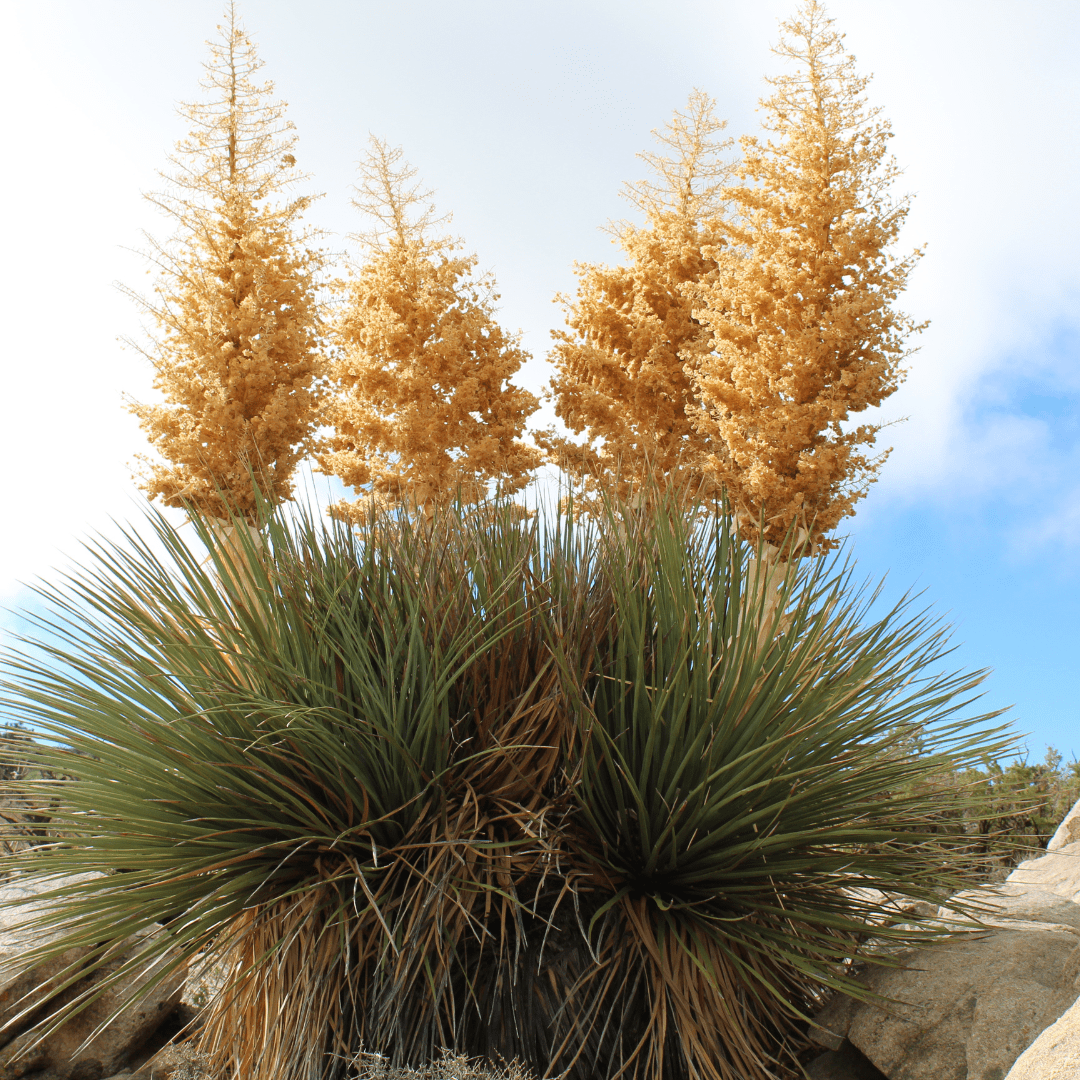
Tree Bear Grass (Nolina matapensis) is the most architecturally striking native screening plant in the Sonoran Desert. Growing slowly into a multi-trunked tree form with graceful, arching grass-like foliage, it creates a bold, structural privacy screen that doubles as a stunning focal point in any Phoenix landscape. Exceptionally drought-tolerant and virtually maintenance-free once established, Tree Bear Grass thrives in the Valley's extreme heat with no irrigation once mature. Whether you're screening a view in Scottsdale, creating a dramatic desert border in Paradise Valley, or adding vertical structure in Gilbert — Tree Bear Grass delivers year-round beauty with zero fuss.
Tree Bear Grass Plant Details
| Attribute | Detail |
|---|---|
| Scientific Name | Nolina matapensis |
| Common Names | Tree Bear Grass, Tree Nolina, Sacahuista |
| Mature Height | 10–15 feet |
| Mature Width | 6–10 feet |
| Growth Rate | Slow to moderate — 1–2 feet per year in Phoenix |
| Sun | Full sun (6+ hrs). Handles reflected heat from walls. |
| Water | Very low once established. Survives on rainfall alone. |
| USDA Zones | 8–11 (Phoenix is Zone 9b–10a) |
| Soil | Well-draining. Tolerates Arizona caliche soils. |
| Foliage | Evergreen — arching, grass-like blades year-round |
| Native Status | Native to Sonoran Desert — Sonora, Mexico |
Tree Bear Grass Uses in Phoenix Landscapes
Architectural Privacy Screening
Tree Bear Grass grows into a multi-trunked, tree-like form with a dense crown of arching foliage — creating a natural privacy screen with serious visual drama. Unlike formal hedges, it provides a more naturalistic screen that complements desert-modern and Southwestern architecture. Plant 6–8 feet apart for a flowing privacy grove; 10–12 feet apart for specimen plants with screening gaps filled by lower shrubs like Texas Sage or Desert Spoon.
Desert-Modern Focal Points
Tree Bear Grass is one of Phoenix's premier specimen plants for landscape design. Its bold, sculptural form pairs beautifully with decomposed granite, concrete, steel planters, and clean architectural lines. A single mature Tree Bear Grass becomes an unmistakable focal point — few plants look more "Arizona" in any setting.
Native & Low-Water Landscapes
As a native Sonoran Desert plant, Tree Bear Grass is perfectly adapted to Phoenix conditions. It requires virtually no irrigation once established, making it ideal for water-wise landscape designs in Chandler, Tempe, and Peoria. Pair it with Desert Willow, Blue Palo Verde, or Blue Nolina for an all-native, zero-water-after-establishment landscape.
Slope Stabilization & Hot Exposures
Tree Bear Grass thrives in the hot, dry conditions that challenge most plants — including steep south-facing slopes, rocky hillside exposures, and roadside plantings in extreme heat. Its deep root system stabilizes soil while its evergreen foliage provides year-round color and structure.
Best Time to Plant Tree Bear Grass in Phoenix
Fall (October–November) is the ideal window — warm soil encourages root development while cooler air reduces transplant stress, giving your plant 6–8 months of establishment before Phoenix summer arrives. Spring (February–April) is the second-best option. Avoid summer planting; though Tree Bear Grass is extremely tough once established, newly planted specimens need regular irrigation their first summer.
How to Plant Tree Bear Grass
- Dig wide, not deep — 2–3x the root ball width, same depth as the container.
- Check for caliche — break through any hardpan layer to ensure deep drainage.
- Backfill with native soil — Tree Bear Grass prefers lean, well-draining soil; avoid over-amending.
- Spacing — 6–8 ft apart for a privacy grove; 10–12 ft for individual specimens.
- Water basin — build a 3–4 inch earthen ring to direct water to the root zone.
- Mulch — 2–3 inches of gravel mulch to retain moisture and reflect heat naturally.
Watering Tree Bear Grass in Phoenix
First Year Watering Schedule
- Weeks 1–2: Every 2–3 days, deep and slow (30 min drip)
- Months 1–2: Every 5–7 days
- Months 3–6: Every 10–14 days (every 7–10 days during peak summer)
- After Year 1: Every 2–3 weeks in summer; rainfall alone in winter
Drip Irrigation
Place a 1–2 GPH emitter 18–24 inches from the base. Once established, Tree Bear Grass rarely needs supplemental irrigation during cooler months. In mature plantings, most specimens survive on Phoenix's natural rainfall alone — it's one of the most water-independent screening plants available in the Valley.
How tall does Tree Bear Grass get in Phoenix?
Tree Bear Grass matures to 10–15 feet tall with a 6–10 foot spread. It grows slowly — expect 1–2 feet per year — but its dramatic form makes it worth the wait. Larger box sizes from Three Timbers give you an immediate impact in the landscape.
Is Tree Bear Grass truly drought tolerant?
Yes — it's one of the most drought-adapted screening plants you can grow in Phoenix. As a native Sonoran Desert plant, it has evolved to thrive on minimal water. Once established (usually after year 1–2), it can survive entirely on natural rainfall in most Phoenix winters.
Does Tree Bear Grass work as a privacy screen?
Yes, especially as it matures. The dense, arching foliage creates excellent visual screening. For faster coverage, plant multiple specimens 6–8 feet apart. The naturalistic, organic form is especially effective for softening block walls and creating desert-modern privacy corridors.
How is Tree Bear Grass different from Blue Nolina or Bear Grass?
Tree Bear Grass (Nolina matapensis) grows into a distinct tree form with visible trunks — much taller and more architectural than clumping Bear Grass (Nolina microcarpa). Blue Nolina (Nolina nelsonii) has a similar upright structure but with blue-gray foliage. All three make excellent screening plants with different aesthetic effects.
Can Tree Bear Grass handle Phoenix reflected heat?
Absolutely. As a Sonoran Desert native, it's adapted to some of the most extreme heat conditions in North America. South- and west-facing walls, concrete surrounds, and rock mulch beds are all ideal environments for Tree Bear Grass.
You May Also Like
- Blue Nolina — A striking blue-gray accent Nolina with similar drought tolerance and architectural form — beautiful paired with Tree Bear Grass.
- Bear Grass — A clumping, lower-growing Nolina perfect for underplanting or border use alongside Tree Bear Grass specimens.
- Smooth Edged Desert Spoon — A complementary desert accent plant with silvery blue spoon-shaped leaves and dramatic bloom spikes.
- Desert Willow — A fast-growing native tree that pairs beautifully with Tree Bear Grass in all-native, low-water landscapes.
- Purple Hopseed — A fast-growing evergreen shrub that fills mid-level privacy gaps between mature Tree Bear Grass specimens.
How Many Tree Bear Grass Do I Need?
Tree Bear Grass is an architectural specimen that matures 6 to 10 feet wide, so plan around its bold form rather than a tight hedge:
- Single focal point: one plant anchors an entry, a gravel courtyard, or a desert-modern bed where its sculptural silhouette can stand clear.
- Privacy grove / screen: space plants 6 to 8 feet apart in a staggered run so the arching crowns overlap into a flowing screen. Roughly 4 plants screen 25 linear feet at 7 foot spacing.
- Specimen groups: plant in odd-numbered groups of 3 spaced 10 to 12 feet apart, filling the gaps with lower shrubs like Texas Sage or Desert Spoon for a layered look.
Tree Bear Grass Season-by-Season in Phoenix
- Spring (Feb to Apr): Tall creamy plume-like flower spikes can rise above the foliage on mature plants. New blade growth flushes from the crown. A good second planting window.
- Summer (May to Sep): Built for it. As a Sonoran Desert native, it shrugs off the most extreme Valley heat and reflected heat off walls and paving, and established plants need almost no water. Monsoon rain is plenty.
- Fall (Oct to Nov): Prime planting season. Cooler air and warm soil drive strong root establishment ahead of the next summer.
- Winter (Dec to Jan): Stays evergreen and architectural for year-round structure. Cold-hardy well into the teens, so no frost protection is needed in the Valley.
At a Glance
✔ Heat-Loving (Reflected-Heat Tolerant) ✔ Drought-Tolerant ✔ Evergreen ✔ Pool-Friendly (Low-Litter) ✔ Low-Maintenance ✔ Deer & Rabbit-Resistant ✔ Cold-Hardy to 10°F
Plant It With
- Blue Nolina: a blue-gray accent Nolina with matching drought tolerance and architectural form.
- Bear Grass: a clumping, lower-growing Nolina for underplanting around the trunks.
- Desert Spoon: a silvery spoon-leaved accent that fills mid-level gaps in a screen.
- Purple Hopseed: a fast evergreen shrub that closes lower privacy gaps between specimens.
Is Tree Bear Grass Right for Your Yard?
Tree Bear Grass is right for you if you want a bold, water-independent screening plant or sculptural focal point for full sun and reflected heat, in fast-draining or caliche soil, and you have the room for its 6 to 10 foot spread. It is one of the toughest, lowest-care screens for the desert. It is not a fit if you need instant privacy, since it grows slowly at 1 to 2 feet per year, or if your space is tight, since it wants room to show its arching form.
Share