
Snowball
Snowball
Couldn't load pickup availability
The Frosted Desert Showpiece — Snow-White Spines and Vivid Magenta Blooms for Phoenix Landscapes
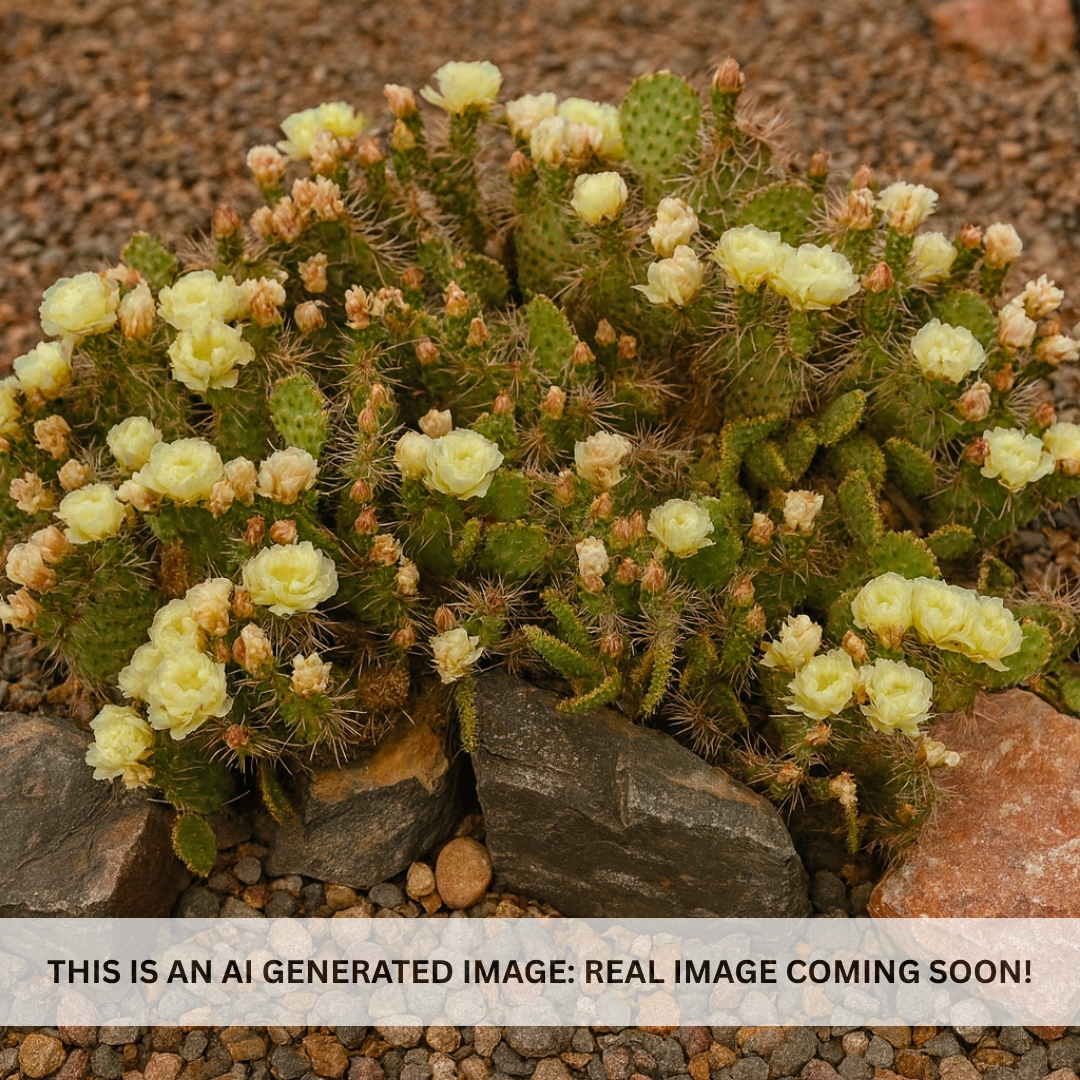
Snowball (Opuntia rhodantha ‘Snowball’) is one of the most visually striking prickly pears you can plant in the Phoenix Valley. Its dense coat of pure white spines gives the entire plant a frosted, snow-covered appearance year-round — a dramatic contrast against desert gravel and dark landscape walls. In spring, Snowball erupts with vivid magenta-pink flowers that pop against the white spines like nothing else in the cactus world. Reaching 2–3 feet tall and 3–5 feet wide, this cold-hardy hybrid thrives in extreme Phoenix heat while adding a unique textural element to any xeriscape. Whether you’re building a collector’s garden in Scottsdale, adding a conversation piece in Chandler, or creating a bold desert border in Mesa — Snowball delivers unforgettable visual impact.
Snowball Plant Details
| Attribute | Detail |
|---|---|
| Scientific Name | Opuntia rhodantha ‘Snowball’ |
| Common Names | Snowball Prickly Pear, White-Spined Prickly Pear |
| Mature Height | 2–3 feet (up to 4 feet at maturity) |
| Mature Width | 3–5 feet |
| Growth Rate | Moderate — 1–2 new pads per season in Phoenix |
| Sun | Full sun (6+ hrs). Handles reflected heat from walls. |
| Water | Very low once established. Highly drought-tolerant. |
| USDA Zones | 4–11 (Phoenix is Zone 9b–10a) — extremely cold-hardy |
| Soil | Well-draining. Adapts to Arizona caliche soils. |
| Foliage | Evergreen — blue-green pads covered in white spines year-round |
| Bloom Color | Vivid magenta-pink — spring |
Snowball Uses in Phoenix Landscapes
Collector’s Accent & Focal Point
Snowball’s frosted white appearance makes it an instant conversation piece. Place it as a standalone specimen in a gravel bed, raised planter, or decorative pot where the unique spine texture can be appreciated up close. It pairs dramatically with dark-colored gravel, black river rock, or stained concrete in modern Scottsdale and Paradise Valley landscapes.
Desert Color & Texture Gardens
Combine Snowball with Purple Prickly Pear, Golden Barrel Cactus, and Blue Agave for a desert garden that delivers year-round contrast in both color and texture. The white spines provide a cool visual counterpoint to warm-toned plants and desert hardscape in Gilbert, Tempe, and Peoria.
Low-Maintenance Borders
Use Snowball along garden edges, walkway borders, or property lines where you want strong visual interest with zero irrigation after establishment. Its moderate 2–3 foot height keeps sight lines clear while the spines provide a natural deterrent. Space 3–4 feet apart for a continuous border effect.
Best Time to Plant Snowball in Phoenix
Fall (October–November) is the ideal planting window. Soil stays warm for root establishment while cooler air reduces transplant stress. Your Snowball gets 6–8 months of root growth before its first Phoenix summer. Spring (February–April) is the second-best window. Avoid planting in peak summer if possible.
How to Plant Snowball
- Dig wide, not deep — 2–3x the root ball width, same depth
- Check for caliche — break through any hardpan layer so water drains freely
- Backfill with native soil — Snowball prefers lean, fast-draining ground
- Spacing — 3–4 ft apart for groupings; 4–5 ft for individual specimens
- Water basin — build a 3–4 inch ring to direct water to the root zone
- Gravel mulch — 2–3 inches of decomposed granite to retain moisture
Watering Snowball in Phoenix
First Year Watering Schedule
- Weeks 1–2: Every 3–4 days, deep and slow
- Month 1–3: Every 7–10 days
- Month 3–6: Every 10–14 days (weekly in peak summer)
- After Year 1: Every 2–4 weeks summer; monthly or less winter
Drip Irrigation
Place one 1-GPH emitter 12–18 inches from the base. Established Snowball plants are extremely drought-tolerant and many thrive on rainfall alone after the first year in the Phoenix Valley.
How fast does Snowball grow in Phoenix?
Expect 1–2 new pads per growing season. Plants reach their mature 3–5 foot spread within 3–4 years in full sun with well-draining soil.
Why are the spines white?
Snowball is a selected cultivar of Opuntia rhodantha bred specifically for its dense, pure white spine coverage. The white spines reflect sunlight and give the plant its distinctive frosted appearance year-round — even when not in bloom.
Is Snowball cold-hardy?
Yes — Snowball is one of the most cold-hardy prickly pears available, rated to USDA Zone 4 (well below zero). In Phoenix’s Zone 9b–10a, cold is never a concern. It handles both extreme heat and occasional frost with ease.
Does Snowball handle Phoenix summer heat?
Absolutely. Despite its snowy appearance, Snowball thrives in temperatures above 110°F and handles reflected heat from walls, concrete, and gravel.
You May Also Like
- Snow Prickly Pear — another white-spined Opuntia variety with bright yellow blooms
- Purple Prickly Pear — deep purple pads for dramatic contrast with Snowball’s white spines
- Baby Rita Prickly Pear — compact purple-padded prickly pear with magenta blooms
- Beavertail Prickly Pear — classic silvery pads with vivid magenta spring flowers
- Golden Barrel Cactus — round golden cactus that pairs beautifully with Snowball’s white texture
Share