

Rose Lantana
Rose Lantana
Couldn't load pickup availability
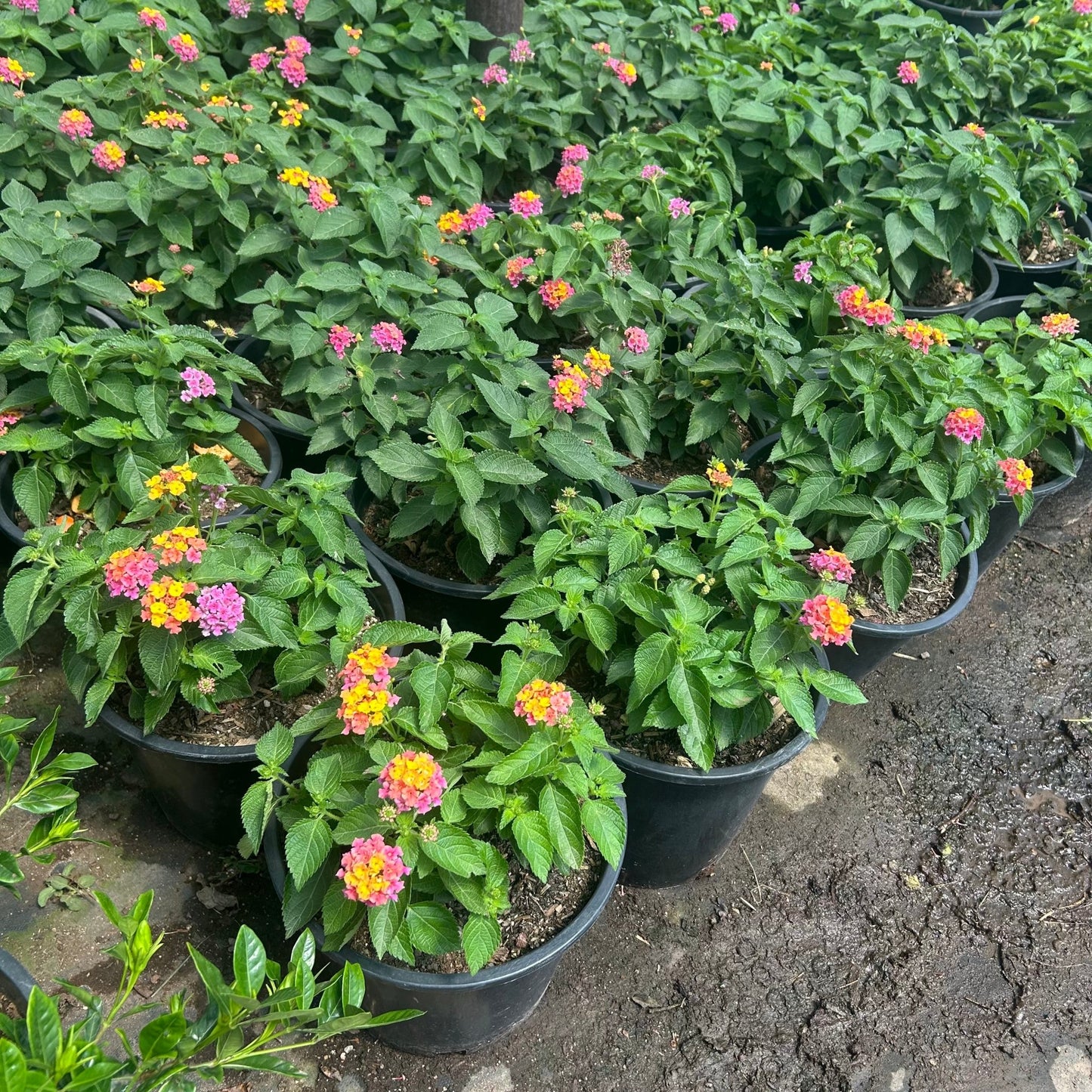
Phoenix's Most Romantic Flowering Shrub — Rose Lantana
Rose Lantana (Lantana camara) is one of the Phoenix Valley's most beloved low-water flowering shrubs, delivering soft rose-pink blooms accented with warm yellow and orange centers from spring through fall. This vigorous, sun-loving perennial grows 2–4 feet tall and spreads 3–6 feet wide, creating a lush, informal hedge or standalone color specimen in desert landscapes. Tough as nails and extraordinarily drought-tolerant, Rose Lantana thrives where most other flowering plants struggle — in full summer sun, reflected heat, and low-water conditions. Whether you're designing a color-rich border in Scottsdale, adding a pollinator garden in Gilbert, or softening a wall in Mesa, Rose Lantana delivers season after season.
Rose Lantana Plant Details
| Attribute | Detail |
|---|---|
| Scientific Name | Lantana camara (Rose variety) |
| Common Names | Rose Lantana, Pink Lantana |
| Mature Height | 2–4 feet |
| Mature Width | 3–6 feet |
| Growth Rate | Fast — 12–24 inches per year in Phoenix |
| Sun | Full sun (6+ hrs). Blooms most heavily in intense desert sun. |
| Water | Low once established. Highly drought-tolerant after the first season. |
| USDA Zones | 9–11 (Phoenix is Zone 9b–10a) |
| Soil | Well-draining. Adapts well to Arizona caliche soils. |
| Foliage | Semi-evergreen — may lose some leaves in winter; regrows vigorously in spring |
| Bloom Color | Rose-pink with yellow and orange centers |
| Bloom Season | Spring through fall (March–November in Phoenix) |
Rose Lantana Uses in Phoenix Landscapes
Informal Color Hedge and Screen
Rose Lantana's vigorous 3–6 foot spread makes it an excellent choice for informal, low-maintenance hedges and screens throughout the Phoenix Valley. Space plants 4–5 feet apart for a dense flowering hedge — a 20-foot fence line needs 4–5 plants to fill in solidly within two seasons. The soft rose-pink and yellow bi-tone blooms create a romantic, cottage-garden feel against block walls, wooden fences, and desert backgrounds in Chandler and Tempe.
Pollinator and Hummingbird Garden
Rose Lantana is one of Phoenix's premier plants for attracting pollinators. Hummingbirds, monarch butterflies, swallowtails, painted ladies, and native bees visit constantly throughout the long bloom season. Its nectar-rich flower clusters are especially attractive to migrating monarchs during spring and fall. Plant near water features, vegetable gardens, or outdoor seating areas in Scottsdale and Glendale to enjoy the wildlife show all season long.
Large-Scale Groundcover on Slopes
Rose Lantana's spreading habit (3–6 feet wide) makes it excellent for covering slopes, embankments, and large sunny areas with minimal maintenance. Its dense growth suppresses weeds while its roots stabilize slopes against monsoon erosion. For a 30-foot slope, plant 6–8 plants spaced 4 feet apart for complete coverage within 2 seasons. It pairs beautifully with Purple Trailing Lantana for a multi-color slope planting.
Focal Point and Specimen Planting
Allowed to reach its full 2–4 foot height and 3–6 foot spread, Rose Lantana makes a stunning landscape focal point that blooms non-stop for 8+ months in Phoenix. Its soft pink color works well in Mediterranean-style, cottage-style, and contemporary desert landscapes alike. Plant as a standalone specimen in a prominent bed position, surrounded by gravel and boulders, for maximum impact in Peoria, Surprise, and Queen Creek.
Best Time to Plant Rose Lantana in Phoenix
Spring (March–April) is the ideal planting window — warmer temperatures trigger immediate growth and bloom production, and you'll enjoy flowers almost right away. Fall planting (October–November) is also very effective, giving roots time to establish in warm soil before winter. Avoid peak summer (July–August) for newly planted specimens. Once established, Rose Lantana handles Phoenix's summer heat with ease and actually blooms more vigorously as temperatures rise.
How to Plant Rose Lantana
- Dig wide, not deep — 2–3x root ball width, same depth as the container.
- Check for caliche — break through any hardpan layer. Lantana doesn't tolerate standing water.
- Backfill with native soil — a light 20% organic blend is fine; straight native soil works too.
- Spacing — 4–5 feet apart for hedges; 5–6 feet for individual specimen planting.
- Water basin — build a 3–4 inch ring to direct irrigation to the root zone during establishment.
- Mulch — 2–3 inches of bark or gravel mulch to retain moisture and moderate soil temperature.
Watering Rose Lantana in Phoenix
First Year Watering Schedule
- Weeks 1–2: Every 1–2 days, deep and slow (20–30 min)
- Month 1–2: Every 3–4 days
- Month 3–6: Every 7–10 days (5–7 days during peak summer)
- After Year 1: Every 10–14 days in summer; every 3–4 weeks in winter
Drip Irrigation
Place drip emitters 18–24 inches from the plant's crown. A 1–2 GPH emitter per plant is sufficient. Once established, Rose Lantana is very drought-tolerant — lean watering encourages more prolific blooming. Overwatering encourages leafy growth at the expense of flowers.
Does Rose Lantana bloom all summer in Phoenix? Yes — it's one of the few shrubs that actually thrives in Phoenix's summer heat and continues blooming through July, August, and September. The hotter it gets, the more it blooms, making it indispensable for summer color in Phoenix Valley landscapes.
How large does Rose Lantana get in Phoenix? In Phoenix's warm climate, Rose Lantana typically reaches 2–4 feet tall and 3–6 feet wide within 2–3 growing seasons. Light spring pruning (February–March) keeps it compact and stimulates a flush of new growth and blooms.
Is Rose Lantana toxic to pets? Yes — Lantana berries and leaves are toxic to dogs, cats, and livestock if ingested. Plant away from areas where pets graze or forage. The flowers themselves are safe for hummingbirds and butterflies.
Does Rose Lantana need to be cut back in Phoenix? Light pruning in early spring (February–March) removes any frost-damaged wood and stimulates vigorous new growth. Heavy pruning during the growing season should be avoided to preserve blooms, but deadheading spent flower clusters encourages continued bloom production.
How does Rose Lantana differ from other Lantana varieties? Rose Lantana features soft rose-pink flowers with warm yellow-orange centers, giving it a romantic, old-fashioned cottage feel. Compare with Dallas Red (bold red-orange), New Gold (solid yellow), Confetti (multi-color), or Irene (lavender-yellow) for different color moods in your landscape design.
You May Also Like
- Confetti Lantana — Multi-color pink, purple, orange, and yellow blooms in one spectacular cluster.
- Dallas Red Lantana — Bold red-orange blooms on a vigorous, spreading Lantana variety.
- Irene Lantana — Soft lavender-yellow bi-color blooms on a more compact, border-friendly variety.
- Purple Trailing Lantana — A low-spreading groundcover Lantana, perfect in front of Rose Lantana.
- Texas Sage — A classic Phoenix companion shrub with purple blooms that complement rose-pink tones beautifully.
How Many Rose Lantana Do I Need?
Rose Lantana is a fast, wide-spreading shrub used as an informal flowering hedge, slope cover, or specimen. At its mature 3 to 6 foot spread, set plants 4 to 5 feet apart for a hedge and 5 to 6 feet apart as freestanding specimens.
| Planting | Spacing | Plants Needed |
|---|---|---|
| 20 ft informal hedge / screen | 4.5 ft apart | 5 plants |
| 30 ft slope cover | 4 ft apart | 7 to 8 plants |
| Specimen accent | 5 to 6 ft apart | 1 to 3 plants |
| 200 sq ft mass | 4 ft apart | about 12 plants |
Rose Lantana Season-by-Season in Phoenix
- Spring (Feb to Apr): Light prune in late February, then a fast flush of new growth and the first rose-pink clusters. Prime planting window with near-immediate bloom.
- Summer (May to Sep): Peak performance. One of the few shrubs that blooms harder the hotter it gets, thriving on reflected heat off walls and pavement. Monsoon rain pushes vigorous new growth.
- Fall (Oct to Nov): Strong second planting window and continued heavy bloom that draws migrating monarchs into November.
- Winter (Dec to Jan): Slows and may take frost top-dieback near 28°F. Cover on hard-freeze nights or leave it: it regrows vigorously from the roots, and frost-damaged wood is removed in the spring prune.
At a Glance
✔ Pollinator-Friendly ✔ Hummingbird-Friendly ✔ Heat-Loving (Reflected-Heat Tolerant) ✔ Drought-Tolerant ✔ Low-Maintenance ✔ Deer & Rabbit-Resistant ✔ Cold-Hardy to 20°F (recovers from roots)
Plant It With
- Dallas Red Lantana: a bold red-orange partner that intensifies the warm centers of the rose blooms.
- Purple Trailing Lantana: a low trailing groundcover to plant in front for a multi-color slope.
- New Gold Lantana: a solid-yellow companion that echoes the rose flower's golden eye.
- Texas Sage: a classic purple-blooming desert shrub that complements rose-pink tones.
Is Rose Lantana Right for Your Yard?
Rose Lantana thrives in full sun, reflected heat, and fast-draining native or caliche soil, making it ideal for informal hedges, hot wall bases, sunny slopes, and pollinator beds. It is not a fit for shade, which causes weak leggy growth and few flowers, and it should be kept away from areas where pets graze, since the foliage and green berries are toxic if eaten.
Customer Reviews
Share