
Pineapple Pear
Pineapple Pear
Couldn't load pickup availability
The Best Low-Chill Pear Tree for Phoenix Backyards
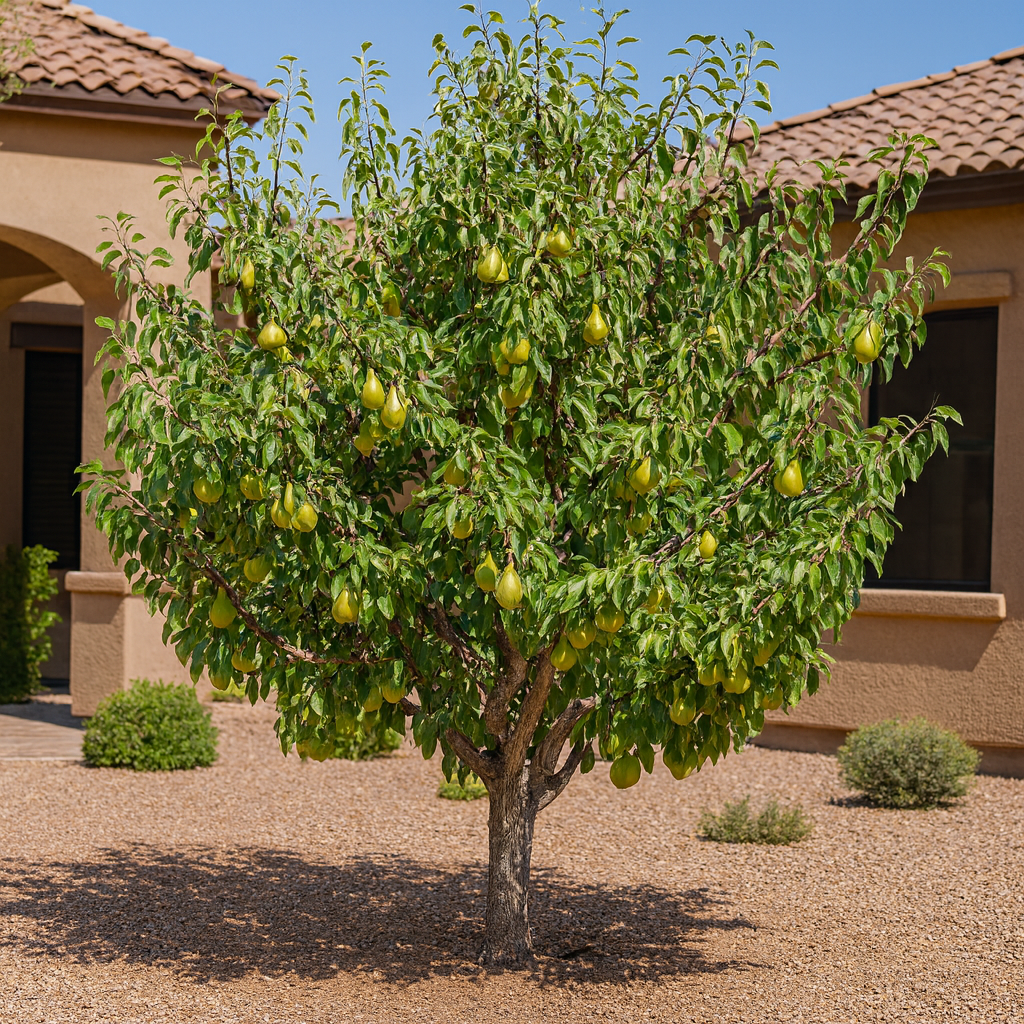
Pineapple Pear (Pyrus communis 'Pineapple') is one of the most reliable fruit-bearing pear trees for the Phoenix Valley. This semi-dwarf deciduous tree reaches 12–15 feet tall and produces large, sweet fruit with a distinctive pineapple-like flavor and crisp texture. Extremely heat-tolerant and requiring only 150–200 chill hours, it thrives where most pear varieties fail. Whether you're adding a backyard orchard in Scottsdale, planting an edible landscape in Gilbert, or growing fresh fruit at home in Chandler — Pineapple Pear delivers dependable harvests year after year.
Pineapple Pear Plant Details
| Attribute | Detail |
|---|---|
| Scientific Name | Pyrus communis 'Pineapple' |
| Common Names | Pineapple Pear, Pineapple Pear Tree |
| Mature Height | 12–15 feet (semi-dwarf) |
| Mature Width | 10–12 feet |
| Growth Rate | Moderate — 1–2 feet per year in Phoenix |
| Sun | Full sun (6+ hrs). Handles reflected heat from walls. |
| Water | Moderate. Regular deep watering during fruit production. |
| USDA Zones | 5–9 (Phoenix is Zone 9b–10a) |
| Soil | Well-draining. Adapts to Arizona caliche soils with amendment. |
| Foliage | Deciduous — drops leaves in winter |
| Chill Hours | 150–200 hours (ideal for low-desert climates) |
| Fruit Season | Mid to late summer |
Pineapple Pear Uses in Phoenix Landscapes
Backyard Orchard & Edible Landscape
Pineapple Pear is a top pick for Phoenix homeowners who want fresh fruit without a sprawling orchard. Its semi-dwarf size fits easily into residential yards, and the heavy fruit set means you'll have plenty of pears for eating fresh, canning, and sharing with neighbors. Plant alongside other low-chill fruit trees like Desert Gold Peach or Red Baron Peach for a diverse harvest from spring through fall.
Shade & Ornamental Interest
Beyond its fruit, Pineapple Pear provides welcome shade during Phoenix summers with its broad, leafy canopy. In spring, clusters of white blossoms create a beautiful display. The tree adds seasonal interest to any landscape — green foliage in summer, warm fall color, and an attractive branching structure in winter.
Pool-Friendly Fruit Tree
Pineapple Pear's compact growth habit and non-invasive root system make it a reasonable choice near pool areas when planted at least 10–12 feet from the pool edge. Pair with Desert Spoon or Ruellia for a layered desert-modern look that includes edible and ornamental plants.
Best Time to Plant Pineapple Pear in Phoenix
Fall (October–November) is the ideal planting window. The soil is still warm enough to encourage root establishment, while cooler air temps reduce transplant stress. Your tree gets 6–8 months of root growth before its first Phoenix summer. Spring (February–April) is the second-best window. Avoid planting in peak summer if possible — the heat makes establishment much harder on fruit trees.
How to Plant Pineapple Pear
- Dig wide, not deep — Excavate a hole 2–3x the root ball width, same depth as the container.
- Check for caliche — Break through any hardpan layer to ensure proper drainage. Pear trees cannot tolerate standing water.
- Backfill with native soil — Mix in 20% compost or organic amendment to help with nutrient availability during fruit production.
- Spacing — Plant 12–15 feet apart for multiple trees; allow 10 feet clearance from walls or structures.
- Water basin — Build a 3–4 inch soil ring around the tree to direct water straight to the root zone.
- Mulch — Apply 2–3 inches of bark or wood chip mulch to retain moisture and keep roots cool. Keep mulch 4 inches from the trunk.
Watering Pineapple Pear in Phoenix
First Year Watering Schedule
- Weeks 1–2: Every 1–2 days, deep and slow (20–30 minutes per session)
- Months 1–2: Every 3–4 days
- Months 3–6: Every 5–7 days (every 3–5 days in peak summer)
- After Year 1: Every 7–10 days in summer; every 2–3 weeks in winter
Drip Irrigation
Place two 2-GPH emitters 18–24 inches from the trunk on opposite sides. As the tree matures, move emitters outward to the drip line and consider adding a second ring. During fruit development (late spring through summer), consistent deep watering is essential for good fruit size and flavor.
How fast does Pineapple Pear grow in Phoenix?
Pineapple Pear grows at a moderate pace of 1–2 feet per year in Phoenix. With proper watering and full sun, most trees begin producing fruit within 2–3 years of planting.
How many chill hours does Pineapple Pear need?
Only 150–200 chill hours, making it one of the best pear varieties for the low desert. Phoenix typically gets 200–400 chill hours per winter, so this variety reliably sets fruit here.
Is Pineapple Pear self-pollinating?
Pineapple Pear is partially self-fertile, meaning it can produce some fruit on its own. However, planting a second pear variety nearby (such as a Bartlett or Hood Pear) significantly increases fruit set and overall yield.
What does Pineapple Pear fruit taste like?
The fruit is large with a sweet, slightly tropical flavor reminiscent of pineapple — hence the name. The flesh is crisp and juicy, excellent for eating fresh off the tree or using in preserves and baking.
You May Also Like
- Desert Gold Peach Tree — Another low-chill fruit tree that thrives in Phoenix heat with sweet, juicy peaches by early summer.
- Red Baron Peach — Stunning red-leafed ornamental peach that doubles as a heavy fruit producer in the Phoenix Valley.
- Fig Tree — One of the easiest fruit trees for Arizona, producing multiple harvests per season with minimal care.
- Desert Delight Nectarine — A low-chill nectarine perfectly suited for Phoenix backyards, producing sweet fruit in early summer.
- Red Grapefruit — A classic Arizona citrus tree delivering juicy, tangy fruit through the cooler months.
Share